Visitor Insights
Visiting Nativity of the Blessed Virgin Mary Chapel
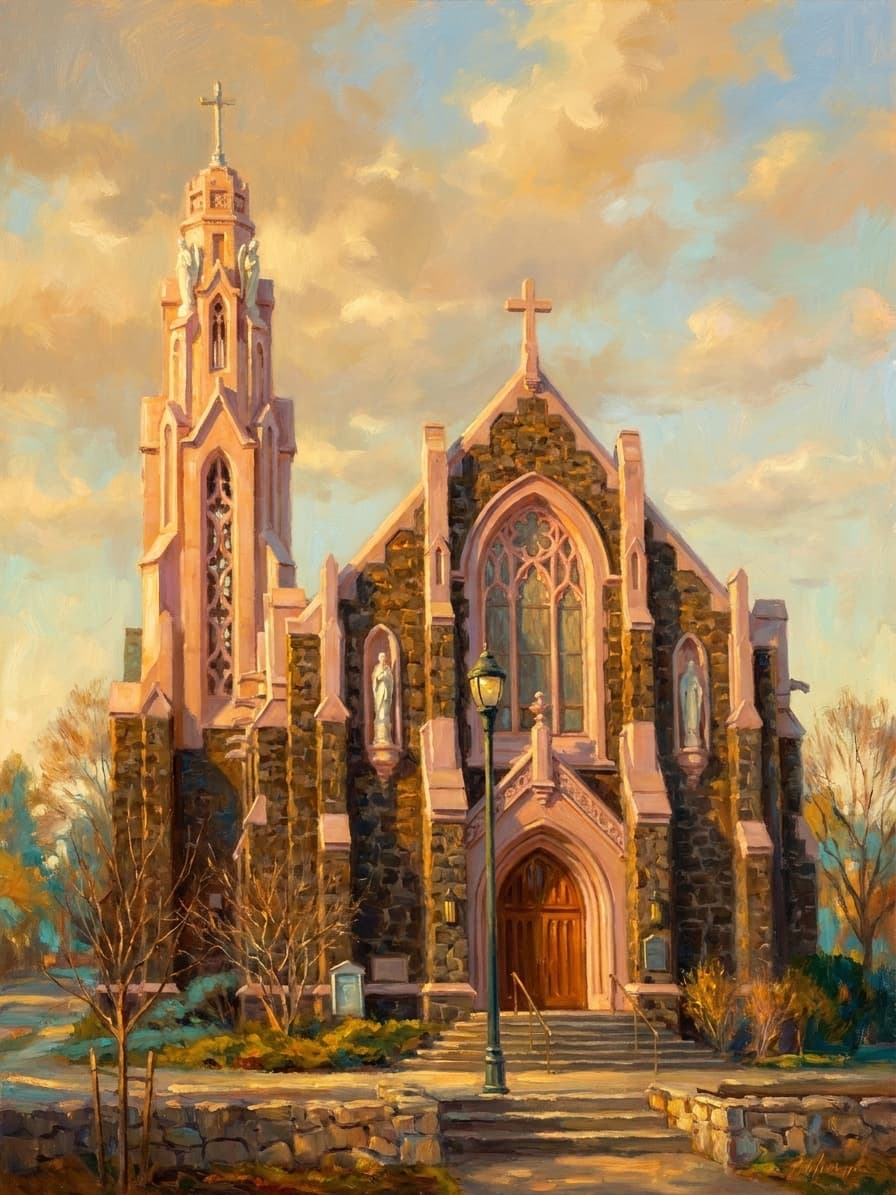
The chapel grounds are easily admired from the quiet sidewalks of downtown Flagstaff just two blocks north of Route 66. Interior visits are centered around scheduled liturgical celebrations, special devotions, and periodic cultural recitals. The contrasting dark basalt walls and rosy trim are most vividly illuminated by afternoon sunlight.
Highlights
- Intricate German antique stained glass depicting the Assumption
- Towering 92-foot Gothic belfry housing the historic 1889 Star of Bethlehem bell
- Sixteen hand-sculpted exterior stone gargoyles lining the parapets
- Hand-carved hammerbeam ceiling trusses adorned with gilded terminations
Things to Know
- Interior access is limited to scheduled liturgical rites, concerts, and holy days
- The building is located at 7,000 feet elevation where winter ice can cover exterior steps
- Metered municipal street parking is available directly along West Cherry Avenue
- Respect prayerful silence when entering for private adoration or devotions
Tips for Your Visit
Afternoon Light Photography
Photograph the west entrance and rose window lancets during late afternoon when the warm sun accentuates the pink-toned trim.
Winter Alpine Aesthetics
Visit after a northern Arizona snowstorm to see fresh powder framing the slate gables, pinnacles, and volcanic fieldstone.
Check Consolidated Parish Schedules
Consult San Francisco de Asís parish bulletins online to attend seasonal choral events or holy day masses inside the sanctuary.
About
Nativity of the Blessed Virgin Mary Chapel stands as an enduring monument of Roman Catholic faith and alpine craftsmanship in high-country northern Arizona. Rooted in the wider Abrahamic tradition of consecrated sanctuaries, the chapel represents a sacred space set apart for communion with the Divine.
Constructed between 1929 and 1930 amid the economic hardships of the Great Depression, the sanctuary replaced Flagstaff's pioneer brick church. Parishioners personally hauled wagonloads of dark volcanic basalt from nearby lava fields to fashion its soaring load-bearing walls.
Designed by Los Angeles architect Emmet G. Martin, the Chapel-Gothic edifice features exquisite cast-stone embellishments that weathered into a soft rose hue, earning it the affectionate moniker 'the Pink Church.' The interior preserves luminous German antique stained glass and exposed hammerbeam trusses.
Today, the consecrated landmark functions as an auxiliary liturgical chapel under the consolidated San Francisco de Asís Parish. It remains an active sanctuary for sacred music, weddings, memorial liturgies, and quiet contemplative prayer.
Gallery
Symbolic Elements
The temple's exterior features intricate carvings, each rich with spiritual meaning:

Volcanic Malpais Basalt
The dark lava rock evokes the scriptural call for believers to be living stones built into a spiritual sanctuary.

The Sixteen Gargoyles
These sculpted grotesques evoke ancient medieval traditions warding secular chaos away from the sacred precinct.

Assumption Stained Glass
The western rose lancet honors Mary's heavenly assumption as a beacon of Christian resurrection hope.

Fleur-de-lis Belfry Louvers
Stylized French lilies cast into the belfry louvers represent Marian purity while honoring pioneer French priests.

The Soaring Bell Tower
Reaching ninety-two feet skyward, the stone spire serves as an axis linking earthly prayers with heaven.

Hammerbeam Timber Trusses
The vaulted wooden roof reflects the inverted hull of Noah's Ark, offering shelter to pilgrim souls.

Seven-Star Halo
The illuminated crown adorning the Marian statue symbolizes the celestial woman described in Revelation.
Interesting Facts
Parishioners physically quarried and hauled wagonloads of dark volcanic lava rock from nearby mountain fields to build the walls. (Tier A)
The entire hundred-thousand-dollar sanctuary was erected in fifteen months during the economic height of the Great Depression. (Tier A)
Artist Jesse Earl Fink glazed the windows on high ladders during a freezing blizzard, warming his hands periodically to prevent drops. (Tier A)
The 92-foot tower's Star of Bethlehem bell was cast in 1889 and predates the Gothic chapel building by over forty years. (Tier A)
Lumber pioneer Michael Riordan personally helped sketch and detail the chapel's sixteen expressive stone gargoyles. (Tier B)
The cornerstone holds an airtight copper capsule containing regional newspapers, period coins, and handwritten parish rosters. (Tier A)
The parish was founded on Christmas 1888 in honor of Christ's Nativity before rededicating its 1930 edifice to the Blessed Mother. (Tier A)
Upon its dedication in 1930, local newspapers lauded the chapel as the most artistically flawless edifice in the Southwest. (Tier B)
Preservationists completed millimeter-accurate 3D laser scans in 2025 to create CAD digital twins of eroding cast-stone ornamentation. (Tier B)
Common Questions
Why is the chapel colloquially called the Pink Church?
Its pre-cast architectural stone trim was cast with a pink aggregate that weathered into a soft rose hue against the dark lava rock.
Are regular weekend masses celebrated at the chapel today?
Regular Sunday masses take place at the consolidated San Francisco de Asís Parish church, while Nativity hosts weddings and special holy day liturgies.
What type of stone was used to construct the chapel walls?
The load-bearing walls are built from local malpais basalt gathered directly from nearby volcanic fields by pioneer parishioners.
Can visitors view the interior of the chapel?
The interior opens for scheduled sacramental ceremonies, holy day masses, and public choral performances throughout the year.
Who crafted the chapel's pictorial stained glass windows?
The windows were painted and glazed by master glass artist Jesse Earl Fink of the American Glass Company in Los Angeles.
Featured Stories
The Wagonloads of Malpais
Autumn 1929
When the financial crash threatened to halt construction plans, working-class parishioners rallied to keep the church project alive. Families drove horse-drawn wagons into the surrounding volcanic flats, prying up lichen-encrusted malpais boulders and hauling them into town by hand. Their shared physical labor trimmed thousands of dollars from construction expenses and permanently rooted the chapel in Flagstaff's native mountain terrain.
Source: Parish Historical Archives & Preservation Dossier
Glazing Through an Alpine Blizzard
November 1930
With dedication day looming, master artisan Jesse Earl Fink scaled exterior ladders alone to fit fragile German antique glass windows. A sudden winter blizzard swept over the San Francisco Peaks, plunging temperatures well below zero and repeatedly numbing the craftsman's fingers. He climbed down continually to thaw his hands over a brazier before ascending again to ensure each fragile pane was secured.
Source: The Coconino Sun Dedication Reports
Voice of the Bethlehem Bell
December 1930
Cast in 1889 for the original frontier brick chapel, the bronze Star of Bethlehem bell had tolled for every birth, funeral, and railroad arrival in early Flagstaff. When the new Gothic tower was finished, workmen carefully winched the historic heirloom into the ninety-two-foot belfry. Its resonant tolling during the solemn December dedication bridged the town's pioneering frontier past with a bright architectural future.
Source: Diocese of Tucson Dedication Records
Timeline
Inaugural Midnight Mass
Father Ferrari celebrates Flagstaff's first Catholic Christmas Mass in a pioneer brick church on Beaver and Ellery Streets.
EventCherry Avenue Land Gift
Gerhard Verkamp donates downtown parcels on Cherry Avenue to secure a permanent location for future parish expansion.
MilestoneSt. Anthony's School Opens
The Sisters of Loretto establish St. Anthony's School, shifting the center of Catholic community life north of the tracks.
MilestoneGroundbreaking and Excavation
Parishioners begin digging foundations and hauling local volcanic fieldstone under the direction of Father Edward D. Albouy.
component.timeline.groundbreakingCornerstone Blessing
Tucson Bishop Daniel J. Gercke formally blesses the cornerstone containing a sealed copper time capsule.
MilestoneStained Glass Installation
Master artisan Jesse Earl Fink perseveres through sub-zero blizzards to glaze the imported German antique windows.
MilestoneSolemn Edifice Dedication
The completed hundred-thousand-dollar stone chapel is solemnly dedicated under the patronage of Mary's Nativity.
DedicationMortgage Retirement
The parish liquidates its building debt, prompting Pope Pius XII to elevate Father Albouy to Domestic Prelate.
MilestoneDiocesan Reorganization
Coconino County parishes are transferred from the historic Diocese of Tucson into the newly erected Diocese of Phoenix.
EventParish Consolidation
Three Flagstaff parishes unite into San Francisco de Asís, preserving Nativity Chapel as an auxiliary consecrated shrine.
EventPreservation Campaign Launch
The Babbitt Brothers Foundation inaugurates the Save Nativity BVM initiative to restore fragile stone ornament.
RenovationDigital Twin Laser Scanning
Specialists generate millimeter-accurate 3D scans of external gargoyles to guide restorative masonry replication.
RenovationHistory by Decade
1880s — Frontier Founding
A small brick sanctuary gave the frontier faithful a permanent spiritual home amidst the pines.
The arrival of the transcontinental railroad in 1882 brought Catholic merchants, sheep ranchers, and track hands to Flagstaff. P. J. Brannen donated lots at Beaver and Ellery Streets, where Father Ferrari celebrated the town's first Christmas Midnight Mass in 1888 within a modest brick church.
1890s–1900s — Northward Migration
As downtown commercial activity expanded, local benefactor Gerhard Verkamp deeded acreage along Cherry Avenue to relocate parish life away from the railroad saloon corridor. The Sisters of Loretto arrived in 1904 to open St. Anthony's School, anchoring parish family life north of the tracks.
1910s–1920s — Transition and Vision
Let us build a house of stone worthy of the majesty of the San Francisco Peaks.
After selling the deteriorating frontier brick church, the parish worshiped temporarily inside the school hall. Following the arrival of Father Edward D. Albouy in 1924, architect Emmet G. Martin designed a monumental stone church, breaking ground in September 1929 just weeks before the Great Depression.
1930s — Erection and Consecration
Parish volunteers quarried native malpais basalt while local craftsmen raised the walls in fifteen months without general contractor markups. Bishop Daniel J. Gercke blessed the cornerstone in May 1930, and the magnificent hundred-thousand-dollar chapel was dedicated on December 7, 1930.
1940s–1960s — Postwar Stability
Careful parish stewardship during World War II allowed the community to retire its building debt by 1947, earning Father Albouy the title of Monsignor from Pope Pius XII. In 1969, northern Arizona was formally assigned to the newly established Roman Catholic Diocese of Phoenix.
1970s–1990s — Liturgical Renewal and Centenary
The sanctuary adapted smoothly to post-conciliar liturgical guidelines while reverently safeguarding its historic high altar, timber trusses, and communion rails. In 1988, parishioners gathered under its gothic arches to celebrate a full century of Catholic witness in Flagstaff.
2000s–2020s — Preservation and Heritage
Saving this sanctuary preserves the living faith and communal sacrifices of Flagstaff's pioneers.
In 2007, Flagstaff's historic Catholic communities unified into San Francisco de Asís Parish, designating Nativity as a consecrated preservation chapel. The Babbitt Brothers Foundation led community conservation efforts, using 3D laser scanning in 2025 to safeguard its delicate exterior stone carving.
Architecture & Facilities
The chapel is a distinguished interpretation of English Chapel-Gothic Revival architecture tailored to high-altitude mountain terrain. Its design relies on steep gables, prominent stepped buttresses, lancet apertures, and an imposing asymmetric bell tower that harmonizes with the volcanic geography of the Colorado Plateau.
Building Materials
Volcanic Malpais Basalt
Dense, porous volcanic lava rock hand-quarried by local parishioners from Flagstaff lava beds.
Architectural Cast Stone
Pre-cast architectural concrete utilizing warm pink aggregates for copings, pinnacles, and window tracery.
Slate Roofing
Heavy green and grey slate shingles secured along steep timber rafters with copper flashing.
Clear Douglas Fir Timber
Regional heavy timber milled for the vaulted hammerbeam ceiling system and interior woodwork.
Interior Features
Nave
Measures 35 by 99.5 feet beneath exposed hammerbeam trusses decorated with hand-carved gilded corbels.
Sanctuary Apse
Raised chancel holding the historic marble high altar beneath a devotional mural of Mary.
West Choir Loft
Elevated timber gallery framing the tripartite Munich-technique Assumption stained glass window.
Tower Vestibule
Entry narthex opening beneath the belfry containing commemorative dedicatory stained glass panels.
Temple Grounds
Situated on an urban parcel along Cherry Avenue, bordered by concrete walks, manicured lawn margins, and mature trees.
Additional Facilities
Adjoining sacristies provide liturgical preparation spaces, with nearby parish meeting halls supporting downtown community gatherings.
Religious Significance
In the broad Abrahamic tradition, sacred architecture mirrors the concept of the tent of meeting or the Jerusalem Temple—a sanctuary set apart from secular commerce where the presence of the transcendent God dwells among humanity. Within classical Christian ecclesiology, this spatial theology deepens: the church building represents the gathered Mystical Body of Christ, while the stone walls evoke the living stones referenced in the Petrine epistles.
To serve as a consecrated sacramental house of God for Eucharistic worship, prayerful devotions, and milestone sacred rites.
Sacred Ordinances
The Holy Sacrifice of the Mass
The central Catholic Eucharistic celebration commemorating the sacrifice and resurrection of Christ.
Sacrament of Holy Matrimony
Sacramental nuptial celebrations uniting couples in Christian marriage beneath the historic Gothic nave.
Liturgy of the Word and Memorials
Solemn prayer vigils and funeral masses offering comfort and eternal hope for deceased parish faithful.
Eucharistic Adoration
Devotional silent prayer and contemplation held before the Blessed Sacrament exposed on the altar.
The Incarnational Theology of Native Stone
Catholic theology emphasizes that the material world serves as an instrument of divine grace. By constructing the chapel from native volcanic basalt quarried directly from surrounding fields, pioneer parishioners turned the raw earth of northern Arizona into an enduring testament of sacrifice and sanctified space.
Marian Patronage and Communal Identity
Originally dedicated during pioneer days to celebrate Christ's Nativity, the chapel's patronage was extended to the Nativity of the Blessed Virgin Mary. This Marian devotion emphasizes humble receptivity to God's will, symbolized throughout the chapel by delicate fleur-de-lis carvings and luminous stained glass.
Sources & Research
Every fact on Temples.org is backed by verified Sources & Research. Each piece of information is rated by source tier and confidence level.
View All Sources (8)
| Field | Source | Tier | Retrieved |
|---|---|---|---|
| About & Historical Background | San Francisco de Asís Catholic Parish (opens in a new tab) | A | 2026-03-31 |
| Dedication & Architectural Overview | Save Nativity BVM Historic Preservation Committee (opens in a new tab) | A | 2026-03-31 |
| Mass Times & Directory Details | Discover Mass Diocesan Directory (opens in a new tab) | A | 2026-03-31 |
| Regional Heritage & Pioneer Families | Arizona State Parks and Trails (opens in a new tab) | A | 2026-03-31 |
| Historical Markers & Construction History | The Historical Marker Database (opens in a new tab) | B | 2026-03-31 |
| Architectural Biography of Emmet G. Martin | World Biographical Encyclopedia (opens in a new tab) | B | 2026-03-31 |
| Historic Structure Assessment & Digital Twin | Laser Calibration & 3D Scanning Services (opens in a new tab) | B | 2026-03-31 |
| Flagstaff Municipal Heritage Profile | Arizona Leisure Travel Network (opens in a new tab) | C | 2026-03-31 |