Visitor Insights
Visiting Kuruvungna Sacred Springs
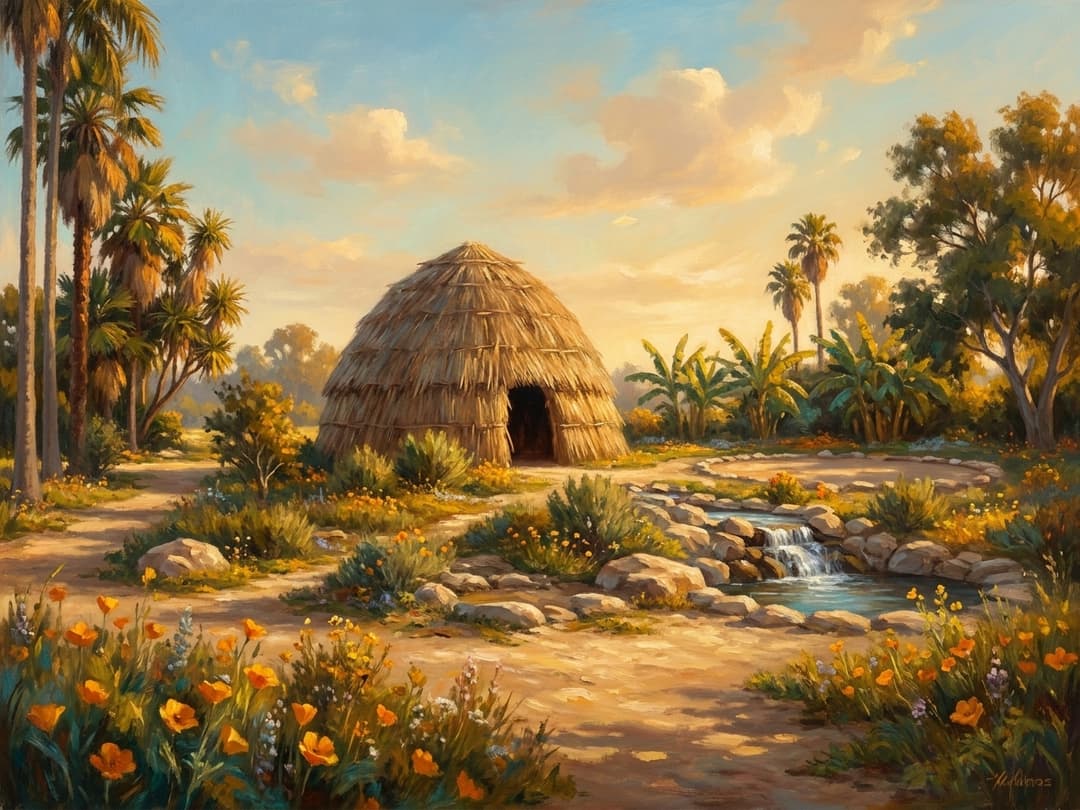
Kuruvungna Sacred Springs offers a serene oasis of indigenous heritage and natural beauty hidden within urban Los Angeles. Visitors can explore native botanical gardens, traditional willow dwellings, natural spring pools, and a cultural museum.
Highlights
- Natural artesian spring head and stone waterfall channel
- Traditional Tongva kish domed willow dwellings
- Cultural museum showcasing excavated stone mortars and historic artifacts
- Native coastal sage scrub and riparian woodland gardens
Things to Know
- Open to the public only on the first Saturday of each month
- Quiet reverence is required near sacred ceremonial and reburial areas
- Wading or swimming in the spring waters is strictly prohibited
Location
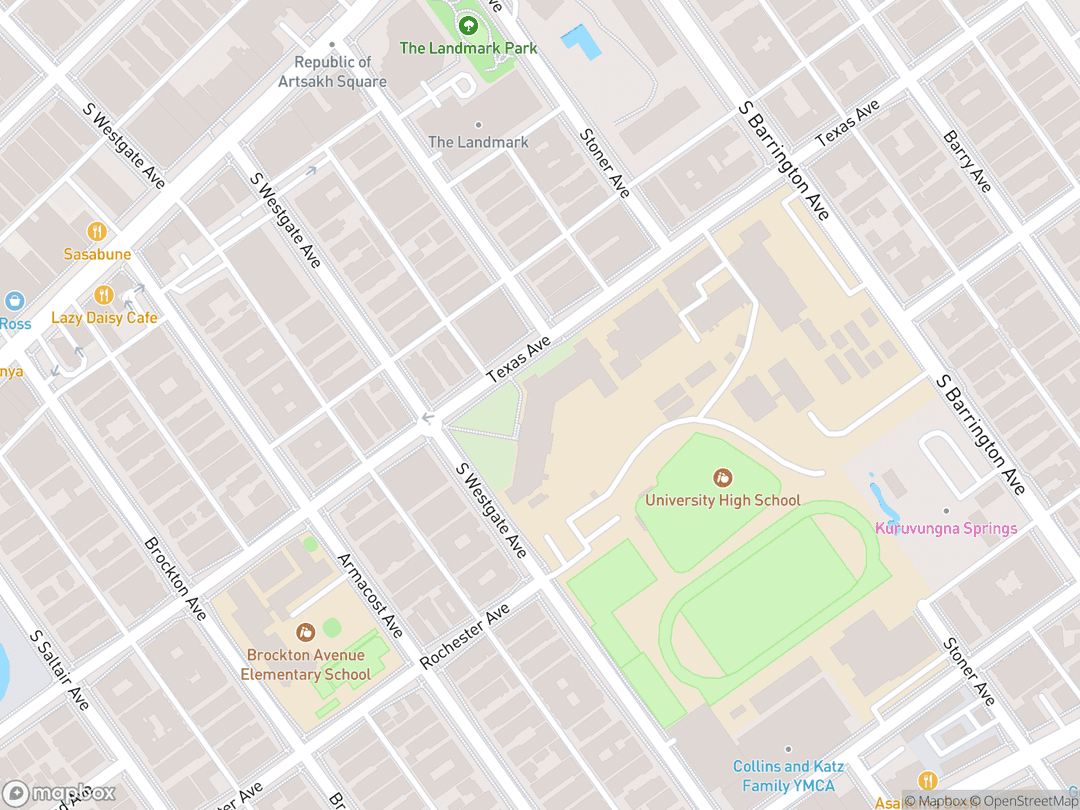
1439 S. Barrington Avenue, Los Angeles, CA 90025
Hours: First Saturday of every month, 10:00 AM – 3:00 PM
Getting There: Accessible via Metro Bus lines on Wilshire or Santa Monica Boulevard, transferring to Big Blue Bus Route 11 along Barrington Avenue.
Get DirectionsTips for Your Visit
Plan Around Open House Days
Public access is limited to the first Saturday monthly from 10:00 AM to 3:00 PM.
Respect the Sanctuary Protocol
Treat the site as an active place of prayer and ancestral reburial by maintaining quiet conduct.
Visit the Cultural Museum First
Start at the small museum near the entrance to view ancestral artifacts and historical maps.
About
Kuruvungna Sacred Springs is an ancient indigenous sacred site, natural artesian wellspring, and botanical sanctuary located in West Los Angeles. Continuously producing over 22,000 gallons of pure groundwater daily for thousands of years, the springs formed the spiritual and communal heart of a major Gabrielino-Tongva village prior to Spanish missionization.
Situated on the campus grounds of University High School, the two-acre sanctuary is preserved and managed by the Gabrielino-Tongva Springs Foundation under a lease with the Los Angeles Unified School District. Today, Kuruvungna serves as an active place of indigenous ceremony, educational outreach, native habitat restoration, and ancestral reinterment.
Gallery
Symbolic Elements
The temple's exterior features intricate carvings, each rich with spiritual meaning:
Sacred Water (Sii)
Pure artesian groundwater flowing continuously from deep subterranean aquifers, representing the living blood of the Earth Mother.
Traditional Kish Dwelling
Circular domed shelter crafted from flexible willow branches and tule thatch, embodying ancient indigenous architecture.

Council Gathering Circle
Open-air stone-lined earth plaza designed for communal gatherings, drumming, and sacred dances under the sun.

White Sage (Kupaar)
Sacred medicinal herb harvested on site and burned in smudging rituals to cleanse spiritual energy.
Naturalized Lagoon Pond
Shallow natural collection basin nurturing native aquatic life and reflecting ancestral spiritual continuity.

Dolphin (Pa'at) Emblem
Revered coastal Tongva guardian symbol bridging land and ocean spiritual realms.
Oak and Sycamore Canopy
Living woodland shelter of Valley Oaks and California Sycamores creating a spiritual botanical sanctuary.
Ancestral Reburial Mound
Sacred hillside burial ground where displaced indigenous ancestral remains are peacefully re-interred.
Interesting Facts
The springs discharge up to 25,000 gallons of natural unchlorinated water every day regardless of drought conditions. (Tier A)
Diaries from the 1769 Spanish expedition note that the springs gave rise to the name of nearby Santa Monica. (Tier B)
It is one of the only ancient indigenous sacred sites in the United States enclosed within an active public high school. (Tier A)
Tongva elder Angie Behrns initiated the modern site restoration after finding the springs neglected at her high school reunion. (Tier A)
Ancestral Tongva human remains unearthed in West Los Angeles were re-interred ceremoniously on the north hill in 2014. (Tier A)
Habitat restoration enabled ecologists to successfully reintroduce the once-extinct native Arroyo chub fish to the lagoon. (Tier A)
The site stands just one mile from the monumental Los Angeles California Temple of the LDS Church along Santa Monica Boulevard. (Tier B)
While early state landmark records called it Serra Springs, historical documents prove Junípero Serra never visited the location. (Tier A)
In the event of a severe earthquake disrupting municipal aqueducts, the springs offer a critical natural freshwater supply. (Tier B)
Common Questions
What does the name Kuruvungna mean?
In the Tongva language, Kuruvungna translates to 'a place where we are in the sun.'
When can the public visit Kuruvungna Sacred Springs?
The sanctuary is open to the public on the first Saturday of every month from 10:00 AM to 3:00 PM.
Why is the site located inside a high school campus?
The school district built University High School on the site in 1923 before indigenous historical rights were protected.
Can visitors drink or wade in the spring water?
Wading and drinking are prohibited to safeguard delicate riparian ecosystems and respect ceremonial protocols.
Featured Stories
The High School Reunion That Saved a Sacred Site
1991
When Tongva elder Angie Behrns attended her 40th high school reunion at University High in 1991, she walked down to her ancestral springs and was heartbroken to find them overgrown and littered with debris. Driven by ancestral duty, she organized family members, alumni, and volunteers to begin manual cleanups. Her determination led to the founding of the Gabrielino-Tongva Springs Foundation and the permanent protection of the site.
Source: Gabrielino-Tongva Springs Foundation Archives
The Origin of Santa Monica's Tears
August 4, 1769
During the Spanish Portolá expedition of 1769, Franciscan friar Juan Crespí visited Kuruvungna and drank from its crystal springs. In his personal journal, Crespí likened the pure water bubbling from the soil to the tears shed by Saint Monica for her wayward son Augustine. This poignant poetic note directly inspired Spanish colonizers to name the nearby coastal region Santa Monica.
Source: Diary of Juan Crespí, Portolá Expedition Records
Bringing Ancestors Home
2014
For decades, urban expansion across West Los Angeles frequently unearthed ancient Tongva burials that were deposited in museum storage facilities. In 2014, working alongside state agencies and tribal leaders, the Springs Foundation completed a solemn ceremony re-interring these ancestral remains upon the sacred north hill of Kuruvungna. The reburial marked a historic triumph in returning indigenous ancestors to their rightful homeland.
Source: California Native American Heritage Commission Reports
Timeline
Tongva Village Establishment
The village of Kuruvungna is established near permanent artesian springs in the coastal Los Angeles basin.
MilestonePortolá Expedition Arrival
Spanish explorer Gaspar de Portolá and Franciscan friar Juan Crespí arrive at Kuruvungna springs.
EventMexican Rancho Grant
Mexican Governor Juan Alvarado grants Rancho San Vicente y Santa Monica encompassing the springs.
EventHigh School Campus Built
Los Angeles Unified School District acquires the site and builds Harding High School.
EventAgriculture Ponds Constructed
Two concrete-lined collection ponds are built for high school agricultural education classes.
EventState Historical Landmark Status
The site receives official designation as California Historical Landmark No. 522.
MilestoneArchaeological Excavations
Construction unearths ancestral remains, sparking archaeological study confirming ancient settlement layers.
EventRegistered Sacred Site
The location is registered as a Sacred Site with the California Native American Heritage Commission.
MilestoneTongva Restoration Movement
Tongva elder Angie Behrns mobilizes community volunteers to reclaim and restore the neglected springs.
MilestoneFoundation Incorporation
The Gabrielino-Tongva Springs Foundation is incorporated to manage and preserve the sanctuary.
MilestoneAncestral Reinterment
Unearthed ancestral remains from Westside construction projects are ceremoniously re-interred on site.
EventNative Habitat Revitalization
Extensive native ecology projects reintroduce rare flora and native aquatic species to the spring lagoon.
RenovationHistory by Decade
6000 BCE–1768 CE — Pre-Contact Indigenous Era
For thousands of years, the village of Kuruvungna served as a major cultural and trade settlement for the Tongva people. Drawn by permanent freshwater artesian springs, villagers harvested acorns, gathered medicinal plants, and maintained an interconnected coastal society in harmony with the natural oasis.
1769–1830s — Spanish Colonial & Mission Period
The arrival of the Portolá expedition in 1769 introduced Spanish colonization to the Los Angeles Basin. The establishment of Mission San Gabriel Arcángel forced the removal of Tongva villagers into the mission system, depopulating Kuruvungna while early colonizers tapped the springs for agriculture.
1840s–1910s — Mexican Rancho & Early Utility Era
Following California mission secularization, the springs were incorporated into Rancho San Vicente y Santa Monica. During the late nineteenth century, early developers piped the artesian water directly to supply drinking water to the newly established town of Santa Monica.
1920s–1980s — Campus Construction & Institutional Neglect
In 1923, the Los Angeles Unified School District acquired the site to construct University High School. While lower springs were fenced for horticulture classes in 1931, municipal groundwater extraction caused northern spring heads to dry, and the grounds eventually fell into severe urban neglect.
1990s–Present — Community Reclamation & Living Preservation
Initiated by Tongva elder Angie Behrns in 1991, community mobilization transformed the neglected springs into a protected cultural sanctuary. The Gabrielino-Tongva Springs Foundation was incorporated in 1998, securing state preservation grants, restoring native riparian ecosystems, and holding active monthly public open houses.
Architecture & Facilities
The spatial layout of Kuruvungna Sacred Springs is defined by sacred indigenous ecology, prioritizing natural water basins and open sky over built structural walls. The site combines traditional woven willow architecture with native riparian landscaping and earth-lined ceremonial gathering circles.
Building Materials
Woven Willow Strands
Flexible native willow branches hooked into domed structural frames for traditional kish dwellings.
Tule Reeds and Cattails
Harvested marshland grasses utilized for exterior thatch roofing on indigenous structures.
Uncut River Boulders
Locally sourced stream stones defining ceremonial gathering rings and natural water channels.
Decomposed Granite and Earth
Compacted natural soil pathways facilitating rain percolation throughout sanctuary grounds.
Interior Features
Cultural Center Exhibit Room
Wood-framed interior displaying excavated stone metates, steatite carvings, and archival maps.
Traditional Kish Interior
Earthen floor interior providing shaded natural ventilation for ceremonial gatherings.
Lower Lagoon Viewing Area
Shaded waterside seating area designed for quiet meditation and wildlife observation.
Upper Spring Cascade Pavilion
Stone terrace overlooking the primary freshwater spring source and rock waterfall.
Temple Grounds
The two-acre botanical sanctuary encompasses coastal sage scrub and riparian woodland biomes. Mature Valley Oaks, California Sycamores, and Fremont Cottonwoods shade walking paths, sedge-lined stream channels, and native plant gardens.
Additional Facilities
The site includes a single-story cultural museum, an outdoor council ring, native plant nursery beds, and visitor seating benches.
Religious Significance
In Tongva cosmology, natural artesian springs are venerated as living sacred sites where spiritual power (pahaat) emerges directly from the Earth Mother. Kuruvungna represents a timeless portal connecting contemporary indigenous communities to ancestral creation traditions.
To preserve sacred indigenous waters, provide a place for traditional ceremonies, and educate the broader public on Tongva culture.
Sacred Ordinances
Smudging Ceremony (Kupaar)
Burning sacred white sage smoke to purify spiritual energy and carry community prayers to the creator Quaoar.
Ancestral Reinterment Rites
Solemn indigenous burial rites honoring displaced ancestral remains returned to native soil.
Spring Water Veneration
Ritual offerings and quiet prayers performed near the flowing artesian waters to give thanks for earthly life.
The Circle in Tongva Worldview
Circular arrangements in kish dwellings and council rings symbolize the non-linear, eternal cycles of life, time, and community unity.
A Place in the Sun
The name Kuruvungna honors Quaoar, the creator deity who brought light and life to the sun and universe in Tongva sacred traditions.
Similar Temples

Sources & Research
Every fact on Temples.org is backed by verified Sources & Research. Each piece of information is rated by source tier and confidence level.
View All Sources (8)
| Field | Source | Tier | Retrieved |
|---|---|---|---|
| About & Historical Background | Gabrielino-Tongva Springs Foundation (opens in a new tab) | A | 2026-02-23 |
| About & Historical Background | California Native American Heritage Commission (opens in a new tab) | A | 2026-02-23 |
| Timeline & History | California State Parks Office of Historic Preservation (opens in a new tab) | A | 2026-02-23 |
| Timeline & History | Los Angeles Unified School District (opens in a new tab) | A | 2026-02-23 |
| Architecture & Spatial Design | Santa Monica History Museum (opens in a new tab) | B | 2026-02-23 |
| Religious & Cultural Significance | UCLA Fowler Museum Native American Studies Collection (opens in a new tab) | B | 2026-02-23 |
| Visitor Insights & Sanctuary Management | Los Angeles Times Archives (opens in a new tab) | B | 2026-02-23 |
| Visitor Insights & Sanctuary Management | City of Los Angeles Office of Historic Resources (opens in a new tab) | A | 2026-02-23 |