Visitor Insights
Visiting Los Angeles California Temple
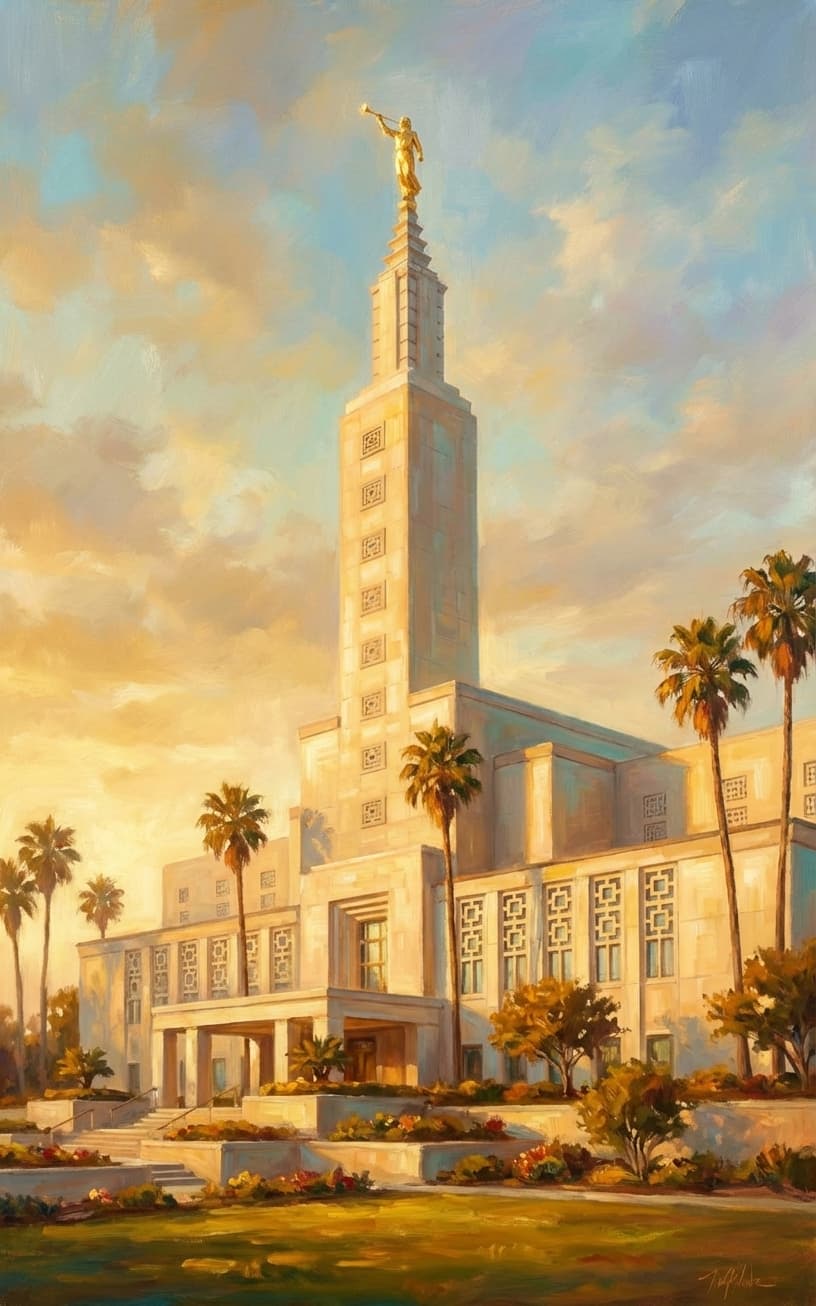
Visitors to the Los Angeles California Temple are welcome to explore the beautifully landscaped grounds and the Visitors' Center, which offers insights into the temple's significance and the beliefs of The Church of Jesus Christ of Latter-day Saints. The atmosphere is one of reverence and peace, providing a respite from the city's hustle and bustle. Guests can expect to see meticulously maintained gardens, fountains, and family-themed statues, creating a serene environment for reflection.
Highlights
- Explore the serene gardens and grounds.
- Visit the Visitors' Center to learn about the temple's purpose.
- Admire the unique Mayan-inspired architecture.
Things to Know
- The temple itself is only open to members of The Church of Jesus Christ of Latter-day Saints.
- Dress modestly when visiting the grounds.
- Photography inside the Visitors' Center may be restricted.
Location
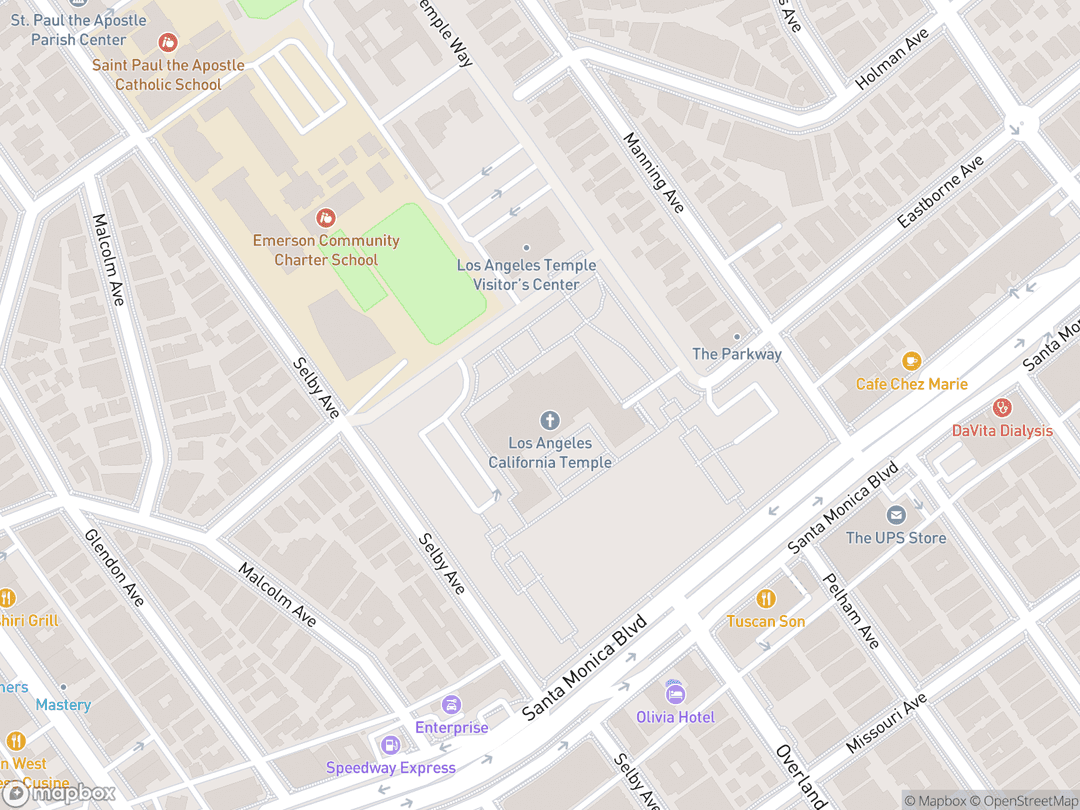
10777 W. Santa Monica Boulevard, Los Angeles, CA 90025, USA
Hours: Visitors' Center: Monday-Saturday 9:00 a.m. to 9:00 p.m., Sunday 11:00 a.m. to 9:00 p.m.
Getting There: Located at 10777 W. Santa Monica Boulevard in Los Angeles. Parking is available on-site.
Get DirectionsTips for Your Visit
Plan Your Visit
Check the Visitors' Center hours before you go to ensure it is open.
About
According to The Church of Jesus Christ of Latter-day Saints, the Los Angeles California Temple, dedicated on March 11, 1956, serves as a prominent landmark in the Westwood district. Designed by architect Edward O. Anderson with a distinctive Mayan-inspired exterior, it stands as a testament to the enduring faith and commitment of the Latter-day Saint community in Southern California.
As part of the Abrahamic tradition, the temple emphasizes covenants and sacred ordinances that connect believers to God. The temple's purpose is to provide a place where individuals can draw closer to God through participation in sacred ceremonies that unite families for eternity. These ordinances are central to the Latter-day Saint faith and provide a pathway for spiritual growth and eternal progression.
The temple's location on a prominent hill offers a sense of peace and reverence amidst the bustling city. The meticulously maintained grounds, adorned with gardens and fountains, provide a tranquil setting for reflection and spiritual renewal. The Los Angeles California Temple stands as a symbol of hope and a reminder of the eternal nature of God's love for all His children.
Gallery
Symbolic Elements
The temple's exterior features intricate carvings, each rich with spiritual meaning:

Angel Moroni Statue
The 15½-foot statue of the angel Moroni stands atop the temple, symbolizing the restoration of the gospel of Jesus Christ. Moroni was an ancient prophet from the Book of Mormon who revealed the location of the golden plates to Joseph Smith. The statue faces east, signifying the anticipation of Christ's return.

Mayan-Inspired Architecture
The temple's architecture is patterned after Mayan designs, reflecting a unique blend of ancient and modern influences. This design choice symbolizes the connection between ancient civilizations and the restored gospel, emphasizing the universality of God's plan for His children. The geometric patterns and stepped facade evoke a sense of timelessness and spiritual ascent.

Mo-Sai Stone
The exterior of the temple is covered with 146,000 square feet of Mo-Sai stone facing, a mixture of crushed quartz and white Portland cement quarried in Utah and Nevada. This durable and aesthetically pleasing material symbolizes the strength and enduring nature of the temple and the covenants made within its walls. The white color represents purity and holiness.

Celestial Room
The Celestial Room represents the highest degree of glory in the afterlife, symbolizing peace and communion with God. This room is designed to evoke a sense of reverence and spiritual connection, inviting patrons to reflect on their eternal potential and the blessings of the temple. The serene atmosphere promotes contemplation and personal revelation.

Progressive-Style Ordinance Rooms
The temple features progressive-style ordinance rooms with hand-painted murals depicting the Creation, the Garden of Eden, the world, and the Terrestrial room, ultimately leading to the Celestial Room. These murals symbolize humanity's journey toward eternal life and exaltation, key tenets of Latter-day Saint theology. The progressive design emphasizes the step-by-step nature of spiritual growth.

Baptistry
The baptistry is a sacred space where baptisms for the dead are performed, symbolizing the opportunity for all of God's children to receive the blessings of the gospel. This ordinance reflects the belief in the eternal nature of families and the importance of extending salvation to those who have passed on. The font is often adorned with symbolic imagery related to water and purification.

Gardens and Grounds
The meticulously maintained gardens and grounds surrounding the temple provide a tranquil setting for reflection and spiritual renewal. The gardens feature a variety of plants, flowers, and fountains, symbolizing the beauty and abundance of God's creations. The peaceful atmosphere invites visitors to contemplate the divine and find solace in nature.

Sealing Rooms
The sealing rooms are where marriages are performed, uniting families for eternity. These sacred spaces symbolize the eternal nature of love and commitment, reflecting the belief that families can be together forever through the power of the priesthood. The rooms are designed to create a sense of intimacy and reverence, emphasizing the importance of eternal relationships.
Interesting Facts
The Los Angeles California Temple was the first temple built in California.
At the time of its construction, it was the largest temple of the Church.
It was the first temple to include a priesthood assembly room and angel Moroni statue following the Salt Lake Temple.
The presentation of the endowment was originally delivered by live acting in the Los Angeles California Temple. It was the last temple designed for live acting.
The Los Angeles California Temple was the first temple explicitly designed for automobile accessibility.
During the open house in 1956, 682,361 people visited the temple.
Members in the temple district donated $1.6 million to build the temple.
The spire is 257 feet high, making it taller than the Salt Lake Temple's tallest spire.
The angel Moroni statue was sculpted with Native American features and wears a Mayan-style cloak.
The temple sits on a hill, the highest point between Los Angeles and the Pacific Ocean, and can be seen from Catalina Island and ships 25 miles out at sea.
Common Questions
What is the purpose of the Los Angeles California Temple?
The Los Angeles California Temple serves as a sacred space for members of The Church of Jesus Christ of Latter-day Saints to participate in religious ordinances, strengthen their connection with God, and unite families for eternity. It is a place of peace, reflection, and spiritual growth.
Can anyone visit the Los Angeles California Temple?
The temple itself is open only to members of The Church of Jesus Christ of Latter-day Saints who are in good standing. However, the grounds and Visitors' Center are open to the public, providing an opportunity for anyone to learn more about the temple and the Church.
What is the significance of the angel Moroni statue on top of the temple?
The angel Moroni statue symbolizes the restoration of the gospel of Jesus Christ. Moroni was an ancient prophet from the Book of Mormon who revealed the location of the golden plates to Joseph Smith. The statue represents the spreading of the gospel message to the world.
What are the architectural features of the Los Angeles California Temple?
The Los Angeles California Temple's architecture was patterned after Mayan architecture by Edward O. Anderson. The exterior is covered with Mo-Sai stone, and the interior includes a baptistry, celestial room, ordinance rooms with murals, and sealing rooms. The temple is designed to withstand earthquakes.
When was the Los Angeles California Temple dedicated?
The Los Angeles California Temple was dedicated from March 11-14, 1956, by David O. McKay. At the time of its dedication, it was the largest temple of the Church.
Featured Stories
Dedication of the Los Angeles California Temple
March 11, 1956
The dedication of the Los Angeles California Temple was a momentous occasion for members of The Church of Jesus Christ of Latter-day Saints in Southern California. Presided over by David O. McKay, the dedication services spanned four days, reflecting the deep spiritual significance of the event. The temple, at the time the largest of the Church, became a beacon of faith and a symbol of the growing Latter-day Saint community in the region.
The dedication ceremonies were filled with prayers, hymns, and sermons, all focused on the sacred purpose of the temple. Attendees felt a profound sense of reverence and gratitude for the blessings of the temple, which would provide a place for sacred ordinances and covenants. The dedication marked a new chapter in the history of the Church in California, solidifying its presence and influence in the area.
Source: The Church News, March 1956
The Open House: Welcoming the Community
December 19, 1955 – February 18, 1956
Prior to its dedication, the Los Angeles California Temple opened its doors to the public for an extensive open house. This event provided an opportunity for people of all faiths to tour the temple and learn about its purpose and significance. The response was overwhelming, with 682,361 visitors passing through the temple's doors during the two-month period.
The open house was a remarkable success, fostering goodwill and understanding between the Latter-day Saint community and the broader public. Visitors were impressed by the temple's beautiful architecture, serene atmosphere, and the warm hospitality of the volunteers who guided the tours. The event helped to dispel misconceptions about the Church and build bridges of friendship and respect.
Source: Church History Archives
Renovations and Seismic Upgrades: Preserving a Sacred Landmark
2005-2006
In the mid-2000s, the Los Angeles California Temple underwent significant renovations to ensure its structural integrity and enhance its facilities. A major focus of the project was a seismic overhaul, designed to protect the temple from earthquakes, a common occurrence in Southern California. The renovations also included updates to the baptistry and other areas of the temple.
The renovations were completed in 2006, and the temple was rededicated, reaffirming its role as a sacred landmark in the community. The project demonstrated the Church's commitment to preserving its temples for future generations, ensuring that they remain places of spiritual strength and refuge. The rededication was a joyous occasion, celebrated by Latter-day Saints throughout the region.
Source: The Church News, July 2006
Timeline
Local Church Leaders Desire a Temple
Local Church leaders express a desire for a temple in the Los Angeles area to serve the growing membership.
MilestoneTemple Announced
Church President Heber J. Grant announces the construction of a temple in Los Angeles.
MilestoneLand Purchased
The Church purchases 24.23 acres from the Harold Lloyd Motion Picture Company for the temple site.
MilestonePublic Announcement of Construction
A public announcement is made regarding the construction of the Los Angeles California Temple.
MilestoneGroundbreaking Ceremony
The groundbreaking ceremony is held, presided over by David O. McKay.
component.timeline.groundbreakingPlans Revised
Plans are revised to include a priesthood assembly room and accommodate 300 patrons per session.
RenovationConstruction Begins
Construction begins in earnest on the Los Angeles California Temple.
component.timeline.constructionAngel Moroni Statue Placed
A 15½-foot statue of the angel Moroni, sculpted by Millard F. Malin, is placed atop the temple.
MilestonePublic Open House
A public open house is held, attracting 682,361 visitors to tour the temple.
EventTemple Dedicated
The Los Angeles California Temple is dedicated by David O. McKay.
DedicationTemple Refurbished
The temple is refurbished for 10 weeks, enhancing its facilities and appearance.
Renovation25th Anniversary Celebration
Patrons celebrate the temple's 25th anniversary with 36 continuous hours of temple service.
EventEndowment Presentation Updated
The temple reverts to a progressive-style presentation of the endowment and completely renovates the Terrestrial room.
RenovationTemple Closed for Renovations
The temple is closed for renovations, including a seismic overhaul and redesign of the baptistry.
RenovationTemple Reopened
The temple reopens after renovations and celebrates its 50th anniversary.
DedicationVisitors' Center Renovated
The Visitors' Center is renovated to enhance the visitor experience.
RenovationFire Damages Adjacent Building
A fire damages an adjacent building under construction that was to house the mission president.
EventHistory by Decade
1920s — Early Aspirations
In the 1920s, local Church leaders in Southern California began to express a desire for a temple in the Los Angeles area. The growing membership in the region recognized the need for a dedicated space where they could participate in sacred ordinances and strengthen their connection with God. These early aspirations laid the foundation for the eventual construction of the Los Angeles California Temple.
1930s — Announcement and Land Acquisition
On March 6, 1937, Church President Heber J. Grant announced the construction of a temple in Los Angeles. This announcement was met with great excitement and anticipation by Latter-day Saints in the region. The Church subsequently purchased 24.23 acres from the Harold Lloyd Motion Picture Company, providing a suitable site for the temple.
1940s — World War II Delay
The onset of World War II in the 1940s brought significant challenges and delays to the temple project. Resources were diverted to the war effort, and construction plans were put on hold. Despite these setbacks, the faith and determination of the Latter-day Saint community remained strong, and they looked forward to the time when the temple could be built.
1950s — Construction and Dedication
In the early 1950s, construction began in earnest on the Los Angeles California Temple. The groundbreaking ceremony was held on September 22, 1951, presided over by David O. McKay. The temple was designed with unique Mayan-inspired architecture, reflecting a blend of ancient and modern influences. The temple was dedicated from March 11-14, 1956, by David O. McKay, marking a significant milestone in the history of the Church in California.
1960s–1970s — Growth and Service
Following its dedication, the Los Angeles California Temple became a center of spiritual activity and service for Latter-day Saints in the region. The temple provided a place for sacred ordinances, including baptisms for the dead, endowments, and sealings, strengthening families and connecting them to God. The temple also served as a gathering place for members to worship and learn together.
1980s — Refurbishment and Anniversary
In 1981, the Los Angeles California Temple was refurbished for 10 weeks, enhancing its facilities and appearance. Patrons celebrated the temple's 25th anniversary with 36 continuous hours of temple service, demonstrating their deep appreciation for the blessings of the temple. The refurbishment ensured that the temple would continue to serve as a sacred space for future generations.
1990s–2000s — Renovations and Updates
In the late 1990s and early 2000s, the Los Angeles California Temple underwent further renovations and updates to improve its functionality and accessibility. In 2003, the temple reverted to a progressive-style presentation of the endowment and completely renovated the Terrestrial room. In 2005, the temple closed for renovations, including a seismic overhaul and redesign of the baptistry.
2010s–Present — Continued Service
In the 2010s and beyond, the Los Angeles California Temple has continued to serve as a vital center of faith and service for Latter-day Saints in Southern California. The temple has hosted countless visitors and provided a place for sacred ordinances, strengthening families and connecting them to God. The temple stands as a testament to the enduring faith and commitment of the Latter-day Saint community in the region.
Architecture & Facilities
The Los Angeles California Temple showcases a unique architectural style inspired by Mayan designs, blending ancient and modern elements to create a distinctive and recognizable structure. The temple's exterior is characterized by geometric patterns, stepped facades, and a towering central spire, reflecting a sense of timelessness and spiritual ascent. The use of Mo-Sai stone facing adds to the temple's grandeur and durability.
Building Materials
Mo-Sai Stone
The exterior of the temple is covered with 146,000 square feet of Mo-Sai stone facing, a mixture of crushed quartz and white Portland cement quarried in Utah and Nevada. This durable and aesthetically pleasing material symbolizes the strength and enduring nature of the temple.
Reinforced Concrete
The temple was constructed with reinforced concrete, providing a solid and stable foundation. This material was chosen for its ability to withstand earthquakes, ensuring the safety and longevity of the temple. The reinforced concrete is engineered to meet the highest standards of structural integrity.
Structural Steel
Structural steel was used in the construction of the temple to provide additional support and stability. The steel framework is designed to withstand the forces of nature, including earthquakes and high winds. The use of structural steel ensures the long-term durability of the temple.
Murals
The ordinance rooms feature hand-painted murals depicting the Creation, the Garden of Eden, the world, and the Terrestrial room. These murals symbolize humanity's journey toward eternal life and exaltation, key tenets of Latter-day Saint theology. The murals add to the beauty and spiritual significance of the temple.
Interior Features
Celestial Room
The Celestial Room represents the highest degree of glory in the afterlife, symbolizing peace and communion with God. This room is designed to evoke a sense of reverence and spiritual connection, inviting patrons to reflect on their eternal potential and the blessings of the temple. The serene atmosphere promotes contemplation and personal revelation.
Baptistry
The baptistry is a sacred space where baptisms for the dead are performed, symbolizing the opportunity for all of God's children to receive the blessings of the gospel. This ordinance reflects the belief in the eternal nature of families and the importance of extending salvation to those who have passed on. The font is often adorned with symbolic imagery related to water and purification.
Sealing Rooms
The sealing rooms are where marriages are performed, uniting families for eternity. These sacred spaces symbolize the eternal nature of love and commitment, reflecting the belief that families can be together forever through the power of the priesthood. The rooms are designed to create a sense of intimacy and reverence, emphasizing the importance of eternal relationships.
Ordinance Rooms
The ordinance rooms are where members of the Church participate in sacred ordinances, including the endowment. These rooms are designed to create a reverent and spiritual atmosphere, inviting patrons to draw closer to God and learn about His plan for their eternal progression. The murals and other decorative elements add to the beauty and significance of these spaces.
Temple Grounds
The Los Angeles California Temple is surrounded by meticulously maintained grounds, featuring gardens, fountains, and family-themed statues. The grounds provide a tranquil setting for reflection and spiritual renewal, inviting visitors to contemplate the divine and find solace in nature. The gardens are carefully designed to create a sense of peace and beauty.
Additional Facilities
The Los Angeles California Temple includes a Visitors' Center, which is open to the public and offers information about the Church and the temple. The Visitors' Center provides an opportunity for anyone to learn more about the temple's purpose and significance. The center features exhibits, displays, and interactive presentations.
Religious Significance
The Los Angeles California Temple holds deep religious significance for members of The Church of Jesus Christ of Latter-day Saints, as it serves as a sacred space where they can draw closer to God and participate in ordinances that unite families for eternity. As part of the Abrahamic tradition, the temple emphasizes covenants and sacred ceremonies that connect believers to God.
The primary purpose of the Los Angeles California Temple is to provide a place where members of the Church can participate in sacred ordinances, including baptisms for the dead, endowments, and sealings. These ordinances are essential for eternal progression and provide a pathway for individuals to return to God's presence.
Sacred Ordinances
Baptism for the Dead
Baptism for the dead is a sacred ordinance performed in temples, allowing individuals to be baptized on behalf of deceased ancestors who did not have the opportunity to be baptized during their lifetime. This ordinance reflects the belief in the eternal nature of families and the importance of extending salvation to all of God's children.
Endowment
The endowment is a sacred ordinance in which members of the Church receive instruction, make covenants with God, and are blessed with power from on high. This ordinance prepares individuals to return to God's presence and receive eternal life. The endowment is a central part of temple worship.
Sealing
Sealing is a sacred ordinance in which couples and families are united for eternity. This ordinance reflects the belief that families can be together forever through the power of the priesthood. Sealing ceremonies are performed in temples and are considered to be among the most sacred ordinances of the Church.
The Abrahamic Tradition
The Los Angeles California Temple, as a temple of The Church of Jesus Christ of Latter-day Saints, stands within the broader Abrahamic tradition, which emphasizes covenants, sacred spaces, and the pursuit of spiritual growth. The temple's ordinances and teachings reflect core beliefs shared by Judaism, Christianity, and Islam, including the importance of faith, prayer, and service to others.
Similar Temples
Sources & Research
Every fact on Temples.org is backed by verified Sources & Research. Each piece of information is rated by source tier and confidence level.
View All Sources (7)
| Field | Source | Tier | Retrieved |
|---|---|---|---|
| About & Historical Background | The Church of Jesus Christ of Latter-day Saints (opens in a new tab) | A | 2024-01-02 |
| About & Historical Background | ChurchofJesusChristTemples.org (opens in a new tab) | C | 2024-01-02 |
| Historical Timeline | The Church of Jesus Christ of Latter-day Saints Newsroom (opens in a new tab) | A | 2024-01-02 |
| Interesting Facts | The Church News (opens in a new tab) | B | 2024-01-02 |
| Historical Timeline | Calisphere (opens in a new tab) | B | 2024-01-02 |
| Historical Timeline | Church History Department, The Church of Jesus Christ of Latter-day Saints (opens in a new tab) | A | 2024-01-02 |
| Architectural Description | fheontheroad.com (opens in a new tab) | C | 2024-01-02 |