Visitor Insights
Visiting Mission San José
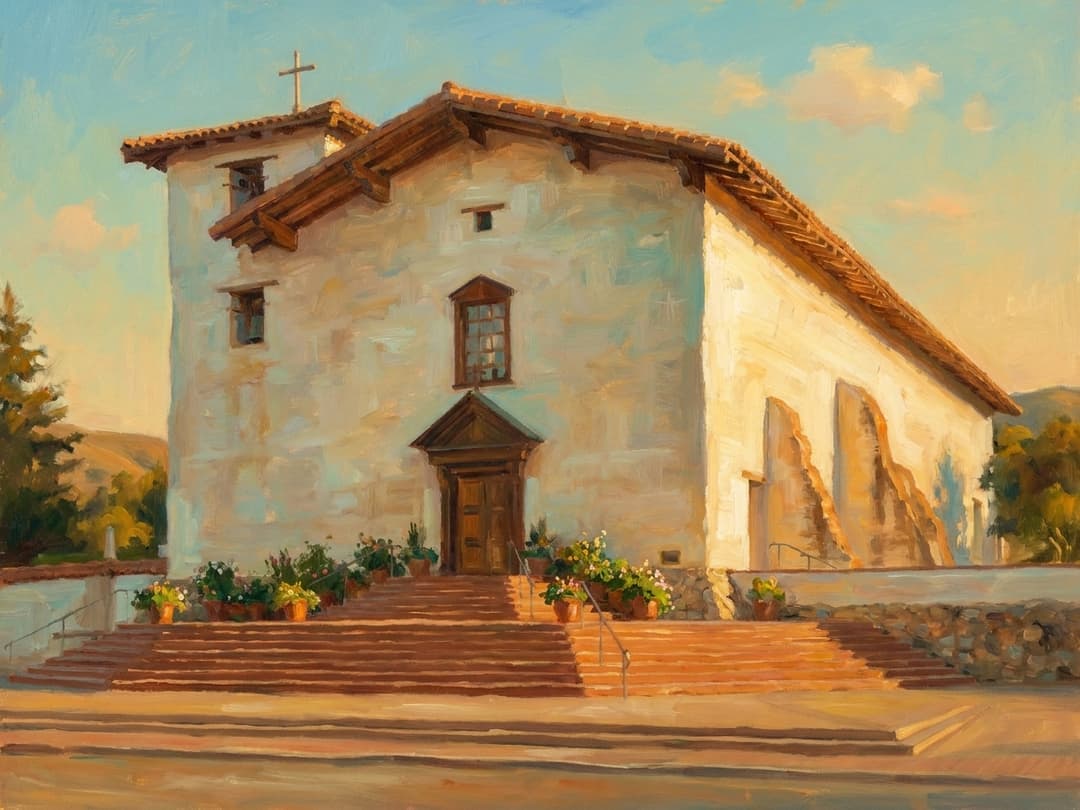
Visitors to Mission San José experience an authentic slice of 19th-century Spanish colonial California. The quiet chapel, restored museum wing, and peaceful courtyard gardens offer an immersive spiritual and historical encounter.
Highlights
- Authentic 1980s adobe church reconstruction matching 1809 dimensions
- Historic 1809 Convento wing with original floor tiles and artifacts
- Custom-built Rosales Opus 14 Spanish-style mechanical pipe organ
- Peaceful courtyard garden with historic roses and fountain
Things to Know
- Active Catholic parish chapel with scheduled daily Mass services
- Admission ticket required for self-guided museum and chapel access
- Docent-led tours available on select weekends by reservation
Location
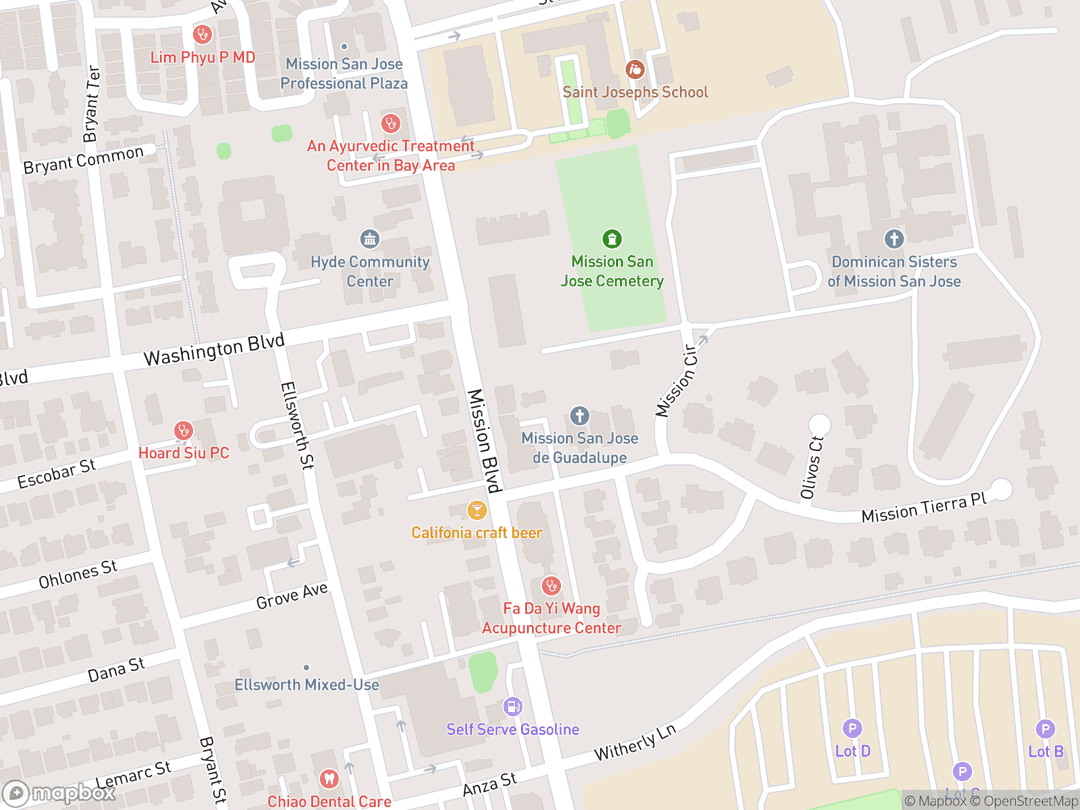
43300 Mission Boulevard, Fremont, California 94539, United States
Hours: Museum & Shop open Wednesday to Friday 10:00 AM - 3:00 PM, Saturday & Sunday 10:00 AM - 4:30 PM.
Getting There: Located at 43300 Mission Blvd in Fremont, CA, easily accessible via I-680 Exit 16 or AC Transit from Fremont BART.
Get DirectionsTips for Your Visit
Plan Around Mass Services
Check the parish liturgy schedule if you wish to attend Mass or ensure open museum quiet hours during your visit.
Explore the Convento Museum
Allow at least 45 minutes to browse the museum exhibits showcasing indigenous Ohlone history, mission music, and artifacts.
Visit in the Spring
Springtime brings pleasant weather and full blooms to the mission garden and courtyard rose display.
About
Founded in 1797 within the sacred ancestral lands of the Chocheño Ohlone people, Mission San José stands as a major historic sanctuary of the Roman Catholic tradition in Northern California. Within the broader context of Abrahamic sacred architecture, the mission represents a consecrated sanctuary—a dedicated space designed for communal worship, sacramental life, and encountering the Divine through liturgical prayer and physical sanctuary.
As the fourteenth mission established by Franciscan friars in Alta California, the site evolved into a thriving spiritual and agricultural center. Its history encompasses complex encounters between European Franciscan missionaries and indigenous populations, catastrophic seismic destruction in the 1868 Hayward Fault earthquake, and a monumental community restoration in the 1980s.
Today, Mission San José functions simultaneously as an active Catholic parish chapel under the Diocese of Oakland, a museum documenting California's complex frontier history, and an enduring symbol of spiritual resilience and cultural heritage.
Gallery
Symbolic Elements
The temple's exterior features intricate carvings, each rich with spiritual meaning:

Mission Cross
Prominently positioned outside the entrance, the wooden cross represents Christ's redemption and Franciscan evangelical mission.
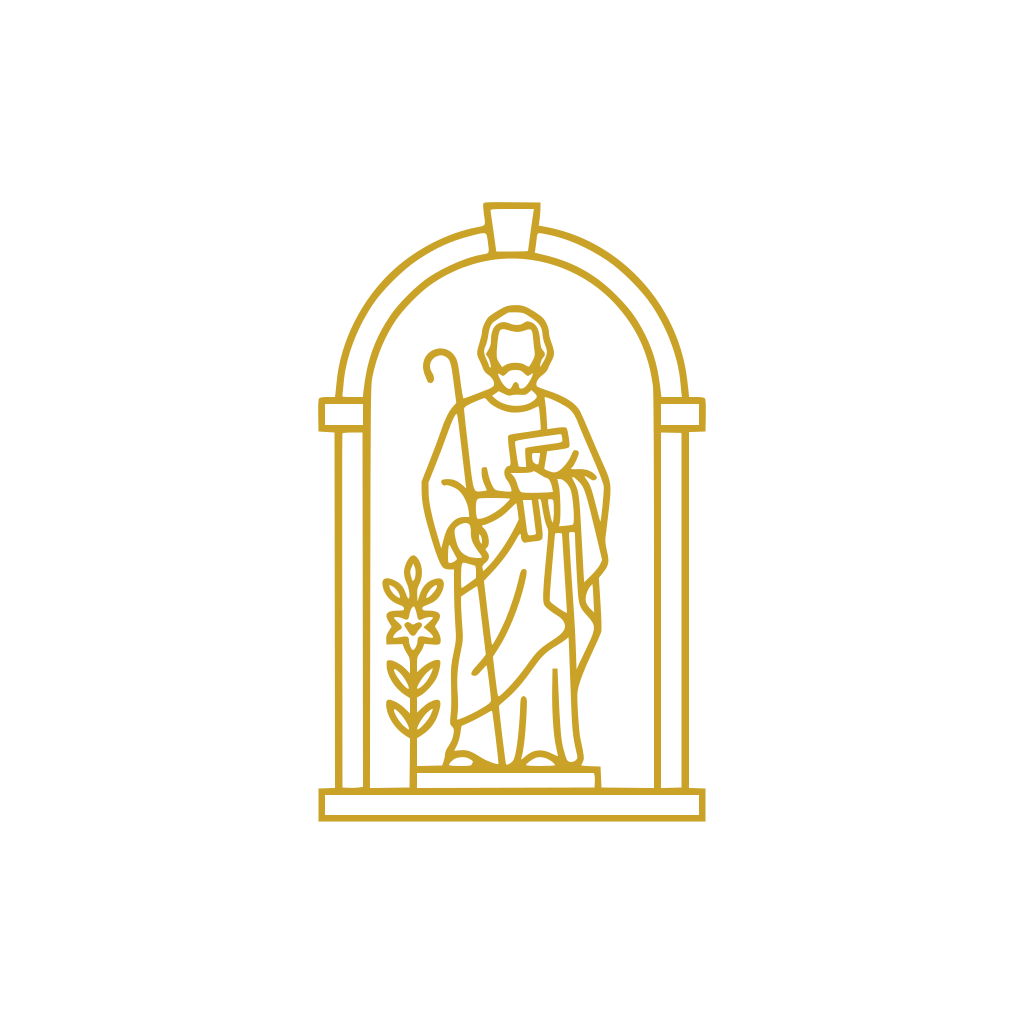
Patron Saint Joseph Statue
Occupying the central niche of the altar screen, St. Joseph signifies divine guardianship, labor, and protection.

Mission Bell Wall
The bronze bells mounted in the campanario serve as the auditory voice calling the community to liturgical prayer.

Hand-Painted Reredos
The vibrant wooden altar screen uses historic pigments and gold leaf to elevate mind and heart toward heavenly glory.

Color-Coded Music Staves
Innovative colored musical notes invented by Father Durán enabled indigenous choristers to read sacred choral parts.

Adobe Structural Buttresses
Massive external mud-brick buttresses provide essential seismic support against outward roof forces.

Courtyard Fountain
The central stone basin symbolizes baptismal purification, spiritual rebirth, and life-giving waters.

Horizontal Trumpet Organ Pipes
Projecting horizontal reed pipes on the Rosales organ reflect traditional 18th-century Spanish organ design.
Interesting Facts
Mission San José twice served as the administrative headquarters for all Alta California missions under Father Narciso Durán. (Tier A)
Father Durán created a famed 30-piece Native American orchestra using color-coded music notation to teach complex polyphony. (Tier A)
Former mission chorister Estanislao led a major 1828 indigenous uprising, inspiring the naming of Stanislaus County. (Tier B)
During the 1848 Gold Rush, mission rooms were converted into a commercial saloon, general store, and hotel for miners. (Tier B)
The wooden 1869 Gothic church built over the ruins was sold for just one dollar in 1982 and moved across the Bay. (Tier B)
Mission San José recorded 6,673 Native American baptisms, the highest total of any northern California mission. (Tier A)
The 1980s church reconstruction required 80,000 authentic hand-pressed mud-adobe bricks made from local soils. (Tier A)
The choir loft houses a 1989 Rosales organ specially built with horizontal trumpets to mimic 18th-century Spanish acoustics. (Tier B)
In 1965, the Catholic Diocese deeded a 2.5-acre ancestral burial ground back to the Ohlone people. (Tier A)
Common Questions
Is Mission San José an active Catholic church?
Yes, it functions as an active parish chapel under the Roman Catholic Diocese of Oakland while also operating a museum.
Why is Mission San José in Fremont rather than San Jose?
The mission was founded in 1797 in the Mission San Jose district, which later incorporated into the unified City of Fremont in 1956.
What happened to the original 1809 adobe church?
The original adobe church was destroyed by a major earthquake along the Hayward Fault on October 21, 1868.
How was the mission church rebuilt in the 1980s?
Architects and craftsmen used approximately 80,000 authentic hand-pressed mud-adobe bricks to accurately rebuild the 1809 church.
Are docent tours available for visitors?
Yes, docent-led public tours are offered on the second weekend of each month by advance reservation.
Featured Stories
Father Durán's Indigenous Orchestra
1815
In 1815, Franciscan friar Narciso Durán established a remarkable 30-piece orchestra and choir composed entirely of Ohlone and Yokuts musicians at Mission San José. To overcome language barriers, Father Durán invented a simplified system using color-coded four-line staves that enabled indigenous choristers to master complex European polyphony. Visitors from around the world traveled to the East Bay to hear this unique ensemble perform classical liturgical music during Sunday High Mass.
Source: Old Mission San Jose Historical Archives
The Uprising of Estanislao
1828
Estanislao, a mission-educated Yokuts leader and former choir member, fled Mission San José in 1828 to mount an armed indigenous resistance against Mexican military oppression. Utilizing military tactics learned during his time at the mission, he successfully fortified river encampments in the San Joaquin Valley and repelled early military raids. His fierce leadership made him a legendary figure, eventually inspiring the naming of Stanislaus County and the Stanislaus River in his honor.
Source: California Historical Society Records
The Earthquake and Great Reconstruction
1868–1985
When a magnitude 7.0 earthquake along the Hayward Fault flattened the original 1809 adobe church on October 21, 1868, local Catholics rebuilt a modest wooden parish church over the ruins. Over a century later in 1982, community leaders dismantled the wooden structure and embarked on a meticulous $5 million reconstruction of the historic adobe church. Utilizing 80,000 hand-formed mud-adobe bricks, master artisans re-dedicated the authentic Spanish colonial sanctuary on June 11, 1985.
Source: Diocese of Oakland Preservation Records
Timeline
Mission Foundation
Father Fermín Francisco de Lasuén blesses the cross and celebrates the founding Mass for Alta California's fourteenth mission.
component.timeline.groundbreakingAdobe Church Dedication
The original single-story adobe church and attached Convento wing are formally completed and dedicated.
DedicationIndigenous Orchestra Formed
Father Narciso Durán organizes a renowned 30-piece Ohlone and Yokuts choir and orchestra trained in European polyphony.
MilestoneSystem Administrative Headquarters
Mission San José becomes the official administrative center for all Alta California missions under Father Durán.
MilestoneEstanislao Uprising
Former mission chorister Estanislao leads a major indigenous revolt in the San Joaquin Valley against Mexican forces.
EventSecularization Decree
The Mexican Secularization Act strips Franciscan friars of mission lands, scattering the population and initiating property decay.
EventGold Rush Commercial Transformation
Mission buildings are rented to commercial operators and adapted as a store, saloon, and hotel for gold prospectors.
EventChurch Property Returned
U.S. President James Buchanan signs a proclamation returning the church and immediate grounds to the Catholic Church.
MilestoneHayward Fault Earthquake
A violent earthquake destroys the 1809 adobe church structure, leaving only the long adobe Convento wing standing.
EventGothic Parish Church Erected
A wooden Carpenter Gothic church is constructed atop the original adobe foundation to serve local parishioners.
RenovationOhlone Burial Ground Returned
The Roman Catholic Diocese of Oakland deeds an ancestral burial site back to the Ohlone tribe.
MilestoneReconstructed Adobe Church Dedication
A fully reconstructed adobe church is dedicated on the exact 188th anniversary of the mission's founding.
DedicationHistory by Decade
1790s–1800s — Franciscan Foundation & Adobe Construction
Father Fermín Francisco de Lasuén founded Mission San José on June 11, 1797, selecting an Ohlone settlement area known as Oroysom. Construction of the permanent single-story adobe church commenced shortly after, utilizing approximately 80,000 hand-pressed mud bricks crafted by indigenous labor. The original adobe sanctuary and adjoining Convento wing were formally dedicated on April 22, 1809.
1810s–1820s — Agricultural Powerhouse & Musical Flourishing
Under Father Narciso Durán, Mission San José grew into the most productive agricultural enterprise in Northern California, managing vast herds and wheat crops. Father Durán established a famed 30-piece indigenous choir and orchestra that mastered European polyphony using color-coded music notation. During this period, the mission also served as the administrative headquarters for all Alta California missions.
1830s–1850s — Secularization, Gold Rush Commercialization & Return
The Mexican Secularization Act of 1833 stripped Franciscan friars of mission governance, resulting in land privatization and building neglect. During the 1849 Gold Rush, secularized mission wings were leased out and repurposed into a commercial hotel, store, and saloon for prospectors. U.S. President James Buchanan formally restored the church property to the Catholic Church on March 3, 1858.
1860s–1910s — Hayward Fault Earthquake & Wooden Gothic Church
On October 21, 1868, a catastrophic earthquake along the Hayward Fault collapsed the 1809 adobe church, leaving only the Convento wing intact. In 1869, the parish erected a wooden Carpenter Gothic church directly over the ruined adobe foundation. Early preservation groups stabilized the surviving Convento in 1915, converting it into a local historical museum.
1920s–1970s — Museum Preservation & Native Heritage Recognition
Throughout the mid-20th century, community organizations worked to safeguard remaining mission structures as Fremont incorporated around the historic district. In 1965, the Roman Catholic Diocese of Oakland returned an ancestral 2.5-acre burial ground to the Ohlone tribe. Mission San José was officially listed on the National Register of Historic Places in July 1971.
1980s–Present — Adobe Reconstruction & Contemporary Stewardship
In 1982, the 1869 wooden church was relocated to San Mateo to allow for the faithful reconstruction of the 1809 adobe sanctuary. Built using traditional adobe brick techniques and hand-carved finishes, the reconstructed church was consecrated on June 11, 1985. Today, it remains an active parish chapel, historic monument, and sacred musical sanctuary.
Architecture & Facilities
Mission San José exemplifies Alta California Spanish Colonial Mission architecture, featuring heavy load-bearing adobe walls, lime plaster, single-story low profiles, and red clay tile roofs adapted for frontier conditions and seismic stability.
Building Materials
Adobe Mud Bricks
Structural walls built from 80,000 hand-molded bricks made of local clay, sand, straw, and water.
Redwood Timber Framing
Massive roof joists and trusses hand-hewn from local redwood timber lashed with rawhide.
Terracotta Roof Tiles
Curved red clay tiles fired in earthen kilns providing heavy weatherproofing and fire resistance.
Lime Wash Plaster
Thick lime plaster coatings protect exterior mud walls and provide the signature white reflective finish.
Interior Features
Main Sanctuary Nave
A rectangular central aisle with timber ceiling joists designed for acoustic clarity and liturgical gathering.
Reconstructed Reredos
An ornate wooden altar screen hand-painted in historic pigments housing statues of Franciscan saints.
Elevated Choir Loft
An upper gallery above the main entrance designed for choral resonance and musical acoustics.
Rosales Organ Chamber
A mechanical organ gallery featuring horizontal trumpet pipes crafted in traditional 18th-century Spanish style.
Temple Grounds
The mission grounds encompass a lush central courtyard, a restored historic rose garden with citrus trees, a central stone fountain, and an adjacent historic cemetery housing early settlers and native converts.
Additional Facilities
The site includes the original 1809 Convento museum wing, a visitor gift shop, parish administrative offices, and accessible parking facilities.
Religious Significance
In the shared tradition of Abrahamic faiths, physical sanctuaries represent consecrated spaces dedicated to encountering the Divine and coming together in communal worship. Within Christian theology, a church edifice serves as the 'House of God' and a visible manifestation of the Mystical Body of Christ. Within Roman Catholicism, Mission San José fulfills this sacred role through daily Eucharistic celebration, the sacraments, and Franciscan devotional veneration.
To serve as a consecrated space for Eucharistic worship, sacramental administration, spiritual formation, and historical remembrance.
Sacred Ordinances
Holy Mass & Eucharist
The central liturgical sacrifice of Catholic worship celebrating the real presence of Christ in holy communion.
Sacrament of Baptism
Sacramental initiation cleansing original sin and welcoming believers into the Christian faith community.
Sacrament of Reconciliation
Confessional practice seeking divine forgiveness, spiritual healing, and reconciliation with God.
Sacrament of Matrimony
Sacred marriage rites celebrating holy matrimony within the parish chapel setting.
Franciscan Missionary Heritage
Established under the Order of Friars Minor (OFM), the mission reflects Saint Francis of Assisi's devotion to humility, creation, and Gospel proclamation. The sanctuary preserves this heritage through devotional art, Franciscan saint statuary, and quiet contemplative spaces.
Liturgical Music Tradition
Sacred music has formed a cornerstone of Mission San José's spiritual life since Father Narciso Durán established its early choir. The presence of the Rosales pipe organ continues this living tradition of sacred choral and organ worship.
Sources & Research
Every fact on Temples.org is backed by verified Sources & Research. Each piece of information is rated by source tier and confidence level.
View All Sources (8)
| Field | Source | Tier | Retrieved |
|---|---|---|---|
| About & Historical Background | Old Mission San Jose Museum (opens in a new tab) | A | 2026-02-23 |
| About & Historical Background | California Office of Historic Preservation (opens in a new tab) | A | 2026-02-23 |
| Timeline & Featured Stories | National Park Service - National Register of Historic Places (opens in a new tab) | A | 2026-02-23 |
| Religious Significance & History | Roman Catholic Diocese of Oakland (opens in a new tab) | A | 2026-02-23 |
| Architecture & Structural Details | Rosales Organ Builders (opens in a new tab) | B | 2026-02-23 |
| Timeline & Preservation History | City of Fremont Historic Preservation (opens in a new tab) | A | 2026-02-23 |
| Religious Significance & Music Tradition | Franciscan Media (opens in a new tab) | B | 2026-02-23 |
| Visitor Insights & Overview | California Missions Foundation (opens in a new tab) | B | 2026-02-23 |