Visitor Insights
Visiting Fort Hall Shoshone-Bannock Sacred Lands
The Fort Hall Reservation is a sovereign nation where back-country sacred sites are reserved exclusively for tribal members. Visitors are welcome to visit public commercial areas and the tribal museum while respecting strict privacy protocols.
Highlights
- Shoshone-Bannock Tribal Museum exhibits historical beadwork and treaty documents.
- Annual Shoshone-Bannock Indian Festival and Powwow held every August.
- Pristine natural scenery along public highway corridors.
Things to Know
- Strict zero-tolerance photography and recording ban during sacred ceremonies.
- Back-country areas including Fort Hall Bottoms require official tribal permits.
- Disturbing stone rings or collecting plants violates federal and tribal laws.
Location
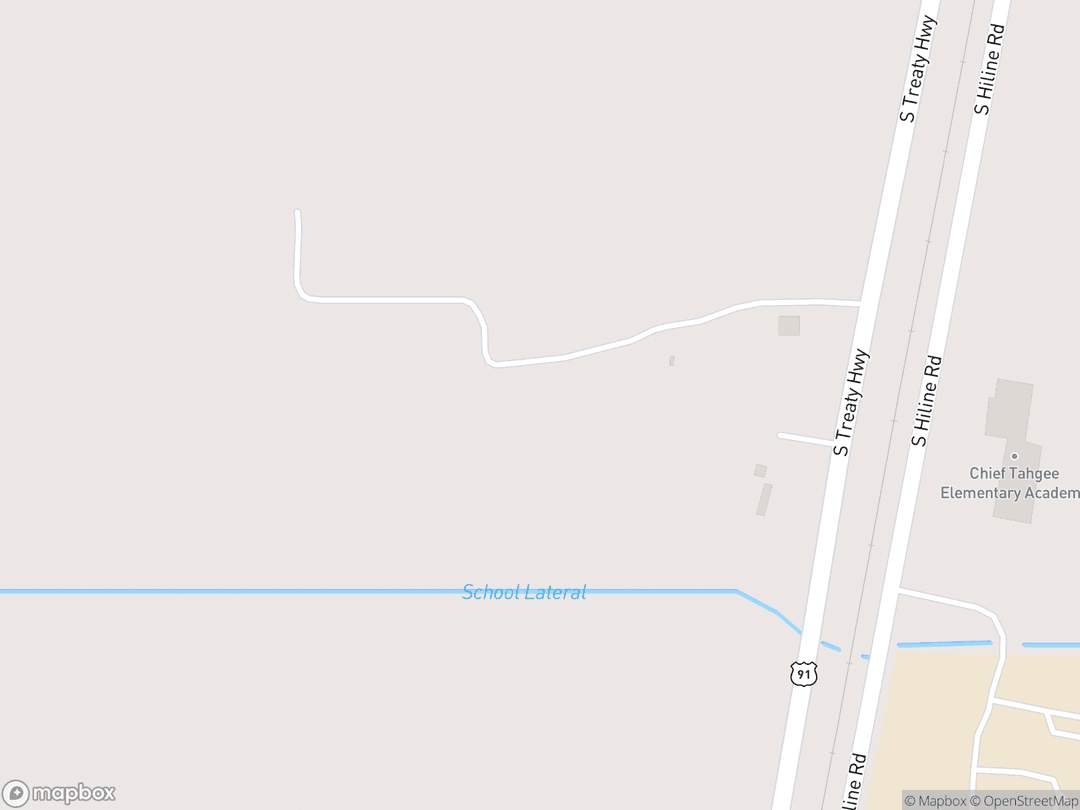
Fort Hall Indian Reservation, P.O. Box 306, Fort Hall, ID 83203
Hours: Museum open Mon-Fri 8:00 AM–5:00 PM; sacred lands restricted.
Getting There: Located along Interstate 15 and US Route 91 north of Pocatello, Idaho.
Get DirectionsTips for Your Visit
Visit the Tribal Museum
Start at the Shoshone-Bannock Tribal Museum to learn about tribal history and sacred protocols before exploring.
Respect Restricted Areas
Always obtain written permission from the Fort Hall Business Council before attempting to access back-country sites.
Attend Public Cultural Events
Experience living traditions by attending the open annual August Powwow rather than attempting to view private rites.
About
The Fort Hall Shoshone-Bannock Sacred Lands (Pohoko'ikkatee) encompass over 520,000 acres of sovereign tribal trust land in southeastern Idaho. Occupied since time immemorial, these ancestral grounds serve as a living sanctuary for the Northern Shoshone and Bannock peoples.
Spanning high desert steppe, artesian spring systems, and volcanic basalt flows, the landscape itself is revered as a sacred temple. Sacred ceremonies, including the annual Sun Dance, continue unbroken on these lands under sovereign tribal governance.
Interesting Facts
Archaeological repatriation of the 12,750-year-old Buhla ancestor proved unbroken ancient occupancy in the Snake River region. (Tier A)
The name Shoshone derives from Sosoni, meaning high-growing grass used in traditional woven thatched homes. (Tier B)
In the native Shoshoni language, the Fort Hall Reservation is named Pohoko'ikkatee, meaning At the Sagebrush Butte. (Tier A)
Bannock oral tradition describes Creator forming the earth from a speck of mud brought up from deep water by Muskrat. (Tier B)
The reservation brings together two distinct linguistic traditions: Central Numic (Shoshoni) and Western Numic (Bannock). (Tier B)
Spiritual leaders preserved the Sun Dance in secret mountain locations throughout decades of federal criminalization. (Tier A)
The ancient Great Bannock Trail spanned over 200 miles from Idaho prairies across Yellowstone to eastern bison plains. (Tier B)
Strategic land buy-back programs have successfully restored 97% of reservation acreage into sovereign tribal trust status. (Tier A)
Shoshone oral legends of a giant serpent describe active lava flows observed thousands of years ago at Craters of the Moon. (Tier B)
The Fort Bridger Treaty of 1868 guarantees off-reservation hunting and gathering rights exercised by tribal members today. (Tier A)
Common Questions
Can non-tribal members visit sacred sites on the reservation?
Back-country sacred sites and ceremonial arbors are strictly restricted to tribal members, though public museum areas and annual powwows welcome visitors.
Are photos allowed during sacred ceremonies?
Photography, video recording, and audio taping are strictly prohibited during all sacred ceremonies and at traditional cultural sites.
What is the primary annual public event at Fort Hall?
The Shoshone-Bannock Indian Festival and Powwow held every August features public cultural dances and traditional arts.
How large is the Fort Hall Reservation?
The sovereign reservation encompasses approximately 521,519 acres (815 square miles) across southeastern Idaho.
Featured Stories
Preservation of the Sun Dance
1890s–1978
When federal restrictions outlawed Indigenous religious practices in the late nineteenth century, Shoshone-Bannock spiritual leaders refused to let the Sun Dance die. They secretly conducted ceremonies in isolated mountain valleys across the reservation for decades. This unbroken devotion ensured the sacred rite survived until federal religious protection was codified in 1978.
Source: Shoshone-Bannock Tribal Cultural Archives
The Repatriation of Buhla
1997
In 1989, archaeologists discovered the 12,750-year-old remains of a young female ancestor near the Snake River. Following years of legal advocacy under NAGPRA, the Shoshone-Bannock Tribes secured her repatriation in 1997. Tribal elders reburied Buhla with sacred traditional rites, confirming ancient oral histories of time-immemorial occupancy.
Source: Language & Cultural Preservation Department
The Fort Bridger Treaty Legacy
July 3, 1868
Shoshone and Bannock chiefs negotiated the Fort Bridger Treaty to safeguard their ancestral homelands from complete loss. The treaty explicitly reserved sovereign reservation rights and off-reservation hunting and gathering privileges on unoccupied federal lands. Today, tribal leaders actively exercise these treaty rights across three states to protect natural ecosystems.
Source: Fort Bridger Treaty Historical Records
Timeline
Ancestral Stewardship Begins
Ancestors of the Northern Shoshone and Bannock tribes establish unbroken occupancy across the Snake River Plain.
MilestoneAdoption of the Horse
Tribes acquire horses, expanding seasonal bison hunting along the Great Bannock Trail.
EventEstablishment of Trading Post
Fur trader Nathaniel Wyeth builds Fort Hall along the Snake River, introducing heavy westward pioneer trade.
EventBear River Massacre
U.S. forces attack a Shoshone encampment, resulting in the deaths of over 400 tribal members.
EventExecutive Order Reservation
President Andrew Johnson issues an Executive Order setting aside land for the Fort Hall Reservation.
MilestoneFort Bridger Treaty
Tribal leaders sign the Fort Bridger Treaty, securing reservation lands and off-reservation gathering rights.
DedicationThe Bannock War
Encroachment and federal survey reductions lead to conflict and subsequent forced band relocations.
EventTribal Constitution Adopted
The Shoshone-Bannock Tribes establish the sovereign Fort Hall Business Council under the Indian Reorganization Act.
MilestoneAmerican Indian Religious Freedom Act
Federal law codifies protection for Native spiritual practices, reaffirming open Sun Dance ceremonies.
MilestoneRepatriation of Buhla
The 12,750-year-old ancestral remains of Buhla are repatriated to the Tribes and ceremonially reburied.
EventTribal Land Reclamation
Active land buy-back initiatives restore 97% of reservation acreage to sovereign tribal trust status.
RenovationHistory by Decade
Time Immemorial — Ancestral Occupancy
For over twelve millennia, Shoshone and Bannock ancestors lived in harmony with the natural spring systems and basalt fields of the Snake River Plain. Seasonal migrations followed natural plant cycles and bison herds across vast intermountain territories.
1830s–1860s — Contact and Treaty Rights
The establishment of Fort Hall in 1834 brought thousands of westward emigrants, causing severe resource depletion. The Fort Bridger Treaty of July 3, 1868, formally recognized sovereign tribal lands while guaranteeing off-reservation hunting and gathering rights.
1870s–1930s — Land Reductions and Preservation
Survey errors and municipal land takings significantly reduced reservation borders during the late nineteenth century. Despite severe federal assimilation policies, tribal spiritual leaders preserved sacred rites like the Sun Dance in remote mountain valleys.
1970s–Present — Rebirth of Sovereignty
Federal recognition of religious freedom in 1978 allowed public ceremonial life to flourish once again. Modern tribal initiatives have successfully reclaimed 97% of reservation land into sovereign trust and protected ancient sacred sites.
Architecture & Facilities
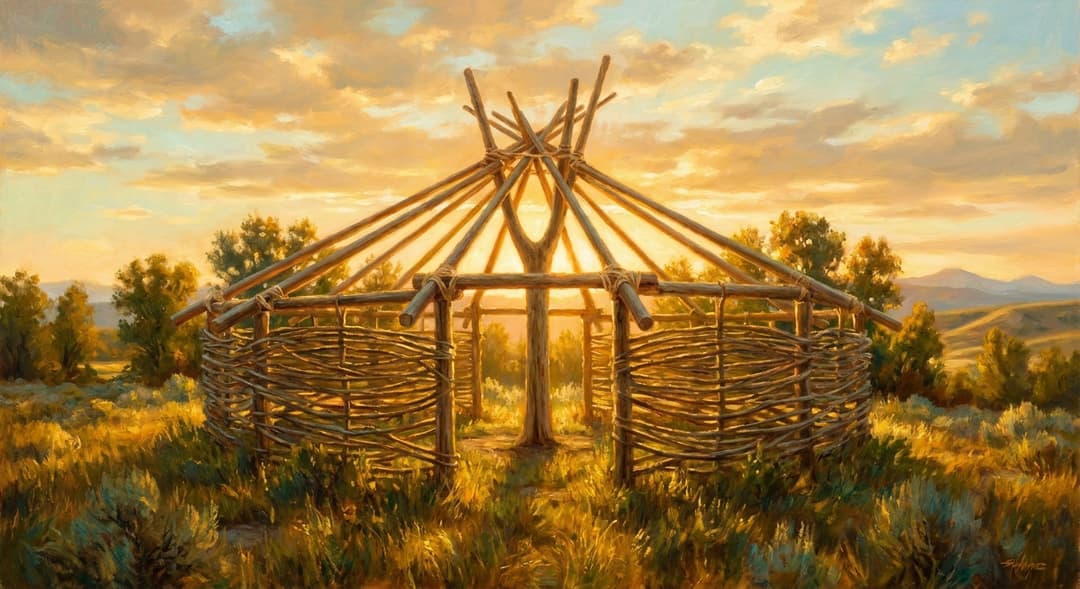
Natural sacred landscape sanctuary centered on open-air ceremonial arbors, cold artesian springs, and high-elevation prayer peaks constructed without artificial enclosures.
Building Materials
Cottonwood Tree Trunk
Harvested through sacred ritual to form the fork-topped central center pole connecting earth and sky.
Radial Pine Rafters
Twelve pine or fir poles extending from the central fork to represent annual months and tribal divisions.
Fresh Willow Boughs
Woven around the outer framework to create a shaded perimeter wall open to the sky above.
Rawhide Bindings
Traditional natural lashings used instead of metal nails to allow the structure to return to nature.
Interior Features
Central Fork Altar
The sacred center pole base where a bison skull and ceremonial offerings are placed during fasting rites.
East Entrance Threshold
The primary ceremonial portal aligned precisely to catch the rays of the rising morning sun.
Singing & Dancing Circle
The open earthen floor where dancers observe fasting while maintaining focus on the center pole.
Shaded Outer Arbor Ring
Perimeter enclosure providing shaded seating for ceremonial drummers, singers, and elders.
Temple Grounds
Encompasses over 520,000 acres of high desert steppe, the Fort Hall Bottoms artesian spring complex, and sacred volcanic basalt fields.
Additional Facilities
The Shoshone-Bannock Tribal Museum in Fort Hall offers educational exhibits, historic treaty documents, and cultural artifacts for visitors.
Religious Significance
To the Shoshone-Bannock people, spiritual life is inseparable from the natural landscape created by Tam Apha (the Creator).
To maintain ecological and spiritual harmony, honor ancestral traditions, and ensure community health through sacred rites.
Sacred Ordinances
Da-gu-wa-ne (The Sun Dance)
An annual multi-day fasting and prayer ceremony held in a circular cottonwood lodge for spiritual healing.
Puhagan (Vision Quests)
Solitary spiritual retreats conducted on mountain peaks to seek spiritual guidance and medicine.
Smudging & Purification
Cleansing rites utilizing burning sagebrush to purify body and spirit before prayer.
Living Relationship with Nature
Water, land, plants, and animals are viewed as conscious spiritual entities deserving of respect and sacred reciprocity.
Sources & Research
Every fact on Temples.org is backed by verified Sources & Research. Each piece of information is rated by source tier and confidence level.
View All Sources (8)
| Field | Source | Tier | Retrieved |
|---|---|---|---|
| About & Historical Background | Shoshone-Bannock Tribes (opens in a new tab) | A | 2026-02-08 |
| About & Historical Background | National Park Service (opens in a new tab) | B | 2026-02-08 |
| Timeline & Featured Stories | ICT News (opens in a new tab) | B | 2026-02-08 |
| Architecture & Sacred Landscape | Idaho National Laboratory (opens in a new tab) | B | 2026-02-08 |
| Architecture & Sacred Landscape | Idaho Conservation League (opens in a new tab) | C | 2026-02-08 |
| Symbolic Elements & Rites | Native Hope (opens in a new tab) | C | 2026-02-08 |
| Visitor Insights & Protocols | Native Michigan (opens in a new tab) | C | 2026-02-08 |
| Visitor Insights & Protocols | Idaho High Country Regional Tourism (opens in a new tab) | D | 2026-02-08 |