Visitor Insights
Visiting Cahokia Mounds
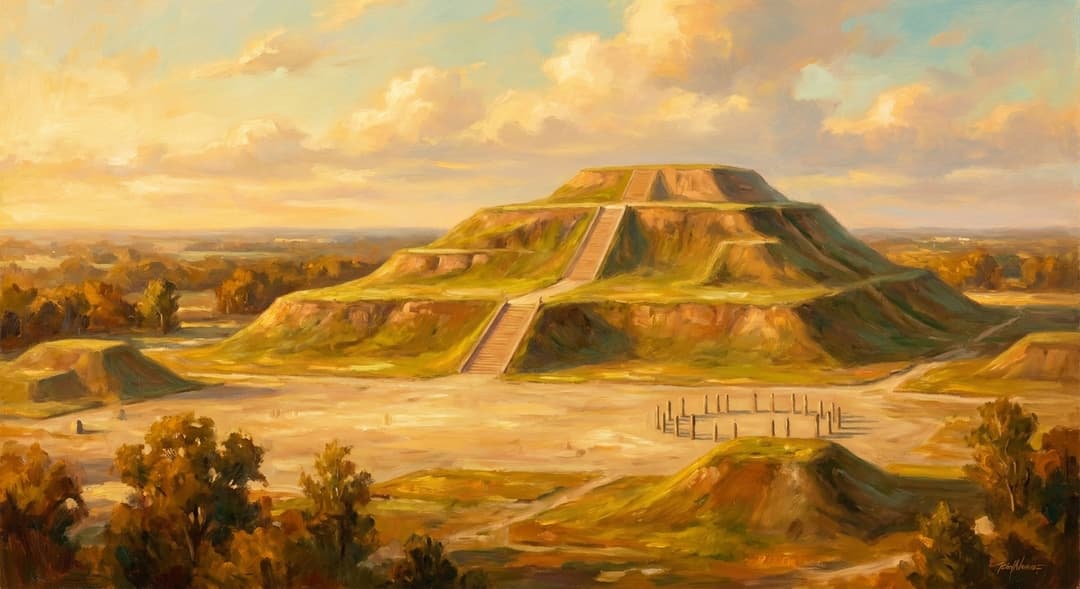
Visiting Cahokia Mounds offers a rare encounter with North America's ancient urban past. Visitors can climb Monks Mound for vistas of the St. Louis skyline, explore reconstructed solar post circles at Woodhenge, and walk miles of sacred earthwork trails.
Highlights
- Monks Mound summit view overlooking the 40-acre Grand Plaza
- Reconstructed Woodhenge solar observatory
- Interpretive Center with life-sized village re-creations and artifacts
- Self-guided walking trails across 2,200 preserved acres
Things to Know
- Monks Mound requires climbing 156 concrete steps to reach the upper terrace
- Grounds trails are outdoor and exposed; bring sun protection and water
- Check state historic site announcements for seasonal indoor facility hours
Location
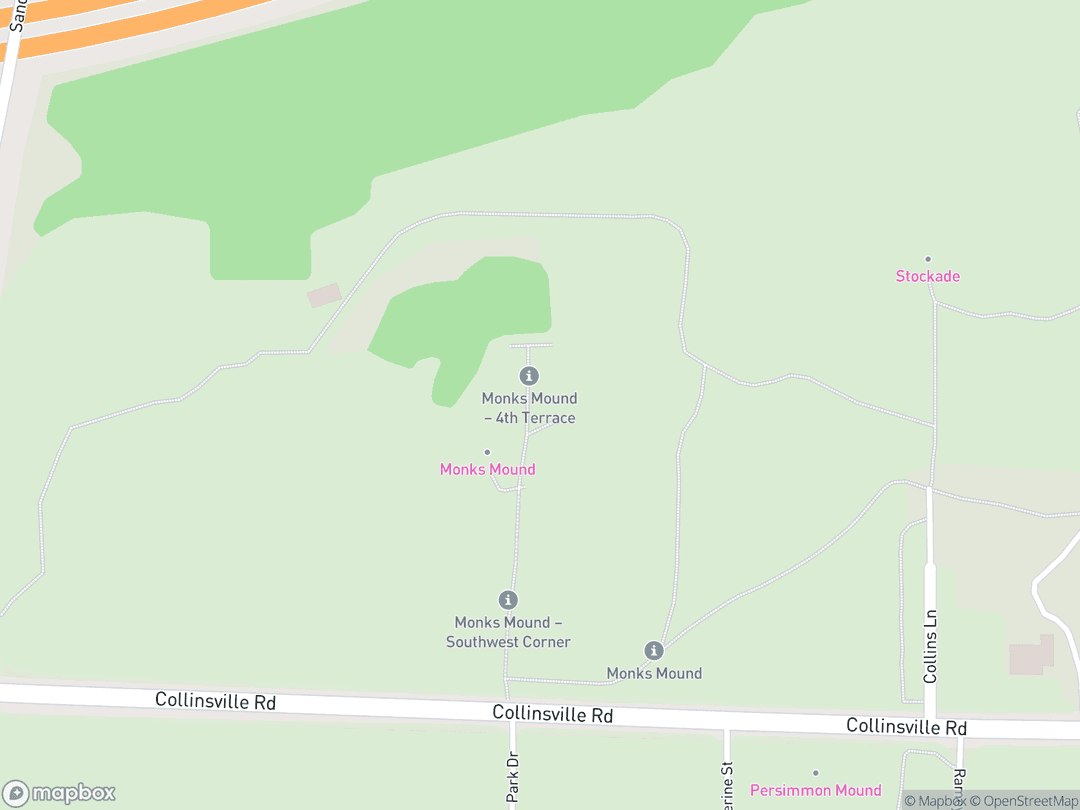
3026 Collinsville Road, Collinsville, IL 62234
Hours: Grounds open daily from dawn to dusk (8:00 AM – 5:00 PM). Interpretive Center hours vary seasonally.
Getting There: Located off Collinsville Road, 8 miles east of downtown St. Louis via I-55/70 East to Exit 6 (IL-111 South).
Get DirectionsTips for Your Visit
Equinox and Solstice Gatherings
Attend free early morning gatherings at Woodhenge during seasonal equinoxes and solstices to witness solar alignments firsthand.
Pacing Your Tour
Allow at least 2 to 3 hours to comfortably explore both the Interpretive Center and outdoor mound trails.
About
Cahokia Mounds represents the zenith of Middle Mississippian civilization and the largest pre-Columbian urban center north of Mexico. Constructed between 900 and 1200 CE in the fertile American Bottom floodplain, this monumental complex served as the political, economic, and spiritual heart for tens of thousands of indigenous residents. At its peak, Cahokia was a planned ceremonial metropolis anchored by Monks Mound—the largest prehistoric earthen earthwork in North America.
The site was engineered around a cosmos-aligned grid integrating platform mounds, conical mortuary earthworks, and a 40-acre central plaza. Through sophisticated soil mechanics, solar observation structures like Woodhenge, and sacred iconography, Cahokia's builders expressed a profound cosmological worldview connecting the sky, earth, and underworld. Today, protected as a UNESCO World Heritage Site, Cahokia Mounds stands as a testament to the engineering genius and spiritual legacy of North America's indigenous peoples.
Gallery
Symbolic Elements
The temple's exterior features intricate carvings, each rich with spiritual meaning:

Birdman Falcon Iconography
A sacred Mississippian motif combining human and falcon attributes, representing upperworld spiritual power and celestial authority.

Monks Mound Terraces
Four stepped earthen tiers representing the progressive elevation of human realm soil toward upperworld divine realms.

Sacred Red Cedar Posts
Rot-resistant timber posts painted with red ochre that anchored Woodhenge and symbolized solar vitality and eternal life.

Cross-in-Circle Design
An ancient cosmic emblem representing sacred fire, the four cardinal directions, and the balance of This World.
Equinox Sunrise Alignment
An astronomical phenomenon where the rising equinox sun appears to emerge directly from Monks Mound as seen from Woodhenge.

Chunkey Stone Disc
Polished bi-concave stone discs rolled across the Grand Plaza during ritual games re-enacting primordial cosmic struggles.

Tri-Layered Axis Mundi
The spatial orientation connecting the Upperworld, Middle World, and Underworld through central earthwork architecture.
Interesting Facts
Monks Mound required an estimated 14 million 50-pound basketloads of soil carried entirely by human labor. (Tier A)
At its 11th-century peak, Cahokia's population was larger than contemporary London or Paris. (Tier B)
The 40-acre Grand Plaza was artificially flattened and surfaced with sandy clay for mass gatherings. (Tier B)
Woodhenge served as an astronomical calendar aligning precisely with solstice and equinox sunrises. (Tier A)
A high-status male in Mound 72 was buried on a bed of 20,000 marine shell beads shaped like a falcon. (Tier A)
Cahokia was completely abandoned over 150 years before Christopher Columbus arrived in the Caribbean. (Tier A)
Seventy of the original 120 ceremonial mounds remain preserved within the state historic site today. (Tier A)
The name Monks Mound derives from Trappist monks who farmed its lower terrace between 1809 and 1813. (Tier B)
Common Questions
Is Monks Mound larger than the Great Pyramid of Giza?
Yes, at 14.5 acres, Monks Mound covers a larger ground footprint at its base than Giza's 13.1 acres.
What materials were used to build Cahokia?
Cahokia was constructed entirely of hand-carried soil, clay, wood, thatch, and grass without stone or metal tools.
Who named the site Cahokia?
French settlers assigned the name in the late 17th century after a local sub-tribe of the Illiniwek Confederation.
Can visitors climb to the top of Monks Mound?
Yes, a 156-step concrete stairway allows visitors to ascend to the top terrace for panoramic views.
Featured Stories
The Creation of the Grand Plaza
1050
Around 1050 CE, Cahokians undertook a massive urban redesign by leveling 40 acres of uneven terrain to construct the Grand Plaza. Workers moved thousands of tons of earth by hand using woven baskets, creating a smooth ceremonial field for assemblies and sacred games. This monumental effort established the spatial and spiritual heart of North America's largest ancient metropolis.
Source: Illinois Department of Natural Resources
The Discovery of Woodhenge
1961
In 1961, archaeologist Warren Wittry analyzed post-pit patterns uncovered during highway salvage excavations west of Monks Mound. He realized the oval pits formed precise arc alignments designed to track seasonal solar cycles. This landmark discovery proved Mississippian builders possessed advanced archaeoastronomical knowledge comparable to ancient sun-watching traditions worldwide.
Source: Cahokia Mounds Museum Society
The Shell Bead Falcon Burial
1967
During excavations at Mound 72 in the late 1960s, archaeologists uncovered the burial of a prominent 10th-century Mississippian leader. The individual was laid to rest upon a bed of more than 20,000 marine shell disc beads arranged in the shape of a soaring falcon. This discovery provided dramatic evidence of the sacred elite iconography and far-reaching trade networks of ancient Cahokia.
Source: Illinois Department of Natural Resources
Timeline
Late Woodland Village Origins
First agricultural communities settle along the American Bottom floodplain.
MilestoneInitial Monks Mound Construction
Mississippian builders begin placing hand-carried clay loads for Monks Mound's foundation base.
component.timeline.groundbreakingErection of First Woodhenge
The earliest circular timber solar observatory is constructed west of the central complex.
EventThe Urban Transformation
Centralized planning establishes the 40-acre Grand Plaza and surrounding earthwork grid.
MilestonePeak Zenith and Palisade Construction
Cahokia reaches 20,000 residents and builds a 2-mile stockade wall around the central core.
MilestoneMound 72 Burial Rituals
High-status leaders are interred with elaborate shell bead and falcon symbolism.
EventGradual Dispersal Begins
Environmental stress and regional changes trigger gradual population movement away from the core.
EventComplete Urban Abandonment
The ceremonial site is fully vacated while remaining a revered sacred landscape.
MilestoneWoodhenge Rediscovery
Archaeologist Warren Wittry identifies post-pit patterns confirming the timber solar circle.
EventUNESCO World Heritage Inscription
Cahokia Mounds is designated a UNESCO World Heritage Site for its universal cultural significance.
DedicationHistory by Decade
900s — Foundation Phase
Late Woodland farming communities consolidate into early Mississippian social structures. Builders initiate the foundation mound for Monks Mound using basket-carried clay, establishing the spatial layout of early earthworks.
1050s — The Urban Explosion
Cahokia undergoes rapid centralized planning known as its golden expansion phase. The 40-acre Grand Plaza is leveled, Monks Mound expands into multiple terraced tiers, and Woodhenge observatories are erected.
1150s — Zenith and Fortification
At peak population, leaders construct a 2-mile wooden palisade stockade enclosing the central 300-acre ceremonial core. Ritual interments at Mound 72 express elaborate upperworld falcon symbolism and social hierarchy.
1350s — Abandonment Era
Environmental pressures and shifting political networks lead to complete site abandonment. Surrounding indigenous nations preserve memory of the complex as a sacred ancestral landscape.
Architecture & Facilities
Cahokia Mounds represents Middle Mississippian sacred earthwork architecture, organized along a north-south axis rotated 5 degrees east of true north. The complex integrates massive earthen platform mounds, conical mortuary earthworks, and a 40-acre central plaza engineered entirely without stone or mortar.
Building Materials
Smectite Swelling Clay
Densely compacted core clay used by Mississippian engineers to retain internal moisture and prevent structural collapse.
Permeable Silt and Sand
Capping soil layers applied over earthwork cores to promote external drainage and combat erosion.
Sacred Red Cedar Posts
Heavy timber posts coated in red ochre used to construct Woodhenge solar observatories and sacred center markers.
Wattle and Daub Timber Framing
Hardwood oak and hickory wall frames interwoven with twigs and coated in mud plaster for summit temples.
Interior Features
Fourth Terrace Summit Temple
The primary council hall atop Monks Mound measuring 105 feet by 48 feet where spiritual rulers conducted rituals.
Grand Plaza Assembly Floor
A 40-acre artificially leveled ceremonial field engineered with sandy clay layers for sacred chunkey games.
Mound 72 Burial Chamber
A high-status mortuary mound containing the elaborate shell-bead falcon burial and elite ancestral offerings.
Woodhenge Observation Circle
An open-air astronomical sanctuary featuring central post pits aligned precisely with solstice and equinox sunrises.
Temple Grounds
Encompassing 2,200 preserved acres containing 70 extant earthworks, expansive grassland trails, borrow pits, and the reconstructed Woodhenge solar observatory.
Additional Facilities
Features a 33,000-square-foot Interpretive Center with museum galleries, a life-sized village recreation, orientation theater, and outdoor walking trails.
Religious Significance
In the Mississippian worldview, Cahokia was conceptualized as the sacred center of a tri-layered universe: the Upperworld of sun and celestial order, This World of human society, and the Underworld of water, fertility, and transformation.
To serve as a physical axis mundi connecting human society with celestial powers, solar cycles, and divine cosmic order.
Sacred Ordinances
Solstice and Equinox Solar Rites
Archaeoastronomical ceremonies held at Woodhenge to calculate agricultural seasons and honor solar divine power.
Chunkey Ritual Assemblies
Sacred athletic competitions held on the Grand Plaza re-enacting mythic cosmic balance and hero struggles.
Ancestor Veneration Interments
Mortuary offerings placing elite leaders with falcon iconography to ensure spiritual transcendence and lineage continuity.
The Great Sun and Cosmic Authority
Cahokia's paramount chief, recognized as the Great Sun, resided atop Monks Mound's upper terrace, bridging celestial solar energy with earthly governance.
Similar Temples

Sources & Research
Every fact on Temples.org is backed by verified Sources & Research. Each piece of information is rated by source tier and confidence level.
View All Sources (7)
| Field | Source | Tier | Retrieved |
|---|---|---|---|
| About & Historical Background | Cahokia Mounds Museum Society (opens in a new tab) | A | 2026-02-17 |
| UNESCO World Heritage Inscription | UNESCO World Heritage Centre (opens in a new tab) | B | 2026-02-17 |
| Architecture & Structural Mechanics | University of Wisconsin-Milwaukee Department of Anthropology (opens in a new tab) | B | 2026-02-17 |
| Timeline & Archaeobotanical Studies | Illinois State Museum (opens in a new tab) | B | 2026-02-17 |
| Symbolic Elements & Falcon Iconography | Smithsonian Institution (opens in a new tab) | B | 2026-02-17 |
| Woodhenge & Archaeoastronomy | Archaeological Institute of America (opens in a new tab) | B | 2026-02-17 |
| Visitor Insights & Site Preservation | National Park Service (opens in a new tab) | A | 2026-02-17 |