Visitor Insights
Visiting Indianapolis Indiana Temple
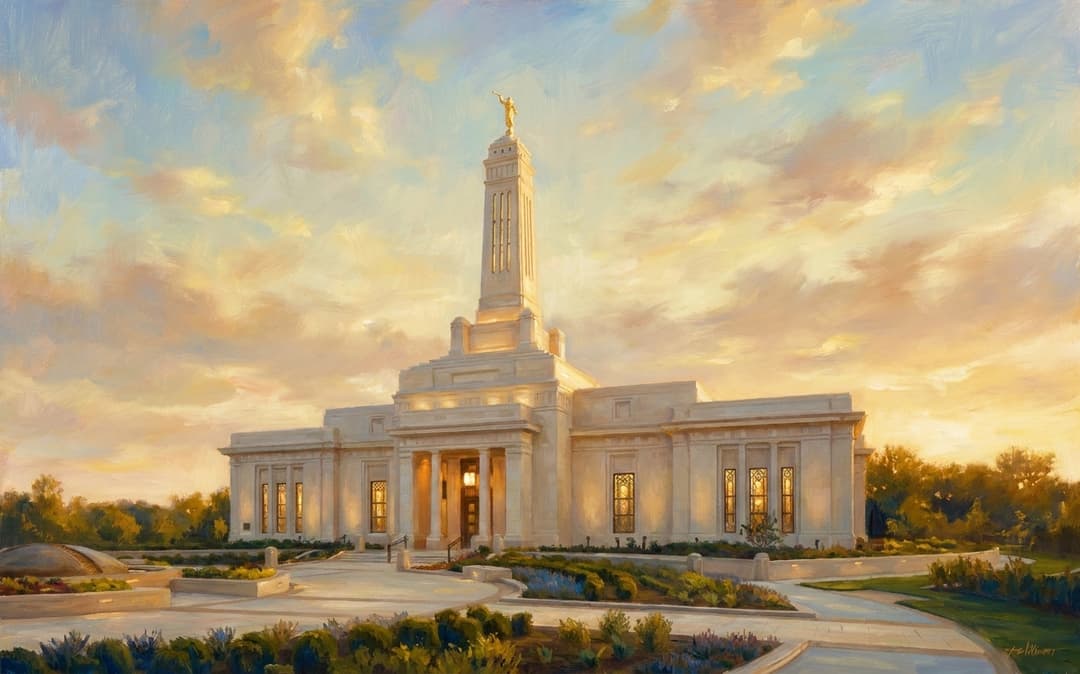
The Indianapolis Indiana Temple is a sacred site for Latter-day Saints, with its interior reserved for members holding a current temple recommend. However, the beautifully maintained grounds are open to the public, offering a peaceful environment for reflection and enjoyment. Visitors can appreciate the temple's exterior architecture and landscaping.
Highlights
- Enjoy the meticulously landscaped temple grounds.
- View the temple's unique architecture and Angel Moroni statue.
- Experience a sense of peace and serenity on the sacred property.
Things to Know
- The temple interior is not open to the public after dedication.
- No dedicated visitors' center on site.
- Temple clothing is not available for rental; patrons should bring their own.
Location
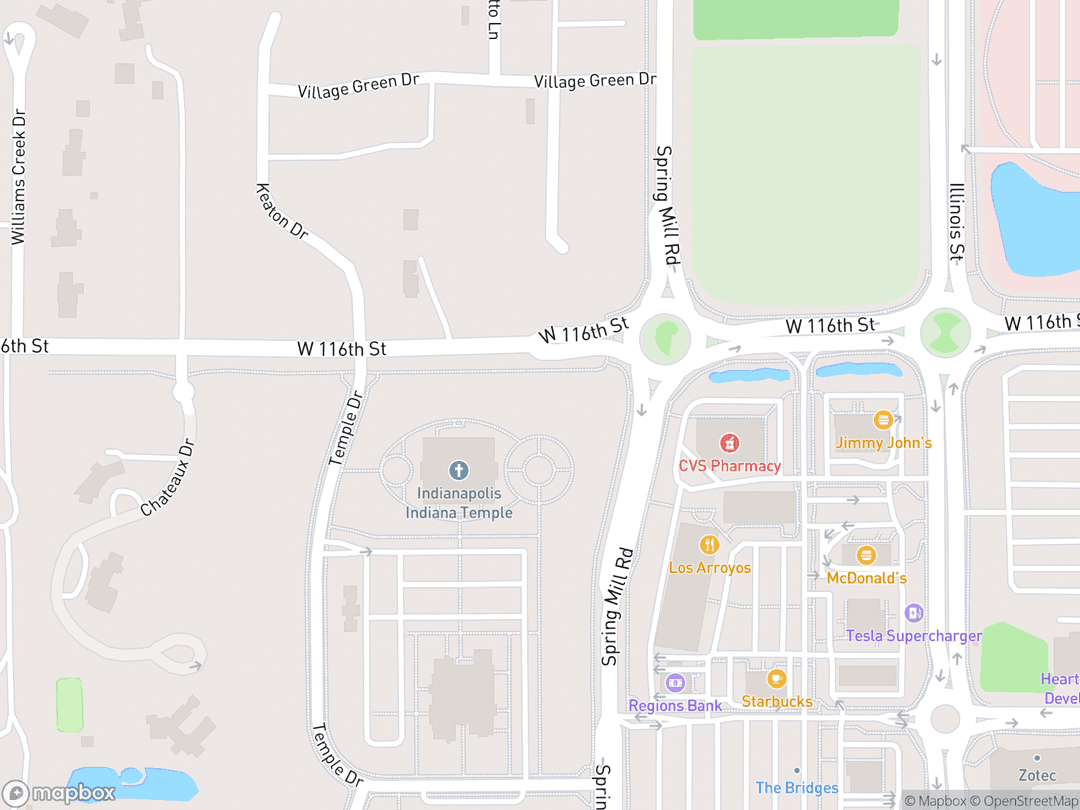
11565 Temple Dr, Carmel, Indiana 46032-8859, United States
Hours: Operating hours for members are available on the official Church website.
Getting There: The temple is located at 11565 Temple Dr, Carmel, Indiana, easily accessible from U.S. 31, approximately two miles north of I-465.
Get DirectionsTips for Your Visit
Explore the Grounds
Take time to walk around the temple grounds and admire the exterior design and native Indiana flora.
Visit the Distribution Center
A distribution center on site offers temple garments and clothing for purchase by members.
About
The Indianapolis Indiana Temple stands as a beacon of faith in Carmel, a suburb north of Indianapolis. Dedicated in 2015, it is a sacred house of worship for members of The Church of Jesus Christ of Latter-day Saints, providing a place for essential ordinances and covenants. Its design thoughtfully integrates local architectural influences with timeless spiritual symbolism.
This temple serves a vibrant community of Latter-day Saints across Indiana and eastern Illinois, offering a sanctuary for spiritual growth and connection to God. It represents a significant milestone in the Church's presence in the Midwest, fostering a deeper commitment to Christian principles and eternal family bonds.
Gallery
Symbolic Elements
The temple's exterior features intricate carvings, each rich with spiritual meaning:

Angel Moroni Statue
The gilded statue of the Angel Moroni atop the spire symbolizes the restoration of the gospel of Jesus Christ.

Tulip Poplar Blossom
Indiana's state flower, the tulip poplar blossom, is integrated into the art glass and millwork, symbolizing local connection and creation's beauty.

Celtic Knot Pattern
Found in art glass and decorative paint, the Celtic knot represents eternal life, interconnectedness, and God's everlasting covenants.

Circle within a Square
This motif on entry doors and millwork references Indianapolis's 'Circle City' nickname and symbolizes divine order and eternal plans.

Twelve Oxen
The baptismal font is supported by twelve bronze oxen, symbolizing the twelve tribes of Israel and connecting ordinances to ancient practices.

Aero Cream Limestone
The exterior's warm, buff-gray Aero Cream limestone, quarried in Turkey, provides a stately and enduring facade.

Indiana Landscapes Mural
An original oil painting mural by Michael Albrechtsen depicts serene Indiana landscapes, bringing local beauty into the sacred space.
Interesting Facts
The Indianapolis Indiana Temple is the first temple constructed in the state of Indiana (Tier A).
It serves approximately 30,000 Latter-day Saints in Indiana and eastern Illinois (Tier B).
The land where the temple stands was previously farmland (Tier B).
The temple's spire design was inspired by historic monuments in downtown Indianapolis (Tier A).
Much of the temple's art glass was crafted by Kokomo Opalescent Glass in Kokomo, Indiana (Tier C).
Aero Cream limestone for the exterior was quarried in Myra, Turkey (Tier B).
The interior features an original oil painting mural by Michael Albrechtsen depicting Indiana landscapes (Tier B).
Local members indexed one million names for temple work just before the temple's announcement (Tier A).
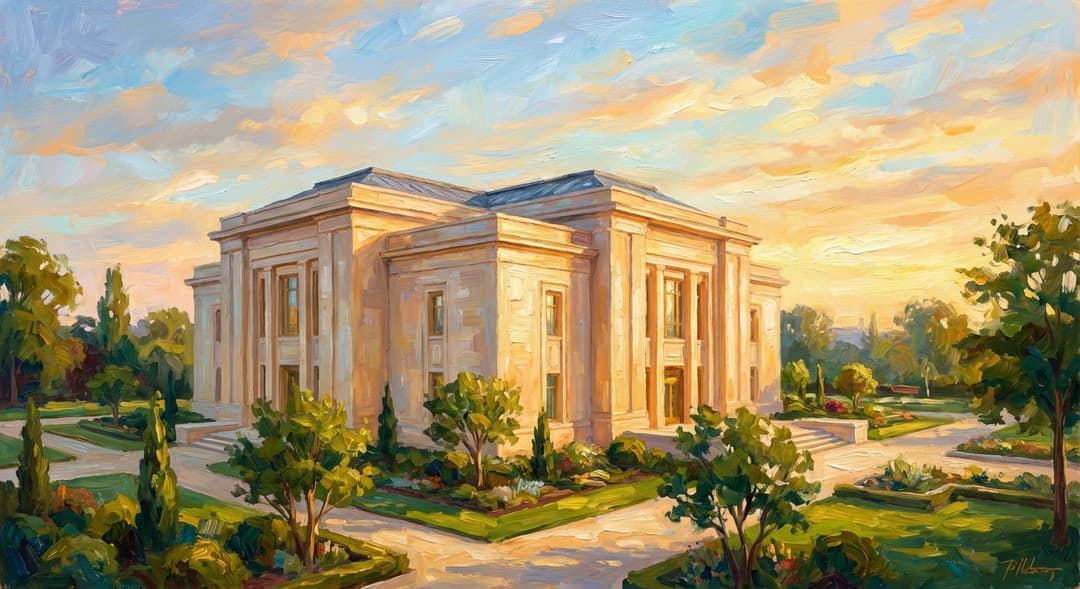
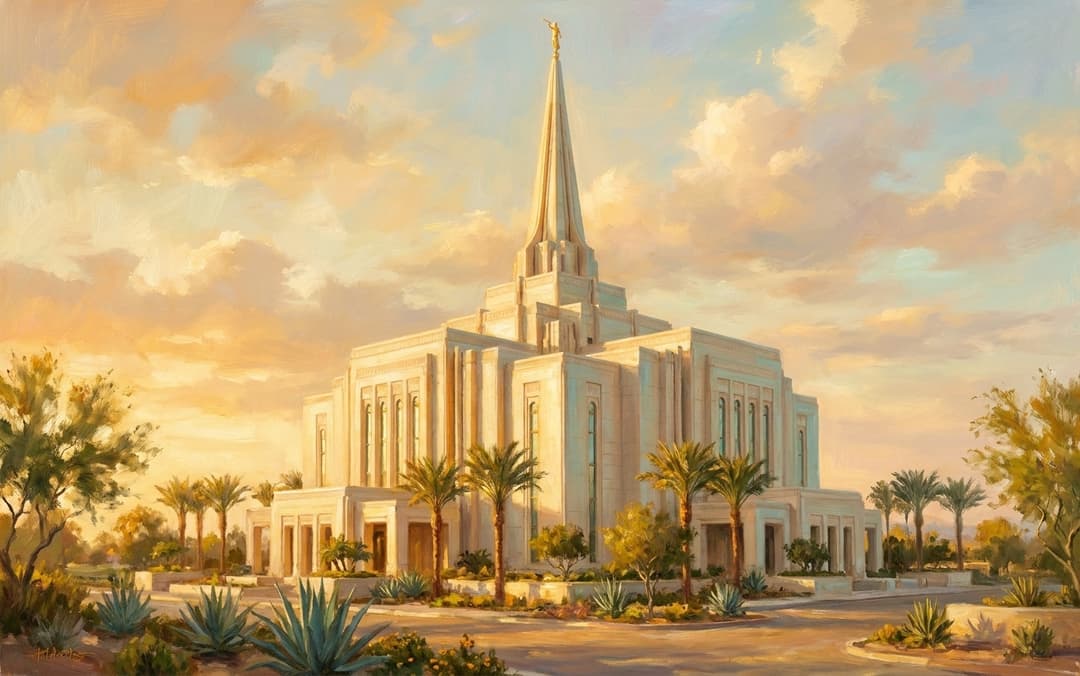
The temple's design shares similarities with the Gila Valley Arizona Temple (Tier A).
The temple temporarily closed in 2020 due to the COVID-19 pandemic (Tier B).
Common Questions
What is the purpose of the Indianapolis Indiana Temple?
It is a sacred house of worship where Latter-day Saints perform ordinances and make covenants with God.
Can non-members enter the temple?
After its dedication, the interior of the temple is reserved for worthy members of The Church of Jesus Christ of Latter-day Saints.
Are the temple grounds open to the public?
Yes, the beautifully landscaped temple grounds are open to the public for all to enjoy.
What architectural style does the temple feature?
The temple features a neoclassical design, blending classical principles with regional motifs.
Where was the exterior limestone sourced?
The Aero Cream limestone for the exterior was quarried in Myra, Turkey, and fabricated in Isparta, Turkey.
Featured Stories
A Temple for the Hoosier State
October 2, 2010
The announcement of the Indianapolis Indiana Temple by President Thomas S. Monson brought immense joy to Latter-day Saints across the state. For years, members had traveled long distances to attend temples, and this announcement signaled a new era of spiritual accessibility and growth for the region. It was a testament to the faith and dedication of the Indiana Saints.
Community Celebration and Open House
July 17 – August 8, 2015
Before its dedication, the Indianapolis Indiana Temple opened its doors to the public, welcoming over 90,000 visitors from all walks of life. This open house provided a unique opportunity for the community to tour the sacred interior, fostering understanding and goodwill. The event culminated in a vibrant cultural celebration, where 1,500 youth shared their talents and heritage.
Inspired by Local Heritage
2015
The temple's architectural design thoughtfully incorporates elements inspired by Indianapolis's historic monuments, such as the Indiana World War Memorial and the Soldiers' and Sailors' Monument. This intentional connection to local heritage grounds the sacred structure within its community. The use of Indiana's state tree, the tulip poplar, in its art glass and carvings further deepens this regional bond.
Timeline
Temple Announced
President Thomas S. Monson announced plans for the Indianapolis Indiana Temple during General Conference.
component.timeline.announcementPreliminary Plans Presented
Church representatives presented initial plans for the temple and an adjoining meetinghouse to the Carmel Technical Advisory Committee.
EventZoning Hearing Continued
The Board of Zoning Appeals continued its special use hearing regarding the temple plans.
EventGroundbreaking Ceremony
Elder Donald L. Hallstrom presided over the groundbreaking and site dedication, commencing construction.
component.timeline.groundbreakingPublic Open House Begins
The temple opened its doors for a public open house, welcoming over 90,000 visitors before its dedication.
EventPublic Open House Concludes
The public open house period for the temple concluded, preparing for its formal dedication.
EventCultural Celebration Held
Approximately 1,500 Latter-day Saint youth participated in a cultural celebration at the IUPUI Carroll Track & Soccer Stadium.
EventTemple Dedicated
The Indianapolis Indiana Temple was formally dedicated in three sessions by President Henry B. Eyring.
DedicationTemporary Closure due to Pandemic
The temple temporarily closed its operations in response to the global COVID-19 pandemic, like all other temples worldwide.
EventHistory by Decade
2010s — Announcement and Construction
The 2010s marked a pivotal decade for Latter-day Saints in Indiana with the announcement of the Indianapolis Indiana Temple. Following years of anticipation, the groundbreaking ceremony in 2012 initiated the construction phase, bringing the vision of a sacred edifice to life. This period was characterized by meticulous planning and dedicated effort to create a house of the Lord.
2010s — Dedication and Operation
By 2015, the temple was completed, celebrated with a public open house that welcomed thousands of visitors, followed by a vibrant cultural celebration. The formal dedication by President Henry B. Eyring on August 23, 2015, marked its official opening for sacred ordinances. The temple quickly became a spiritual anchor for members in Indiana and eastern Illinois.
2020s — Global Pandemic Response
In 2020, like all other temples worldwide, the Indianapolis Indiana Temple temporarily closed its operations in response to the global COVID-19 pandemic. This period of closure underscored the Church's commitment to public health and safety. Operations gradually resumed with modified procedures, ensuring continued access to sacred ordinances for members.
Architecture & Facilities
The Indianapolis Indiana Temple features a neoclassical design, thoughtfully blending classical architectural principles with distinct regional motifs. Its stately spire and overall aesthetic draw inspiration from historically significant structures in downtown Indianapolis, such as the Indiana World War Memorial and the Soldiers' and Sailors' Monument, creating a harmonious blend of tradition and local identity.
Building Materials
Exterior
Structural steel and concrete clad in Aero Cream limestone, quarried in Myra, Turkey, providing a warm, buff-gray tone.
Art Glass
Exterior art glass, designed by MHTN Architects, incorporates Celtic knot and tulip poplar patterns, produced by Kokomo Opalescent Glass.
Interior Flooring
Flooring and wall bases throughout the temple utilize Perlatino, Sahara Beige, and Artic Grey marble for a refined finish.
Millwork
Cherry wood from the eastern United States, finished naturally, is extensively used in millwork, featuring carved Celtic knots and tulip poplar blossoms.
Interior Features
Color Scheme
Primary color schemes feature variations of blue, accented with gold and green, reflecting the warm tones of the exterior limestone.
Walls and Pilasters
Interior walls and coverings reflect the warm tones of the exterior limestone, which is also used in features such as the baptismal font and stone pilasters.
Entry Doors
Cast bronze entry doors, designed by MHTN Architects, feature the circle-within-a-square motif, referencing Indianapolis's original street platting.
Mural
An original oil painting mural by Michael Albrechtsen depicts serene Indiana landscapes, adding a local artistic touch to the sacred space.
Temple Grounds
The meticulously landscaped grounds feature various plants and flowers native to Indiana, including the tulip poplar, creating a serene and inviting environment for visitors.
Additional Facilities
A distribution center is located on site where patrons can purchase temple garments and clothing, providing convenience for members.
Religious Significance
Temples of The Church of Jesus Christ of Latter-day Saints are considered sacred 'Houses of the Lord,' dedicated for the highest ordinances and covenants of the Christian faith. They serve as places where members can draw closer to God and learn about His eternal plan for His children.
The core spiritual purpose of the Indianapolis Indiana Temple is to provide a sacred space where Latter-day Saints can participate in saving ordinances and make eternal covenants, strengthening their relationship with Jesus Christ and preparing for eternal life with their families.
Sacred Ordinances
Baptism for the Dead
Members perform proxy baptisms on behalf of their deceased ancestors, offering them the opportunity to accept the gospel in the spirit world.
Endowment
The endowment is a series of covenants and instructions that provide spiritual power, knowledge, and blessings, preparing individuals for eternal progression.
Sealing
Families are sealed together for time and all eternity, including husbands and wives, and children to their parents, affirming the eternal nature of family relationships.
Celestial Room
The Celestial Room represents a return to God's presence, offering a peaceful and reflective space where members can contemplate eternal truths and feel the Spirit.
Instruction Rooms
These rooms are where members receive sacred instruction and make covenants as part of the endowment ordinance, learning about God's plan of salvation.
Sealing Rooms
In these sacred rooms, families are united for eternity through the sealing ordinance, a central doctrine of Latter-day Saint belief.
Similar Temples
Sources & Research
Every fact on Temples.org is backed by verified Sources & Research. Each piece of information is rated by source tier and confidence level.
View All Sources (6)
| Field | Source | Tier | Retrieved |
|---|---|---|---|
| About & Historical Background | The Church of Jesus Christ of Latter-day Saints (opens in a new tab) | A | 2024-07-30 |
| Architectural Description & Facts | churchofjesuschristtemples.org (opens in a new tab) | C | 2024-07-30 |
| Dedication & Cultural Celebration | The Church News (opens in a new tab) | B | 2024-07-30 |
| Architectural Design & Materials | Encyclopedia of Indianapolis (opens in a new tab) | B | 2024-07-30 |
| Architectural Firm | MHTN Architects (opens in a new tab) | A | 2024-07-30 |
| Symbolic Elements & Interior Details | Traditional Building (opens in a new tab) | B | 2024-07-30 |