Visitor Insights
Visiting Baton Rouge Louisiana Temple
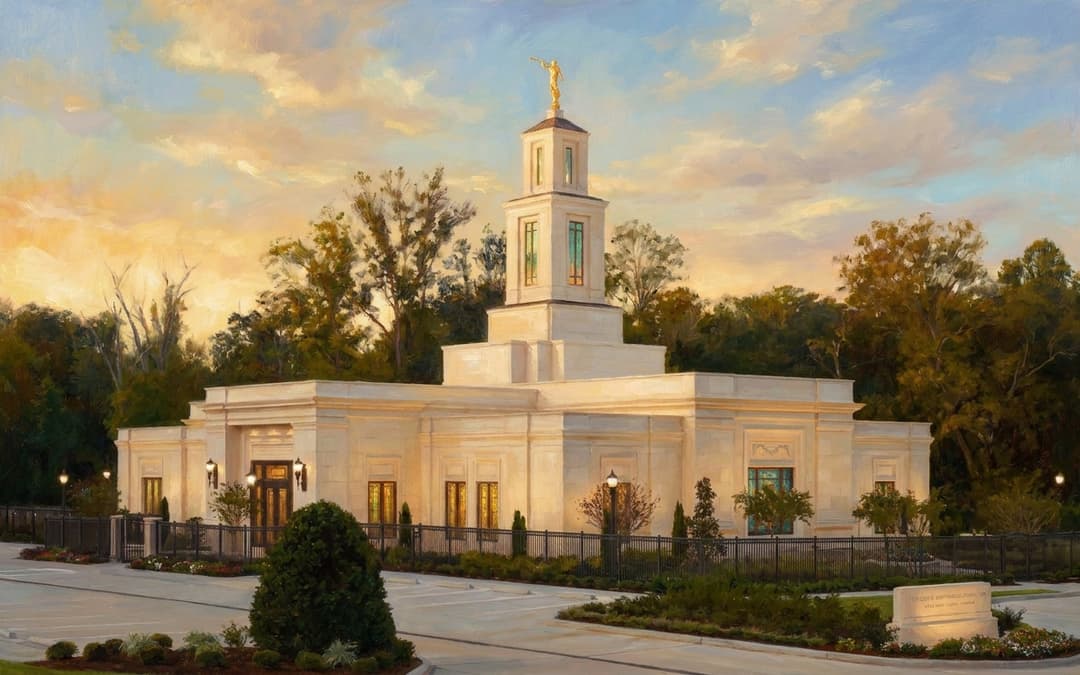
The Baton Rouge Louisiana Temple offers a serene and deeply spiritual experience for all who visit its beautifully landscaped grounds. Situated in South Baton Rouge, the temple property backs onto a lush 103-acre wetlands nature reserve, creating a peaceful barrier from the surrounding city. Visitors can enjoy quiet walks along manicured pathways lined with native Southern flora, including magnificent magnolia trees and vibrant crepe myrtles. The peaceful atmosphere makes it an ideal spot for personal reflection, prayer, and appreciating the elegant classical architecture.
Highlights
- Stunning views of the 83-foot-9-inch steeple topped with the gold-leafed Angel Moroni statue.
- Beautiful rear gardens featuring a magnificent centerpiece magnolia tree and blooming crepe myrtles.
- A peaceful natural backdrop bordering a protected 103-acre wetlands nature reserve.
- Warm, classical exterior cladding made of light beige limestone that glows beautifully in the late afternoon.
Things to Know
- The temple interior is reserved exclusively for members of the Church holding active temple recommends.
- The surrounding grounds and gardens are open to the general public for quiet walks and contemplation.
- Operating hours for ordinances vary throughout the week, so check the official schedule before visiting.
- Modest attire is highly recommended when walking on the sacred temple grounds.
Location
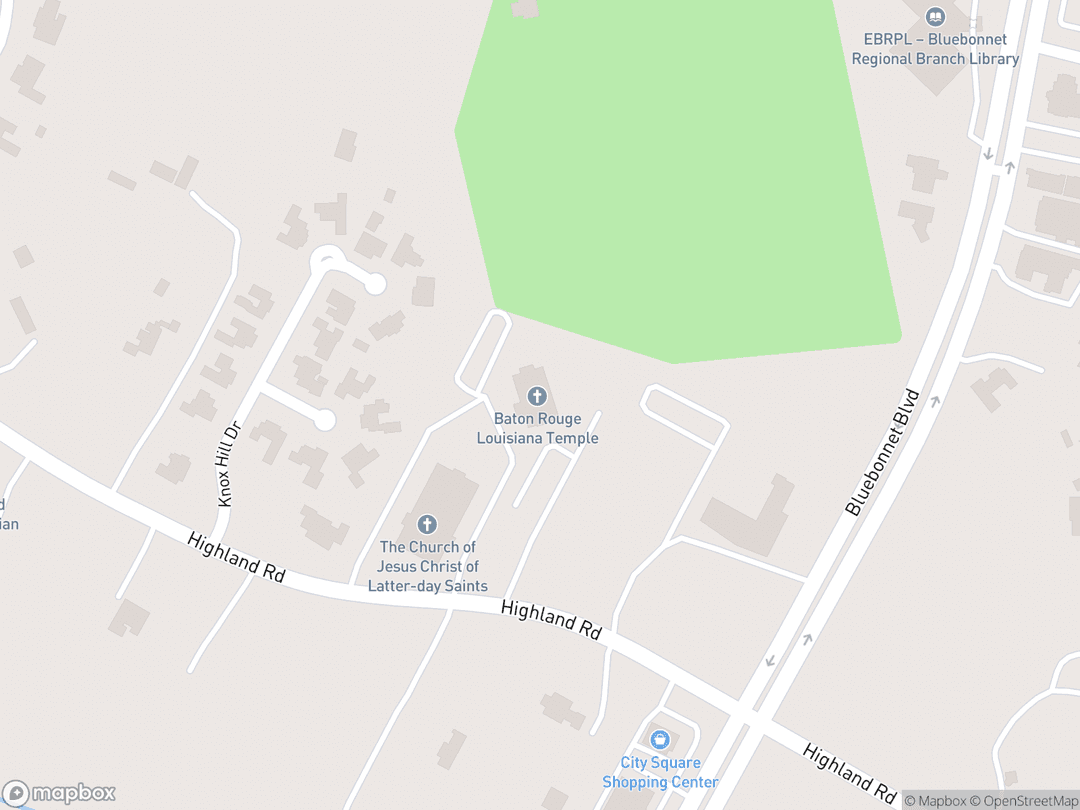
10339 Highland Road, Baton Rouge, Louisiana 70810
Hours: Tuesday through Saturday: hours vary by day for scheduled ordinances. Grounds are open daily from sunrise to sunset.
Getting There: Located at 10339 Highland Road in South Baton Rouge. From Interstate 10, take Exit 166 for Highland Road and head south for approximately 2.5 miles. The temple entrance is on the right, situated behind the Baton Rouge Louisiana Stake Center.
Get DirectionsTips for Your Visit
Visit During Golden Hour
The late afternoon sun highlights the warm tones of the beige limestone exterior, providing spectacular lighting for photography and quiet reflection.
Springtime Blooms
Plan your visit during spring or early summer to see the native magnolia trees and crepe myrtles in full, vibrant bloom.
Respectful Photography
Photography is welcomed and encouraged on the outdoor temple grounds, but please maintain a quiet, respectful demeanor to preserve the peaceful atmosphere.
About
The Baton Rouge Louisiana Temple stands as a sacred monument of faith, representing the enduring bridge between heaven and earth. In keeping with the ancient traditions of Abrahamic sacred spaces—from the biblical Tabernacle in the wilderness to the grand cathedrals of Christendom—this temple is dedicated as a literal "House of the Lord." It serves as a sanctuary where modern disciples can withdraw from the noise of the world to commune with the Divine, participate in eternal covenants, and seek spiritual refinement.
Originally dedicated in 2000 by President Gordon B. Hinckley, the temple was constructed as part of a historic effort to bring sacred ordinances closer to Latter-day Saints worldwide through smaller, localized temples. Nestled against a sprawling 103-acre wetlands nature reserve in South Baton Rouge, the temple provides a peaceful, natural backdrop that enhances its sacred atmosphere. The temple serves a dedicated community of Latter-day Saints across Louisiana and Mississippi, standing as the only operating temple in the state of Louisiana.
Between 2018 and 2019, the temple underwent a comprehensive reconstruction to upgrade its building envelope against Louisiana's humid climate and to realign its design with classical regional architecture. The original porous white Vermont marble cladding was replaced with durable, moisture-resistant light beige limestone, and the steeple was raised by ten feet to improve its visual proportions. Rededicated in November 2019 by Elder Quentin L. Cook, the renovated temple continues to stand as a beacon of spiritual refuge and community strength, embodying the shared Christian hope of redemption, resurrection, and eternal life.
Gallery
Symbolic Elements
The temple's exterior features intricate carvings, each rich with spiritual meaning:

The Angel Moroni
Perched atop the 83-foot-9-inch steeple, the gold-leafed statue of the prophet Moroni symbolizes the restoration of the gospel of Jesus Christ. It represents the spreading of glad tidings to all nations, echoing biblical imagery of an angel flying through heaven preaching the everlasting gospel.

Magnolia Flower Motif
Integrated into the custom art glass windows, carpets, and stone carvings, the magnolia represents purity, endurance, and the natural beauty of God's creation. As a beloved symbol of the American South, it connects the sacred building to its regional home.

Seashell Motif
Featured alongside the magnolia in the art glass, the seashell is a traditional Christian symbol of pilgrimage, rebirth, and divine grace. It reflects Louisiana's rich coastal heritage and the spiritual journey of the Saints toward eternal life.

Twelve Oxen
Supporting the cast-in-place baptismal font, these twelve sculpted oxen represent the twelve tribes of ancient Israel. They symbolize the temple's role as a place of gathering and the covenant heritage shared by the house of Israel.

Gold Leaf Pinstriping
The delicate gold leaf detailing in the Celestial Room and Baptistry represents the refinement, purity, and holiness of the House of the Lord. This draws on the biblical description of Solomon's Temple, which was adorned with gold to honor the Divine.

Light Beige Limestone
The durable limestone cladding installed during the renovation symbolizes strength, endurance, and spiritual stability. It provides a warm, classical appearance while serving as a protective shield against the humid regional climate.

The Single Steeple
The prominent single steeple anchors the structure to its sacred purpose, pointing heavenward to direct the thoughts of visitors toward God. Its ten-foot elevation during the renovation symbolizes the continuous upward reach of the human soul.

The Centerpiece Magnolia Tree
Serving as the centerpiece of the rear gardens, this magnificent magnolia tree symbolizes deep roots, resilience, and flourishing life. It stands as a living testament to the growth of the Church in Louisiana over nearly two centuries.
Interesting Facts
True to its dedicatory prayer describing it as a 'house of refuge,' the temple site served as a massive emergency command center and staging ground during the aftermath of Hurricane Katrina in 2005, coordinating over 1.1 million hours of volunteer labor.
The temple was originally clad in porous white Vermont marble. Because this material did not hold up well against Louisiana's extreme humidity, the entire exterior was stripped to the studs during the 2018–2019 renovation and replaced with durable, moisture-resistant beige limestone.
During the 2018–2019 renovation, the steeple was raised by exactly ten feet to improve the overall massing and visual balance of the building, increasing the total height to 83 feet, 9 inches.
The groundbreaking ceremony for the Baton Rouge Louisiana Temple took place on May 8, 1999—the exact same day as the groundbreaking for the Suva Fiji Temple on the other side of the globe.
The temple's interior features a truly international collaboration: the custom area rugs were fabricated in China, the luxurious sealing room carpets were woven in Hong Kong, and the pattern carving was completed by a specialized studio in Utah.
Dedicated in 2000 as the 94th operating temple of the Church, the Baton Rouge Louisiana Temple remains the only operating Latter-day Saint temple in the state of Louisiana, serving members across Louisiana and Mississippi.
The temple property directly borders a stunning 103-acre wetlands nature reserve, providing a peaceful, natural sanctuary that shields the sacred grounds from the bustle of the surrounding city.
Before the 2018 renovation, architects conducted a comprehensive 'precedent study' of historic and classical architecture in the American Southeast to ensure the redesigned temple would seamlessly harmonize with the cultural heritage of Louisiana.
The temple's dedication in 2000 occurred nearly 160 years after the first recorded Latter-day Saints in New Orleans mailed a ten-dollar donation to the Prophet Joseph Smith in 1841, pleading for a missionary to be sent to their region.
The custom art glass windows throughout the temple feature localized floral and coastal motifs, including green, blue, coral, and cream-colored glass designed to reflect the natural beauty of the Gulf Coast.
Common Questions
Why was the temple's exterior marble replaced with limestone during the renovation?
The temple was originally clad in porous white Vermont Imperial Danby marble. Over time, this material proved vulnerable to Louisiana's intense humidity and heavy rainfall, leading to moisture issues. During the 2018–2019 renovation, the marble was stripped to the studs and replaced with a durable, light beige limestone cladding that provides a superior moisture barrier suited to the local climate.
Can the general public visit the Baton Rouge Louisiana Temple?
Yes, the general public is welcome to visit and walk around the beautifully landscaped temple grounds and gardens. However, the interior of the temple is reserved for members of the Church who hold active temple recommends to participate in sacred ordinances.
What is the significance of the wetlands nature reserve bordering the temple?
The temple property directly backs onto a 103-acre wetlands nature reserve in South Baton Rouge. This natural sanctuary provides a peaceful, quiet backdrop that shields the sacred grounds from urban noise and development, enhancing the temple's atmosphere of spiritual refuge.
How did the temple serve the community during Hurricane Katrina?
In the aftermath of Hurricane Katrina in 2005, the temple site and adjacent stake center served as a massive emergency command center and staging ground. Latter-day Saint Charities and Helping Hands volunteers coordinated the distribution of over four million pounds of food and water and organized over 1.1 million hours of volunteer labor from this location.
What architectural style does the renovated temple feature?
The renovated temple features a refined classical architectural style inspired by the historic and classical vernacular of the southeastern United States. The design incorporates traditional symmetry, clean lines, a single prominent steeple, and custom art glass windows featuring local floral and coastal motifs.
Featured Stories
A House of Refuge during Hurricane Katrina
August 2005
When Hurricane Katrina devastated the Gulf Coast in August 2005, the Baton Rouge Louisiana Temple site immediately fulfilled a prophetic line from its dedicatory prayer, which petitioned that the temple might stand as a 'house of refuge.' The temple grounds and adjacent stake center were transformed into a massive emergency command center and staging ground for Latter-day Saint Charities and Helping Hands volunteers. Over the course of several weeks, the site coordinated the distribution of more than four million pounds of food, water, and critical emergency supplies to storm victims. More than 1.1 million hours of volunteer labor were organized from this single location, demonstrating the deep Christian commitment to serving neighbors in times of dire need. The temple stood not only as a spiritual sanctuary but as a literal beacon of hope and physical relief for the entire region.
Source: Latter-day Saint Charities Disaster Relief Records
The Climate-Driven Transformation
2018–2019
The Baton Rouge Louisiana Temple was originally clad in beautiful, white Vermont Imperial Danby marble when it was dedicated in 2000. However, the porous nature of the marble proved vulnerable to Louisiana's intense humidity, heavy rainfall, and coastal climate, leading to severe moisture intrusion. In 2018, Church leaders made the decision to close the temple for a comprehensive reconstruction that would strip the building down to its structural framing. Architects selected a durable, light beige limestone to replace the marble, creating a superior moisture barrier while giving the temple a warmer, classical Southern aesthetic. Additionally, the steeple was raised by exactly ten feet to improve the building's visual proportions and massing. This dramatic transformation ensured that the sacred structure would withstand the elements for generations to come, symbolizing the spiritual process of refinement and endurance.
Source: VCBO Architecture Project Portfolio
A 160-Year Journey of Faith
July 16, 2000
The dedication of the Baton Rouge Louisiana Temple in July 2000 marked the culmination of a spiritual journey that began nearly 160 years earlier. In January 1841, two Latter-day Saints living in a tiny, isolated branch in New Orleans wrote a letter to the Prophet Joseph Smith in Nauvoo, Illinois. They enclosed a humble ten-dollar donation and pleaded for an elder to be sent to their area 'to preach unto us Jesus.' Over the ensuing decades, early members in Louisiana faced intense isolation, economic hardship, and the challenges of establishing the Church in the Deep South. The organization of the first stake in New Orleans in 1955 marked a major milestone, but members still had to travel hundreds of miles to receive temple ordinances. The dedication of the temple in Baton Rouge brought tears of joy to generations of Saints who had prayed for a dedicated House of the Lord in their home state.
Source: Church History Department Regional Records
Timeline
First Church Roots in Louisiana
Two Latter-day Saints living in a small branch in New Orleans write a letter to the Prophet Joseph Smith, enclosing a ten-dollar donation and requesting an elder to preach the gospel in their area.
MilestoneFirst Louisiana Stake Organized
The first stake of the Church in Louisiana is organized in New Orleans, marking a major milestone for regional membership growth.
MilestoneTemple Announcement
President Gordon B. Hinckley announces the construction of the Baton Rouge Louisiana Temple as part of a historic initiative to build smaller, localized temples.
MilestoneGroundbreaking Ceremony
Elder Monte J. Brough presides over the groundbreaking ceremony, officially commencing construction on the 6.37-acre site in South Baton Rouge.
component.timeline.groundbreakingPublic Open House Begins
The temple opens its doors to the general public for a multi-day open house, allowing thousands of local residents to tour the sacred interior.
EventOriginal Temple Dedication
President Gordon B. Hinckley dedicates the Baton Rouge Louisiana Temple as the 94th operating temple of the Church and the first in Louisiana.
DedicationHurricane Katrina Staging Ground
Following the devastation of Hurricane Katrina, the temple site and adjacent stake center are transformed into a critical emergency command center.
EventDisaster Relief Distribution
Latter-day Saint Charities coordinates the distribution of over four million pounds of food, water, and emergency supplies from the temple property.
EventHelping Hands Mobilization
Volunteer coordination at the temple site reaches a milestone, organizing over 1.1 million hours of labor to assist storm victims along the Gulf Coast.
EventRenovation Closure
The temple closes for a comprehensive interior and exterior renovation to upgrade its moisture barriers and realign its design with classical regional architecture.
RenovationExterior Cladding Removal
Construction crews begin stripping the original porous Vermont marble cladding, preparing the structural framing for a new, durable limestone exterior.
RenovationSteeple Elevation Raised
The temple steeple is raised by exactly ten feet, improving the building's visual massing and bringing the total height to 83 feet, 9 inches.
RenovationRenovation Open House
A public open house begins for the newly renovated temple, inviting the local community to view the updated classical interior and custom art glass.
EventYouth Devotional
Elder Quentin L. Cook addresses local youth at a special devotional held on the eve of the temple's rededication, emphasizing spiritual preparation.
EventTemple Rededication
Elder Quentin L. Cook of the Quorum of the Twelve Apostles rededicates the newly renovated and expanded temple in three sacred sessions.
DedicationHistory by Decade
1840s–1950s — Early Roots and Regional Stakes
The history of the Church in Louisiana began in January 1841 when two early converts in New Orleans wrote to the Prophet Joseph Smith, requesting missionaries to preach the gospel. Despite early missionary efforts, the growth of the Church in the region was slow and faced significant geographic isolation. For over a century, local members met in small branches and traveled great distances to attend established stakes. A major turning point occurred in 1955 when the first stake in Louisiana was organized in New Orleans, signaling a new era of growth and establishing a permanent, organized presence for the Saints in the Deep South.
1990s — The Small Temple Initiative
By the late 1990s, President Gordon B. Hinckley introduced a revolutionary initiative to construct smaller, localized temples. This program aimed to bring the sacred ordinances of the temple directly to members worldwide, eliminating the need for long, expensive journeys. On October 14, 1998, President Hinckley announced the construction of the Baton Rouge Louisiana Temple. Ground was broken on May 8, 1999, on a beautiful 6.37-acre site in South Baton Rouge, bordering a protected wetlands nature reserve, which provided a peaceful and sacred setting for the new House of the Lord.
2000s — Dedication and Hurricane Katrina Relief
President Gordon B. Hinckley dedicated the Baton Rouge Louisiana Temple on July 16, 2000, as the 94th operating temple of the Church. Just five years later, in August 2005, the temple's dedicatory prayer was put to a literal test when Hurricane Katrina devastated the Gulf Coast. True to its petition to be a 'house of refuge,' the temple site and adjacent stake center became a massive emergency command center. Latter-day Saint Charities and Helping Hands volunteers coordinated the distribution of over four million pounds of food and water and organized over 1.1 million hours of volunteer labor from the property, serving as a vital community hub.
2010s–Present — Renovation and Rededication
In January 2018, the temple closed for a comprehensive renovation to address moisture issues caused by Louisiana's humid climate. The original porous Vermont marble cladding was replaced with durable, light beige limestone, and the steeple was raised by ten feet to improve the building's proportions. The interior was completely redesigned with classical Southern motifs, custom art glass, and refined wood finishes. On November 17, 2019, Elder Quentin L. Cook of the Quorum of the Twelve Apostles rededicated the temple, securing its place as a beautiful, enduring sanctuary of faith for the Saints of Louisiana and Mississippi.
Architecture & Facilities
The Baton Rouge Louisiana Temple features a refined classical architectural style inspired by the historic and classical vernacular of the southeastern United States. The design combines traditional symmetry and clean, elegant lines with a single, prominent steeple that anchors the structure to its sacred purpose. The 2018–2019 renovation enclosed the original open portico, creating a more dignified, unified entrance that aligns with the classical public buildings of the region.
Building Materials
Light Beige Limestone
Installed during the 2018–2019 renovation, this durable limestone cladding provides a warm, classical appearance and a superior moisture barrier suited to the local climate.
Wood and Steel Framing
The structural skeleton of the single-story building utilizes a robust combination of wood and steel framing designed to withstand regional hurricane-force winds.
Art Glass Window Systems
Custom-crafted window panels featuring green, blue, coral, and cream-colored glass, designed with localized floral and coastal motifs.
Daphne White Mosaic Tile
Used extensively in the baptistry area, featuring elegant Temple Gray accents and gold leaf detailing to create a sacred and clean aesthetic.
Interior Features
The Celestial Room
Representing the highest state of peace and communion with God, this room features plush wool carpeting with custom pattern carving by Halfmoon Studio of Utah and elegant gold leaf pinstriping by Iconography of Salt Lake City.
Ordinance Rooms
Two progressive instruction rooms where members participate in sacred covenants. The rooms are decorated with refined wood finishes and regional floral motifs to foster a quiet, contemplative atmosphere.
Sealing Rooms
Two rooms dedicated to the solemnization of eternal marriages. They are adorned with custom Tai Ping wool carpets fabricated in Hong Kong and delicate decorative painting.
The Baptistry
Featuring a new cast-in-place baptismal font resting on the backs of twelve sculpted oxen, the room is embellished with Daphne White mosaic tile with Temple Gray accents and gold leaf detailing.
Temple Grounds
The temple is situated on a lush 6.37-acre property that backs onto a beautiful 103-acre wetlands nature reserve in South Baton Rouge. The beautifully landscaped grounds feature manicured pathways, vibrant flowerbeds, and native Southern flora. A magnificent magnolia tree—a beloved symbol of the American South—serves as the centerpiece of the rear gardens, complemented by flowering crepe myrtles that bloom in brilliant shades throughout the warm seasons.
Additional Facilities
The temple site includes an adjacent stake center that serves local congregations for weekly Sunday worship services and community activities. While the temple does not feature a public visitors' center, patron housing, or a distribution center, the adjacent stake center has historically served as a vital community hub and staging ground for disaster relief operations during regional emergencies.
Religious Significance
In harmony with the broader Christian and Abrahamic traditions, the Baton Rouge Louisiana Temple is revered as a literal House of the Lord—a sacred space set apart from the world where heaven and earth meet. Just as ancient tabernacles and historic cathedrals utilized physical symbols and sacred architecture to point the human mind toward the divine, this temple serves as a physical testament to the eternal nature of the soul and the reality of Jesus Christ. It is a place of quiet contemplation, intense prayer, and spiritual covenant-making.
To provide a sacred sanctuary where members of the Church can make eternal covenants with God, receive saving ordinances, and feel a deep connection to the divine.
Sacred Ordinances
The Endowment
A sacred ceremony where members receive instruction regarding the eternal plan of salvation, make covenants of obedience and service, and receive promises of spiritual power.
Eternal Marriage (Sealing)
A sacred ordinance where couples are united for time and all eternity, establishing families that can endure beyond the grave under the authority of the priesthood.
Baptism for the Dead
A vicarious ordinance where living members are baptized on behalf of their deceased ancestors, offering them the opportunity to accept the gospel in the spirit world.
The Covenant Path and Abrahamic Heritage
The ordinances performed within the temple are deeply rooted in the covenant heritage of the house of Israel. Members view these covenants as a continuation of the promises made to Abraham, Isaac, and Jacob, focusing on the gathering of Israel and the eternal progression of the human family.
A Sanctuary of Christian Discipleship
Every aspect of the temple's design and purpose is centered on the life, teachings, and Atonement of Jesus Christ. It serves as a place where disciples can strengthen their personal commitment to follow Him, seek forgiveness, and find the peace that passeth all understanding.
Similar Temples
Sources & Research
Every fact on Temples.org is backed by verified Sources & Research. Each piece of information is rated by source tier and confidence level.
View All Sources (3)
| Field | Source | Tier | Retrieved |
|---|---|---|---|
| Visitor Insights & Location | The Church of Jesus Christ of Latter-day Saints (opens in a new tab) | A | 2026-02-18 |
| Featured Stories & Interior Design | LDS Living (opens in a new tab) | B | 2026-02-18 |
| Timeline & General Information | ChurchofJesusChristTemples.org (opens in a new tab) | C | 2026-02-18 |