Visitor Insights
Visiting Holy Redeemer Catholic Church
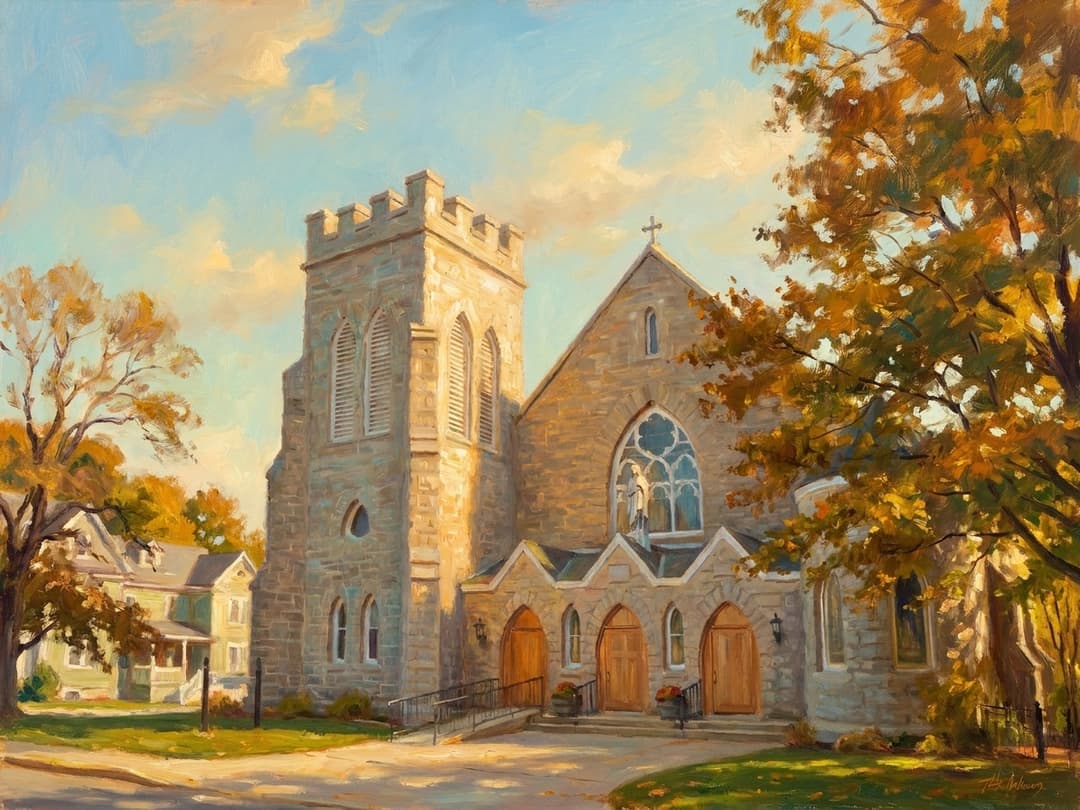
Holy Redeemer Catholic Church welcomes pilgrims and visitors to experience a peaceful suburban sanctuary defined by rich red brick masonry and brilliant stained glass windows. Open daily for personal prayer and Eucharistic Adoration, the church offers an oasis of quiet contemplation just minutes from the busy Capital Beltway.
Highlights
- Dazzling narrative stained glass windows depicting the mysteries of the Holy Rosary and the life of Christ.
- A soaring longitudinal nave providing completely unobstructed sightlines toward the elevated marble sanctuary.
- Devotional side chapels dedicated to the Blessed Virgin Mary and Saint Joseph with banks of votive candles.
- A peaceful prayerful atmosphere accentuated by daily Exposition and Adoration of the Blessed Sacrament.
Things to Know
- Modest attire respectful of sacred worship is requested inside the consecrated sanctuary.
- Maintain reverent silence within the nave, as the Blessed Sacrament is reserved in the tabernacle.
- Weekday afternoons between 1:00 PM and 4:00 PM offer the quietest hours for architectural touring.
- Large parish events and Sunday liturgies often fill the main parking lot during morning hours.
Location
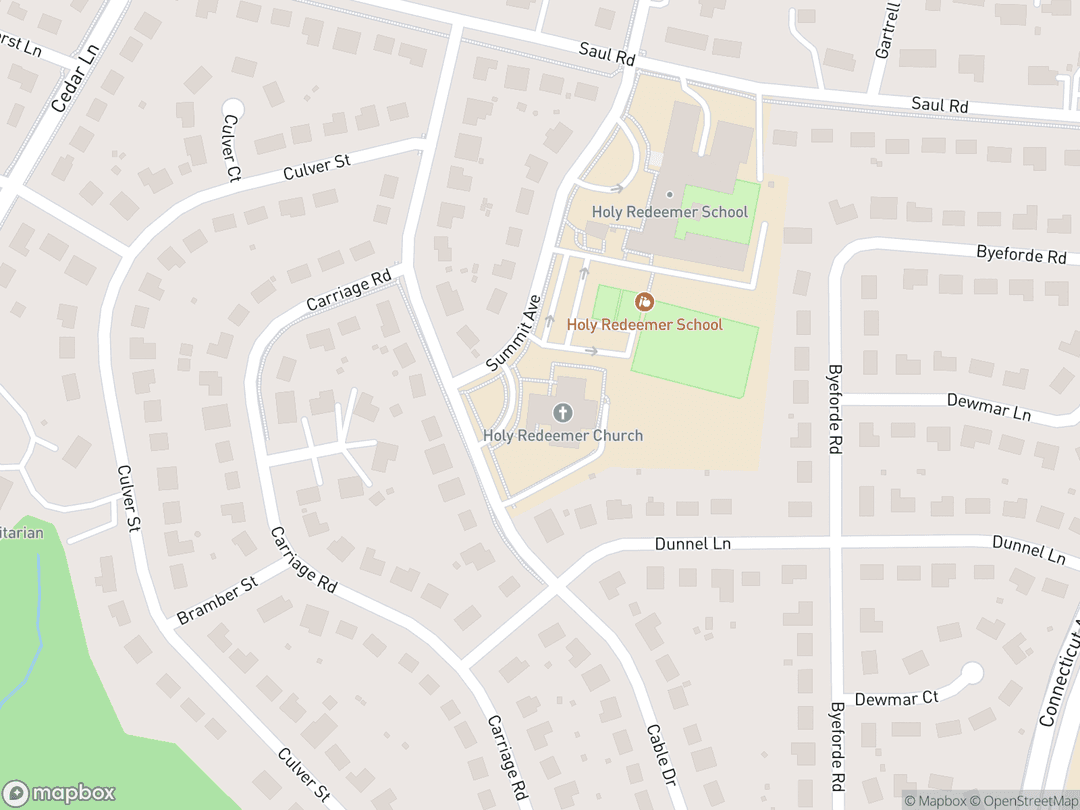
9705 Summit Avenue, Kensington, MD 20895
Hours: Monday through Friday: 6:00 AM – 9:00 PM; Saturday: 8:00 AM – 6:30 PM; Sunday: 7:00 AM – 1:00 PM
Getting There: Located off Connecticut Avenue (MD-185) south of I-495 Exit 33; MARC Brunswick train stops 0.7 miles north at Kensington Station.
Get DirectionsTips for Your Visit
Sanctuary Reverence
Catholics genuflect toward the tabernacle upon entering pews as a sign of adoration for Christ's Real Presence.
Stained Glass Viewing
Morning light provides optimal illumination for viewing the vibrant faceted glass windows along the eastern nave.
Accessibility
Step-free ramped entrances and accessible seating bays are located near the main narthex on Summit Avenue.
About
Holy Redeemer Catholic Church stands within the historic town of Kensington, Maryland, serving as a spiritual home for thousands of families in the Roman Catholic Archdiocese of Washington. The parish traces its lineage to the pioneering colonial Catholic missions founded by Father John Carroll in the late eighteenth century, which sustained the faithful across Montgomery County during an era of legal disenfranchisement.
Rooted in the shared Abrahamic understanding of a sacred dwelling set apart for the adoration of the one God, Catholic theology perceives the consecrated church as the house of the New Covenant. Here, the Incarnation of Jesus Christ is continually remembered and made present through the liturgy of the Word and the celebration of the Eucharist, uniting the assembly across time and eternity.
Erected canonically as an independent parish in 1948, Holy Redeemer relocated to its expansive Summit Avenue campus in the 1950s through the benevolence of developer B. Francis Saul. Dedicated by Archbishop Patrick A. O'Boyle on April 6, 1963, the permanent sanctuary exemplifies mid-century Modern Traditionalism, featuring unobstructed sightlines, narrative stained glass, and an active community devoted to regional charity and global missions.
Gallery
Symbolic Elements
The temple's exterior features intricate carvings, each rich with spiritual meaning:
Holy Redeemer Crucifix
Proclaims Christ's sacrificial atonement on the Cross as the redeemer who ransoms humanity from sin.

Tabernacle and Sanctuary Lamp
Housings for the consecrated Eucharist with a living flame signifying the Real Presence of Christ.
Narrative Stained Glass
Visual catechesis depicting the mysteries of the Rosary, the Gospels, and the communion of saints.
Marian Shrine Altar
Side altar dedicated to the Mother of God, honoring her role as first disciple and heavenly intercessor.
Saint Joseph Altar
Honors the earthly protector of the Holy Family as patron of fathers, laborers, and the Universal Church.

Baptismal Font
Carved stone basin marking sacramental regeneration where believers enter new life in Christ.

Fourteen Stations of the Cross
Relief carvings lining the nave that guide pilgrims spiritually through Christ's path to Calvary.

Chi-Rho Monogram
Ancient Christian christogram representing the sovereignty of Jesus as Lord of history.
Interesting Facts
Father John Carroll celebrated secret colonial Masses in his mother's home near Kensington to avoid anti-Catholic British penal laws (Tier A).
Post-war population growth at Holy Redeemer spurred the archdiocese to partition its territory into three new daughter parishes (Tier A).
Philanthropist B. Francis Saul donated the entire seven-acre Summit Avenue campus property in memory of his parents (Tier A).
The original 1911 church was acquired and demolished by county authorities in the 1950s to widen Connecticut Avenue (Tier A).
Parish school enrollment reached an all-time high of nearly 1,300 students in 1960 under the Sisters of Charity of Cincinnati (Tier B).
Founding pastor Father Charles Rosensteel was recognized as the first priest in the archdiocese to minister by motorcycle (Tier B).
In 2023, Holy Redeemer parishioners raised over $85,000 to construct a sister mission church in Abelelbe, Togo (Tier B).
The parish annually hosts a popular winter antiques showcase that attracts collectors from across the mid-Atlantic region (Tier C).
Common Questions
Are non-Catholic visitors allowed to attend Mass at Holy Redeemer?
Visitors of all faiths are warmly welcomed to attend liturgical services and join in prayer.
Can non-Catholics receive Holy Communion during Mass?
In Catholic practice, reception of the Eucharist is reserved for baptized Catholics who share full sacramental communion.
Is Holy Redeemer Church open for personal prayer during the week?
Yes, the main sanctuary is open throughout the day for quiet prayer, meditation, and Eucharistic Adoration.
Why was the original 1911 church on Connecticut Avenue demolished?
The historic property was acquired by Montgomery County in the 1950s to facilitate the widening of Connecticut Avenue.
Featured Stories
The Motorcycle Pastor of Forest Glen
1911
Father Charles Rosensteel of Saint John the Evangelist was renowned across Maryland as the first Catholic priest to travel his parish territory on a motorcycle. Facing muddy rural trails and scattered farming outposts, he used two-wheeled transport to minister across Kensington and organize the original 1911 chapel.
Source: Archdiocese of Washington Historical Archives
A Landmark Gift on Summit Avenue
1950
When post-war expansion overwhelmed Kensington's original chapel, prominent banker B. Francis Saul stepped forward to donate nearly seven acres along Summit Avenue. Given in memory of his parents, this generous gift gave Holy Redeemer the expansive grounds required to build its parish school, convent, and grand modern church.
Source: Holy Redeemer Dedication Program
From Maryland Suburbs to Abelelbe Togo
June 12, 2023
To celebrate their parish's seventy-fifth anniversary, parishioners raised funds to erect a complete brick mission church in the rural village of Abelelbe in Togo, West Africa. Parishioners and priests traveled abroad to consecrate the sister sanctuary, demonstrating how a suburban community's faith reaches across global boundaries.
Source: Catholic Standard
Timeline
Forest Glen Mission Founded
Father John Carroll establishes Saint John Chapel in Forest Glen, planting Catholic seeds in colonial Maryland.
MilestoneOriginal Kensington Chapel
Father Charles Rosensteel oversees construction of a small frame mission chapel at Connecticut Avenue and Prospect Street.
DedicationCanonical Erection of the Parish
Archbishop Patrick A. O'Boyle formally establishes Holy Redeemer as an independent parish under Father Stephen J. Hogan.
MilestoneCampus Land Donation
Philanthropist B. Francis Saul donates seven acres on Summit Avenue to the archdiocese for a permanent parish campus.
EventParish School and Auditorium Dedicated
Archbishop O'Boyle dedicates Holy Redeemer School, opening under the direction of the Sisters of Charity of Cincinnati.
DedicationPartition for Saint Catherine Labouré
Rapid suburban growth leads the archdiocese to partition parish boundaries to establish a new parish in Wheaton.
MilestonePermanent Sanctuary Consecrated
Archbishop Patrick A. O'Boyle presides over the solemn dedication of the new Holy Redeemer Church on Summit Avenue.
DedicationVatican II Liturgical Transition
Monsignor Leo J. Coady guides the congregation through the implementation of conciliar reforms and vernacular Mass.
EventSisters of Charity Transition
The Sisters of Charity conclude thirty-two years of parochial leadership, transferring the school to lay educators.
MilestoneSaint John Vianney House Opens
The former convent building is repurposed as an archdiocesan residence and spiritual retreat home for priests.
RenovationParish Golden Jubilee
Holy Redeemer celebrates fifty years since canonical erection with interior lighting and acoustic enhancements.
Milestone75th Jubilee and Togo Chapel
Parishioners mark seventy-five years by constructing and dedicating an overseas mission church in Abelelbe, Togo.
MilestoneHistory by Decade
1770s–1900s — Colonial Roots at Forest Glen
During the British colonial era, anti-Catholic penal laws prohibited public Catholic chapels across the Maryland colony. In 1774, Jesuit Father John Carroll began celebrating clandestine Masses in his mother's home in Forest Glen. Following American independence, this humble mission evolved into Saint John the Evangelist Parish, which nurtured the small Catholic population scattered around Kensington.
1910s–1930s — The Railroad Mission Chapel
With the growth of commuter suburbs along the Baltimore and Ohio Railroad, Kensington required its own place of worship. In 1911, Father Charles Rosensteel directed the erection of a modest wood-frame mission chapel at Connecticut Avenue and Prospect Street. Dedicated to the Holy Redeemer, the chapel provided sacramental life for local families throughout the Great Depression.
1940s — Canonical Independence and Post-War Boom
Following the 1947 establishment of the Archdiocese of Washington, Archbishop Patrick A. O'Boyle canonically erected Holy Redeemer as an independent parish on June 12, 1948. Founding pastor Father Stephen J. Hogan greeted an influx of military veterans and young families moving to Montgomery County. Weekend Masses overflowed into community halls as the suburban population surged.
1950s — Summit Avenue Relocation and School Dedication
In 1950, developer B. Francis Saul donated a seven-acre tract on Summit Avenue, securing a permanent home for the parish. Archbishop O'Boyle dedicated the new parochial school and multi-purpose auditorium on September 30, 1951, staffed by the Sisters of Charity of Cincinnati. The old Connecticut Avenue chapel was later acquired by the county and removed during highway widening projects.
1960s — Consecration of the Modern Sanctuary
Monsignor E. Robert Arthur initiated construction of the permanent church building to accommodate over eight hundred worshippers. Consecrated by Archbishop O'Boyle on April 6, 1963, the sanctuary married traditional longitudinal massing with modern open-span construction. Following the Second Vatican Council, Monsignor Leo J. Coady oversaw liturgical adaptations, including the installation of a freestanding altar.
1980s–Present — Transition, Renewal, and Global Mission
Following the departure of the Sisters of Charity in 1984, the parish school successfully transitioned to an all-lay faculty while the convent became the Saint John Vianney House for diocesan priests. Across recent decades, pastors have modernized sanctuary accessibility, instituted daily Eucharistic Adoration, and established international missionary partnerships, culminating in their 75th Jubilee celebrations in 2023.
Architecture & Facilities
Holy Redeemer Church exemplifies mid-century Modern Traditionalist Catholic ecclesiastical architecture, constructed during the transitional period of the early 1960s. The structure combines traditional Romanesque massing and red brick running bond with clean geometric limestone trim and an open, pillar-free nave designed to enhance congregational participation in the sacred liturgy.
Building Materials
Exterior Red Brick
Warm variegated red masonry laid in running bond provides a dignified colonial Maryland texture.
Indiana Limestone
Carved limestone surrounds frame the entrance tympanums, lintels, and exterior coping.
Architectural Slate Roofing
Durable dark slate panels clad the steep pitched gable roof over the central nave.
Solid American Oak
Crafted oak pews and chancel furnishings impart warmth throughout the congregational interior.
Interior Features
The Main Nave
A wide pillar-free hall seating eight hundred worshippers with clear views of the altar.
The Elevated Sanctuary
A raised marble platform housing the freestanding altar of sacrifice, ambo, and tabernacle.
The West Choir Loft
An elevated gallery above the narthex housing organ consoles and musical vocalists.
Devotional Side Shrines
Dedicated prayer niches flanking the sanctuary featuring statues of Our Lady and Saint Joseph.
Temple Grounds
The seven-acre campus features expansive grass lawns, mature hardwood trees, dedicated walkways linking the church to the school and community center, and spacious on-site parking accessible from Summit Avenue and Saul Road.
Additional Facilities
The parish campus encompasses Holy Redeemer Parochial School, the Saint John Vianney House residence, a full-sized gymnasium auditorium, and lower-level community meeting halls.
Religious Significance
Within the Roman Catholic tradition, Holy Redeemer Church is a consecrated temple of God where heaven and earth intersect through sacramental liturgy. Rooted in the ancient Abrahamic sanctuary tradition, it fulfills biblical types through the bodily Incarnation and ongoing Eucharistic presence of Jesus Christ.
To offer the Holy Sacrifice of the Mass, celebrate the seven Sacraments, foster continuous adoration of the Blessed Sacrament, and proclaim the Gospel of Christ to the world.
Sacred Ordinances
The Holy Sacrifice of the Mass
The unbloody re-presentation of Christ's sacrifice on Calvary through the consecration of bread and wine.
Sacrament of Reconciliation
The sacramental forgiveness of sins granted by Christ through the priestly ministry of absolution.
Eucharistic Adoration
Solemn prayer before the exposed Blessed Sacrament, honoring Christ's perpetual Real Presence.
Sacrament of Holy Baptism
The gateway sacrament washing away original sin and incorporating the soul into the Body of Christ.
The Patronage of the Holy Redeemer
The title 'Holy Redeemer' invokes the heart of Christian soteriology: Christ paying the debt of human sin upon the Cross. Every aspect of the parish liturgy, architecture, and outreach reflects this redemptive grace, inviting believers to share in the divine mercy poured out for the salvation of the world.
The Eucharistic Tabernacle
Unlike churches built solely as lecture spaces, Catholic sanctuaries are anchored by the tabernacle. Containing consecrated hosts, the tabernacle makes the church a perpetual sanctuary of divine encounter, indicated by the glowing red flame of the sanctuary lamp.
Sources & Research
Every fact on Temples.org is backed by verified Sources & Research. Each piece of information is rated by source tier and confidence level.
View All Sources (5)
| Field | Source | Tier | Retrieved |
|---|---|---|---|
| About & Historical Background | Roman Catholic Archdiocese of Washington (opens in a new tab) | A | 2026-03-30 |
| About & Historical Background | Holy Redeemer Catholic Church (opens in a new tab) | A | 2026-03-30 |
| Colonial Foundations & Forest Glen | St. John the Evangelist Catholic Church (opens in a new tab) | A | 2026-03-30 |
| Architecture & Sacred Arts | Parish Times (opens in a new tab) | B | 2026-03-30 |
| Community Programs & Demographics | The Washington Post (opens in a new tab) | B | 2026-03-30 |