Visitor Insights
Visiting Boston Massachusetts Temple
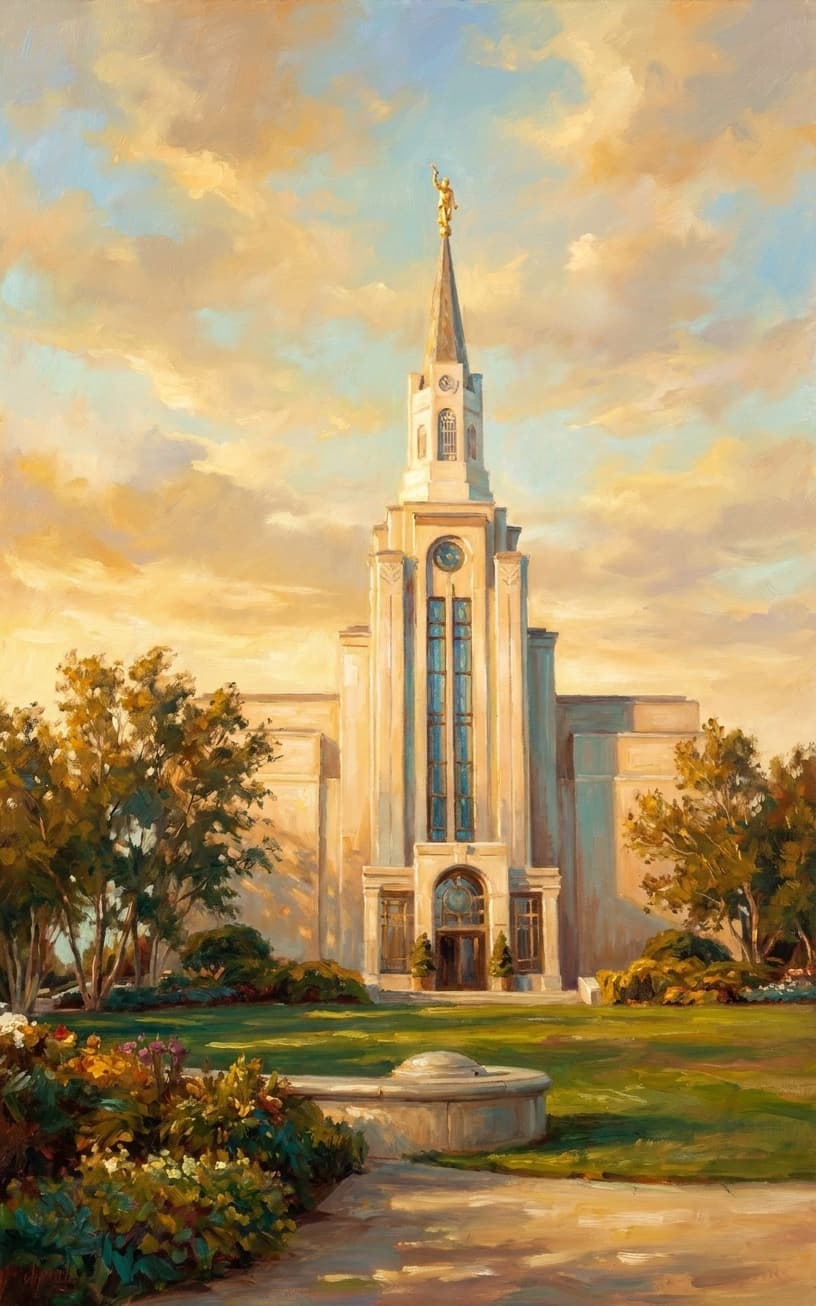
The Boston Massachusetts Temple offers a serene and contemplative environment, situated atop a beautiful, heavily wooded granite hill in Belmont. Visitors are welcome to walk the meticulously landscaped grounds, which feature curving concrete pathways, stone retaining walls, and vibrant seasonal floral displays. The peaceful atmosphere provides a quiet escape from the busy adjacent Concord Turnpike, allowing guests of all faiths to reflect and find solace. While the interior is reserved for sacred ordinances, the exterior architecture and peaceful gardens are highly accessible and welcoming to the public.
Highlights
- Stunning views of the Olympia white granite facade catching the evening light
- Meticulously manicured gardens featuring seasonal flowers and mature trees
- A peaceful New England-style stone fence enclosing the perimeter
Things to Know
- The interior of the temple is accessible only to members with a valid recommend
- Parking is available on-site but can be limited during weekend services
- The grounds are open daily from sunrise to sunset
Location
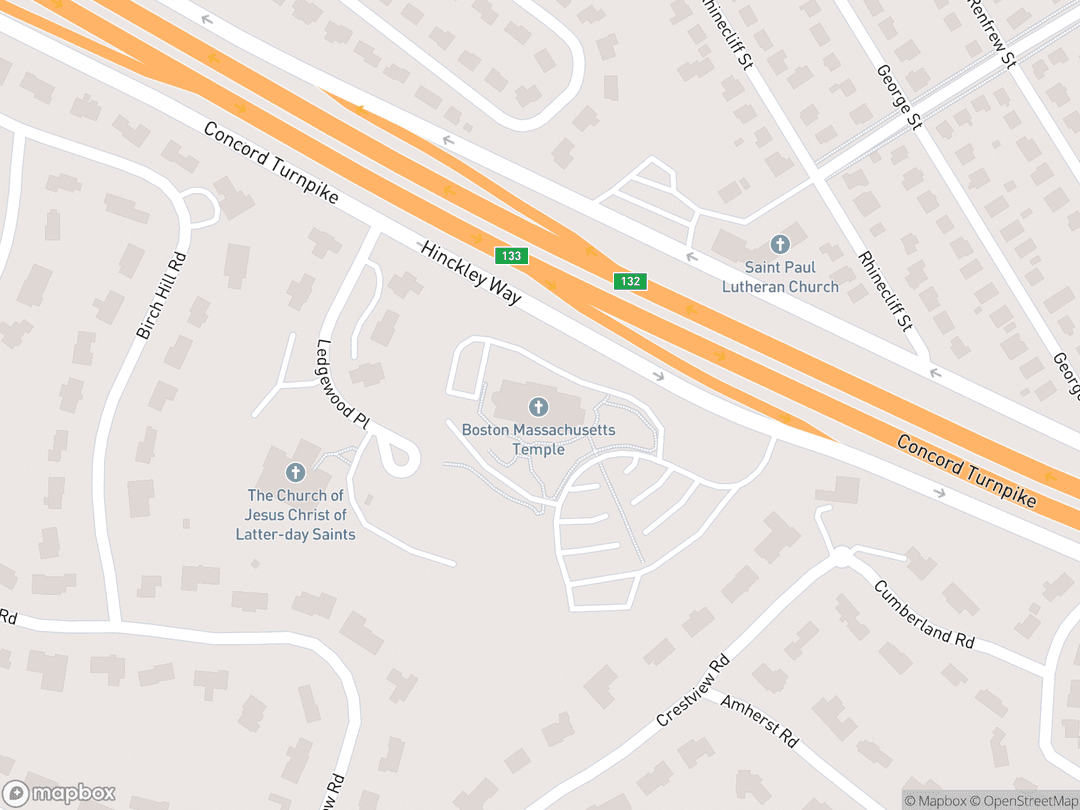
100 Hinckley Way, Belmont, Massachusetts 02478-2135, United States
Hours: The temple grounds are open daily to the public from sunrise to sunset. Temple ordinance hours vary by day and require scheduling.
Getting There: Located at 100 Hinckley Way in Belmont, Massachusetts, the temple sits prominently off the Concord Turnpike (Route 2). It is easily accessible by car from Interstate 95 (Route 128). Public transit users can take the MBTA Commuter Rail (Fitchburg Line) to Belmont Center station or local buses from the Alewife MBTA subway station, followed by a short rideshare.
Get DirectionsTips for Your Visit
Golden Hour Photography
Visit just before sunset to capture the warm evening light reflecting off the brilliant Sardinian white granite facade.
Public Transit Access
If traveling without a car, take the MBTA Red Line to Alewife station, then catch a quick rideshare or local bus to Belmont.
Respectful Attire
While the grounds are public, visitors are encouraged to dress respectfully to maintain the quiet, sacred atmosphere of the site.
About
The Boston Massachusetts Temple stands as a magnificent spiritual beacon atop a heavily wooded granite hill in the historic suburb of Belmont. Dedicated in 2000, it holds a landmark place in modern Latter-day Saint history as the Church's 100th operating temple worldwide. The building's classic modern, single-spire design is heavily influenced by traditional New England ecclesiastical architecture, utilizing clean lines and vertical symmetry that mirror the historic steeples of early American houses of worship in the Northeast. This architectural bridge connects the temple to the deep Christian heritage of the region, creating a harmonious visual presence in the local community.
The road to the temple's completion was marked by significant historical and legal milestones. Originally announced in 1995, the project faced intense local zoning challenges and height-restriction lawsuits regarding its proposed steeple. In a spirit of faith and determination, the Church proceeded with construction and dedicated the temple in October 2000 with a flat roof. The legal dispute culminated in a landmark religious freedom ruling by the Supreme Judicial Court of Massachusetts, which unanimously declared the steeple a protected religious element. In September 2001, the 139-foot spire and gold-leafed Angel Moroni statue were finally hoisted into place, completing the temple's iconic silhouette.
Within the broader context of Christian and Abrahamic theology, the Boston Massachusetts Temple serves as a sacred sanctuary for making and keeping eternal covenants with God. It is a place of profound reverence where patrons participate in ordinances that emphasize the eternal nature of the soul and the perpetuity of family relationships beyond the grave. The temple's peaceful interior, from the beautiful baptistry to the quiet Celestial Room, is designed to foster deep contemplation, personal revelation, and a closer connection to Jesus Christ, whom Latter-day Saints worship as the Savior of humanity.
Gallery
Symbolic Elements
The temple's exterior features intricate carvings, each rich with spiritual meaning:

Angel Moroni Statue
Crowning the single spire, the gold-leafed statue of the Angel Moroni symbolizes the restoration of the gospel of Jesus Christ. It serves as a visual call to all nations, representing the fulfillment of biblical prophecy regarding the preaching of the everlasting gospel.

Single Spire
The prominent single spire mirrors the historic steeples of traditional New England houses of worship. It serves as an architectural bridge to the region's Christian heritage, pointing upward to remind onlookers to draw closer to God.

Twelve Oxen Baptismal Font
Located in the baptistry, the baptismal font rests on the backs of twelve life-sized sculpted oxen. Drawing from the biblical design of Solomon's Temple, they represent the twelve tribes of Israel and the strength of God's covenant family.

Olympia White Granite
The exterior is clad in Olympia white granite quarried from the island of Sardinia, Italy. Its brilliant, light-reflective sheen symbolizes purity, holiness, and the light of Christ reflecting into the world.

Vertical Blue Stained-Glass Windows
Deep vertical bands of blue stained-glass windows run along the granite facade. They cast a soft, tranquil light into the interior, symbolizing the peace, clarity, and heavenly focus of temple worship.

The Celestial Room
Designed as the spiritual heart of the temple, the Celestial Room represents the peace and beauty of heaven. It contains no altars, serving instead as a place of quiet contemplation and communion with God.

New England Stone Fence
A low, traditional New England-style stone fence encloses the perimeter of the temple grounds. It symbolizes the sacred boundary between the busy world and the peaceful sanctuary of the temple.
Interesting Facts
The Boston Massachusetts Temple holds the historic distinction of being the 100th operating temple of the Church worldwide, fulfilling a major goal set by President Gordon B. Hinckley to have 100 temples in operation before the conclusion of the year 2000.
Due to intense local opposition and zoning disputes, the temple was dedicated in October 2000 without its signature steeple, leaving the roof flat at dedication.
In the landmark 2001 case Martin v. Corporation of the Presiding Bishop, the Supreme Judicial Court of Massachusetts ruled unanimously in favor of the Church, protecting the steeple as a religious element.
The 8-acre site was originally purchased years prior for a local meetinghouse. The architect insisted on fitting the chapel in the lower corner, unknowingly preserving the perfect, commanding hilltop location for the temple.
The gold-leafed Angel Moroni statue was installed on September 21, 2001—the 178th anniversary of the angel's first appearance to Joseph Smith in 1823.
The exterior finish is made of Olympia white granite, which was quarried on the island of Sardinia, Italy, before being shipped to the United States.
To help navigate the complex federal and local challenges surrounding construction, prominent U.S. Senators Orrin Hatch and Ted Kennedy personally stepped in to support the project.
The Angel Moroni statue is a casting of the original sculpture created by Torlief Knaphus for the Washington D.C. Ward chapel in the 1930s.
The temple's announcement in 1995 effectively replaced a previously planned regional temple in Hartford, Connecticut, which had faced severe site-acquisition challenges.
Elder Loren C. Dunn, the first president of the Boston Temple, tragically passed away on May 16, 2001—just hours after the Massachusetts Supreme Judicial Court issued its final ruling allowing the steeple to be built.
Common Questions
Why was the temple dedicated without a steeple?
Due to intense local opposition and zoning disputes, opponents argued that the planned 139-foot steeple violated local height restrictions. Rather than delay the opening, the Church chose to dedicate the temple in October 2000 with a flat roof while the legal case was resolved in court.
What is the significance of the Boston Temple being the 100th operating temple?
The dedication of the Boston Temple fulfilled a historic administrative goal set by President Gordon B. Hinckley to have 100 operating temples in service before the end of the year 2000, marking a major milestone in the global expansion of the Church.
Can the public visit the temple?
While the interior of the temple is reserved for members holding a valid temple recommend, the public is warmly invited to visit and walk the beautifully landscaped 8-acre grounds, which are open daily from sunrise to sunset.
What is the landmark legal case associated with this temple?
The legal battle over the steeple led to the landmark 2001 Massachusetts Supreme Judicial Court case Martin v. Corporation of the Presiding Bishop. The court ruled unanimously that the steeple was a protected religious element exempt from local height limits, setting an important precedent for religious land-use rights.
What materials were used to construct the exterior of the temple?
The exterior facade is clad in Olympia white granite, which was quarried on the island of Sardinia, Italy. This high-grade stone gives the building a brilliant, light-reflective sheen that stands out beautifully against the wooded hillside.
How does the temple's design reflect New England heritage?
The temple features a classic modern, single-spire design that draws inspiration from traditional New England ecclesiastical architecture. Its clean lines, vertical symmetry, and prominent end-spire mirror the historic steeples of early American houses of worship in the Northeast.
Featured Stories
The Battle for the Steeple
October 1, 2000
When the Boston Massachusetts Temple was dedicated in October 2000, it stood with a conspicuously flat roof, devoid of its planned steeple and Angel Moroni statue. Local opponents had waged an intense zoning battle, arguing that the 139-foot spire violated municipal height restrictions. The Church chose to proceed with the dedication rather than delay, leaving the roof bare as a symbol of the ongoing legal struggle.
For nearly a year, the temple operated in this incomplete state while the case worked its way through the legal system. The conflict was finally resolved in May 2001 when the state's highest court ruled that the steeple was a protected religious expression, paving the way for its dramatic installation.
Source: Church History Department Records
A Landmark Victory for Religious Freedom
May 16, 2001
The legal battle over the Boston Temple's spire culminated in the landmark Massachusetts Supreme Judicial Court case, Martin v. Corporation of the Presiding Bishop. In a unanimous decision, Chief Justice Margaret Marshall delivered a powerful defense of religious freedom and architectural expression.
She famously compared the temple's steeple to the rose windows of Notre Dame and the balcony of St. Peter's Basilica, asserting that secular judges should not dictate which architectural features are 'necessary' for a religion. This ruling set a vital legal precedent across the United States, reinforcing the principle that religious communities have the right to define their own sacred architecture without undue municipal interference.
Source: Massachusetts Supreme Judicial Court Ruling
The Tri-Temple Moroni Installation
September 21, 2001
On September 21, 2001, a massive crane hoisted the prefabricated 139-foot steeple and gold-leafed Angel Moroni statue into place atop the Boston Temple, completing its design. This historic event occurred on the 178th anniversary of the angel's first appearance to the Prophet Joseph Smith in 1823.
Remarkably, the Church coordinated the installation of Angel Moroni statues on three separate temples—Boston, Nauvoo, and The Hague—on or around this highly symbolic date. The sight of the golden figure rising above the Belmont hillside brought tears to the eyes of local Latter-day Saints, who had waited years to see their temple fully completed.
Source: Deseret News Archives
Timeline
Temple Announcement
President Gordon B. Hinckley announces plans for the Boston Massachusetts Temple during General Conference, replacing a previously proposed site in Hartford, Connecticut.
MilestoneGroundbreaking Ceremony
Elder Richard G. Scott of the Quorum of the Twelve Apostles presides over the groundbreaking ceremony on an 8-acre wooded granite hillside in Belmont.
component.timeline.groundbreakingPublic Open House Begins
The temple opens its doors to the general public, welcoming over 100,000 visitors of all faiths to tour the interior before its formal dedication.
EventOpen House Concludes
The public open house concludes after weeks of high attendance, preparing the building for its sacred dedication ceremonies.
EventTemple Dedication
President Gordon B. Hinckley dedicates the Boston Massachusetts Temple as the 100th operating temple of the Church, though it is dedicated without a steeple due to ongoing zoning litigation.
DedicationLandmark Supreme Court Ruling
The Supreme Judicial Court of Massachusetts rules unanimously in Martin v. Corporation of the Presiding Bishop, declaring the proposed steeple a protected religious element exempt from local height limits.
MilestonePassing of President Loren C. Dunn
Elder Loren C. Dunn, the first president of the Boston Massachusetts Temple, tragically passes away just hours after the landmark court ruling allowing the steeple's construction.
EventSpire and Angel Moroni Installation
The 139-foot steeple and gold-leafed Angel Moroni statue are hoisted and permanently installed atop the temple, completing its architectural design.
MilestoneBelmont Meetinghouse Fire
A major fire severely damages the adjacent Belmont Meetinghouse chapel. The temple itself remains untouched and fully operational.
EventRebuilt Meetinghouse Dedication
The rebuilt Belmont Meetinghouse is formally dedicated, restoring the full congregational worship facilities on the lower portion of the temple property.
MilestoneTemporary Pandemic Closure
In response to the global COVID-19 pandemic, the temple temporarily suspends all patron ordinances to ensure the safety of staff and visitors.
EventPhased Reopening Begins
The temple begins a cautious, phased reopening protocol, initially offering limited living ordinances under strict safety guidelines.
EventReturn to Full Operations
The Boston Massachusetts Temple returns to full operational capacity, welcoming patrons back for all proxy and living ordinances.
MilestoneSilver Jubilee Anniversary
The temple celebrates 25 years of continuous operation, serving as a spiritual beacon for Latter-day Saints throughout New England.
MilestoneCatalog Entry Created
The Boston Massachusetts Temple is formally documented and added to the global temple registry with comprehensive historical and architectural details.
MilestoneHistory by Decade
1990s — Announcement and Groundbreaking
The journey of the Boston Massachusetts Temple began on September 30, 1995, when President Gordon B. Hinckley announced its construction during General Conference. This announcement was a significant shift, as it replaced a previously proposed regional temple in Hartford, Connecticut, which had faced insurmountable site-acquisition challenges. The Church selected an 8-acre wooded granite hillside in the northwest suburb of Belmont, a site originally purchased years prior for a local meetinghouse. Ground was officially broken on June 13, 1997, in a ceremony presided over by Elder Richard G. Scott of the Quorum of the Twelve Apostles, marking the start of a highly anticipated construction phase that would soon capture local and national attention.
2000s — Dedication, Litigation, and Completion
The turn of the century brought both triumph and intense legal challenges. In August 2000, more than 100,000 visitors toured the temple during its public open house. On October 1, 2000, President Hinckley dedicated the temple as the 100th operating temple of the Church, fulfilling a historic administrative goal. However, due to ongoing zoning disputes with local residents, the temple was dedicated with a flat roof. The legal battle ended on May 16, 2001, when the Supreme Judicial Court of Massachusetts ruled unanimously in favor of the Church. On September 21, 2001, the 139-foot spire and Angel Moroni statue were finally installed, completing the temple's iconic silhouette.
2010s — Trial by Fire and Rebuilding
The 2010s were marked by a dramatic event that tested the resilience of the local Latter-day Saint community. On December 6, 2011, a major fire broke out in the adjacent Belmont Meetinghouse, a standard chapel used for weekly congregational worship. While the fire completely gutted the meetinghouse, the temple itself stood untouched and remained fully operational throughout the crisis. The local community rallied, and the meetinghouse was subsequently rebuilt and dedicated on June 15, 2013, restoring the full spiritual and administrative hub on the Belmont property.
2020s — Global Pandemic and Silver Jubilee
The onset of the 2020s brought unprecedented global challenges. In March 2020, the Boston Massachusetts Temple temporarily suspended all patron ordinances in compliance with safety measures during the COVID-19 pandemic. The temple gradually transitioned through phased reopening protocols, returning to full operational capacity by August 2021. In October 2025, the temple celebrated its 25th anniversary, marking a quarter-century of serving as a sacred sanctuary of peace, covenant-making, and spiritual refuge for Latter-day Saints across the New England region.
Architecture & Facilities
The Boston Massachusetts Temple features a classic modern, single-spire design heavily influenced by traditional New England ecclesiastical architecture. The building's aesthetic utilizes clean lines, vertical symmetry, and a prominent end-spire that mirrors the historic steeples of early American houses of worship in the Northeast, blending seamlessly into the historic Massachusetts landscape.
Building Materials
Exterior Facade
Clad in Olympia white granite, quarried on the island of Sardinia, Italy, which gives the exterior a brilliant, light-reflective sheen.
Stained-Glass Windows
Deep vertical bands of blue stained-glass windows that run along the granite facade, casting a soft, tranquil light into the interior.
Interior Woodwork
Finely crafted, light-colored maple woodwork that frames the doorways, altars, and structural accents throughout the temple.
Flooring and Carpeting
High-grade, polished marble and plush, light-colored carpets designed to absorb sound and maintain a quiet, reverent atmosphere.
Interior Features
Baptistry
Located on the lower level, featuring a large font resting on the backs of twelve life-sized, sculpted oxen arranged in groups of three pointing toward the four cardinal directions.
Ordinance Rooms
Contains four instruction rooms designed for a two-stage progressive presentation of the endowment, where patrons move from an initial room to a second, symbolically higher room.
Sealing Rooms
Four sealing rooms dedicated to the performance of eternal marriages, featuring central altars and parallel mirrors on opposing walls that create infinite reflections.
Celestial Room
The spiritual heart of the temple, designed to represent the peace of heaven, adorned with exquisite crystal chandeliers, elegant light-colored furnishings, and detailed maple trim.
Temple Grounds
The temple is situated atop an 8-acre, heavily wooded granite crag in Belmont. The grounds are formally landscaped with curving concrete walkways, stone retaining walls, and a low, New England-style stone fence that encloses the perimeter. The gardens feature a rich variety of seasonal flowers, manicured lawns, and mature trees that shield the sacred site from the adjacent Concord Turnpike.
Additional Facilities
An adjoining meetinghouse (the Belmont Meetinghouse) sits on the lower portion of the property, serving local Latter-day Saint congregations for Sunday worship services. A distribution center is also located on-site, allowing patrons to purchase temple garments, scriptures, and Church literature.
Religious Significance
The Boston Massachusetts Temple stands as a sacred sanctuary within the Christian theological tradition, emphasizing the eternal covenant relationship between God and humanity. Like other Christian houses of worship, it is built to honor Jesus Christ as the Savior of the world, serving as a physical testament to the reality of His resurrection and the hope of eternal life.
The core spiritual purpose of the temple is to provide a sacred space where Latter-day Saints can make formal, binding covenants with God. These covenants are designed to guide individuals in their daily lives, helping them draw closer to Christ and prepare for the ultimate return to the presence of the Father.
Sacred Ordinances
The Endowment
A sacred presentation of the plan of salvation, where patrons receive instruction regarding the creation, the fall of Adam and Eve, and the redemption through Jesus Christ, making covenants of obedience and service.
Eternal Marriage (Sealing)
An ordinance that unites husbands, wives, and children in eternal family relationships, allowing love and family bonds to transcend death through the power of the priesthood.
Baptism for the Dead
A proxy ordinance performed on behalf of deceased ancestors, offering them the opportunity to accept the covenant of baptism, demonstrating God's universal love and mercy for all His children.
The Abrahamic Covenant and Eternal Families
In Latter-day Saint theology, the temple ordinances restore and fulfill the ancient Abrahamic covenant. Through these sacred rites, families are 'sealed' together for eternity, extending God's promises to Abraham regarding endless posterity and divine inheritance to all faithful followers of Christ today.
A Sanctuary of Peace and Revelation
Beyond the performance of formal ordinances, the temple serves as a house of personal revelation and peace. Patrons visit to escape the noise of the world, meditate in the quiet Celestial Room, and seek divine guidance for their personal lives, families, and spiritual journeys.
Similar Temples
Sources & Research
Every fact on Temples.org is backed by verified Sources & Research. Each piece of information is rated by source tier and confidence level.
View All Sources (8)
| Field | Source | Tier | Retrieved |
|---|---|---|---|
| About & Historical Background | The Church of Jesus Christ of Latter-day Saints (opens in a new tab) | A | 2026-02-18 |
| Timeline & Dedication | Official Church Newsroom (opens in a new tab) | A | 2026-02-18 |
| Historical Timeline | Church History Department (opens in a new tab) | A | 2026-02-18 |
| Visitor Insights & Operations | Official Temple Directory (opens in a new tab) | A | 2026-02-18 |
| Steeple Litigation & History | Brigham Young University (opens in a new tab) | B | 2026-02-18 |
| Martin v. Corporation of the Presiding Bishop Case Law | Thomson Reuters FindLaw (opens in a new tab) | B | 2026-02-18 |
| Community & Architectural Context | The Pluralism Project at Harvard University (opens in a new tab) | B | 2026-02-18 |
| Technical Specifications | ChurchofJesusChristTemples.org (opens in a new tab) | C | 2026-02-18 |