Visitor Insights
Visiting St. Paul Minnesota Temple
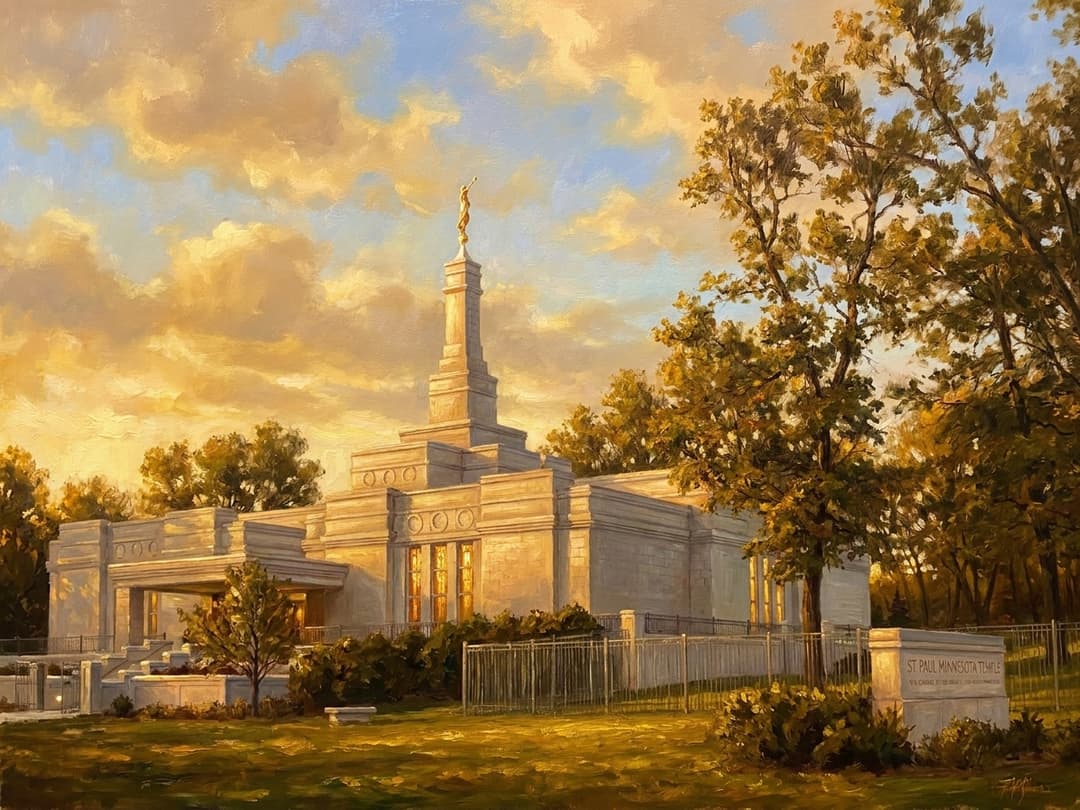
The St. Paul Minnesota Temple sits on a peaceful, heavily wooded site in Oakdale. Visitors of all faiths are welcome to walk the landscaped grounds and admire the granite architecture. Access to the interior is reserved for members of the Church holding a current temple recommend.
Highlights
- Lush native oak and pine canopy surrounding the temple grounds
- Light gray granite facade paired with elegant stained art glass windows
- Immaculate seasonal flowerbeds and peaceful walking pathways
- Proximity to the adjacent Oakdale Stake Center campus
Things to Know
- Interior admittance requires an active temple recommend
- No public visitors' center or patron housing is located on site
- Dress modestly and maintain a quiet, respectful atmosphere on the grounds
- Winter snow cover creates striking evening photography opportunities
Location
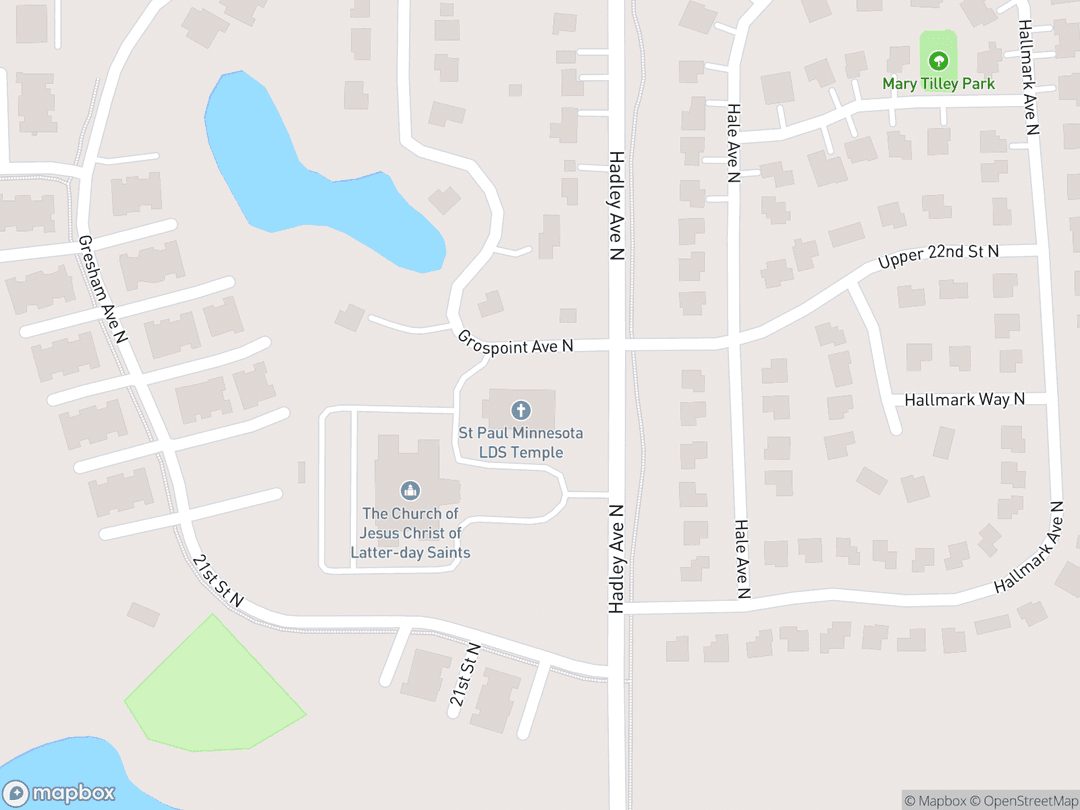
2150 Hadley Avenue North, Oakdale, Minnesota 55128-4505, United States
Hours: Operating schedule varies by appointment; grounds open daily during daylight hours
Getting There: Located off Interstate 694 at Hadley Avenue North in Oakdale, approximately 10 miles east of downtown St. Paul.
Get DirectionsTips for Your Visit
Grounds Access
Feel free to walk the quiet pathways and photograph the exterior from spring through autumn.
Winter Visits
Evening lighting against freshly fallen snow highlights the polished granite exterior and Moroni statue.
Local Services
Since no patron housing or cafeteria exists on site, plan dining and accommodations in Oakdale or St. Paul.
About
Dedicated in January 2000 as the 69th operating temple of The Church of Jesus Christ of Latter-day Saints, the St. Paul Minnesota Temple stands as a sacred sanctuary of holiness and communion. Rooted in the broader Abrahamic and Christian traditions of temple worship, it serves as a dedicated space set apart from the world for prayer, spiritual reflection, and sacred covenants centered on Jesus Christ as Savior and Redeemer.
Unlike meetinghouses used for weekly Sunday congregational worship, Latter-day Saints reserve temples for special non-congregational rites known as ordinances. Within these holy halls, members participate in sacred ceremonies including eternal marriage sealings and proxy baptisms on behalf of deceased ancestors. These practices reflect a fundamental belief in the eternal nature of the soul and the divine potential of human families.
The temple occupies a beautifully wooded seven-and-a-half-acre property in Oakdale, approximately ten miles east of downtown St. Paul. Built as part of an initiative to bring temple blessings closer to Latter-day Saint populations worldwide, the facility features classic modern architecture faced in light gray granite, serving members across Minnesota, western Wisconsin, and neighboring regions.
Gallery
Symbolic Elements
The temple's exterior features intricate carvings, each rich with spiritual meaning:

Angel Moroni Statue
The gilded angel statue atop the spire symbolizes the restoration of the everlasting gospel spoken of in Revelation 14:6.

Twelve Oxen Font
The twelve oxen supporting the baptismal font represent the twelve tribes of Israel carrying the gospel message worldwide.

Progressive Ordinance Layout
Sequential movement through ordinance rooms symbolizes spiritual growth and humanity's journey back to God's presence.

Reflecting Sealing Mirrors
Opposing mirrors in the sealing rooms create an endless visual corridor representing eternal family lineages.

Granite Facade
The durable gray granite cladding signifies spiritual constancy, purity, and the foundational role of Christ as the chief cornerstone.

Midwestern Floral Windows
Custom art glass featuring regional floral designs symbolizes divine beauty and local spiritual growth.

Native Oak Landscape
Surrounding mature oak trees evoke strength, enduring faith, and harmony between nature and divine worship.
Interesting Facts
The St. Paul Minnesota Temple was the very first Latter-day Saint temple dedicated in the 21st century on January 9, 2000. (Tier A)
The seven-and-a-half-acre site was selected for a stake center in 1960 after a church leader received a prophetic spiritual impression. (Tier B)
It was dedicated by Church President Gordon B. Hinckley as the 69th operating temple worldwide. (Tier A)
During the 1999 open house, over 27,000 members of the public toured the interior prior to its sacred dedication. (Tier A)
Official architectural records confirm a finished floor area of 11,411 square feet following structural layout adaptations. (Tier A)
The temple's exterior cladding uses light gray granite panels specifically chosen to withstand severe Minnesota winter freezes. (Tier B)
Quick response by local firefighters extinguished a minor doorway arson incident in September 2008, protecting the sanctuary interior. (Tier A)
The temple property is shared with the Oakdale Stake Center, forming a dual worship hub for the region. (Tier A)
Common Questions
When was the St. Paul Minnesota Temple dedicated?
The temple was dedicated on January 9, 2000, by President Gordon B. Hinckley.
Can non-members visit the temple grounds?
Yes, visitors of all faiths are welcome to explore the landscaped grounds and exterior paths daily.
What is the floor area of the St. Paul Minnesota Temple?
The finished interior floor area is 11,411 square feet.
Are there public visitor facilities or cafeterias on site?
No, there is no public visitors' center or patron cafeteria on the temple grounds.
Where is the temple located?
It is located at 2150 Hadley Avenue North in Oakdale, Minnesota, about 10 miles east of downtown St. Paul.
Featured Stories
Providential Site Discovery
1960
While searching for land to construct a stake center in 1960, regional leader Elder Thomas A. Holt explored multiple Twin Cities properties without finding spiritual clarity. Upon arriving at a secluded seven-and-a-half-acre oak hill in Oakdale, he received a powerful spiritual impression that the land was reserved for divine purposes. Nearly forty years later, that exact parcel became the sacred home of Minnesota's first temple.
Source: Church News Archives
Interfaith Outreach at the Open House
December 18, 1999
During the two-week open house in late 1999, over 27,000 visitors walked through the newly completed temple halls, including civic leaders and interfaith theologians. A local Baptist college administrator remarked publicly that touring the sacred space dispelled rumors and fostered genuine understanding between religious communities. The event established enduring goodwill and friendship across the Twin Cities metro area.
Source: Minnesota Church History Records
Dedication at the Turn of the Millennium
January 9, 2000
On January 9, 2000, President Gordon B. Hinckley dedicated the St. Paul Minnesota Temple in four emotional sessions, marking it as the 69th operating temple and the very first dedicated in the new millennium. Local Latter-day Saints who had previously traveled hundreds of miles to Chicago or Alberta celebrated having a house of the Lord in their home state. The dedication inaugurated a new era of spiritual accessibility for Midwest Saints.
Source: The Church of Jesus Christ of Latter-day Saints
Timeline
Early Saints Arrive
The earliest Latter-day Saint pioneers pass through Minnesota following the exodus from Nauvoo.
MilestoneFirst Stake Organized
The first Latter-day Saint stake in Minnesota is formally established to serve growing regional congregations.
MilestoneTemple Announced
President Gordon B. Hinckley officially announces plans to build Minnesota's first temple.
MilestoneGroundbreaking Ceremony
Elder Hugh W. Pinnock presides over the groundbreaking ceremony on the Oakdale property.
component.timeline.groundbreakingAngel Moroni Installed
The gold-leafed Angel Moroni statue is lifted and secured atop the temple spire.
EventPublic Open House Begins
A two-week public open house commences, welcoming over 27,000 community members and interfaith leaders.
EventOpen House Concludes
The public open house concludes after hosting thousands of visitors prior to formal dedication.
EventTemple Dedication
President Gordon B. Hinckley dedicates the temple in four sacred sessions as the 69th operating temple.
DedicationArson Incident Repaired
Quick-acting local fire crews extinguish a doorway fire, preventing internal damage and allowing rapid repairs.
Renovation25th Dedication Anniversary
The temple marks twenty-five years of spiritual service to Latter-day Saints across the Upper Midwest.
EventHistory by Decade
1840s–1950s — Pioneer Roots and Regional Gathering
Latter-day Saint history in Minnesota began as early as 1847, when pioneer migrants traveled through the region following the main westward exodus. Over the subsequent decades, steady migration into the Minneapolis–St. Paul metropolitan area established firm roots. By the mid-20th century, thriving local branches and wards formed across the Twin Cities.
1960s–1980s — Regional Growth and Site Identification
In 1960, the Church organized Minnesota's first stake to accommodate rapid church growth. During this period, regional leader Elder Thomas A. Holt evaluated multiple land parcels for a stake center, eventually selecting a 7.5-acre oak-wooded hill in Oakdale after receiving a distinct spiritual impression that the land was set apart for sacred purposes.
1990s — Announcement, Construction, and Public Outreach
President Gordon B. Hinckley announced the St. Paul Minnesota Temple in July 1998, fulfilling the vision for the Oakdale land identified decades earlier. Groundbreaking took place in September 1998, and construction progressed swiftly under lead architect Ed Kodet Jr. In December 1999, a two-week open house welcomed over 27,000 visitors, introducing the community to Latter-day Saint temple worship.
2000s — Dedication and Initial Operations
On January 9, 2000, President Gordon B. Hinckley dedicated the sanctuary, making it the 69th operating temple worldwide and the first dedicated in the new millennium. Despite a minor exterior arson incident in 2008 that was swiftly extinguished by local firefighters, the temple has consistently served thousands of faithful patrons across the Upper Midwest.
Architecture & Facilities
The St. Paul Minnesota Temple represents classic modern single-spire temple architecture developed during the late 1990s small-temple initiative. Designed by architect Ed Kodet Jr. in collaboration with Church A&E Services, the building combines geometric symmetry, light gray granite cladding, and an integrated central spire that balances modern simplicity with sacred tradition.
Building Materials
Exterior Cladding
Precision-fitted light gray granite veneer panels designed to endure severe northern winter freeze-thaw cycles.
Spire & Finials
A single attached structural tower topped with a gilded fiberglass statue of the Angel Moroni.
Art Glass Windows
Custom insulated exterior art glass panels incorporating subtle floral geometric motifs inspired by Midwestern flora.
Millwork & Trim
High-grade painted hardwood moldings and detailed interior trim framework throughout the instruction spaces.
Interior Features
Baptistry
A lower-level baptistry centered on a cast bronze baptismal font supported by twelve sculpted ox figures.
Ordinance Rooms
Two progressive instruction rooms decorated with soft off-white wall coverings and subtle indirect cove lighting.
Sealing Rooms
Two intimate sealing rooms equipped with central altars and facing mirrors for eternal marriage ceremonies.
Celestial Room
A serene central room featuring high ceilings, refined upholstery, and a magnificent crystal chandelier.
Temple Grounds
The temple sits on a heavily wooded seven-and-a-half-acre property featuring native oak and pine trees. Meticulously landscaped flowerbeds, stone pathways, outdoor benches, and night lighting integrate the sanctuary with the adjacent Oakdale Stake Center.
Additional Facilities
The temple complex includes an adjacent meetinghouse (Oakdale Stake Center) which provides parking and administrative facilities for stake events.
Religious Significance
The St. Paul Minnesota Temple stands as a modern manifestation of biblical temple worship within the Christian Restorationist tradition. Like sacred sanctuaries of the Old and New Testaments, it is revered by Latter-day Saints as a literal house of the Lord set apart for divine worship, personal revelation, and spiritual covenant-making centered on Jesus Christ.
To provide a holy environment where Latter-day Saints perform sacred Christian priesthood ordinances that unite families for eternity and offer gospel covenants to living patrons and deceased ancestors.
Sacred Ordinances
Baptism for the Dead
A proxy ritual performed in obedience to New Testament teachings, offering vicarious baptism by immersion to ancestors who passed without receiving the ordinance.
The Endowment
A ceremonial instruction course on the plan of salvation and creation, during which members make personal covenants of righteousness, devotion, and obedience to Jesus Christ.
Eternal Marriage & Sealing
A sacred ordinance binding husbands, wives, and children together in eternal family units that endure beyond physical death through divine priesthood authority.
A Christ-Centered Sanctuary
Every ritual and architectural detail inside the temple focuses patrons' thoughts on the Savior Jesus Christ. Through sacred covenants, believers pledge to live Christian lives, serve their fellow human beings, and build the kingdom of God on Earth.
Connecting Eternal Generations
By uniting family history research with proxy temple ordinances, members link past, present, and future generations together. This work embodies the prophecy of Malachi regarding turning the hearts of the children to their fathers.
Similar Temples
Sources & Research
Every fact on Temples.org is backed by verified Sources & Research. Each piece of information is rated by source tier and confidence level.
View All Sources (5)
| Field | Source | Tier | Retrieved |
|---|---|---|---|
| About & Historical Background | The Church of Jesus Christ of Latter-day Saints (opens in a new tab) | A | 2026-02-15 |
| Temple Dedication & History | The Church of Jesus Christ of Latter-day Saints (opens in a new tab) | A | 2026-02-15 |
| Pioneer History & Site Selection | Church History Department (opens in a new tab) | A | 2026-02-15 |
| Architecture & Structural Specifications | Church News (opens in a new tab) | B | 2026-02-15 |
| Construction Milestones & Open House | ChurchofJesusChristTemples.org (opens in a new tab) | C | 2026-02-15 |