Visitor Insights
Visiting Billings Montana Temple
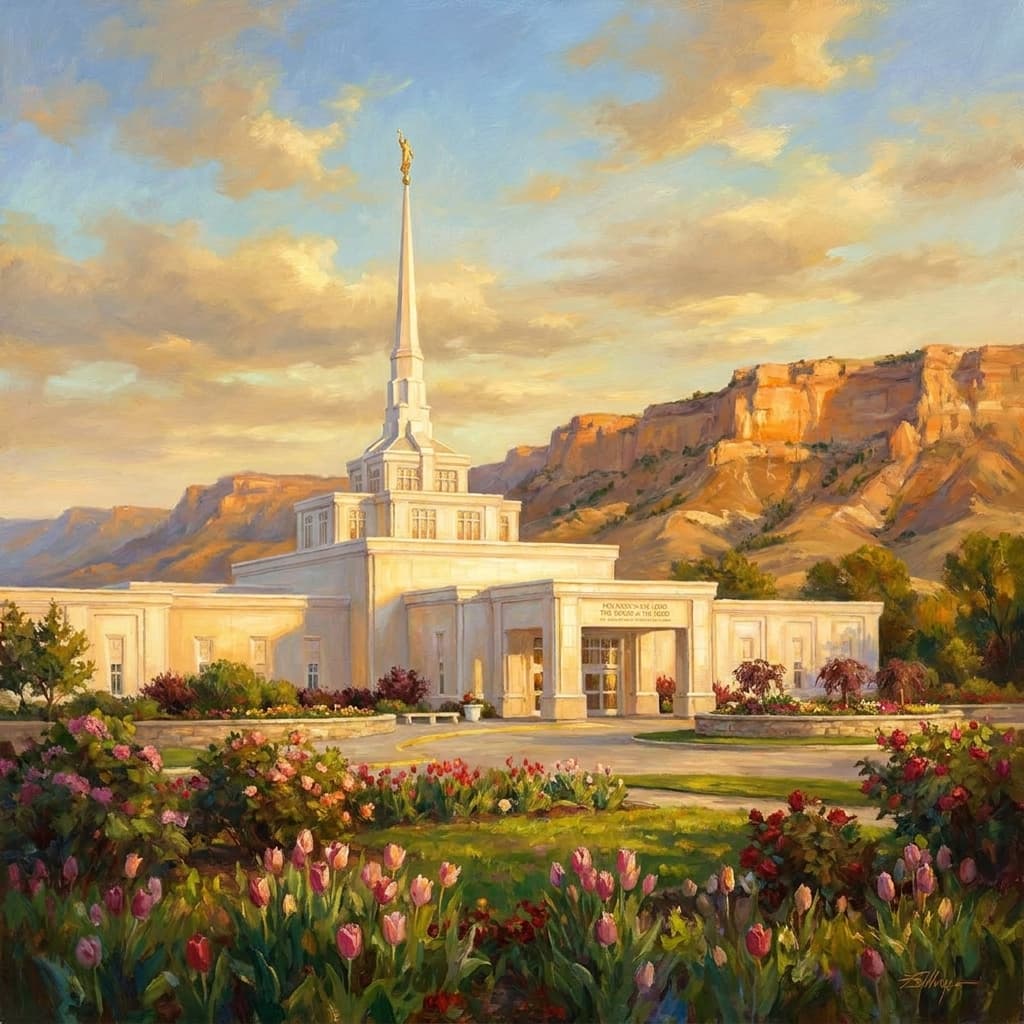
The Billings Montana Temple offers a serene and deeply spiritual experience for all who visit. Nestled directly beneath the dramatic, 80-million-year-old sandstone cliffs known as the Rimrocks, the temple grounds provide a peaceful sanctuary from the busy city. Visitors can stroll along beautifully manicured pathways, enjoy vibrant seasonal floral displays, and sit by a cascading water feature that enhances the quiet, contemplative atmosphere. The site is particularly stunning at sunset when the fading light casts a warm glow over both the white temple and the rugged cliffs behind it.
Highlights
- Stunning backdrop of the historic 80-million-year-old Rimrocks sandstone cliffs.
- Beautifully manicured 10-acre grounds featuring native coniferous trees and vibrant flower beds.
- A peaceful cascading water feature perfect for quiet contemplation and prayer.
- Brilliant evening illumination that highlights the temple's classic modern architecture.
Things to Know
- The interior of the temple is reserved for members of the Church holding active temple recommends.
- The grounds are open to the public daily from sunrise to sunset.
- Photography is welcomed on the grounds, but please maintain a quiet and respectful demeanor.
- Winters in Billings can be harsh; pathways are cleared, but dress warmly for outdoor visits.
Location
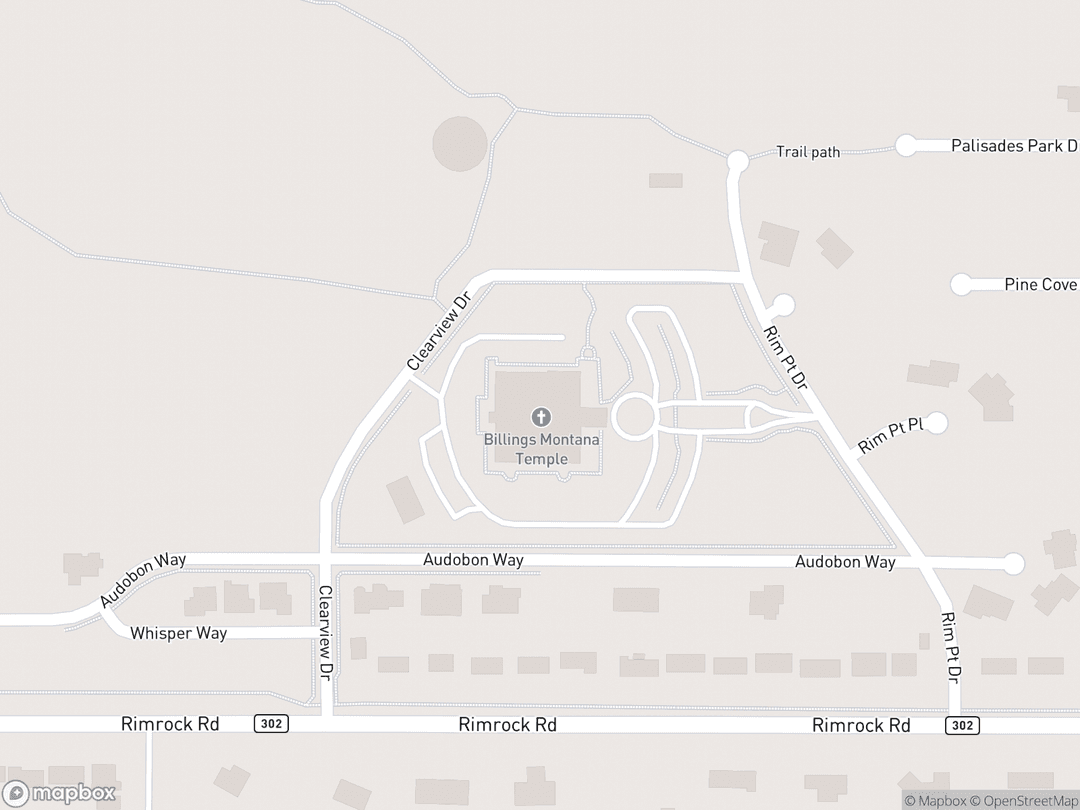
3100 Rim Point Dr, Billings, MT 59106
Hours: Grounds open daily from sunrise to sunset. Temple services operate Tuesday through Saturday.
Getting There: Located in the western foothills of Billings at 3100 Rim Point Dr. Easily accessible from Interstate 90 by taking the 24th Street West exit, heading north to Rimrock Road, and traveling west to Rim Point Drive.
Get DirectionsTips for Your Visit
Sunset Photography
Visit the temple at dusk. The combination of the illuminated white dolomite exterior and the warm sunset colors on the Rimrocks makes for spectacular photographs.
Walk the Perimeter
Take time to walk the entire paved pathway around the temple. The changing angles of the Rimrocks and the temple spire offer unique perspectives and quiet spots for reflection.
Respectful Attire
While there is no formal dress code for the public grounds, wearing respectful clothing harmonizes with the sacred nature of the site.
About
The Billings Montana Temple stands as a sacred monument within the broader Christian tradition, sharing a foundational heritage with other Abrahamic faiths. Like the ancient temples of the Old Testament built by Solomon and Herod, and in harmony with the Christian reverence for sacred spaces dedicated to the worship of Almighty God, Latter-day Saints view the temple as a literal "House of the Lord." This magnificent structure serves as a physical testament to the community's devotion to Jesus Christ, offering a sanctuary of peace and holiness apart from the clamor of the modern world.
Within this shared Christian framework, the temple serves a unique denominational purpose for members of The Church of Jesus Christ of Latter-day Saints. While traditional Christian chapels and meetinghouses serve as centers for weekly congregational worship, community fellowship, and biblical instruction, the temple is reserved for sacred, quiet ordinances. It is not a traditional chapel, but a place of higher covenants. Here, patrons participate in ordinances that bridge the mortal and eternal realms, reflecting the deep theological commitment to the eternal nature of the soul and family relationships.
Dedicated in 1999 by President Gordon B. Hinckley, the Billings Montana Temple was the first temple constructed in the state of Montana. It dramatically reduced the travel burdens of local Saints who previously journeyed hundreds of miles to temples in Idaho or Alberta, Canada. Situated beautifully against the backdrop of the historic Rimrocks, the temple stands as a beloved spiritual landmark, welcoming all who seek peace and reminding the surrounding community of the infinite reach of Jesus Christ's grace.
Gallery
Symbolic Elements
The temple's exterior features intricate carvings, each rich with spiritual meaning:

The Angel Moroni
A gold-leafed statue of the Angel Moroni stands atop the single central spire. It symbolizes the restoration of the gospel of Jesus Christ and the spreading of the glad tidings to all nations, as prophesied in the New Testament.

Spire Pointing Heavenward
The single, prominent spire represents the human soul reaching toward God. It draws the eyes of onlookers upward, serving as a constant visual reminder of hope, spiritual aspiration, and the eternal nature of life.

Dolomite Stone Cladding
The use of white dolomite precast panels, glittering with crushed stone from Wyoming, symbolizes purity, holiness, and refinement. It represents the spiritual polishing and purification that patrons experience within the House of the Lord.

Floral Motifs
Stained glass and interior wood carvings feature localized floral designs, including the bitterroot, Montana's state flower. These motifs symbolize the beauty of God's creation and the blooming of faith in the rugged wilderness.

Baptismal Font on Twelve Oxen
Following the biblical pattern of Solomon's Temple, the baptismal font rests upon the backs of twelve sculpted oxen. They represent the twelve tribes of Israel and symbolize the strength, labor, and support of the covenant community.

Two-Stage Progressive Layout
The progression of patrons from the first instruction room to the second symbolizes the spiritual journey of mankind. It represents moving from the creation and mortal life into spiritual progression and ultimate eternal glory.

Celestial Room Chandeliers
The elegant, light-catching chandeliers in the Celestial Room symbolize the light of Christ and the clarity of heaven. They cast a warm, radiant glow that represents the peace, order, and beauty of the celestial kingdom.
Interesting Facts
During the groundbreaking on March 28, 1998, a sudden, heavy spring snowstorm blanketed the site, which Elder Hugh W. Pinnock poetically noted made the ground 'white and pure' for the House of the Lord.
At the freezing groundbreaking ceremony, Elder Pinnock gave his coat to a cold attendee. Seeing this, a local Protestant minister in attendance immediately took off his own coat and draped it over Elder Pinnock's shoulders.
Billings Mayor Charles F. Tooley was so touched by his tour during the public open house that upon returning home, he immediately called temple organizers to ask if he could bring his family back for a second tour.
Montana Governor Marc Racicot was given a personal, private tour of the temple's interior by Elder Hugh W. Pinnock during the open house.
The temple's exterior precast concrete panels are made with white dolomite stone quarried in neighboring Wyoming, linking the temple physically to the regional landscape it serves.
The temple is uniquely situated directly below the Rimrocks—massive, 80-million-year-old sandstone cliffs that frame the city of Billings, providing a dramatic natural contrast to the temple's pristine white exterior.
Dedicated in 1999, it was the very first Latter-day Saint temple built in the state of Montana, serving a vast geographic area that previously required members to travel hundreds of miles to Cardston, Alberta, or Idaho Falls, Idaho.
A massive choir of 700 local Latter-day Saint youth from across Montana and Wyoming was assembled to sing at the groundbreaking ceremony despite the freezing temperatures.
A humorous local legend tells of a small dent in a metal utility door on the north side of the temple, caused by a wayward golf ball hit off the top of the Rimrocks ridge directly north of the temple.
The temple features a 'two-stage progressive' layout for its instruction rooms, where patrons move from one room to another as they progress through the symbolic journey of the endowment ceremony.
Common Questions
Why is the Billings Montana Temple significant to the local community?
Dedicated in 1999, it was the first Latter-day Saint temple built in the state of Montana. It serves as a major spiritual and architectural landmark on the Billings West End, drawing visitors to its peaceful grounds and representing the deep faith of thousands of members in the region.
Can anyone visit the temple grounds?
Yes, the beautifully landscaped grounds and pathways are open to the public of all faiths daily from sunrise to sunset. Visitors are welcome to walk, meditate, and enjoy the peaceful atmosphere and the dramatic views of the adjacent Rimrocks.
What is the significance of the Angel Moroni statue on top of the spire?
The gold-leafed statue of the Angel Moroni represents the restoration of the gospel of Jesus Christ in the latter days. It symbolizes the spreading of the glad tidings of salvation to all nations, kindreds, tongues, and people, as described in the New Testament Book of Revelation.
How does the temple differ from a regular Latter-day Saint meetinghouse?
Latter-day Saint meetinghouses (chapels) are used for weekly Sunday worship services, youth activities, and community gatherings, and are open to everyone. Temples are sacred spaces reserved for quiet, personal worship and eternal ordinances, such as marriages and baptisms for ancestors, and require a temple recommend for entry.
What materials give the temple its unique white appearance?
The exterior is clad in precast concrete panels embedded with crushed white dolomite stone quarried in neighboring Wyoming. This unique material gives the building a brilliant, shimmering white finish that beautifully reflects the changing mountain light throughout the day.
Featured Stories
The Pure Snow Groundbreaking
March 28, 1998
On a cold spring morning, thousands of Latter-day Saints gathered on the temple site for the long-awaited groundbreaking ceremony. As the proceedings began, a sudden and heavy spring snowstorm swept across the Billings West End, blanketing the entire 10-acre site in a thick layer of pristine white. Rather than dampening spirits, the weather added a profound sense of sacred beauty to the event. Elder Hugh W. Pinnock, who presided over the ceremony, poetically remarked to the shivering crowd that the Lord had sent the snow to make the ground 'white and pure' for His holy house. This memorable event became a cherished symbol of purity and divine approval for the local membership.
Source: The Church of Jesus Christ of Latter-day Saints Newsroom
An Act of Interfaith Kindness
March 28, 1998
The freezing temperatures during the groundbreaking ceremony brought about a beautiful moment of interfaith connection and warmth. Seeing an attendee shivering in the bitter cold, Elder Hugh W. Pinnock unhesitatingly took off his own heavy overcoat and draped it over the person's shoulders. Observing this selfless act, a local Protestant minister who was attending the ceremony in support of the Latter-day Saint community immediately stepped forward. He took off his own warm coat and placed it over Elder Pinnock's shoulders, ensuring the presiding authority remained warm. This spontaneous exchange of kindness set a beautiful tone of mutual respect and interfaith harmony that would characterize the temple's relationship with the Billings community for decades to come.
Source: Local Historical Accounts & News Reports
The Mayor's Second Tour
October 1999
During the public open house in October 1999, the temple welcomed tens of thousands of visitors from various religious backgrounds, including many local civic leaders. Among them was Billings Mayor Charles F. Tooley, who was given a guided tour of the sacred interior spaces. The mayor was so deeply moved by the beauty, quiet reverence, and peaceful atmosphere of the temple that his experience extended far beyond a standard civic duty. Upon returning home, he immediately contacted the temple committee to express his profound appreciation and asked if he could bring his family back for a second, private tour. His reaction mirrored that of many in the community, helping to dissolve misconceptions and build lasting bridges of friendship.
Source: Open House Committee Records
Timeline
Temple Announced
President Gordon B. Hinckley announces plans to construct a temple in Montana, bringing immense joy to local members who previously traveled long distances to Idaho or Alberta.
MilestoneGroundbreaking Ceremony
Elder Hugh W. Pinnock presides over the groundbreaking ceremony during a sudden, heavy spring snowstorm that blankets the site in pure white.
component.timeline.groundbreakingAngel Moroni Statue Installed
The gold-leafed statue of the Angel Moroni is lifted and secured atop the temple's single spire, marking a major milestone in construction.
MilestonePublic Open House Begins
The public open house commences, allowing tens of thousands of visitors to tour the sacred interior of the temple.
EventPublic Open House Concludes
The open house concludes with an estimated 68,450 visitors having toured the interior, fostering deep interfaith goodwill.
EventTemple Dedication
President Gordon B. Hinckley dedicates the Billings Montana Temple in the first of eight sacred dedicatory sessions.
DedicationDedicatory Sessions Conclude
The final dedicatory sessions are completed, officially opening the temple for sacred ordinances.
DedicationFirst Year of Operations
The temple completes its first full year of operations, serving as a spiritual beacon for thousands of Saints across Montana and northern Wyoming.
MilestoneSecond Temple Presidency Called
The temple welcomes its second temple presidency, establishing a legacy of dedicated volunteer leadership.
EventExterior Preservation Work
The temple's exterior precast concrete panels undergo routine preservation and cleaning to maintain their brilliant, reflective white finish.
Renovation20th Anniversary
The Billings Montana Temple celebrates its 20th anniversary of continuous operation, having firmly established itself as a beloved local landmark.
MilestoneTemporary Pandemic Closure
In response to the global COVID-19 pandemic, the temple temporarily suspends operations for the safety of patrons and staff.
EventPhased Reopening
The temple begins careful, phased stages of reopening as local health and safety conditions permit.
EventHelena Temple Dedicated
The Helena Montana Temple is dedicated, becoming the second temple in the state and easing the travel burden on members in western Montana.
EventMissoula Temple Groundbreaking
Ground is broken for the Missoula Montana Temple, further expanding the temple network in the region and highlighting Church growth.
MilestoneHistory by Decade
1990s — Announcement and Construction
The announcement of the Billings Montana Temple on August 30, 1996, by President Gordon B. Hinckley was met with immense joy by Latter-day Saints throughout the region. For decades, members in Montana and northern Wyoming had traveled hundreds of miles over treacherous mountain passes to attend temples in Idaho or Alberta, Canada. The groundbreaking on March 28, 1998, marked the official start of construction, which progressed rapidly over the next year and a half. In October 1999, the temple opened its doors to the public for a highly successful open house, attracting over 68,000 visitors and fostering deep interfaith goodwill. The temple was formally dedicated on November 20, 1999, by President Hinckley, establishing a permanent house of covenant worship in the Big Sky State.
2000s — Establishing a Spiritual Anchor
As the new millennium dawned, the Billings Montana Temple quickly became the spiritual heart of the Church in the region. Serving stakes across a vast geographic area, the temple saw a steady stream of dedicated patrons who volunteered as ordinance workers and temple presidency members. The temple's presence helped strengthen local congregations, providing a close and accessible place for members to receive sacred ordinances and seal their families for eternity. The beautiful grounds also became a popular spot for local residents of all faiths to enjoy quiet reflection.
2010s — Preservation and Continued Service
The 2010s were characterized by ongoing preservation and steady service. In May 2011, the temple's exterior precast concrete panels underwent routine preservation and cleaning to maintain their brilliant, reflective white finish against the rugged Montana elements. In November 2019, the temple celebrated its 20th anniversary of continuous operation. Over two decades, it had firmly established itself as a beloved local landmark on the Billings West End, symbolizing the permanent growth and maturity of the Church in Montana.
2020s — Expansion of the Temple Network
The 2020s brought both challenges and exciting growth. After navigating temporary closures and phased reopenings during the global COVID-19 pandemic, the temple returned to full operations. The spiritual landscape of Montana expanded significantly with the dedication of the Helena Montana Temple in June 2023 and the groundbreaking of the Missoula Montana Temple in June 2026. These new temples eased the massive travel burden on members in central and western Montana, allowing the Billings Montana Temple to focus its sacred service on the saints of eastern Montana and northern Wyoming.
Architecture & Facilities
The Billings Montana Temple features a classic modern architectural style with a single-spire design. The design philosophy was to create a structure that felt monumentally sacred while remaining deeply integrated into the rugged, natural landscape of Montana. It utilizes clean, vertical lines that draw the eye upward, echoing the nearby sandstone cliffs while maintaining a timeless, elegant simplicity.
Building Materials
Wyoming White Dolomite Precast Concrete
The exterior walls are clad in precast concrete panels embedded with crushed white dolomite stone quarried in neighboring Wyoming, giving the building a brilliant, shimmering white finish.
Custom Art Glass
Custom-designed stained-glass windows fabricated with intricate geometric patterns and soft pastel hues filter natural light into the sacred interior spaces.
Quarter-Sawn Cherry Wood
High-quality cherry wood is used extensively throughout the interior for millwork, doors, and altars, providing a warm, grounding contrast to the bright exterior.
Imported Granite and Marble
Select imported stone is used for high-traffic flooring and accents, ensuring durability and a sense of permanent, high-quality craftsmanship.
Interior Features
Instruction Rooms
Two instruction (endowment) rooms arranged in a two-stage progressive layout, where patrons move from the first room to the second as they participate in the ceremony.
Celestial Room
The symbolic heart of the temple, featuring elegant chandeliers, plush seating, soft cream and gold color palettes, and a quiet, reverent atmosphere for personal prayer.
Sealing Rooms
Three sealing rooms featuring central altars where marriages are performed for eternity, surrounded by facing mirrors that symbolize endless generations.
Baptistry
Located on the lower level, featuring a large baptismal font resting on the backs of twelve sculpted oxen, used for proxy baptisms.
Temple Grounds
The temple sits on a beautifully landscaped 10-acre site directly below the Rimrocks. The spatial organization utilizes wide, sweeping lawns, native coniferous trees, and meticulously arranged flower beds that burst with color during the spring and summer. Paved pathways wind through the grounds, leading to quiet seating areas and a cascading water feature.
Additional Facilities
The temple complex includes a clothing distribution and rental facility where patrons can obtain white temple clothing, a comfortable waiting area for non-patron visitors, and administrative offices.
Religious Significance
Within the broader Christian tradition, the Billings Montana Temple stands as a modern testament to the ancient practice of dedicating sacred spaces to Almighty God. Like the biblical temples of old, it is revered as a literal 'House of the Lord,' where heaven and earth meet.
The temple serves as a place of higher covenants and quiet ordinances, distinct from regular meetinghouses. It is designed to help patrons draw closer to Jesus Christ, receive sacred saving ordinances, and establish eternal family relationships.
Sacred Ordinances
The Endowment
A sacred ceremony where patrons receive instruction regarding the plan of salvation, make covenants of obedience and devotion to God, and receive promises of eternal progression.
Eternal Marriage (Sealing)
An ordinance performed in sealing rooms where couples and families are united not just 'until death do you part,' but for all eternity through the authority of the priesthood.
Proxy Baptisms
Performed in the baptistry on behalf of deceased ancestors, reflecting the Christian belief in the infinite reach of Jesus Christ's grace and the opportunity for salvation for all of God's children.
A Sanctuary of Peace
The temple provides a refuge from the noise and distractions of daily life, allowing patrons to feel the Holy Spirit, seek personal revelation, and find spiritual renewal in a dedicated, holy environment.
The Covenant Path
Every ordinance performed within the temple reinforces the patron's commitment to follow Jesus Christ, live a life of discipleship, and strive to love and serve God and neighbor more fully.
Similar Temples
Sources & Research
Every fact on Temples.org is backed by verified Sources & Research. Each piece of information is rated by source tier and confidence level.
View All Sources (7)
| Field | Source | Tier | Retrieved |
|---|---|---|---|
| About & Historical Background | The Church of Jesus Christ of Latter-day Saints (opens in a new tab) | A | 2026-02-18 |
| Timeline & Dedication | The Church of Jesus Christ of Latter-day Saints Newsroom (opens in a new tab) | A | 2026-02-18 |
| Architectural Design & Construction | Cushing Terrell (opens in a new tab) | B | 2026-02-18 |
| Temple Directory & Statistics | ChurchofJesusChristTemples.org (opens in a new tab) | C | 2026-02-18 |
| Church History & Regional Growth | Church History Department (opens in a new tab) | A | 2026-02-18 |
| Groundbreaking & Community Reception | The Church of Jesus Christ of Latter-day Saints (opens in a new tab) | A | 2026-02-18 |
| General Temple Information | The Church of Jesus Christ of Latter-day Saints (opens in a new tab) | A | 2026-02-18 |