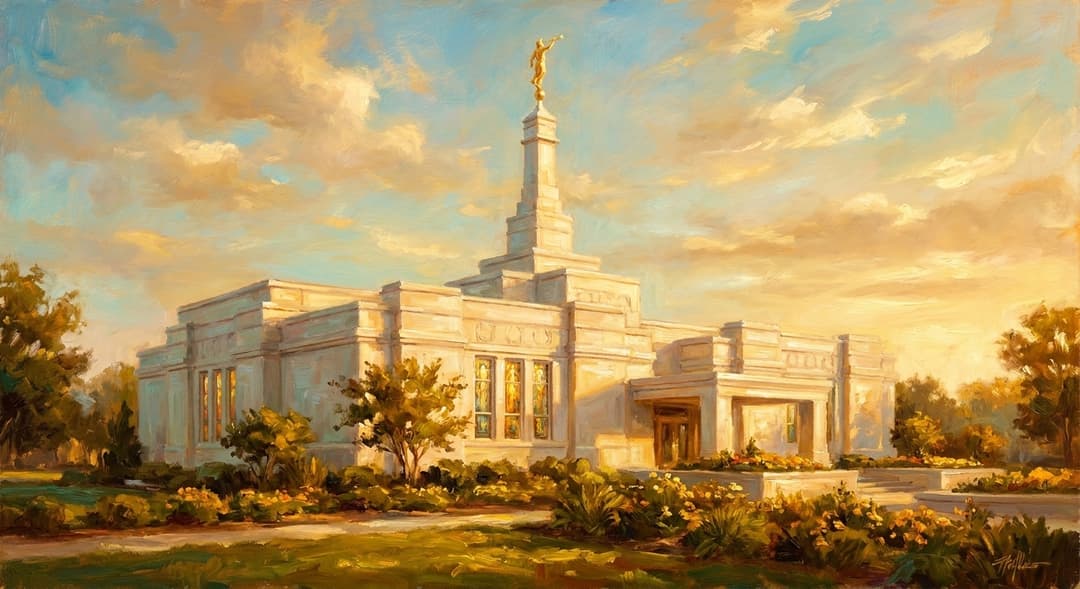
Visitor Insights
Visiting Winter Quarters Nebraska Temple
Visitors to the Winter Quarters Nebraska Temple can explore beautifully maintained grounds situated alongside the historic pioneer cemetery. The site offers a peaceful retreat filled with local flower beds and rich history overlooking the Missouri River valley.
Highlights
- 32 custom narrative stained glass windows depicting pioneer trail history
- Adjacent historic Mormon Pioneer Cemetery featuring the Tragedy and Triumph sculpture
- Mormon Trail Center historic exhibit located directly across the street
- Brilliant exterior cladding composed of Vermont Bethel White granite
Things to Know
- Temple interior access requires a valid Latter-day Saint temple recommend
- Public grounds and walking paths around the cemetery are open daily to all visitors
- Free historical exhibits are available across the street at the Mormon Trail Center
Location
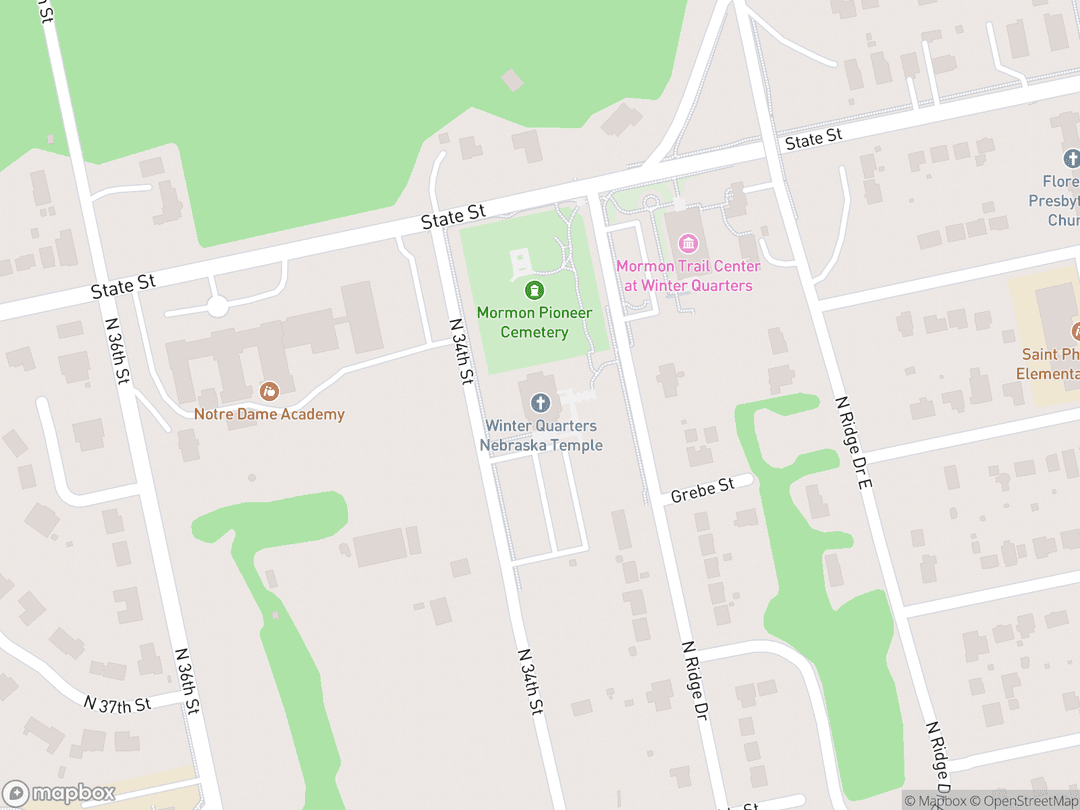
8283 N 34th St, Omaha, Nebraska 68112, United States
Hours: Grounds open daily from sunrise to sunset; temple service schedules vary
Getting There: Accessible via Highway 75 / North Freeway to the Mormon Bridge exit in North Omaha
Get DirectionsTips for Your Visit
Explore Across the Street
Visit the Mormon Trail Center for free interactive historical exhibits detailing the 1846 pioneer migration.
Pioneer Cemetery Walkway
Take time to walk the peaceful paths of the adjacent pioneer cemetery and read the historical markers.
About
Rooted in the ancient Judeo-Christian tradition of consecrated spaces, Latter-day Saint temples stand as holy houses dedicated to divine communion, solemn covenants, and eternal hope in Jesus Christ. Like biblical sanctuaries and historic Christian cathedrals, the Winter Quarters Nebraska Temple provides a physical intersection between the earthly and the divine where sacred rites unite families across generations.
Dedicated in 2001 by President Gordon B. Hinckley, this house of the Lord stands on land sanctified by the sacrifice of 19th-century pioneers. Situated directly adjacent to the historic Mormon Pioneer Cemetery in Omaha, the temple symbolizes triumph over tragedy and serves members across Nebraska, Iowa, South Dakota, and Kansas.
Gallery
Symbolic Elements
The temple's exterior features intricate carvings, each rich with spiritual meaning:

Stained Glass Narrative Windows
Thirty-two custom art glass panels depict historical pioneer events and geographical landmarks along the trail.

Angel Moroni Statue
The gilded statue atop the central spire symbolizes the restoration of the gospel to all nations.

Pioneer Cemetery Proximity
Direct adjacency to pioneer graves creates a tangible theological link between mortal memory and eternal covenants.

State Flowers Motif
Art glass features stylized flowers representing Illinois, Iowa, Nebraska, Wyoming, and Utah.

William Clayton Window
Depicts William Clayton penning the famous pioneer hymn 'Come, Come, Ye Saints' along the migration trail.

Chief Big Elk Window
Honors Chief Big Elk and the Omaha Nation for providing safe refuge during the severe winter of 1846.

Bethel White Granite Facade
Vermont white granite cladding reflects purity and resilience against Midwestern seasonal extremes.
Interesting Facts
The temple stands on sacred historic ground where displaced pioneers wintered during their 1846 exodus westward. (Tier A)
It is the only Latter-day Saint temple built directly adjacent to an 19th-century pioneer cemetery. (Tier A)
Artisan Tom Holdman designed 32 narrative stained glass panels depicting actual pioneer events. (Tier B)
The stained glass windows honor Chief Big Elk and the Omaha Tribe for assisting early Church refugees. (Tier A)
Five official state flowers along the pioneer trail are woven into the interior glass art motifs. (Tier B)
More than 61,000 visitors attended the public open house in 2001, vastly exceeding local membership numbers. (Tier A)
The dedication's first session was broadcast via satellite to meetinghouses across North America. (Tier A)
Exterior walls are clad in weather-resistant Bethel White granite quarried in Vermont. (Tier B)
Common Questions
Why is the temple located at Winter Quarters?
It stands on sacred historic ground where hundreds of Latter-day Saint pioneers wintered during their 1846 exodus.
Can non-members visit the temple grounds?
Yes, the manicured grounds and adjacent historic pioneer cemetery are open to the public daily.
What makes the stained glass windows unique?
Artist Tom Holdman crafted 32 narrative windows depicting actual historic pioneer events and state flowers along the trail.
What visitor facilities are available nearby?
The Mormon Trail Center across the street features interactive museum displays, full-scale wagons, and historic films.
Featured Stories
Hallowed Ground at Winter Quarters
2001
During the harsh winter of 1846, over three hundred Latter-day Saint pioneers lost their lives to illness and exposure after fleeing Nauvoo. Decades later, President Gordon B. Hinckley selected this consecrated ground to construct a modern sanctuary. Building a temple beside their resting place fulfills a poignant spiritual vision linking modern worship to pioneer sacrifice.
Source: Church History Department
Narrative Windows of Pioneer Faith
2001
Glass artisan Tom Holdman spent months researching historical pioneer diaries to design 32 narrative stained glass panels. The windows portray scenes such as William Clayton composing 'Come, Come, Ye Saints' and pioneer wagons crossing rivers. These artistic panels transform Midwestern light into an inspiring visual history of faith.
Source: Ensign Magazine
The Historic Satellite Dedication
April 22, 2001
When President Hinckley dedicated the temple in April 2001, the proceedings were broadcast via satellite to meetinghouses across the region. This innovative broadcast allowed tens of thousands of members to participate in the sacred dedication. The event united scattered congregations in shared gratitude for the new sanctuary.
Source: Church News
Timeline
Encampment Established
Pioneers fleeing persecution settle at Winter Quarters along the Missouri River.
MilestoneFirst Presidency Reorganized
Brigham Young is sustained as Church President at nearby Kanesville.
MilestoneCemetery Acquisition
The Church acquires the historic pioneer burial ground for preservation.
EventTrail Center Dedicated
President Gordon B. Hinckley dedicates the Mormon Trail Center visitor facility.
EventTemple Announced
Official announcement of the temple to be built adjacent to the burial ground.
MilestoneGroundbreaking Ceremony
Elder Hugh W. Pinnock presides at the ceremonial groundbreaking.
component.timeline.groundbreakingPublic Open House Begins
Over 61,000 public visitors tour the newly completed sanctuary.
EventTemple Dedicated
President Gordon B. Hinckley dedicates the temple in four sessions.
DedicationHistory by Decade
1840s — Pioneer Refuge and Sanctification
Fleeing religious persecution in Nauvoo, thousands of pioneers established Winter Quarters on the banks of the Missouri River. Despite severe winter hardships, the community became a spiritual refuge where Brigham Young was sustained as Church President.
1930s — Memorializing the Sacred Past
Recognizing the historic weight of the site, the Church acquired land surrounding the pioneer burial ground in North Omaha. Sculptor Avard Fairbanks created the iconic 'Tragedy and Triumph' bronze monument to honor early sacrifices.
1990s — Announcement and Sacred Groundbreaking
President Gordon B. Hinckley announced plans to construct a temple on property overlooking the pioneer cemetery. Ground was broken in November 1999 during a solemn ceremony attended by thousands of local residents and civic leaders.
2000s — Construction and Dedication
Built with Bethel White granite and custom art glass, the temple was completed in early 2001. Over 61,000 visitors attended the public open house before President Hinckley dedicated the sanctuary in four sacred sessions.
2020s — Ongoing Service and Heritage
Today, the temple serves stakes across four Midwestern states while welcoming international visitors to its historic surroundings. It remains an enduring emblem of hope, connecting ancestral history with sacred modern worship.
Architecture & Facilities
The Winter Quarters Nebraska Temple features a Classic Modern aesthetic with subtle neoclassical proportions and pioneer-inspired embellishments. Designed by Omaha architect Dan Reinhardt, the structure balances clean geometric symmetry with monumental stone facades, harmonizing gracefully with the adjacent historic pioneer burial grounds and North Omaha landscape.
Building Materials
Bethel White Granite
Quarried in Vermont and precision-cut to withstand Midwestern weather extremes.
Solid Cherry Woodwork
Hand-crafted interior doors, wainscoting, and crown moldings executed with high precision.
Solid Cast Bronze
Custom bronze hardware, light fixtures, and protective railings surrounding the baptismal font.
Handcrafted Art Glass
Thirty-two narrative stained glass panels featuring scenes from the Mormon Pioneer Trail.
Interior Features
Baptistry
Features a cast bronze railing surrounding a font supported by twelve oxen representing the tribes of Israel.
Instruction Rooms
Two-stage progressive ordinance rooms adorned with warm cherry wood trims and original oil paintings.
Sealing Rooms
Sacred altars and crystal chandeliers set in serene settings dedicated to eternal marriage ceremonies.
Celestial Room
A quiet sanctuary of reflection featuring high ceilings, refined cherry moldings, and brilliant crystal lighting.
Temple Grounds
The 1.92-acre site features manicured lawns, flower beds depicting native prairie flora, paved walking paths, and peaceful reflection areas immediately adjacent to the historic pioneer cemetery.
Additional Facilities
Located directly across the street is the Mormon Trail Center at Historic Winter Quarters, offering interactive historical exhibits and pioneer artifacts.
Religious Significance
Aligned with Abrahamic traditions of sacred altars and holy sanctuaries, Latter-day Saint temples serve as consecrated spaces where believers make eternal covenants with God. Within these holy houses, sacred rites connect earth and heaven, emphasizing the central role of Jesus Christ in God's eternal plan for humanity.
To provide a holy place for sacred covenants, eternal family sealings, and vicarious ordinances linking generations.
Sacred Ordinances
Temple Endowment
An instructional ceremony providing spiritual knowledge and sacred covenants centered on Jesus Christ.
Eternal Marriage Sealings
Sacred rites uniting husbands, wives, and families for eternity under priesthood authority.
Vicarious Baptisms
Proxy baptisms performed in behalf of deceased ancestors, offering them the opportunity for eternal salvation.
A Sacred Bridge to Ancestral Memory
Built directly beside the graves of hundreds of early Saints, the temple serves as a literal and symbolic bridge between mortal memory and eternal life.
Similar Temples
Sources & Research
Every fact on Temples.org is backed by verified Sources & Research. Each piece of information is rated by source tier and confidence level.
View All Sources (5)
| Field | Source | Tier | Retrieved |
|---|---|---|---|
| About & Historical Background | The Church of Jesus Christ of Latter-day Saints (opens in a new tab) | A | 2026-02-18 |
| About & Historical Background | Church Newsroom (opens in a new tab) | A | 2026-02-18 |
| Timeline & Featured Stories | Church History Department (opens in a new tab) | A | 2026-02-18 |
| Architecture & Stained Glass | Ensign Magazine (opens in a new tab) | A | 2026-02-18 |
| Architecture & Design | LDS Temples Center (opens in a new tab) | C | 2026-02-18 |