Visitor Insights
Visiting Las Vegas Nevada Temple
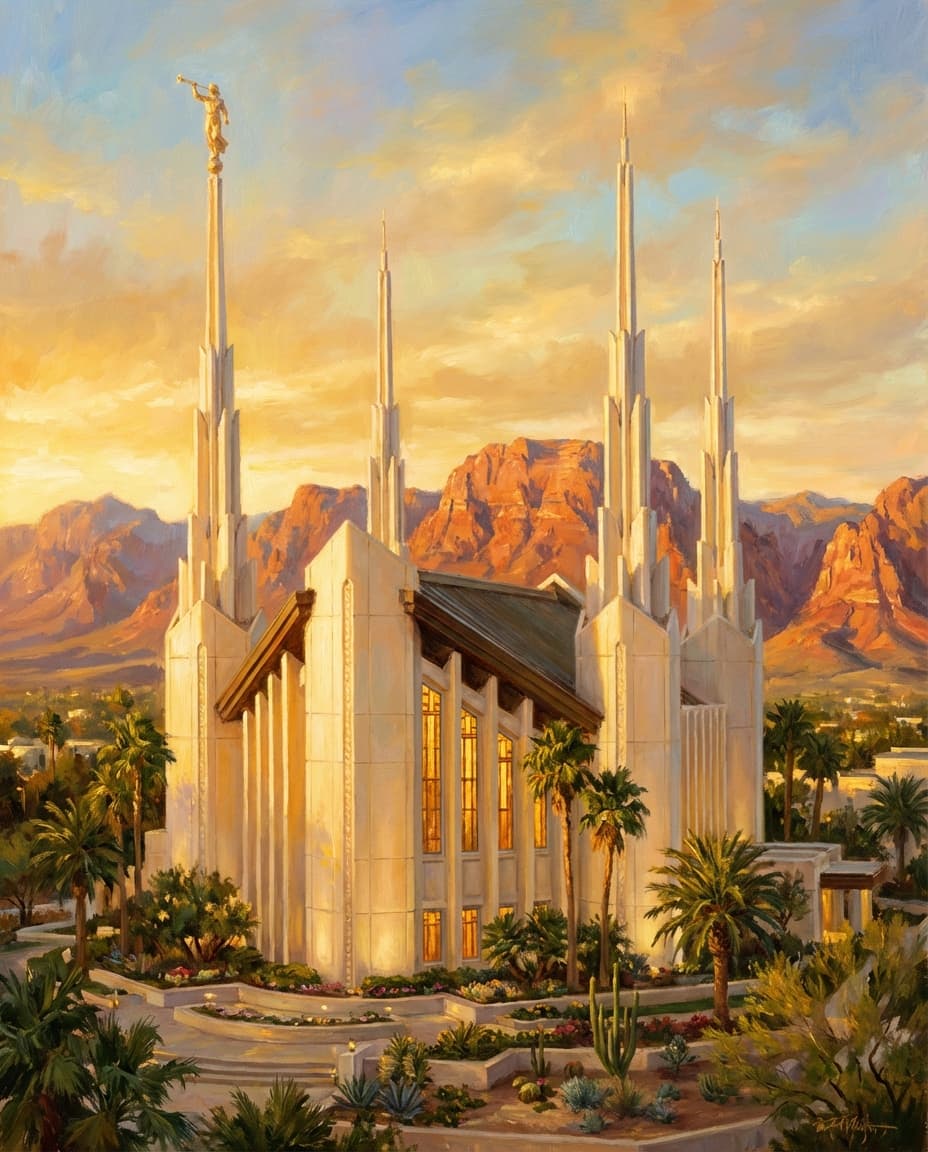
While the interior of the temple is reserved for members of the Church, the beautifully landscaped grounds are open to the public. Visitors are welcome to walk the gardens, enjoy the view of the Las Vegas skyline, and feel the peaceful atmosphere of the site.
Highlights
- Panoramic views of the Las Vegas Valley
- Native desert landscaping and gardens
- Exterior architecture featuring the Desert Lily motif
Things to Know
- Grounds are open to the public; interior is restricted
- Modest dress is appreciated on temple grounds
- Photography is permitted outside but prohibited inside
Location
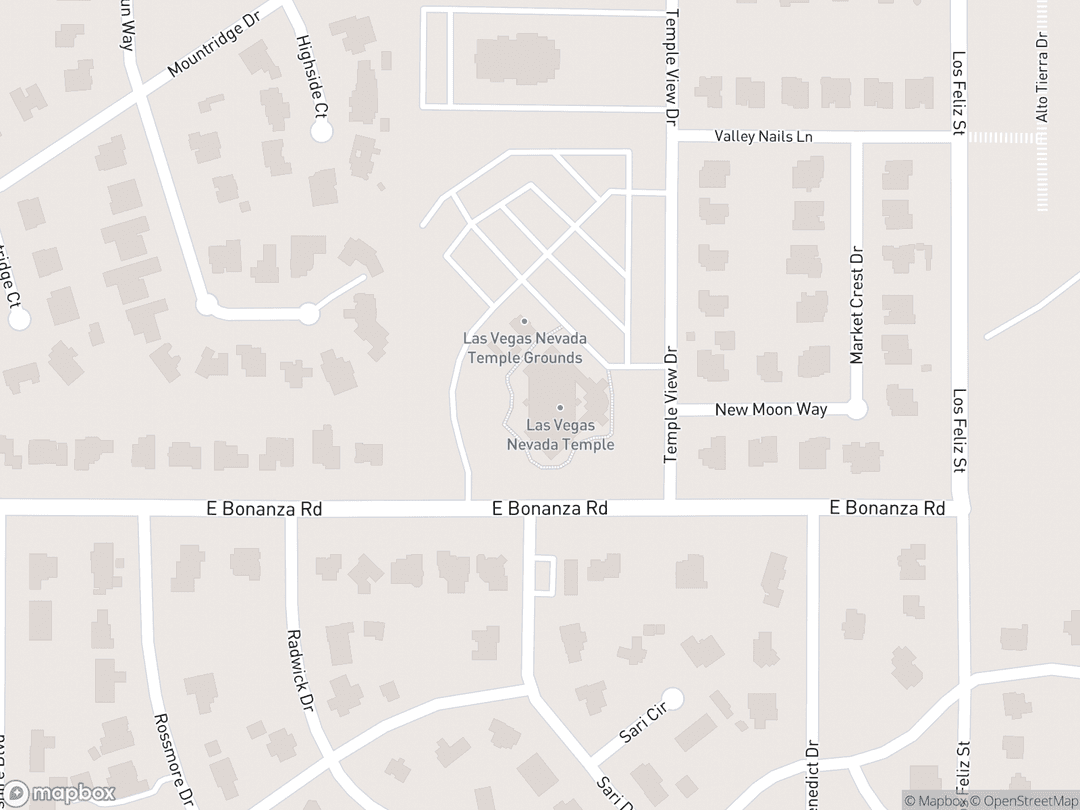
827 Temple View Drive, Las Vegas, NV 89110
Hours: Grounds are generally open daily from dawn until dusk.
Getting There: Located approximately 7.4 miles east of the Las Vegas Strip via Bonanza Road or Washington Avenue.
Get DirectionsAbout
The Las Vegas Nevada Temple stands as a prominent landmark on the eastern edge of the Las Vegas Valley, situated at the base of Frenchman Mountain. Dedicated in 1989, it was the first temple built in Nevada and serves as a spiritual counterpoint to the city's secular entertainment industry. Church leaders have described the edifice as a "crowning jewel" and an "oasis of peace and life and light," designed to offer sanctuary from the clamor of the world below.
Architecturally, the temple is characterized by a modern six-spire design with a sloping copper roof, a style reminiscent of a desert tent. The exterior is clad in white precast stone, while the grounds feature dusty rose, rust, and sandy tones to harmonize with the surrounding Mojave Desert. A unique "desert lily" motif is integrated into the exterior panels and interior detailing, symbolizing purity and resilience amidst a harsh environment.
The temple's construction was marked by an extraordinary outpouring of local support. When the temple was announced in 1984, local members were asked to contribute to the construction costs. In a display of immense dedication, they raised $11 million—428% of their assessment—prompting President Gordon B. Hinckley to jokingly instruct local leaders to "stop raising money." Today, the temple continues to serve a large district covering Southern Nevada, standing as a testament to the faith of the region's Latter-day Saint community.
Gallery
Symbolic Elements
The temple's exterior features intricate carvings, each rich with spiritual meaning:

The Desert Lily
Cast into exterior panels and interior detailing, this flower symbolizes purity and the ability to blossom beautifully despite a harsh, arid environment.

Circle in Square
This geometric motif represents the union of heaven (the circle/eternity) and earth (the square/four corners), signifying the temple as the intersection of the divine and the mortal.

Eastward Orientation
The Angel Moroni statue and the temple's primary axis face east, symbolically anticipating the Second Coming of Jesus Christ.

Celestial Prisms
The Celestial Room windows feature cut-glass prisms designed to scatter sunlight into miniature rainbows, representing the 'progression of light' and divine promise.

Copper Roof
The copper roofing material was chosen to honor Nevada's identity as the 'Silver State' (using metal) and to naturally patina into colors that blend with the desert landscape.

Twelve Stars
Oval windows in the interior feature stars that reference Lehi's vision from the Book of Mormon, symbolizing Christ and the twelve apostles.
Interesting Facts
Local members raised 428% of the requested construction funds ($11 million), prompting President Hinckley to tell them to 'stop raising money.'
The temple was dedicated the same year as The Mirage casino, creating a 'Tale of Two Cities' contrast between the sacred and the secular.
In the dedicatory prayer, the temple was described as a 'crowning jewel' overlooking the city.
The open house attendance of 297,480 visitors shattered the Church's expectation of 200,000.
The Celestial Room features cut-glass prisms that project miniature rainbows onto the walls, symbolizing the progression of light.
The temple is located at the base of Frenchman Mountain to physically separate it from the Las Vegas Strip.
It was the first temple built in Nevada; a second followed in Reno in 2000.
The cornerstone contains a hymnal, local histories, and images of the Old Las Vegas Mormon Fort.
The exterior features a 'Circle in Square' motif, symbolizing the meeting of heaven (circle) and earth (square).
Local residents viewed the temple as a 'bookmark' proving Las Vegas is a community of families, not just a tourist destination.
Common Questions
Can anyone enter the Las Vegas Temple?
Only members of The Church of Jesus Christ of Latter-day Saints with a valid temple recommend may enter the interior. However, the grounds are open to the general public and are a popular spot for photography and quiet reflection.
What is the significance of the Desert Lily symbol?
The desert lily motif was chosen by architect George Tate. He observed that the lily produces beautiful white blossoms despite the harsh, arid climate, symbolizing the temple as a holy edifice standing amidst the 'barren' or worldly environment of Las Vegas.
Why does the temple have a copper roof?
The copper roof was selected to complement Nevada's identity as the 'Silver State' (using a metal finish) and to harmonize with the desert environment. Over time, copper develops a patina that blends naturally with the earth tones of the Mojave Desert.
How tall is the Las Vegas Temple?
The highest of the six spires reaches 137 feet (42 meters). The Angel Moroni statue stands atop this eastern spire, facing the rising sun.
Is there a Visitors' Center?
No, there is no public Visitors' Center on the site. However, the grounds are open for self-guided walking.
Related Stories
Explore the rich history, traditions, and people connected to this sacred site.
Featured Stories
The Fundraising Miracle
1984–1985
When the Las Vegas Temple was announced, the local Church district was tasked with raising a portion of the construction costs, a common practice at the time. The response from the Saints in Southern Nevada was nothing short of miraculous. In a demonstration of overwhelming faith and sacrifice, families contributed savings, children donated allowances, and businesses gave generously.
The final tally reached $11 million, which was an astounding 428% of the original assessment. The surplus was so significant that President Gordon B. Hinckley reportedly told the local stake presidents, 'Brethren, you've got to stop raising money.' This financial sacrifice cemented the local members' sense of ownership and spiritual investment in the edifice.
Source: Church News / Local History
A Tale of Two Cities
1989
The year 1989 saw the completion of two massive construction projects in the Las Vegas Valley that represented polar opposites of the human experience. On the Strip, Steve Wynn opened The Mirage, a resort that redefined the scale of Las Vegas entertainment. Simultaneously, on the eastern edge of the valley, the Church completed the Las Vegas Temple.
Local members and observers noted the stark contrast between the two structures. One was built for entertainment, chance, and the 'glitz' of the world; the other was dedicated to eternity, covenants, and peace. In his dedicatory prayer, President Hinckley emphasized this distinction, consecrating the temple as an 'oasis' standing apart from the 'clamor and evil and darkness' of the world.
Source: Dedicatory Prayer / Historical Observation
The Desert Lily
Design Phase
Architect George Tate sought a symbol that would uniquely represent the temple's location in the Mojave Desert. He bypassed standard religious iconography in favor of the desert lily, a native plant he admired for its resilience. Tate noted that the lily produces a brilliant white blossom even in the harshest, driest conditions.
He integrated this motif into the precast stone panels of the exterior and the interior woodwork and fabrics. The symbol serves as a powerful metaphor for the temple itself and the patrons who attend it: a place of holiness and purity that flourishes regardless of the spiritual aridity of the surrounding environment.
Source: Architectural Records
Timeline
Temple Announced
President Gordon B. Hinckley announces the temple during General Conference, alongside temples for Portland, Toronto, San Diego, and Bogotá.
MilestoneFundraising Miracle
Local members raise $11 million for construction, achieving 428% of the requested assessment.
EventGroundbreaking
President Gordon B. Hinckley presides over the groundbreaking ceremony, attended by over 6,000 members at the Las Vegas Convention Center.
component.timeline.groundbreakingOpen House Begins
The temple opens to the public for 23 days. Attendance reaches 297,480 visitors, shattering expectations of 200,000.
EventDedication
The temple is dedicated in 11 sessions by President Gordon B. Hinckley. More than 30,000 members attend.
DedicationReno Temple Dedicated
The dedication of the Reno Nevada Temple reduces the geographical size of the Las Vegas temple district.
MilestoneFamily History Center Opens
A new Family History Center opens in the former Distribution Services building on the temple grounds.
RenovationGrounds Renovation
A renovation of the east side grounds is completed, adding a new plaza and herringbone paver walkways.
RenovationMoroni Regilding
The Angel Moroni statue is removed, regilded with gold leaf, and returned to the highest spire.
RenovationPandemic Closure
The temple closes temporarily due to the global COVID-19 pandemic.
EventLone Mountain Temple Announced
A second temple for the Las Vegas area is announced, reflecting the continued growth of the Church in the valley.
MilestoneHistory by Decade
1980s — Inception and Dedication
May this be an oasis of peace and life and light, in contrast with the clamor and evil and darkness of the world.
The 1980s were a decade of rapid growth for the Church in Nevada, culminating in the announcement and construction of the state's first temple. Following the 1984 announcement, the community galvanized around the project, breaking fundraising records. The decade concluded with a massive open house and the dedication in December 1989, establishing the temple as a spiritual anchor for the region.
1990s–2000s — Service and Expansion
Throughout the 1990s, the Las Vegas Temple served a vast district extending into Arizona and California. The immense demand on the facility led to the construction of the Reno Nevada Temple, dedicated in 2000, which relieved some of the geographical strain. During this era, the temple solidified its role not just as a place of worship, but as a symbol of the permanent, family-oriented community existing within Las Vegas.
2010s–Present — Renovation and Legacy
As the temple aged, it underwent necessary updates, including the opening of an on-site Family History Center in 2012 and a significant renovation of the grounds in 2019 to improve accessibility and aesthetics. The temple weathered the global pandemic closure in 2020 and emerged with a regilded Angel Moroni statue. In 2022, the announcement of a second temple in Lone Mountain marked a new chapter, transitioning the Las Vegas Temple from the sole provider of ordinances to the elder statesman of temples in the valley.
Architecture & Facilities
A classic example of the six-spire sloped roof design common in the 1980s, designed by Tate & Snyder. The 137-foot edifice features a white precast stone exterior and copper roof, with spires echoing the peaks of nearby Sunrise Mountain. Architectural details include desert-inspired motifs such as the sun, moon, and star stones, and a 'progression of light' interior design philosophy.
Building Materials
Exterior
White precast stone walls designed to reflect the intense desert sun.
Roof
Copper roofing that develops a natural patina, complementing the desert landscape.
Accents
Dusty rose and rust-colored detailing to match the surrounding geology.
Interior Features
Celestial Room
Features floor-to-ceiling windows with cut-glass prisms that project rainbows, and two massive crystal chandeliers.
Color Palette
Southwestern earth tones including sand, rust, and brown, accented with brass and silver.
Temple Grounds
10.3 acres of native desert landscaping, featuring a plaza with herringbone pavers and views of the Las Vegas Valley.
Religious Significance
For Latter-day Saints in Southern Nevada, the temple represents the intersection of heaven and earth, providing a sanctuary where sacred covenants can be made.
The temple is dedicated to the performance of vicarious ordinances for ancestors and the sealing of families for eternity.
Sacred Ordinances
Sealing
Marriages performed here are considered valid for eternity, not just 'until death do us part.'
Baptism for the Dead
Vicarious baptisms performed on behalf of deceased ancestors.
An Oasis of Peace
The temple is theologically and physically positioned as a refuge from the secular world, offering a space of quiet contemplation and spiritual renewal.
Similar Temples
Sources & Research
Every fact on Temples.org is backed by verified Sources & Research. Each piece of information is rated by source tier and confidence level.
View All Sources (5)
| Field | Source | Tier | Retrieved |
|---|---|---|---|
| Official Temple Page | The Church of Jesus Christ of Latter-day Saints (opens in a new tab) | A | 2026-02-13 |
| Temple Facts | The Church of Jesus Christ of Latter-day Saints (opens in a new tab) | A | 2026-02-13 |
| Newsroom Fact Sheet | Church Newsroom (opens in a new tab) | A | 2026-02-13 |
| Architecture & Design | ChurchofJesusChristTemples.org (opens in a new tab) | C | 2026-02-13 |
| Local News Coverage | Las Vegas Review-Journal (opens in a new tab) | C | 2026-02-13 |