Visitor Insights
Visiting Reno Nevada Temple
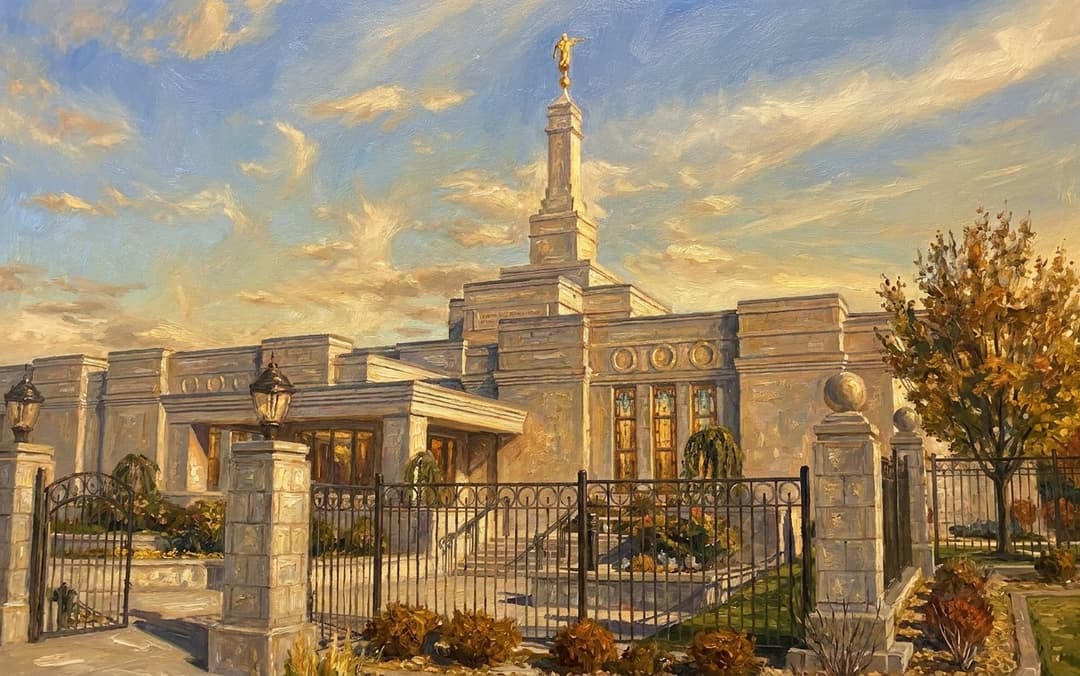
The Reno Nevada Temple rests on a scenic high-desert ridge in northwest Reno, providing panoramic vistas of Truckee Meadows and the Sierra Nevada foothills. The exterior plazas and perimeter gardens offer a quiet setting for personal reflection.
Highlights
- Polished gray granite exterior quarried in Vermont.
- Elevation offering scenic views across the Truckee Meadows valley.
- Peaceful grounds featuring manicured lawns and seasonal flora.
Things to Know
- Interior entry requires a current temple recommend for Church members.
- Grounds and walkways are open to all visitors regardless of faith.
- High elevation can bring sudden winds and seasonal cold weather.
Location
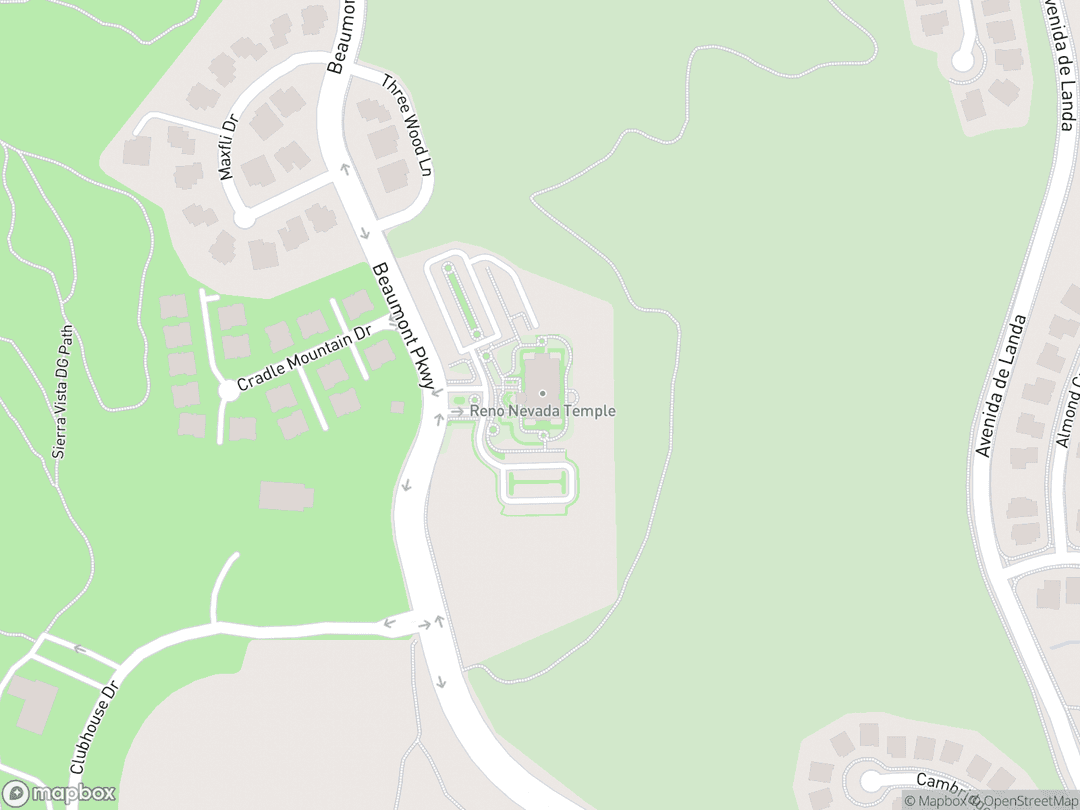
2000 Beaumont Parkway, Reno, Nevada 89523, United States
Hours: Tuesday through Saturday: Hours vary by ordinance schedule. Closed Sundays and Mondays.
Getting There: Located off Interstate 80 at Exit 11 (Robb Drive), connecting to Beaumont Parkway in northwest Reno.
Get DirectionsTips for Your Visit
Sunset Viewing
Visit the temple grounds during sunset for golden-hour views of the granite facade against the Sierra Nevada mountains.
Winter Travel
Monitor local high-desert weather conditions when traveling during winter months.
About
In alignment with ancient Abrahamic and Christian traditions of establishing a dedicated House of the Lord, the Reno Nevada Temple stands as a sacred sanctuary where believers enter into holy covenants with God. The edifice serves as a spiritual centerpiece for Church members living in the high-desert region of Northern Nevada and neighboring California communities.
Announced in 1999 by President Gordon B. Hinckley, the temple eliminated the arduous journey previously required of local Saints. Before its construction, members were forced to navigate hazardous winter mountain driving across the Sierra Nevada range via Donner Pass to access temples in Oakland or Salt Lake City.
As Nevada's second operating temple, the edifice represents President Hinckley's late-20th-century initiative to build smaller, standardized temples. The streamlined design brought sacred ordinances, eternal marriage sealings, and quiet worship opportunities directly to regional member populations.
Gallery
Symbolic Elements
The temple's exterior features intricate carvings, each rich with spiritual meaning:

Angel Moroni Statue
The gold-leafed statue atop the spire symbolizes the restoration of the gospel spoken of in Revelation. (Tier A)

Vermont Gray Granite Facade
Durable granite connects the modern structure to Sharon, Vermont, the historic birthplace of Joseph Smith. (Tier A)

Baptismal Font on Twelve Oxen
Twelve oxen supporting the font represent the twelve tribes of Israel and the gathering of covenant people. (Tier A)

Central Spire
The slender central tower directs attention heavenward, symbolizing humanity's vertical communion with God. (Tier A)

Progressive Instruction Rooms
Sequential ordinance rooms facilitate a physical progression reflecting spiritual advancement toward God. (Tier A)

Sealing Room Altars
Sacred altars represent the divine authority to seal family relationships eternally across generations. (Tier A)

Celestial Room Chandelier
Crystal lighting fixtures reflect celestial glory, peace, and divine light within the sanctuary. (Tier A)

Ridge-Top High-Desert Grounds
An elevated landscape position symbolizes leaving behind the valley of the world to enter the holy mountain. (Tier B)
Interesting Facts
The temple was dedicated on Easter Sunday, April 23, 2000, underscoring Christ's resurrection and eternal life. (Tier A)
Groundbreaking took place on July 24, 1999, coinciding with Pioneer Day in Latter-day Saint heritage. (Tier A)
Its gray granite exterior was quarried near Sharon, Vermont, the birthplace of Prophet Joseph Smith. (Tier A)
The temple eliminated the need for local members to drive through snowstorms over Donner Pass to California. (Tier B)
High high-desert mountain winds reportedly calmed to still conditions right as the groundbreaking prayer began. (Tier A)
It was dedicated on the exact same day as the Memphis Tennessee Temple in a historic dual-dedication weekend. (Tier A)
The building was the second house of the Lord built in Nevada, following the 1989 Las Vegas Temple. (Tier A)
President Thomas S. Monson dedicated the building while serving as First Counselor in the First Presidency. (Tier A)
The edifice represents President Gordon B. Hinckley's standardized small-plan initiative to globalize temple access. (Tier A)
Common Questions
Can visitors walk around the Reno Nevada Temple grounds?
Yes, visitors of all faiths are welcome to walk around the landscaped grounds and public walkways.
Where was the stone for the exterior quarried?
The gray granite exterior was quarried near Sharon, Vermont, the birthplace of Joseph Smith.
When was the temple dedicated?
President Thomas S. Monson dedicated the temple on Easter Sunday, April 23, 2000.
What geographic region does the temple serve?
The temple serves Latter-day Saint stakes throughout Northern Nevada and northeastern California.
Featured Stories
An Easter Sunday Dedication
April 23, 2000
On Easter Sunday in 2000, President Thomas S. Monson dedicated the Reno Nevada Temple across four sacred sessions. He emphasized how Christ's resurrection gives ultimate meaning to temple ordinances that seal families together forever. The spring timing underscored themes of spiritual renewal for regional members.
Source: Church News Dedication Coverage
Calming Winds at Groundbreaking
July 24, 1999
During groundbreaking services held on Pioneer Day, strong mountain winds swept across the elevated ridge site. Attendees noted that as Elder Rex D. Pinegar began the site dedicatory prayer, the gusty winds abruptly subsided into silence. The peaceful atmosphere left a lasting spiritual impression on community members.
Source: Groundbreaking Historical Account
Granite from Sharon, Vermont
1999
To construct the exterior cladding, builders selected polished gray granite from a quarry near Sharon, Vermont. This specific material carries historical resonance as Sharon was the birthplace of Joseph Smith. The stone links Northern Nevada's sanctuary back to the early roots of the Restoration.
Source: Church Architecture Records
Timeline
Las Vegas Temple Dedicated
Nevada's first temple opens in Southern Nevada, leaving Northern Nevada Saints dependent on interstate travel.
MilestoneSmall Temple Plan Introduced
President Gordon B. Hinckley announces a global plan to construct smaller temples closer to member populations.
MilestoneReno Temple Announced
The First Presidency formally announces plans to construct Nevada's second temple in Reno.
EventGroundbreaking Ceremony
Elder Rex D. Pinegar presides over the groundbreaking ceremony held on Pioneer Day.
component.timeline.groundbreakingGranite Cladding Begins
Construction workers begin installing polished gray granite quarried from Sharon, Vermont.
EventAngel Moroni Statue Set
The gold-leafed Angel Moroni statue is raised atop the central tower.
MilestonePublic Open House Begins
Community members begin touring the interior during a weeklong public open house.
EventOpen House Concludes
Thousands of regional visitors complete walkthrough tours of the sacred building.
EventEaster Sunday Dedication
President Thomas S. Monson dedicates the Reno Nevada Temple in four sacred sessions.
DedicationOperations Begin
The temple opens for regular ordinance work serving stakes across Nevada and California.
EventHistory by Decade
1980s–1990s — Regional Need
Before the Reno temple, Northern Nevada Latter-day Saints traveled over 200 miles across the Sierra Nevada to attend the Oakland California Temple. Winter mountain travel through Donner Pass presented severe hazards for families. President Gordon B. Hinckley's smaller temple plan provided the blueprint to establish a regional sanctuary.
1999 — Announcement and Construction
The First Presidency formally announced the Reno Nevada Temple on April 12, 1999. Groundbreaking occurred on Pioneer Day, July 24, 1999, followed by swift assembly of the steel structure and Vermont granite cladding. Construction progressed rapidly throughout the winter on the 7.9-acre parcel.
2000s — Dedication and Service
Following an open house attended by thousands of community neighbors, President Thomas S. Monson dedicated the temple on Easter Sunday, April 23, 2000. The temple immediately began serving six stakes in western Nevada and eastern California. It continues operating as a vital spiritual retreat overlooking Truckee Meadows.
Architecture & Facilities
The Reno Nevada Temple is built in a classic modern architectural style, utilizing the standardized single-spire small-plan design created under President Gordon B. Hinckley's administration to bring sacred temples closer to global member populations.
Building Materials
Exterior Cladding
Faced with durable gray granite quarried near Sharon, Vermont, protecting the structure from alpine climate cycles.
Spire and Statue
Features a slender stone tower capped with a gold-leafed fiberglass statue of the Angel Moroni.
Interior Trim
Finished with high-quality hardwood woodwork and polished stone accents in ordinance rooms.
Art Glass
Custom stained glass windows featuring subtle geometric desert-inspired patterns and warm lighting.
Interior Features
Instruction Rooms
Two progressive endowment rooms where patrons move sequentially during covenant presentations.
Celestial Room
A serene space representing heavenly glory, furnished with elegant light fabrics and crystal lighting.
Sealing Rooms
Two intimate rooms with central altars and facing mirrors where eternal marriages are solemnized.
Baptistry
Contains a central baptismal font supported by twelve bronzed oxen patterned after ancient biblical design.
Temple Grounds
The 7.9-acre hilltop property features manicured lawns, desert-hardy flora, concrete plazas, and iron perimeter fencing.
Additional Facilities
An adjacent Church Distribution Services store provides temple clothing and sacred instructional materials for members.
Religious Significance
Within broader Christian and Abrahamic traditions, a temple serves as a consecrated house of the Lord—a physical place where humanity enters into binding covenants with God. In Latter-day Saint theology, the Reno Nevada Temple stands as a sacred bridge between earthly mortality and eternal life.
The primary purpose of the temple is to provide a holy sanctuary where Latter-day Saints participate in sacred ordinances, including eternal marriages, family sealings, and proxy baptisms for ancestors.
Sacred Ordinances
The Endowment
A sacred ceremony where believers receive spiritual instruction and make covenants of obedience, sacrifice, and devotion to God.
Eternal Marriage and Sealing
Rites performed at sacred altars that unite husbands, wives, and families for eternity through divine priesthood authority.
Baptism for the Dead
Vicarious baptisms offered on behalf of deceased ancestors, ensuring all people have the opportunity to accept gospel covenants.
Christian Sacred Space Alignment
Latter-day Saint temples build upon biblical concepts of dedicated holy ground, echoing the Tabernacle of Moses and Solomon's Temple while centering sacred worship on the Atonement of Jesus Christ.
Similar Temples
Sources & Research
Every fact on Temples.org is backed by verified Sources & Research. Each piece of information is rated by source tier and confidence level.
View All Sources (4)
| Field | Source | Tier | Retrieved |
|---|---|---|---|
| About & Historical Background | The Church of Jesus Christ of Latter-day Saints (opens in a new tab) | A | 2026-02-17 |
| About & Historical Background | The Church of Jesus Christ of Latter-day Saints (opens in a new tab) | A | 2026-02-17 |
| Architecture & Interior Layout | Temples of The Church of Jesus Christ of Latter-day Saints (opens in a new tab) | C | 2026-02-17 |
| Architecture & Interior Layout | Church History Department (opens in a new tab) | A | 2026-02-17 |