Visitor Insights
Visiting Sloan Canyon Sacred Petroglyphs
Visiting Sloan Canyon requires checking in at the contact station before hiking the 4-mile round-trip wash. Hikers must scramble up three steep dry waterfalls to reach the upper petroglyph gallery.
Highlights
- Over 300 documented rock art panels containing nearly 1,700 glyph motifs
- Dramatic volcanic scenery and scrambling up three dry waterfalls
- Solstice solar calendar spirals and historic contact horse petroglyphs
Things to Know
- Must check in at the Visitor Contact Station and exit canyon wash by 4:30 PM
- Never touch or lean on rock art; skin oils permanently damage desert varnish
- Domestic pets are strictly prohibited inside Petroglyph Canyon wash
Location
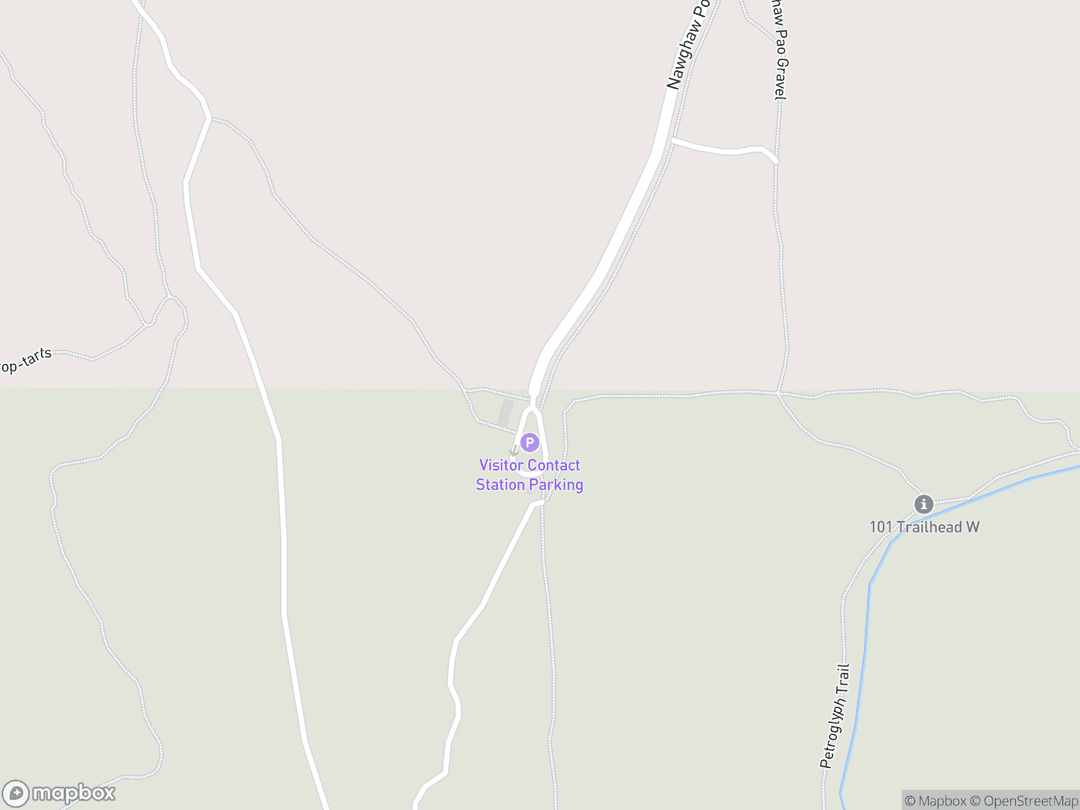
14700 Nawghaw Poa Rd, Henderson, NV 89044
Hours: Day-use only, 8:30 AM – 4:30 PM daily.
Getting There: Located at 14700 Nawghaw Poa Rd, Henderson, NV, accessible via I-15 or St. Rose Parkway.
Get DirectionsTips for Your Visit
Footwear & Scrambling
Wear sturdy hiking boots with excellent grip for scrambling over slick volcanic scarp rocks.
Desert Hydration
Carry at least 2 liters of water per person as no potable water exists beyond the contact station.
Best Visiting Season
Plan your visit between November and April to avoid dangerous summer heat exceeding 105°F.
Sacred Respect
Treat the canyon as an active place of worship by keeping voices low and leaving all artifacts intact.
About
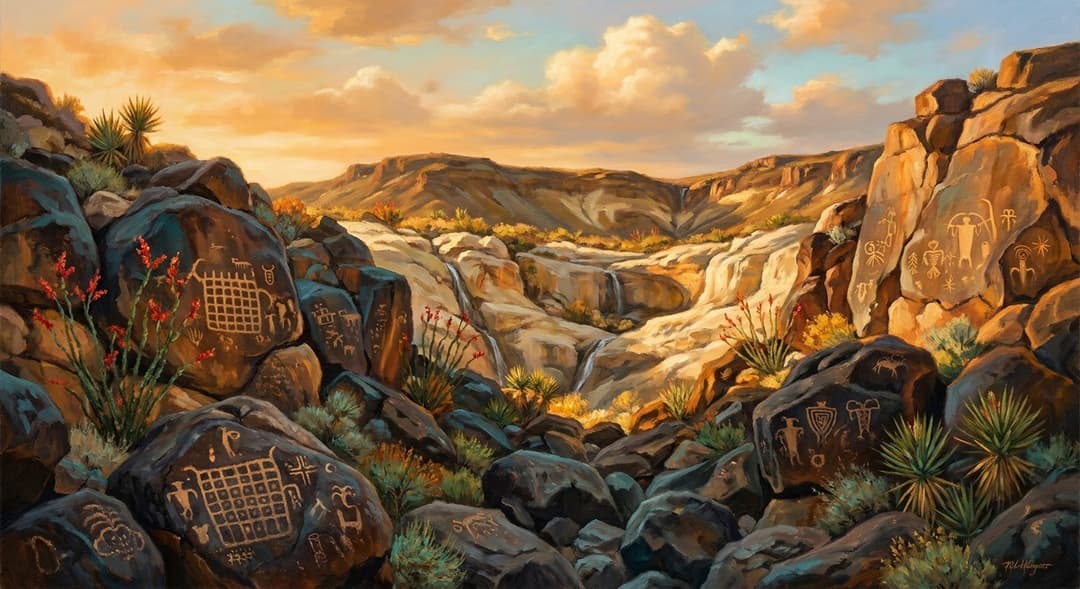
The Sloan Canyon Sacred Petroglyphs, known in Nuwuvi tradition as Nawghaw Poa ("Rock Writing Path"), represent one of North America's most concentrated galleries of ancient Indigenous rock art. Located in the North McCullough Mountains near Henderson, Nevada, this sacred corridor features over 300 documented rock art panels holding nearly 1,700 individual petroglyphs created across 5,000 years.
For millennia, nomadic hunter-gatherers, Ancestral Puebloan groups, Patayan cultures, and the Southern Paiute (Nuwuvi) traversed this volcanic canyon wash. Rather than mere historical artifacts or artistic markers, these petroglyphs are living spiritual writings (Puha) etched through natural desert varnish into the stone, serving as permanent prayers, astronomical calendars, and ceremonial record-keeping.
Designated a National Historic Landmark site and federally protected within the 48,438-acre Sloan Canyon National Conservation Area, the canyon remains a deeply active spiritual space for regional Native American tribes. Today, managed visitation and strict conservation protocols preserve these fragile, sacred inscriptions for generations to come.
Gallery
Symbolic Elements
The temple's exterior features intricate carvings, each rich with spiritual meaning:

Desert Bighorn Sheep
Zoomorphic sacred icon associated with rain-making rituals, endurance, and shamanic spirit helpers.

Shamanic Anthropomorph
Human-like spirit figures with rayed headdresses depicting spiritual practitioners and divine encounters.

Solar Spiral
Concentric etched spirals functioning as solar calendars aligning with solstice and equinox sunlight.

Geometric Grid Net
Intricate cross-hatched markings representing territorial boundary maps and cosmic spiritual pathways.

Handprint Petroglyph
Stenciled and pecked hand symbols signifying personal devotion, presence, and ancestral lineage.

Atlatl Hunting Scene
Depictions of spear-throwers and game animals expressing gratitude and prayers for communal survival.

Historic Contact Rider
Depictions of horses and European riders recording the 18th-century arrival of foreign expeditions.

Cupule Rock Markings
Deep circular pits carved into volcanic boulders used for sacred ceremonial offerings and medicine preparation.
Interesting Facts
Known as the Sistine Chapel of Native American rock art due to its immense density and preservation. (Tier B)
Represents 50 centuries of unbroken Indigenous artistic tradition spanning Archaic to historic Paiute eras. (Tier A)
Artists etched motifs through black manganese desert varnish without using any artificial paint. (Tier A)
Reaching the densest upper gallery requires climbing three steep volcanic dry waterfalls. (Tier A)
Carved solar spirals function as solstice calendars when struck by passing blades of sunlight. (Tier B)
Contact-era panels feature 18th-century horses and riders documenting European arrival in Nevada. (Tier A)
The access road Nawghaw Poa Road translates to Rock Writing Path in the Southern Paiute language. (Tier A)
Regional tribes view the site as a living sacred space where ancestral spirits remain present. (Tier A)
Common Questions
Can I touch the petroglyphs?
No, touching petroglyphs is illegal because skin oils destroy ancient desert varnish patina.
Are pets allowed in Petroglyph Canyon?
No, domestic pets are strictly prohibited in the canyon wash to protect wildlife and sacred ground.
How long is the hike to see the petroglyphs?
The main Petroglyph Trail (Trail 100) is a 4-mile round-trip hike along a gravel wash.
Do I need a reservation or fee to enter?
Entry is free, but all visitors must check in at the contact station before entering.
Are there restrooms along the trail?
Restrooms are available only at the Visitor Contact Station trailhead.
Featured Stories
The Sacred Legacy of Nawghaw Poa
1500
For generations, the Southern Paiute (Nuwuvi) people have revered Petroglyph Canyon as Nawghaw Poa, or the Rock Writing Path. Elders taught that the etched stone walls are not human artistic expression alone, but living spiritual messages infused with Puha. Tribal members continue to regard the canyon as a sacred sanctuary where ancestral spirits speak directly through the stone.
Source: Southern Paiute Tribal Cultural Resources Department
Decoding the Solstice Sun Daggers
500 CE
High on an east-facing volcanic wall in the upper canyon lies a precisely carved spiral petroglyph created over fifteen centuries ago. On the summer and winter solstices, natural rock fissures focus early morning sunlight into a thin blade of light that pierces the exact center of the spiral. This ancient solar calendar allowed ancestral astronomers to mark critical seasonal shifts for ceremonial gatherings.
Source: Nevada Rock Art Foundation Survey
Securing the Volcanic Sanctuary
November 6, 2002
As suburban development rapidly expanded toward the McCullough Mountains in the late 1990s, local conservationists and tribal leaders united to protect the petroglyph gallery. Their efforts culminated on November 6, 2002, when federal legislation permanently established the 48,438-acre Sloan Canyon National Conservation Area. Today, site stewards and visitor check-in protocols ensure the ancient sacred gallery remains unblemished.
Source: Bureau of Land Management Historic Preservation
Timeline
Middle Archaic Rock Art
Nomadic hunter-gatherers etch early geometric grids and cupules into volcanic rocks.
MilestoneLate Archaic Expansion
Artists begin pecking early anthropomorphic figures and desert bighorn sheep.
EventVirgin Anasazi Influence
Ancestral Puebloan peoples introduce handprint petroglyphs and solar calendar spirals.
EventPatayan Trade Network
Patayan artists add interconnected line networks and dynamic wildlife imagery.
EventNuwuvi Sacred Stewardship
The Southern Paiute establish formal spiritual guardianship over Nawghaw Poa.
EventHistoric Contact Glyphs
Tribal artists etch depictions of horses and riders during early European contact.
EventNational Register Listing
The Sloan Petroglyph Site is officially added to the National Register of Historic Places.
MilestoneArchaeological Baseline Survey
Researchers map 318 distinct petroglyph panels across four canyon zones.
EventNational Conservation Area Created
Congress passes legislation establishing the 48,438-acre Sloan Canyon NCA.
MilestoneHistoric Boundary Expansion
Federal authorities expand the National Register boundary to cover additional panels.
MilestoneHigh-Precision Digital Archiving
The Nevada Rock Art Foundation completes comprehensive GPS and panel scale drawings.
EventVisitor Contact Station Opened
BLM constructs the contact station and enforces mandatory visitor check-in.
MilestoneHistory by Decade
3000 BCE — Middle Archaic Beginnings
Nomadic hunter-gatherers navigate the North McCullough Mountains, carving early abstract geometric squiggles, cupules, and grids into volcanic basalt boulders along the water wash.
1000 BCE — Late Archaic Expansion
Utilization of the canyon as a seasonal transit corridor intensifies. Artists begin pecking early human-like anthropomorphic figures and desert bighorn sheep into dark desert varnish.
500 CE — Virgin Anasazi Era
Agricultural Ancestral Puebloan peoples extend their spiritual presence into Southern Nevada. They introduce detailed handprints, hunting imagery, and precision solar calendar markings on south-facing rocks.
700 CE — Patayan Cultural Influence
Yuman-speaking Patayan groups cultivate trade routes across the lower Colorado River region. They add dynamic depictions of sacred bighorn sheep and complex interconnected line networks.
1500 — Nuwuvi Sacred Stewardship
The Southern Paiute (Nuwuvi) establish formal spiritual guardianship over Nawghaw Poa. During the historic era, tribal artists add images of horses and riders to record European contact.
1978 — Federal Historic Protection
Recognizing the exceptional concentration of ancient rock art, federal authorities officially list the Sloan Petroglyph Site on the National Register of Historic Places on December 19, 1978.
2002 — National Conservation Area Designation
On November 6, 2002, Congress passes legislation creating the 48,438-acre Sloan Canyon National Conservation Area to safeguard the sacred site from urban development.
Architecture & Facilities
An open-air Indigenous sacred landscape built from Miocene volcanic basalt, andesite, and dacite flow-breccia. The natural architecture relies on dramatic canyon geology, dark manganese desert varnish patina, and natural dry-waterfall thresholds rather than built masonry walls.
Building Materials
Volcanic Basalt Substrate
Dark weathered volcanic rock formed 15 million years ago serving as the natural canvas.
Manganese Desert Varnish
A microscopic black oxide patina chipped away by artists to reveal lighter underlying rock.
Quartzite Hammerstones
Dense regional stones utilized by ancient artisans to peck and incise precise glyph motifs.
Natural Water-Carved Scarp
Smooth volcanic scarp formations acting as natural gateways along the sacred trail.
Interior Features
Lower Canyon Entry Wash
Entry corridor featuring scattered boulders with broad geometric Archaic boundary symbols.
Middle Canyon Gallery
Widened wash section containing dense eye-level petroglyph panels along the main path.
The Narrows Threshold
Constricted volcanic gorge requiring scrambling past three dry waterfalls.
Upper Canyon Sacred Amphitheater
Elevated basin holding the highest concentration of complex multi-figure spirit panels.
Temple Grounds
Spans a 1-mile section of Petroglyph Canyon wash bordered by the North McCullough Wilderness, preserved in its natural arid desert ecosystem.
Additional Facilities
The Sloan Canyon Visitor Contact Station provides educational exhibits, safety briefings, site steward registration, and restrooms before trail entry.
Religious Significance
To the Southern Paiute (Nuwuvi) and regional Yuman tribes, stone holds living spiritual energy known as Puha. Petroglyphs are not static artwork, but living spiritual writing (Nawghaw Poa) etched into the earth.
Serves as a perpetual sacred archive for ceremonial vision quests, astronomical tracking, ancestral memory, and divine communication.
Sacred Ordinances
Nawghaw Poa (Rock Writing Rituals)
Etching sacred motifs into stone to record spiritual visions, rain-making ceremonies, and tribal law.
Solar Alignment Observation
Gathering during solstices and equinoxes to track solar light daggers passing through carved spirals.
Vision Quest Pilgrimage
Undertaking spiritual journeys through the canyon wash to seek guidance from ancestral spirits in the upper amphitheater.
Living Spiritual Energy (Puha)
Indigenous theology teaches that the spirit of the creators remains permanently active within the rock carvings and surrounding natural landscape.
Intergenerational Record Keeping
Over 50 centuries, successive cultures layered their symbols onto the canyon walls, building an unbroken physical testimony of spiritual history.
Sources & Research
Every fact on Temples.org is backed by verified Sources & Research. Each piece of information is rated by source tier and confidence level.