Visitor Insights
Visiting Bismarck North Dakota Temple
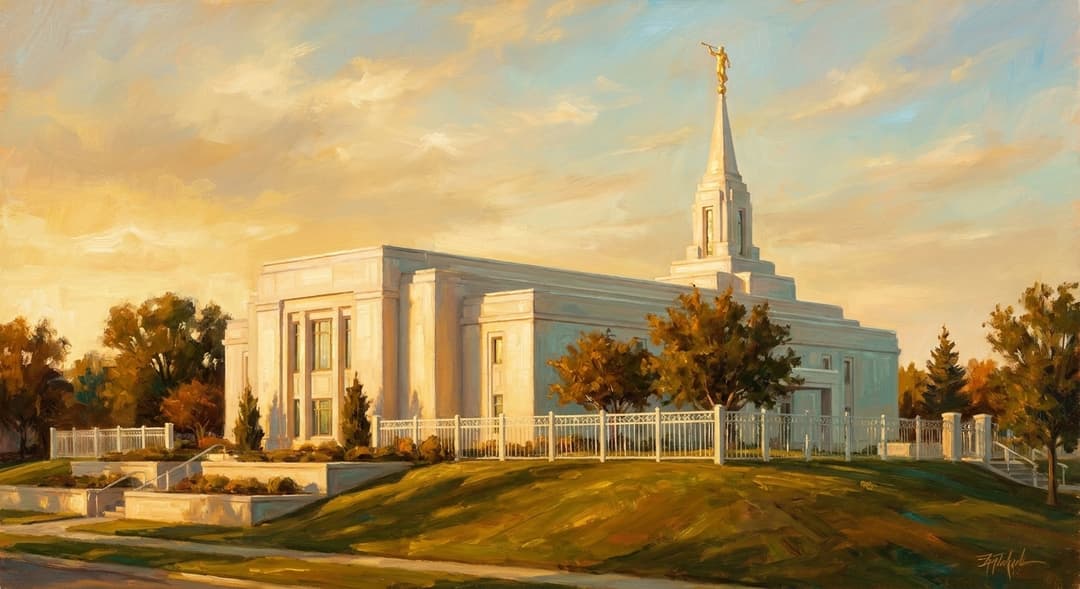
The Bismarck North Dakota Temple offers a serene and deeply spiritual atmosphere, nestled within a quiet residential neighborhood in northwest Bismarck. Visitors of all faiths are welcome to walk the beautifully manicured grounds, which feature native trees, concrete pathways, and vibrant flowerbeds that bloom during the short northern summer. While the interior of the temple is reserved for members holding a valid temple recommend, the exterior provides a peaceful, park-like sanctuary perfect for quiet contemplation and photography. There is no public visitors' center or distribution store on-site, making it a quiet, contemplative destination.
Highlights
- Stunning light-colored Quebec granite exterior that glows warmly at sunset.
- Beautifully landscaped 1.6-acre grounds with native northern plains flora.
- A gold-leafed statue of the angel Moroni standing atop a single 71-foot spire.
Things to Know
- The interior is closed to the general public, requiring a temple recommend for entry.
- No public visitors' center, patron housing, or cafeteria is available on-site.
- Winters in North Dakota can be extremely harsh, making late spring and summer the best times to visit the grounds.
Location
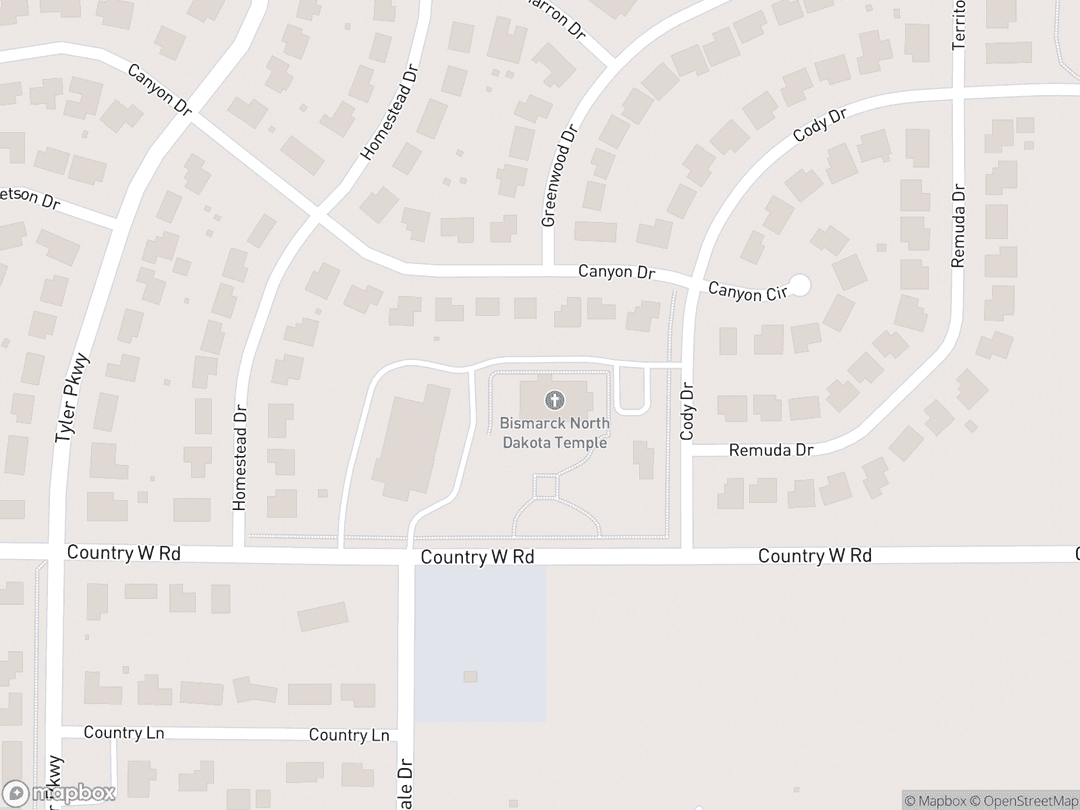
2930 Cody Dr, Bismarck, North Dakota 58503-0116, United States
Hours: Grounds are open daily from sunrise to sunset. Temple ordinance hours vary; check the official schedule for details.
Getting There: Located at 2930 Cody Dr in northwest Bismarck. Easily accessible via US-83 and local roads, with ample free parking available on-site.
Get DirectionsTips for Your Visit
Sunset Photography
Visit during the golden hour of sunset when the warm evening light beautifully illuminates the Quebec granite facade and the gold-leafed Moroni statue.
Seasonal Visits
Plan your visit for late spring or summer to see the meticulously arranged flowerbeds in full, vibrant bloom.
Respectful Attire
While the grounds are public, visitors are encouraged to dress respectfully to maintain the sacred and peaceful atmosphere of the temple site.
About
The Bismarck North Dakota Temple stands as a significant spiritual landmark on the northern plains of the United States. Dedicated on September 19, 1999, by President Gordon B. Hinckley, its construction represented a historic shift in the Church's architectural philosophy. As the 61st operating temple of The Church of Jesus Christ of Latter-day Saints, it was designed to bring sacred sanctuaries directly to geographically isolated congregations, serving a massive 200,000-square-mile district spanning North Dakota, South Dakota, western Minnesota, and parts of Manitoba, Canada.
To understand the temple’s significance, it is helpful to view it through the lens of the broader Judeo-Christian heritage. Throughout biblical history, from the Tabernacle of Moses in the wilderness to the Temple of Solomon in Jerusalem, houses of the Lord have been established as sacred spaces set apart from the world. In these ancient structures, believers sought communion with God through covenants, symbolisms, and sacred rituals. Latter-day Saints continue this ancient Abrahamic tradition, viewing the temple not as a standard meetinghouse for weekly congregational worship, but as a literal "House of the Lord" dedicated to higher Christian ordinances—such as eternal marriages and proxy baptisms—that bind families together across generations.
The temple's creation was part of a revolutionary initiative to build smaller temples, bringing the blessings of the house of the Lord to remote members without requiring days of travel. Before this temple was dedicated, local members faced some of the longest commutes in the Church to attend temple services. Members in Grand Forks had to travel 16 hours to Chicago, Illinois, while those in Minot drove 14 hours to Cardston, Alberta, Canada. The Bismarck temple dramatically reduced these travel times, allowing members to worship regularly in a local sanctuary.
Today, the temple remains a spiritual anchor for the region. During the North Dakota oil boom of the 2010s, a significant influx of families from western states doubled the size of several local congregations, and the temple served as a vital stabilizing force for these transitioning families. Even as the Church announces additional temples in the surrounding region, such as in Rapid City, South Dakota, the Bismarck temple remains celebrated as the historic pioneer temple of the northern plains, continuing its quiet, daily operations in northwest Bismarck.
Gallery
Symbolic Elements
The temple's exterior features intricate carvings, each rich with spiritual meaning:

The Angel Moroni
Atop the single spire stands a gold-leafed statue of the angel Moroni, holding a trumpet to his lips. This symbol is rooted in the New Testament book of Revelation, representing the restoration of the everlasting gospel of Jesus Christ to the earth.

The Twelve Oxen
The baptismal font is supported by twelve sculpted oxen, which face the four cardinal directions. This is a direct continuation of the design of the 'molten sea' in Solomon's Temple, symbolizing the twelve tribes of Israel and the global reach of Christ's redeeming grace.

German Stained Glass
The geometric and floral patterns in the stained glass represent the light of Christ filtering into a darkened world. It serves as a visual reminder of the clarity, beauty, and warmth of divine truth.

The Single Spire
The single attached spire points directly heavenward, serving as a physical reminder of the soul’s vertical relationship with God. It symbolizes the ultimate goal of returning to a heavenly home.

Quebec Granite Veneer
The light-colored granite exterior represents durability and enduring faith against harsh trials. Its reflective quality symbolizes the light of Christ shining brightly in the northern plains.

Italian Travertine and Marble
Used extensively inside the temple's entryways and corridors, this premium stone represents the purity and holiness of the House of the Lord. It creates a transition from the chaotic world into a sacred, clean space.

Czechoslovakian Crystal Chandeliers
Hanging in the Celestial and sealing rooms, these brilliant chandeliers symbolize the light of heaven and the clarity of eternal truth. They reflect and multiply light, representing the infinite nature of God's love.

The Central Altar
Located in the sealing rooms, the altar is the sacred space where couples and families are united for eternity. It represents the focal point of covenant-making and the bridge between heaven and earth.
Interesting Facts
The Bismarck North Dakota Temple was the first temple constructed in the state of North Dakota and the broader Dakota region.
Before its dedication, local members faced some of the longest commutes in the Church, with some driving up to 16 hours to Chicago or 14 hours to Cardston, Alberta.
In the 1980s, local leader Dan Dahlgren felt a strong spiritual prompting to refuse to sell the excess 1.6 acres of land, preserving the exact site where the temple stands today.
The temple is a physical representation of global cooperation, combining Canadian granite, Italian travertine, German stained glass, and Czechoslovakian crystal.
Despite the brutal freezing temperatures and wind of the North Dakota winter, construction was completed in less than eleven months after the groundbreaking.
At the time of its dedication, the temple served an incredibly vast geographical district spanning over 200,000 square miles.
North Dakota was historically the very last state in the United States to receive an organized Latter-day Saint stake (the Fargo Stake in 1977).
Many temple workers historically commuted several hours (such as from Rapid City, South Dakota) and stayed locally over weekends to ensure the temple could operate.
Unlike many larger temples built on prominent hillsides, the Bismarck temple is uniquely situated directly in the middle of a quiet, tree-lined residential neighborhood.
While secondary sources often claim the exterior is white marble, official architectural records confirm it is clad in light-colored granite veneer from Quebec, Canada.
Common Questions
Can the general public go inside the Bismarck North Dakota Temple?
No, the interior is reserved for members of the Church who hold a valid temple recommend. However, the general public is welcome to visit and walk the beautifully landscaped exterior grounds.
What is the significance of the angel Moroni statue on the spire?
The gold-leafed statue of the angel Moroni represents the restoration of the gospel of Jesus Christ to the earth, inspired by the New Testament book of Revelation (14:6).
Why was this temple built so much smaller than older temples like the Salt Lake Temple?
The Bismarck temple was built as part of a smaller temple initiative introduced by President Gordon B. Hinckley. This design allowed temples to be built closer to members in remote areas, eliminating long travel times.
What materials were used in the construction of the temple?
The exterior is clad in light-colored granite veneer from Quebec, Canada. The interior features imported Italian travertine and marble, German stained glass, and Czechoslovakian crystal chandeliers.
Is there a visitors' center or historical exhibit on the temple grounds?
No, there is no public visitors' center, patron housing, or distribution store on this site. The grounds are designed purely as a quiet, contemplative sanctuary.
Featured Stories
The Inspired Land Hold
1985
In the mid-1980s, the Church purchased a parcel of land on the northwestern edge of Bismarck to build a local meetinghouse. While local coordinators were repeatedly encouraged to sell the excess acreage to reduce costs, District President Dan Dahlgren felt a strong, undeniable spiritual impression to retain the full plot. He resisted multiple requests to sell, firmly believing the land would be needed for a higher purpose. This preserved 1.6-acre parcel would eventually become the exact site of the Bismarck North Dakota Temple, proving that his quiet prompting was a divine preparation for the future.
Source: Local Oral Histories & Photogent Records
Defying the Northern Winter
October 1998
Following the groundbreaking ceremony on October 17, 1998, construction crews faced the immediate onset of North Dakota's notoriously harsh winter. Temperatures plummeted well below freezing, accompanied by biting winds and heavy snow, yet the workers refused to halt their progress. They utilized specialized heated enclosures and worked continuously through the freezing months to lay the foundation and erect the structure. Against all odds, the temple was completed in less than eleven months, standing as a testament to the dedication, resilience, and faith of the builders who defied the elements.
Source: Church News Archives
A Historic Dedication on the Plains
September 19, 1999
On a beautiful autumn day, President Gordon B. Hinckley dedicated the Bismarck North Dakota Temple in three sacred sessions, marking a monumental milestone for the region. Over 3,000 Latter-day Saints gathered from across North Dakota, South Dakota, western Minnesota, and Manitoba, Canada, to witness the historic event. Many in attendance wept openly, overwhelmed by the realization that they no longer had to travel up to 16 hours to attend a temple. The dedication officially established the first temple in the Dakotas, bringing a deep sense of spiritual fulfillment and joy to the isolated congregations of the northern plains.
Source: The Church News Dedication Report
Timeline
First Baptism in North Dakota
The first recorded Latter-day Saint baptism in North Dakota takes place, marking the quiet arrival of the restoration movement in the state.
EventFirst Congregation Organized
The first formal Latter-day Saint congregation in North Dakota is organized, followed by the construction of a modest meetinghouse at Sully Lake.
EventFargo Stake Organized
The Fargo Stake is organized, removing North Dakota's status as the only state in the United States without an organized Latter-day Saint stake.
MilestoneLand Purchase in Bismarck
The Church purchases a parcel of land on the northwestern edge of Bismarck to build a local meetinghouse.
EventInspired Land Preservation
District President Dan Dahlgren feels a strong spiritual impression to retain the excess 1.6-acre plot rather than selling it, preserving the future temple site.
MilestoneTemple Announcement
President Gordon B. Hinckley officially announces the construction of the Bismarck North Dakota Temple as part of the smaller temple initiative.
MilestoneGroundbreaking Ceremony
Ground is broken for the temple during a ceremony conducted by Elder Kenneth Johnson of the Seventy.
component.timeline.groundbreakingFoundation Work Begins
Construction crews begin foundation work, braving the onset of a notoriously harsh North Dakota winter.
EventAngel Moroni Installed
The gold-leafed statue of the angel Moroni is installed atop the temple's single spire.
EventInterior Completion
Interior work is completed, featuring Italian marble, German stained glass, and Czechoslovakian crystal.
EventPublic Open House Begins
A public open house begins, allowing neighbors, local clergy, and community leaders of all faiths to tour the interior of the temple.
EventOpen House Concludes
The public open house concludes, having welcomed over 10,000 visitors from across the region.
EventTemple Dedication
President Gordon B. Hinckley dedicates the Bismarck North Dakota Temple in three sessions, attended by over 3,000 members.
DedicationFirst Day of Operations
The temple opens for regular ordinance work, serving a vast 200,000-square-mile district.
MilestoneOil Boom Influx
The North Dakota oil boom brings a significant influx of families, doubling the size of several local congregations and increasing temple attendance.
EventContinued Service
The temple continues its quiet, daily operations as a historic pioneer temple of the northern plains.
MilestoneHistory by Decade
1910s–1970s — Pioneer Roots and the Final Stake
The presence of The Church of Jesus Christ of Latter-day Saints in North Dakota began quietly in 1912 with the first recorded baptism in the state. By 1919, the first formal congregation was organized, leading to the construction of a modest meetinghouse at Sully Lake. For decades, members in the region remained geographically isolated, forming small branches but lacking the organizational structure of a stake. This isolation was finally broken in 1977 when the Fargo Stake was organized. Prior to this historic milestone, North Dakota held the unique distinction of being the only state in the entire United States without an organized Latter-day Saint stake. The creation of the stake signaled a new era of growth and maturity for the Church on the northern plains.
1980s–1990s — Preserving the Land and the Smaller Temple Initiative
In the 1980s, the Church purchased a parcel of land in northwest Bismarck to build a local meetinghouse. Although there was pressure to sell the excess acreage, local leader Dan Dahlgren felt a strong spiritual prompting to retain the full 1.6-acre plot, a decision that would prove prophetic. On July 29, 1998, President Gordon B. Hinckley announced the construction of the Bismarck North Dakota Temple as part of a revolutionary initiative to build smaller temples. Ground was broken on October 17, 1998, and despite a brutal North Dakota winter, construction was completed in less than eleven months. The temple was dedicated on September 19, 1999, eliminating staggering travel times for thousands of faithful members.
2000s–Present — Spiritual Anchor of the Northern Plains
Since its dedication, the Bismarck North Dakota Temple has served as a vital spiritual hub for a massive, 200,000-square-mile district. During the 2010s, the North Dakota oil boom brought a significant influx of families from western states, doubling the size of several local congregations and increasing temple attendance. Today, the temple continues its quiet, daily operations. Even as the Church announces additional temples in the surrounding region, such as in Rapid City, South Dakota, the Bismarck temple remains celebrated as the historic pioneer temple that first brought the blessings of the House of the Lord to the northern plains.
Architecture & Facilities
The Bismarck North Dakota Temple features a Classic Modern, single-spire design. It belongs to a specific cohort of smaller temples designed under the direction of President Gordon B. Hinckley to maximize spiritual utility while maintaining a dignified, elegant, and cost-effective footprint. The building’s clean lines, elongated windows, and vertical emphasis draw the eye upward, reflecting the Christian aspiration to connect the earthly realm with the heavenly.
Building Materials
Exterior Cladding
Light-colored granite veneer quarried in Quebec, Canada, which provides a highly durable barrier against North Dakota's extreme temperature swings.
Interior Stone
Premium travertine and marble imported from Italy, used extensively to line the entryways and main corridors.
Art Glass Windows
Artistically crafted stained glass windows imported from Germany, designed to diffuse natural light into soft, warm hues inside the sacred rooms.
Lighting Fixtures
Brilliant crystal chandeliers imported from the former Czechoslovakia, hanging in the Celestial and sealing rooms.
Interior Features
The Baptistry
Located on the lower level, featuring a sacred font resting on the backs of twelve sculpted oxen, symbolizing the twelve tribes of Israel.
Instruction Rooms
Two ordinance rooms designed for a two-stage progressive presentation, guiding patrons on a symbolic journey of spiritual progression.
The Celestial Room
The spiritual apex of the temple, representing the peace and glory of the heavenly kingdom, designed for quiet prayer and meditation.
Sealing Rooms
Two rooms featuring central altars where couples are united in marriage covenants that last for all eternity.
Temple Grounds
The temple sits on a beautifully manicured 1.6-acre site nestled within a quiet residential neighborhood in northwest Bismarck. The grounds feature concrete walkways, native trees, and meticulously arranged flowerbeds that bloom vibrantly during the short northern summer, offering a peaceful, park-like sanctuary for visitors.
Additional Facilities
The site features a standard meetinghouse adjacent to the temple, sharing the beautifully landscaped grounds. There are no public visitors' centers, patron housing, or distribution stores on this site.
Religious Significance
The Bismarck North Dakota Temple stands as a modern testament to the ancient Judeo-Christian tradition of establishing sacred spaces set apart from the world. Throughout biblical history, from the Tabernacle of Moses in the wilderness to the Temple of Solomon in Jerusalem, houses of the Lord have been established as sanctuaries where believers seek communion with God through covenants, symbolisms, and sacred rituals. Latter-day Saints continue this ancient Abrahamic tradition, viewing the temple not as a standard meetinghouse for weekly congregational worship, but as a literal 'House of the Lord' dedicated to higher Christian ordinances.
To provide a sacred, dedicated space where members of the Church can make eternal covenants with God and participate in saving ordinances that bind families together across generations.
Sacred Ordinances
The Endowment
A sacred presentation of instructions and covenants regarding the purpose of life, the creation of the world, and the redemption of Jesus Christ.
Eternal Marriage (Sealing)
A sacred ordinance performed at the altar, uniting husbands, wives, and children in family relationships that last beyond death.
Baptism for the Dead
A proxy ordinance performed in the baptistry, allowing deceased ancestors to accept or reject the covenant of baptism.
A Covenant-Making Sanctuary
In the temple, members enter into sacred covenants with God, promising to live Christ-like lives, obey His commandments, and dedicate their time and talents to His service. These covenants continue the Abrahamic covenant, offering spiritual protection and eternal promises to the faithful.
Bridging Generations
A core theological focus of the temple is the salvation of all God's children, including those who died without receiving the gospel. Through proxy ordinances, the living act on behalf of the deceased, creating an unbroken chain of family relationships stretching back to the beginning of time.
Similar Temples
Sources & Research
Every fact on Temples.org is backed by verified Sources & Research. Each piece of information is rated by source tier and confidence level.
View All Sources (7)
| Field | Source | Tier | Retrieved |
|---|---|---|---|
| About & Historical Background | The Church of Jesus Christ of Latter-day Saints (opens in a new tab) | A | 2026-02-27 |
| Historical Timeline | BYU ScholarsArchive (opens in a new tab) | B | 2026-02-27 |
| Architecture & Materials | Temples of The Church of Jesus Christ of Latter-day Saints (opens in a new tab) | C | 2026-02-27 |
| Religious Significance | Quora (opens in a new tab) | D | 2026-02-27 |
| Architectural Style | Reddit LDS Community (opens in a new tab) | D | 2026-02-27 |
| Featured Stories | Church Newsroom (opens in a new tab) | A | 2026-02-27 |
| Temple Page Sections | The Church of Jesus Christ of Latter-day Saints (opens in a new tab) | A | 2026-02-27 |