Visitor Insights
Visiting Columbus Ohio Temple
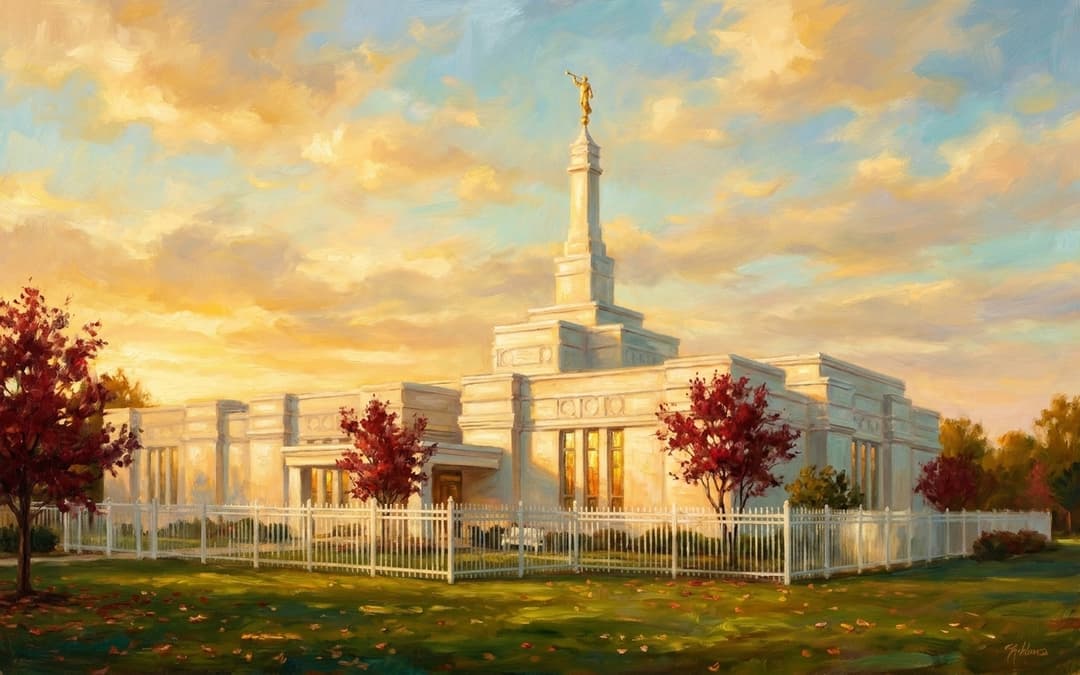
The Columbus Ohio Temple offers a serene and deeply peaceful atmosphere for visitors of all backgrounds. Situated on a beautifully wooded five-acre parcel in western Columbus, the temple grounds feature manicured gardens, native Ohio flora, and quiet pedestrian walkways designed for contemplation. While the interior is reserved for members of the Church holding active temple recommends, the public is warmly invited to walk the exterior grounds, admire the stunning architecture, and experience the tranquil environment. The site provides a spiritual oasis from the busy surrounding metropolitan area, making it an ideal spot for personal reflection and prayer.
Highlights
- Stunning exterior cladding of white Spanish granite and marble that glows in the sunlight.
- Beautifully landscaped grounds featuring native Ohio trees like Eastern redbuds and Red Sunset maples.
- A spacious pedestrian plaza and expanded walkways perfect for quiet walks and photography.
- The majestic 77-foot spire topped with the gold-leafed Angel Moroni statue.
Things to Know
- The interior of the temple is closed to the general public and requires a recommend for entry.
- The grounds are open daily, but the best lighting for photography and quiet contemplation is at sunrise or dusk.
- No public visitors' center is located on-site, but the adjacent stake center shares parking facilities.
- Dress modestly and maintain a quiet, respectful demeanor while on the sacred temple grounds.
Location
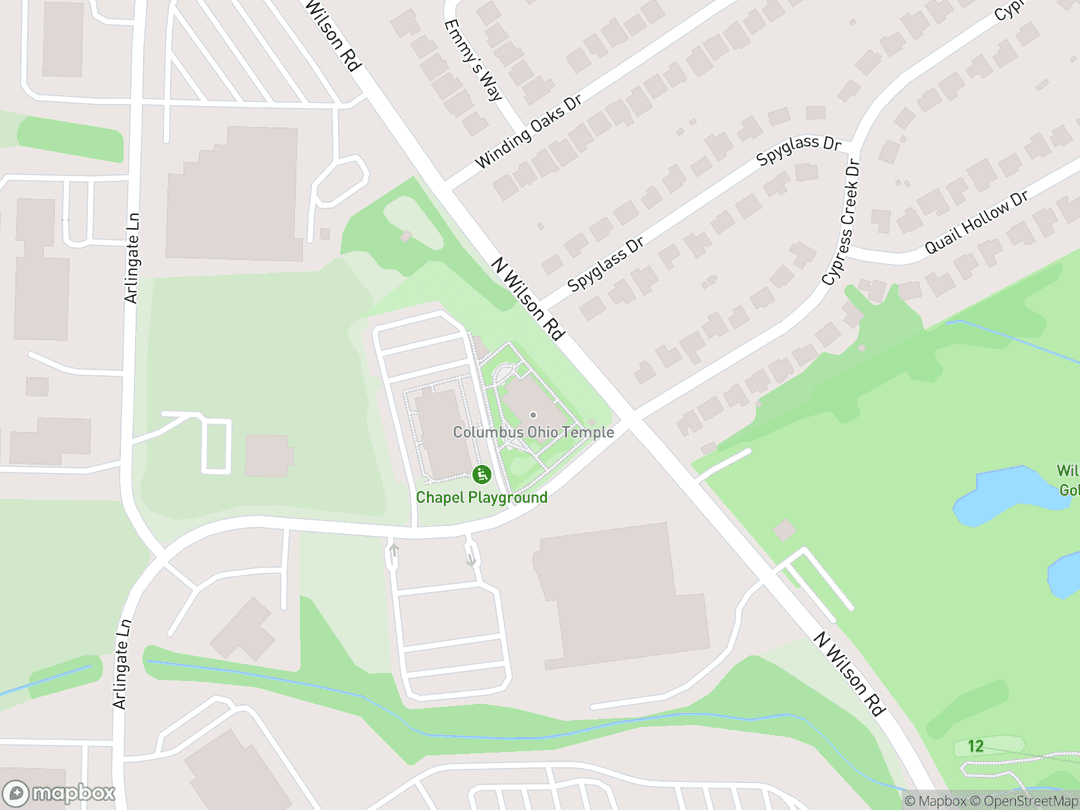
3870 Gateway Boulevard, Columbus, Ohio 43228, United States
Hours: The temple grounds are open daily to the public from sunrise to 10:00 PM. Interior operating hours for patrons vary Tuesday through Saturday, and the temple is closed on Sundays and Mondays.
Getting There: Located at 3870 Gateway Boulevard in western Columbus, the temple is easily accessible via Interstate 270. Take the Broad Street (U.S. Route 40) exit and head west, turning onto Gateway Boulevard. Ample free parking is shared with the adjacent stake center.
Get DirectionsTips for Your Visit
Enjoy the Seasonal Blooms
Visit during the spring to see the native Eastern redbuds and magnolias in full bloom, or during autumn for the vibrant colors of the Red Sunset maples.
Evening Illumination
The temple is beautifully lit at night, offering a spectacular view and a peaceful, quiet atmosphere for evening walks.
About
The Columbus Ohio Temple stands as a sacred monument of faith and devotion in the heart of the American Midwest. Dedicated in 1999 as the 60th operating temple of The Church of Jesus Christ of Latter-day Saints, it represents a significant milestone in the region's ecclesiastical history. In Latter-day Saint theology, the temple is a literal "House of the Lord"—a sacred sanctuary set apart from the world where members draw closer to God, seek personal revelation, and make covenants of discipleship.
The temple's physical location carries deep historical resonance that connects the modern structure back to the earliest days of the Latter-day Saint movement. The five-acre wooded parcel on which the temple sits was originally purchased in 1831 by Abner Clapp, the uncle of Julia Clapp Murdock. Julia was an early Latter-day Saint who tragically passed away in Kirtland, Ohio, in 1831, and her newborn twins were subsequently adopted and raised by Joseph and Emma Smith. When President Gordon B. Hinckley selected this specific plot of land in 1997, he was entirely unaware of this profound historical connection, which was only discovered later by local historians.
Between 2020 and 2023, the temple underwent an extensive, multi-year renovation that completely transformed the building. Workers stripped the structure down to its foundational concrete and steel framing, rebuilding it with premium materials to resolve structural issues common to late-1990s smaller temples. The original Vermont marble cladding was replaced with highly durable white granite and marble from Spain, the windows were enlarged to flood the interior with natural light, and the interior was redesigned with custom local motifs, transforming the temple from a standardized design into a highly customized, structurally robust monument.
Today, the Columbus Ohio Temple serves approximately 57,000 Latter-day Saints across 18 stakes in Ohio, western Pennsylvania, and West Virginia. It stands as a beacon of peace and spiritual refuge, inviting all who visit its manicured grounds to contemplate the eternal nature of the soul and the binding power of family relationships across generations.
Gallery
Symbolic Elements
The temple's exterior features intricate carvings, each rich with spiritual meaning:

The Magnolia Blossom
The primary decorative motif used throughout the temple's interior and exterior. Inspired by the native Ohio landscape, it symbolizes purity, resilience, and the spiritual refinement required for temple worship.

The Angel Moroni Statue
Gilded in 24-karat gold and standing atop the 77-foot spire, this statue represents the restoration of the gospel. The trumpet symbolizes the gathering of Israel and the spreading of Christ's message to all nations.

Twelve Oxen
The baptismal font in the lower-level baptistry rests on the backs of twelve sculpted oxen. They represent the twelve tribes of Israel, symbolizing the temple's role in gathering the entire covenant family of God.

Geometric Lattice
Interlocking geometric lattice patterns are woven into custom area rugs and etched into the art glass windows. This design represents the eternal nature of covenants and the interconnectedness of generations.

Spanish White Granite
The exterior cladding of Spanish white granite and marble replaced the original Vermont marble. This durable stone symbolizes the enduring, eternal nature of the covenants made within the temple walls.

Turkish Stone Flooring
The warm beige and gold Turkish stone flooring in the entryways and baptistry represents the beauty of God's creation. It provides a solid, elegant foundation that guides patrons through the sacred spaces.

Hand-Painted Murals
The instruction rooms feature custom hand-painted murals depicting peaceful natural landscapes. These murals symbolize the beauty of the earth and the progression of the soul through the plan of salvation.
Interesting Facts
The temple land was originally purchased in 1831 by Abner Clapp, the uncle of Julia Clapp Murdock, whose adopted twins were raised by Joseph and Emma Smith.
President Gordon B. Hinckley selected the temple site in 1997 without knowing its deep historical connection to Julia Clapp Murdock's family.
During construction in 1998, the floor plan was altered to add a patron changing area, a design that became standard for all subsequent smaller temples.
The 2020–2023 renovation stripped the temple down to its concrete and steel framing, effectively rebuilding it to resolve early structural issues.
When dedicated in 1999, it was the first operating Latter-day Saint temple in Ohio in over 160 years, since the Kirtland Temple era.
The renovation replaced the original Vermont marble with highly durable white granite and marble quarried from Spain to withstand the local climate.
The temple's interior stone flooring features premium Turkish stone fabricated by Metamar, showcasing a warm beige and gold palette.
The instruction rooms feature hand-painted decorative murals depicting peaceful natural landscapes, a custom addition not present in the 1999 design.
Ohio Governor Mike DeWine was among the prominent civic and community leaders who toured the temple during the 2023 public open house.
The temple serves a massive multi-state district of approximately 57,000 members across 18 stakes in Ohio, Pennsylvania, and West Virginia.
The custom-etched art glass windows were designed by HKS Architects and fabricated by Stew Langer Studio in Riverside, Missouri.
Common Questions
Can anyone visit the interior of the Columbus Ohio Temple?
The interior of the temple is reserved for members of the Church of Jesus Christ of Latter-day Saints who hold a current temple recommend, which certifies their adherence to core religious standards. However, the public is welcome to visit the exterior grounds, walk the pedestrian paths, and enjoy the peaceful atmosphere of the landscaped gardens.
What was the purpose of the 2020–2023 renovation?
The extensive three-year renovation completely rebuilt the temple from its foundational concrete and steel framing. It upgraded the building's structural integrity, mechanical systems, and energy efficiency. Additionally, the exterior was cladded in durable Spanish granite, windows were enlarged to bring in more natural light, and the interior was redesigned with custom local motifs like the magnolia blossom.
How does the Columbus Ohio Temple connect to early Church history?
The temple sits on land originally purchased in 1831 by Abner Clapp, the uncle of Julia Clapp Murdock. Julia was an early Latter-day Saint who died in Kirtland in 1831, and her newborn twins were adopted by Joseph and Emma Smith. When President Gordon B. Hinckley selected this site in 1997, he was unaware of this deep historical connection, which was only discovered later by local historians.
What is the significance of the Angel Moroni statue on the spire?
The gold-leafed statue of the Angel Moroni stands atop the temple's 77-foot spire. Moroni was an ancient prophet whose writings are recorded in the Book of Mormon. The statue, depicted blowing a trumpet, symbolizes the restoration of the gospel of Jesus Christ to the earth and the modern gathering of believers from all nations.
Are there any special facilities or visitors' centers on the temple site?
The temple site does not have a public visitors' center. However, it features a patron housing and changing area within the temple itself, which was added to the floor plan during original construction to accommodate patrons traveling long distances. The temple also shares parking and auxiliary facilities with the adjacent Columbus Ohio Stake Center.
Featured Stories
The Full-Circle Land Connection
April 30, 1831
In 1831, Julia Clapp Murdock tragically passed away in Kirtland, Ohio, after giving birth to twins. Her uncle, Abner Clapp, purchased a parcel of land in western Columbus that same year, seeking to establish a family legacy. Decades later, when President Gordon B. Hinckley selected this exact plot of land for the Columbus Ohio Temple, he had no knowledge of its historical ties to the Murdock family. It was only after construction began that local historians uncovered the land registry, revealing that the temple would stand on the very soil owned by the family of the twins adopted and raised by Joseph and Emma Smith. This remarkable discovery connected the modern temple directly back to the earliest days of the Restoration.
Source: Church History Department Records
The Floor Plan Pioneer
September 12, 1998
When construction began on the Columbus Ohio Temple in 1998, it was designed under the standard smaller temple template championed by President Gordon B. Hinckley. However, local leaders quickly realized that many patrons would be traveling long distances from neighboring states like West Virginia and Pennsylvania. They petitioned the Church's temple department to modify the floor plan to include a dedicated space for changing clothes and eating. This adjustment was approved and successfully integrated into the Columbus design, proving so beneficial that it was immediately adopted as a standard feature for all subsequent smaller temples built by the Church, starting with the Spokane Washington Temple. The Columbus temple thus became a pioneer in functional temple architecture.
Source: Church Newsroom Fact Sheet
Rebuilt from the Bare Bones
August 15, 2020
In August 2020, the Columbus Ohio Temple closed its doors for what was announced as a major renovation. Rather than a simple cosmetic update, workers systematically stripped the building down to its foundational concrete slab and steel framing. This intensive process was necessary to resolve structural and moisture issues common to the early smaller temples built in the late 1990s. Over the next three years, craftsmen rebuilt the structure with premium materials, enlarging the windows to flood the interior with natural light and adding bespoke local details. When it was completed in 2023, the temple had been transformed from a standardized 'cookie-cutter' design into a highly customized, structurally robust monument built to stand for generations.
Source: The Church News
Timeline
Julia Clapp Murdock Passes Away
Julia Clapp Murdock passes away in Kirtland, Ohio, after giving birth to twins; her uncle Abner Clapp purchases the western Columbus land parcel.
EventKirtland Temple Dedicated
The Kirtland Temple is dedicated as the first temple of the Latter-day Saint movement, located 150 miles northeast of Columbus.
MilestoneFirst Formal Meetings in Columbus
The first recorded formal Latter-day Saint meetings are held in Columbus, Ohio, reviving a local presence after decades of dormancy.
EventBroad Street Space Rented
Due to steady growth, the local branch begins renting space on West Broad Street to accommodate the increasing number of worshipers.
EventColumbus Branch Organized
The Columbus Branch is formally organized, holding its initial meetings in the downtown Masonic Hall.
MilestoneFirst Post-Kirtland Chapel Completed
Members finance and complete the first Church-owned chapel in Ohio since the Kirtland era, located just north of Ohio State University.
MilestoneRiverside Chapel Groundbreaking
Ground is broken for a larger chapel near Riverside Methodist Hospital to support the post-World War II influx of families.
component.timeline.groundbreakingFirst Services at Riverside Chapel
The first worship services are held in the newly completed Riverside chapel.
EventColumbus Ohio Stake Organized
The Columbus Ohio Stake is formally organized, with James Leo Mortensen Jr. called as the first stake president.
MilestoneRiverside Chapel Dedicated
The Riverside chapel is formally dedicated, solidifying the regional ecclesiastical structure.
DedicationTemple Announced
President Gordon B. Hinckley announces the Columbus Ohio Temple during a regional meeting as part of the smaller temple initiative.
MilestoneGroundbreaking Ceremony
Elder John K. Carmack of the Seventy presides over the groundbreaking ceremony on the 5-acre wooded site.
component.timeline.groundbreakingOriginal Dedication
President Gordon B. Hinckley dedicates the Columbus Ohio Temple as the 60th operating temple of the Church.
DedicationTemple Closes for Renovation
The temple closes for a comprehensive multi-year renovation to upgrade its structural, mechanical, and aesthetic features.
RenovationTemple Rededicated
President M. Russell Ballard rededicates the completely rebuilt and modernized Columbus Ohio Temple.
DedicationHistory by Decade
1830s — Pioneer Foundations
The spiritual and physical foundations of the Columbus Ohio Temple trace back to the earliest days of the Latter-day Saint movement. In 1831, Julia Clapp Murdock passed away in Kirtland, Ohio, and her uncle, Abner Clapp, purchased the parcel of land in western Columbus that would eventually become the temple site. Meanwhile, in 1836, the Kirtland Temple was dedicated as the first temple of the Restoration, located just 150 miles northeast of Columbus. Although the early Saints eventually migrated westward, these early events planted deep historical roots in Ohio soil.
1900s–1930s — Return and Re-establishment
After decades of dormancy following the pioneer exodus, a formal Latter-day Saint presence returned to Columbus in May 1907. As the congregation grew, members began renting space on West Broad Street in 1925, and the Columbus Branch was formally organized in the downtown Masonic Hall. By 1930, local members had pooled their resources to finance and construct the first Church-owned chapel in Ohio since the Kirtland era, located near Ohio State University, marking a permanent return to the region.
1950s–1960s — Stake Organization and Growth
The post-World War II era brought a significant influx of Latter-day Saint families to central Ohio. To accommodate this growth, ground was broken in 1958 for a larger chapel near Riverside Methodist Hospital, which was dedicated in 1962. This period also saw a major ecclesiastical milestone when the Columbus Ohio Stake was formally organized on February 25, 1962, with James Leo Mortensen Jr. called as the first stake president, solidifying the Church's structural presence in the state.
1990s — The First Temple in Ohio
In April 1998, President Gordon B. Hinckley announced the construction of the Columbus Ohio Temple as part of his historic initiative to build smaller temples closer to the members. Ground was broken later that year, and on September 4, 1999, President Hinckley dedicated the temple. This historic event restored an operating temple presence to the state of Ohio for the first time in over 160 years, serving thousands of Saints across Ohio, Pennsylvania, and West Virginia.
2020s — Rebuilding for the Future
After more than two decades of faithful service, the temple closed on August 15, 2020, for a comprehensive multi-year renovation. The building was stripped to its structural core and completely rebuilt to modernize its systems, improve energy efficiency, and enhance its aesthetic beauty. On June 4, 2023, President M. Russell Ballard rededicated the fully modernized temple, ensuring it would continue to serve as a sacred sanctuary for generations to come.
Architecture & Facilities
The renovated Columbus Ohio Temple features a refined Classic Modern, Single-Spire Design that beautifully blends classic 19th-century symmetry with clean, contemporary lines. The design represents a significant departure from the highly standardized, "cookie-cutter" templates of the late 1900s, presenting instead a highly customized, structurally robust monument that honors local heritage. The exterior features a single, elegant spire that rises 77 feet, topped by the gold-leafed Angel Moroni statue, creating a striking vertical element that harmonizes with the surrounding wooded landscape.
Building Materials
Exterior Cladding
Premium white granite and marble quarried from Spain, replacing the original Vermont marble to improve durability and energy efficiency.
Interior Flooring
Warm beige and gold Turkish stone fabricated by Metamar in Turkey, providing an elegant and durable foundation throughout the entryways.
Interior Accents
Delicate stone borders and decorative thresholds sourced from Pakistan, adding intricate detail to the sacred ordinance rooms.
Art Glass
Custom-etched art glass designed by HKS Architects and fabricated by Stew Langer Studio, featuring localized floral motifs.
Interior Features
Baptistry
Located on the lower level, featuring a sacred font resting on the backs of twelve sculpted oxen, adorned with Turkish stone and custom art glass.
Instruction Rooms
Two ordinance rooms configured for a two-stage progressive endowment presentation, featuring beautiful hand-painted landscape murals.
Celestial Room
A deeply reverent space designed in a Regency-era style, featuring elegant decorative wall paintings, custom-carved carpets, and gold-leaf detailing.
Sealing Rooms
Two sacred rooms featuring elegant altars, floor-to-ceiling mirrors reflecting eternity, and delicate Turkish stone borders.
Temple Grounds
The temple is situated on a beautifully landscaped 5-acre wooded site, featuring an expanded pedestrian plaza, quiet walkways, and gardens populated entirely with native Ohio flora, including Eastern redbud, Red Sunset maple, magnolias, junipers, and boxwoods.
Additional Facilities
The temple includes a patron housing and changing area within the floor plan to accommodate long-distance travelers, and shares parking and auxiliary facilities with the adjacent Columbus Ohio Stake Center.
Religious Significance
In continuity with the biblical tradition of ancient temples dedicated to the worship of God, the temple is a literal 'House of the Lord.' It stands as a sacred sanctuary set apart from the world, where members of the Church seek closer communion with Jesus Christ and make eternal covenants of discipleship.
The core spiritual purpose of the Columbus Ohio Temple is to provide a sacred space where Latter-day Saints can make eternal covenants with God and perform saving ordinances for both the living and the deceased.
Sacred Ordinances
The Endowment
A symbolic presentation of the plan of salvation, where patrons receive instruction and make sacred covenants of obedience, sacrifice, and discipleship to Jesus Christ.
Eternal Marriage (Sealing)
An ordinance performed in the sealing rooms where couples and families are bound together eternally through the priesthood power, transcending physical death.
Baptism for the Dead
A vicarious ordinance performed in the baptistry, allowing deceased ancestors the opportunity to accept the gospel of Jesus Christ in the spirit world.
A Sacred Bridge of Covenants
The ordinances performed within the Columbus Ohio Temple reflect the eternal nature of the soul and the family. By participating in these sacred rites, members strengthen their personal relationship with Jesus Christ and secure spiritual promises that bind generations together across time and eternity.
Similar Temples
Sources & Research
Every fact on Temples.org is backed by verified Sources & Research. Each piece of information is rated by source tier and confidence level.
View All Sources (2)
| Field | Source | Tier | Retrieved |
|---|---|---|---|
| About & Historical Background | The Church of Jesus Christ of Latter-day Saints (opens in a new tab) | A | 2026-02-18 |
| Featured Stories & Land Connection | Temples of The Church of Jesus Christ of Latter-day Saints (opens in a new tab) | C | 2026-02-18 |