Visitor Insights
Visiting Multnomah Falls Sacred Site
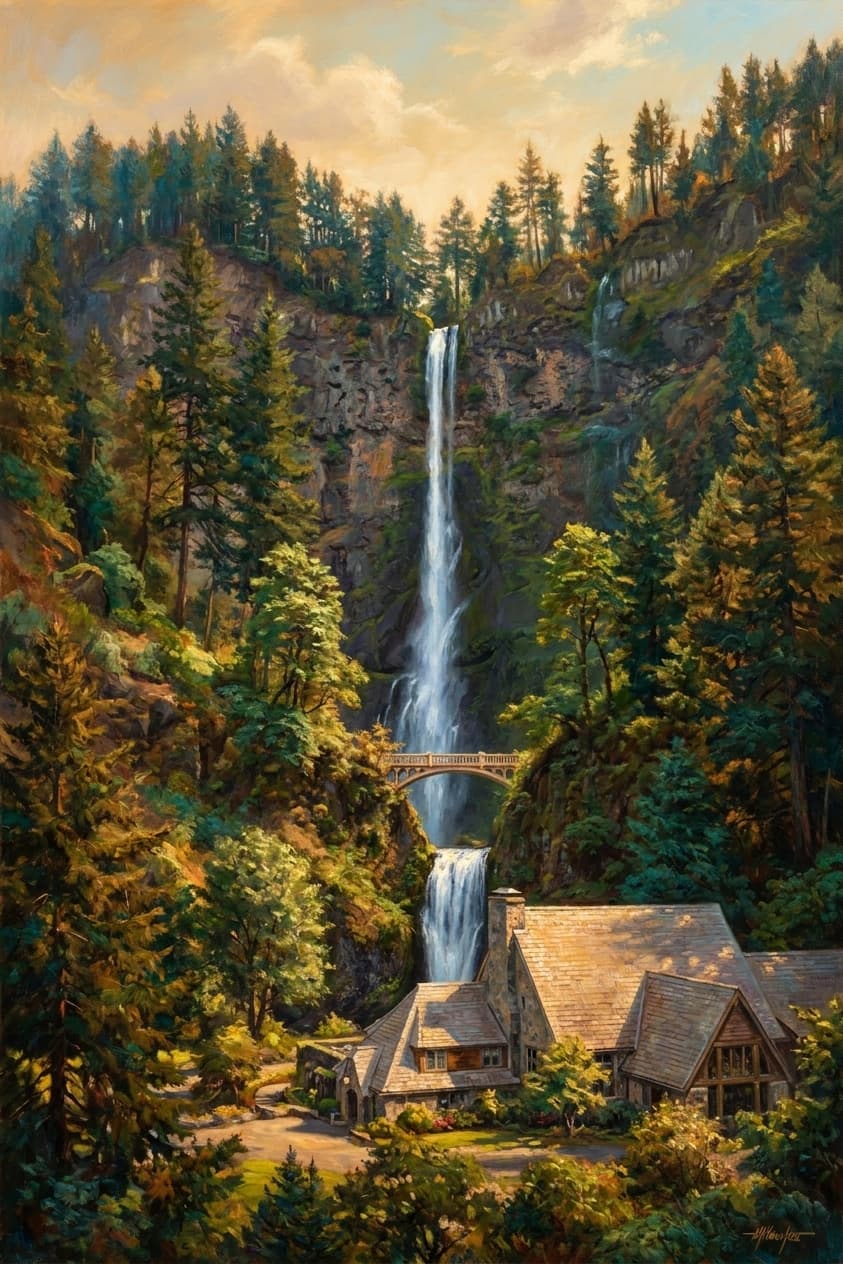
Multnomah Falls offers visitors an awe-inspiring view of Oregon's tallest waterfall alongside rich Indigenous heritage. Access to the viewing plaza is open year-round, with paved pathways leading up to the historic Benson Bridge.
Highlights
- Benson Bridge elevated platform providing a direct view between the upper and lower cascades.
- Historic 1925 Cascadian Rustic lodge crafted from local fieldstone and heavy timber.
- Continuous year-round water flow fed by underground aquifers atop Larch Mountain.
Things to Know
- Seasonal timed-use permits are required for highway parking between May and September.
- Maintain silent reverence to respect ongoing Indigenous spiritual reflections.
Location
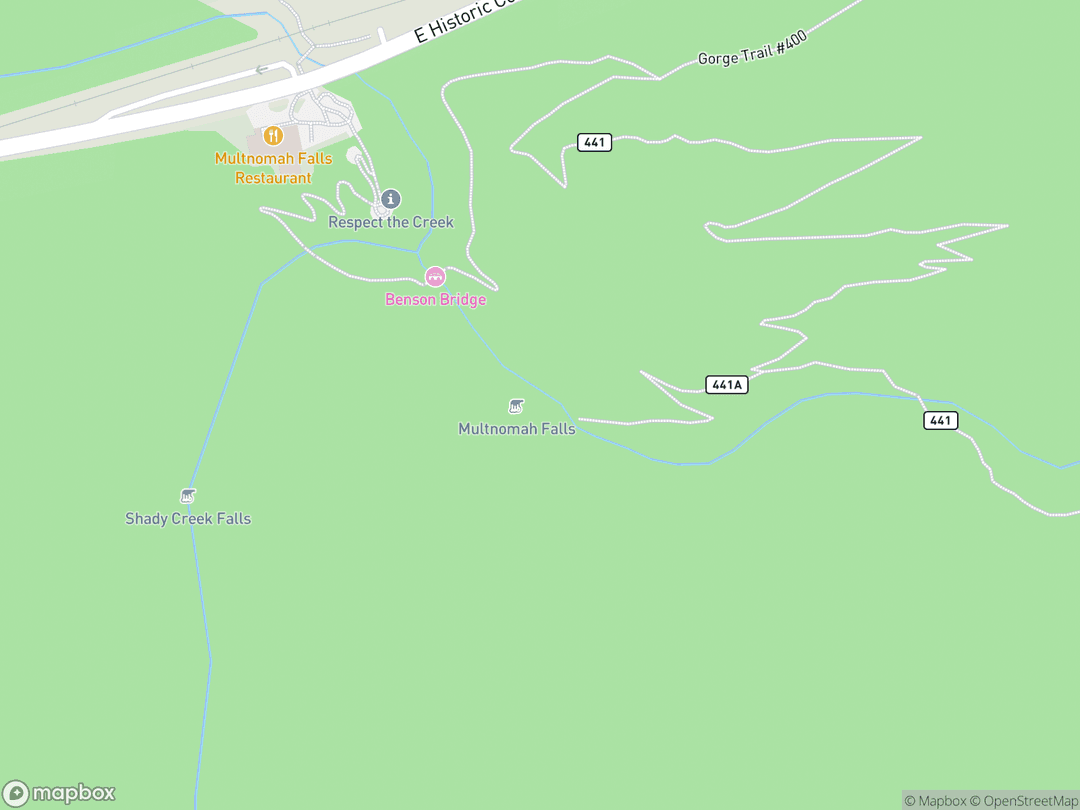
50000 Historic Columbia River Highway, Corbett, Multnomah County, Oregon 97019, United States
Hours: Outdoor viewing area open 24 hours daily; Visitor Center open 8:00 AM to 6:00 PM.
Getting There: Located off I-84 Exit 31, approximately 30 miles east of downtown Portland.
Get DirectionsTips for Your Visit
Early Morning Arrival
Visit before 9:00 AM to experience quiet reflection and avoid peak tourist crowds.
Permit Awareness
Reserve a timed-use vehicle permit via Recreation.gov if visiting during summer months.
Trail Preparation
Wear slip-resistant footwear as mist from the falls keeps paved footpaths damp year-round.
About
Multnomah Falls (Moo-tuk-nomah) is a sacred natural sanctuary and traditional cultural property revered for time immemorial by the Indigenous Chinookan, Wasco-Wishram, and Multnomah peoples. Rising 620 feet out of the Columbia River Gorge basalt cliffs, the dual-tiered cascade is understood as a place of emergence, private prayer, and women's spiritual healing.
According to tribal oral traditions, the waterfall was called into existence by the Great Spirit (Sahale) in response to a noble chief's daughter who sacrificed her life to deliver her people from a devastating plague. The eternal mist rising from the plunge pool carries her protective spirit, offering purification and renewal to all who approach with reverence.
Today, Multnomah Falls is managed as an active sacred natural site within the Columbia River Gorge National Scenic Area by the U.S. Forest Service in consultation with regional treaty tribes. It remains a sacred refuge where living waters, ancient basalt amphitheaters, and mountain springs converge.
Gallery
Symbolic Elements
The temple's exterior features intricate carvings, each rich with spiritual meaning:

The Maiden's Mist
Rising water spray representing the eternal protective spirit and healing presence of the chief's daughter.

Two-Tiered Cascade
Dual waterfall steps symbolizing the spiritual sky realm descending into the physical earth.

Larch Mountain Springs
Subterranean alpine springs supplying pure living water directly from deep earth aquifers.
Basalt Amphitheater
Massive volcanic rock basin creating a natural sanctuary acoustic that insulates prayer from the outside world.

Benson Bridge
Arch footbridge marking the physical boundary between lower public plazas and upper mountain trails.

Evergreen Canopy
Ancient Douglas fir and cedar trees offering shelter and evergreen symbols of endurance.

Natural Plunge Pool
The deep lower water basin used traditionally for sacred bathing and purification rituals.
Interesting Facts
Official USGS topographic measurements record the total vertical fall height at exactly 620 feet (189 meters). (Tier A)
Multnomah Falls is documented as the second-tallest continuously flowing year-round waterfall in the United States. (Tier A)
A 400-ton basalt boulder crashed into the upper pool on Labor Day in 1995, sending a 70-foot wave over Benson Bridge. (Tier B)
Concrete for Benson Bridge was hauled 135 feet up the sheer rock face using a horse-powered aerial trolley in 1914. (Tier B)
Simon Benson officially deeded 140 acres surrounding the waterfall to the City of Portland on September 6, 1915. (Tier A)
The waterfall attracts over two million annual visitors, making it Oregon's most visited natural recreation site. (Tier B)
Subterranean aquifers atop Larch Mountain supply a steady baseline flow of 150 cubic feet per second year-round. (Tier B)
During extreme winter freezing snaps, thick ice columns form along the surrounding 600-foot basalt walls. (Tier B)
Common Questions
Why is Multnomah Falls considered a sacred site?
Indigenous traditions hold that the waterfall was created by the Great Spirit following a maiden's heroic self-sacrifice.
Do visitors need a permit to visit Multnomah Falls?
A timed-use reservation permit is required for vehicle parking along I-84 during summer peak hours.
Is Multnomah Falls accessible for wheelchair users?
Yes, paved ramps provide full wheelchair access from the parking plaza to the primary lower viewing area.
What is the source of water for Multnomah Falls?
The cascade is supplied by natural underground springs originating atop Larch Mountain.
Featured Stories
The Legend of the Chief's Daughter
Time Immemorial
When a fatal plague threatened the Chinookan people, a chief's daughter climbed the high basalt cliffs to plead for her tribe. Demonstrating ultimate devotion, she sacrificed her life to the Great Spirit (Sahale), who immediately caused water to pour forth from the stone to heal her people.
Source: Tribal Oral Tradition & U.S. Forest Service Interpretive Records
Defending the Historic Lodge
September 2, 2017
During the devastating Eagle Creek Fire, wildfire raged along the cliffs surrounding Multnomah Falls. Firefighters deployed continuous high-volume water curtains over the 1925 timber lodge and Benson Bridge, successfully preserving both structures while flames burned within yards.
Source: Columbia River Gorge National Scenic Area Historical Reports
The Labor Day Boulder Fall
September 4, 1995
On a busy holiday afternoon, a 400-ton basalt boulder detached from the upper cliff and plummeted 220 feet into the upper pool. The resulting impact hurled a 70-foot wave over Benson Bridge, proving the dynamic, ever-changing geology of the gorge.
Source: United States Geological Survey Field Incident Reports
Timeline
Lewis and Clark Observation
The expedition documents the dramatic waterfall and active Chinookan village settlements along the Columbia River.
EventRailroad Access Established
The Oregon Railway and Navigation Company opens a passenger depot at the base of the falls.
MilestoneBenson Bridge Completed
Engineer K.P. Biller constructs the 105-foot-high concrete arch footbridge across the lower gorge.
EventLand Donated to Public
Lumber magnate Simon Benson deeds 140 acres surrounding the falls to the City of Portland.
MilestoneMultnomah Falls Lodge Built
Architect A.E. Doyle designs the Cascadian Rustic fieldstone lodge at the base of the trail.
EventForest Service Management
Jurisdiction and land management are transferred to the United States Forest Service.
MilestoneNational Register Listing
The lodge and surrounding historic footpaths are listed on the National Register of Historic Places.
MilestoneScenic Area Act
Congress creates the Columbia River Gorge National Scenic Area, establishing mandatory tribal consultation.
MilestoneUpper Boulder Impact
A 400-ton basalt boulder falls from the cliff into the upper pool, sending a 70-foot wave over Benson Bridge.
EventEagle Creek Fire Defense
Firefighters deploy water curtain systems to defend the historic lodge and bridge from surrounding wildfire.
EventHistory by Decade
Immemorial–1800s — Indigenous Sacred Sanctuary
For millennia prior to European contact, the upper and lower basalt amphitheaters served as a sanctuary for Multnomah and Wasco-Wishram women. The site was kept sacred for rites of passage, private prayer, and gathering medicinal alpine plants.
1880s–1910s — Commercial Access and Bridge Construction
The expansion of transcontinental railroads brought influxes of regional visitors to the waterfall base. In 1914, contractor Robert Ringer erected the iconic concrete arch bridge, engineered by K.P. Biller and funded by Simon Benson.
1920s–1980s — Public Parklands and Historic Preservation
The completion of the Historic Columbia River Highway spurred the creation of the Cascadian Rustic lodge in 1925. Management was transferred to the U.S. Forest Service in 1939, leading to formal National Register recognition in 1981.
1990s–Present — Natural Events and Tribal Collaboration
After surviving major natural events including a massive 400-ton boulder drop in 1995 and the 2017 Eagle Creek Fire, land managers established collaborative timed-permit frameworks with Columbia River Treaty Tribes.
Architecture & Facilities
Cascadian Rustic stone architecture integrated into a dual-tiered Columbia River basalt hanging valley carved by Missoula Floods.
Building Materials
Columbia River Basalt
Dark volcanic rock formed by 15-million-year-old lava flows and Missoula floods.
Cascadian Fieldstone
Local split basalt boulders and granite used in constructing the historic lodge.
Reinforced Concrete
Custom aggregate mixture used to mold the 1914 Benson Bridge arch balustrades.
Heavy Timber
Pacific Northwest Douglas fir beams forming the structural roof frame of the lodge.
Interior Features
Upper Plunge Basin
Deep natural rock bowl at the base of the 542-foot upper drop.
Benson Bridge Deck
Elevated walkway platform situated directly between the upper and lower cascades.
Lodge Great Room
Rustic interior space featuring a stone fireplace and Douglas fir roof timbers.
Lower Amphitheater Basin
Wide stone plunge pool receiving the secondary 69-foot cascade.
Temple Grounds
Paved switchback trails, evergreen forest canopy, and accessible viewing plazas framing Multnomah Creek.
Additional Facilities
Historic visitor lodge, Forest Service information center, restaurant, gift shop, and transit stop.
Religious Significance
Multnomah Falls is revered by Columbia River Basin Tribes as a sacred natural temple created by Sahale.
A sacred site for spiritual renewal, morning prayers, traditional healing, and honoring water as life.
Sacred Ordinances
Water Purification
Traditional cleansing in the mist and living waters of the sacred pool.
Private Prayer & Meditation
Offering silent devotion and tobacco inside the basalt cliff amphitheater.
Rites of Passage
Historic spiritual retreats and instruction for tribal youth and women.
The Living Water of Sahale
Indigenous theology holds that natural springs and mountain cascades possess living spirit (skope) capable of cleansing physical and spiritual afflictions.
Sanctuary of Sacrifice
The site stands as an enduring monument to selflessness, remembering the maiden whose sacrifice brought life and health to future generations.
Sources & Research
Every fact on Temples.org is backed by verified Sources & Research. Each piece of information is rated by source tier and confidence level.
View All Sources (7)
| Field | Source | Tier | Retrieved |
|---|---|---|---|
| About & Cultural Background | U.S. Forest Service (opens in a new tab) | A | 2026-02-15 |
| About & Cultural Background | The Oregon Encyclopedia (opens in a new tab) | B | 2026-02-15 |
| Timeline & Historical Milestones | National Register of Historic Places (opens in a new tab) | A | 2026-02-15 |
| Visitor Insights & Overview | Recreation.gov (opens in a new tab) | A | 2026-02-15 |
| Symbolic Elements & Sacred Meaning | Confederated Tribes of Warm Springs (opens in a new tab) | B | 2026-02-15 |
| Featured Stories & Cultural Traditions | Confederated Tribes of the Umatilla Indian Reservation (opens in a new tab) | B | 2026-02-15 |
| Interesting Facts & Conservation | Columbia River Gorge National Scenic Area (opens in a new tab) | A | 2026-02-15 |