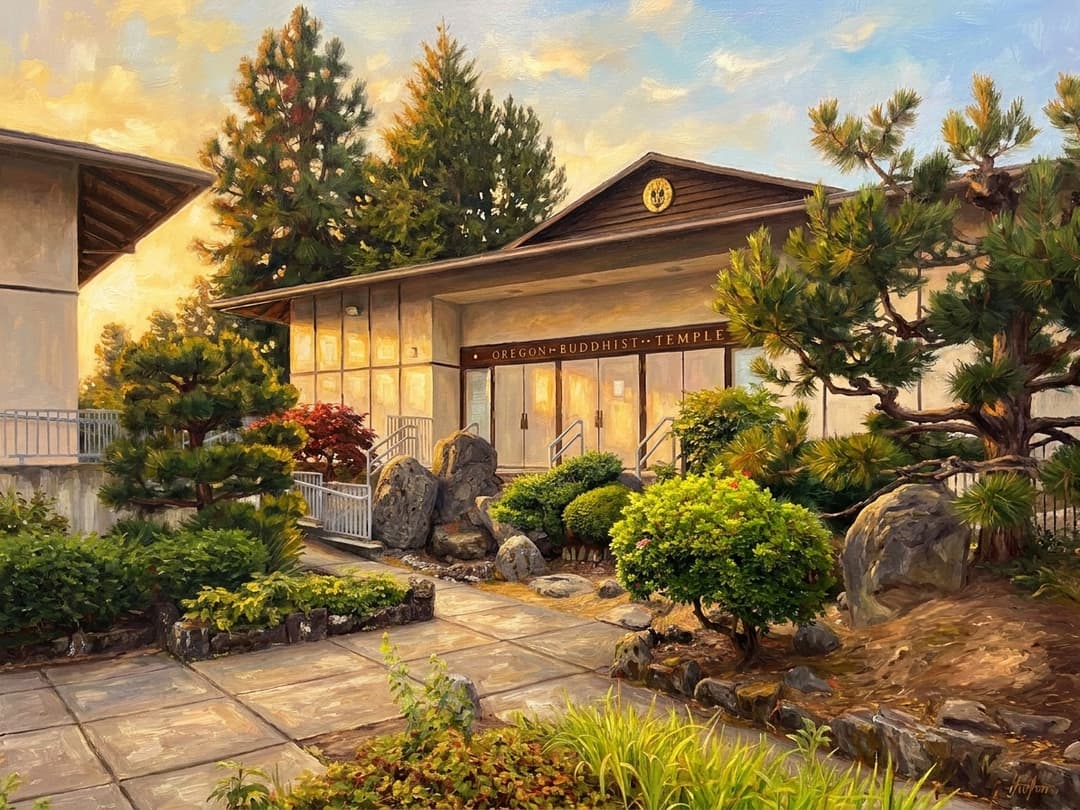
Visitor Insights
Visiting Oregon Buddhist Temple
The Oregon Buddhist Temple offers a welcoming environment for both practicing Sangha members and first-time visitors seeking to learn about Jōdo Shinshū Buddhism. Weekly Sunday Family Dharma Services are open to the public both in-person and online.
Highlights
- Weekly Sunday Family Dharma Service at 10:00 AM with bilingual fellowship
- Annual summer ObonFest featuring Bon Odori folk dancing and Portland Taiko
- Traditional Japanese entry garden designed in 1967 by Kinya Hira
- Historic Sukiyaki Bazaar hosted annually in late October
Things to Know
- Visitors are asked to remove shoes before entering the main sanctuary (Hondo)
- Street and surface parking fill rapidly during major cultural festivals
- Incense offering (Oshōkō) is voluntary during services and open to all
Location
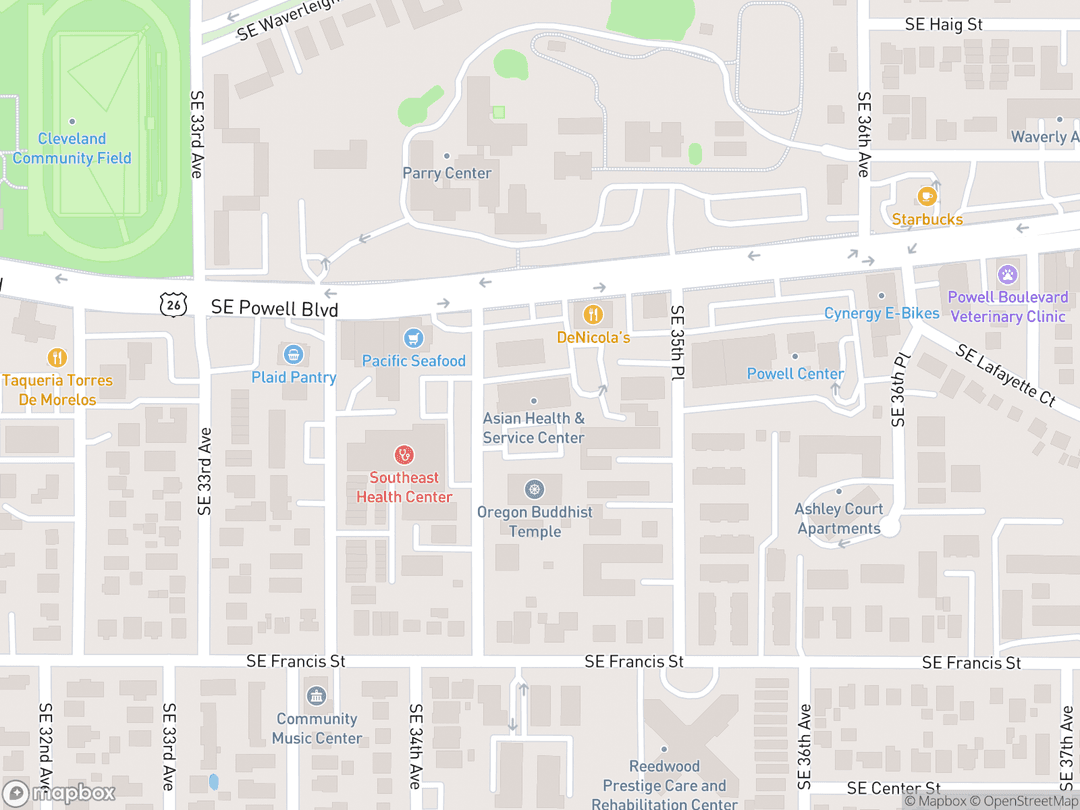
3720 SE 34th Avenue, Portland, Oregon 97202
Hours: Sunday Dharma Service at 10:00 AM; festival and event hours vary
Getting There: Located near SE Powell Boulevard and SE 34th Avenue, accessible via TriMet Bus Lines 9 and 75 with on-site auto and bicycle parking.
Get DirectionsTips for Your Visit
Attending Sunday Service
Arrive 15 minutes before 10:00 AM to sign the guestbook, receive a service book, and observe sanctuary etiquette.
Visiting ObonFest
Held in late July or early August, this outdoor summer festival is free to the public and features folk dancing, food, and music.
Exploring Japanese Architecture
Take time before or after services to appreciate the hand-carved gold-leaf altar imported directly from Japan.
About
Founded on November 29, 1903, by Reverend Shozui Wakabayashi, the Oregon Buddhist Temple is the oldest active Buddhist institution in Oregon. Originally established as the Portland Buddhist Church to serve Japanese immigrants, the congregation constructed a historic three-story brick sanctuary in Portland's Japantown in 1910 before relocating to its current Mid-Century facility in Southeast Portland in 1966.
Affiliated with the Jōdo Shinshū Hongwanji-ha lineage and the Buddhist Churches of America, the temple belongs to the broader Mahayana Dharmic family. Its spiritual foundation relies on tariki (other-power)—the Primal Vow of Amida Buddha—offering liberation from cyclic suffering through Shinjin (entrusting heart) and the joyful recitation of the Nembutsu (Namo Amida Butsu).
Today, the temple remains a vibrant spiritual and cultural center, blending traditional Japanese Buddhist practices with American civic life. The complex features a gold-leaf altar, a traditional Japanese entry garden designed by Kinya Hira, and hosts major community events including the annual ObonFest and Sukiyaki Bazaar.
Gallery
Symbolic Elements
The temple's exterior features intricate carvings, each rich with spiritual meaning:

Amida Nyorai Statue
The central gold-gilded standing image depicting Amida Buddha with right hand in Abhaya Mudra and left in Varada Mudra, casting twelve rays of infinite light.

Golden Altar Onaijin
A multi-tiered sanctuary altar handcrafted in Japan with gold leaf and dark lacquer housing sacred scrolls and central Buddha icons.

Wisteria Crest Sagarifuji
The official crest of Nishi Hongwanji featuring drooping wisteria blossoms that symbolize deep humility, reverence, and gratitude.

Incense Burner Gokoro
Positioned before the altar for Oshōkō offerings, where powdered incense on coals symbolizes mind purification and spreading the Dharma.

Temple Ritual Bell Kansho
A bronze bell struck before service commencement to clear the mind and summon the Sangha to attentive listening.
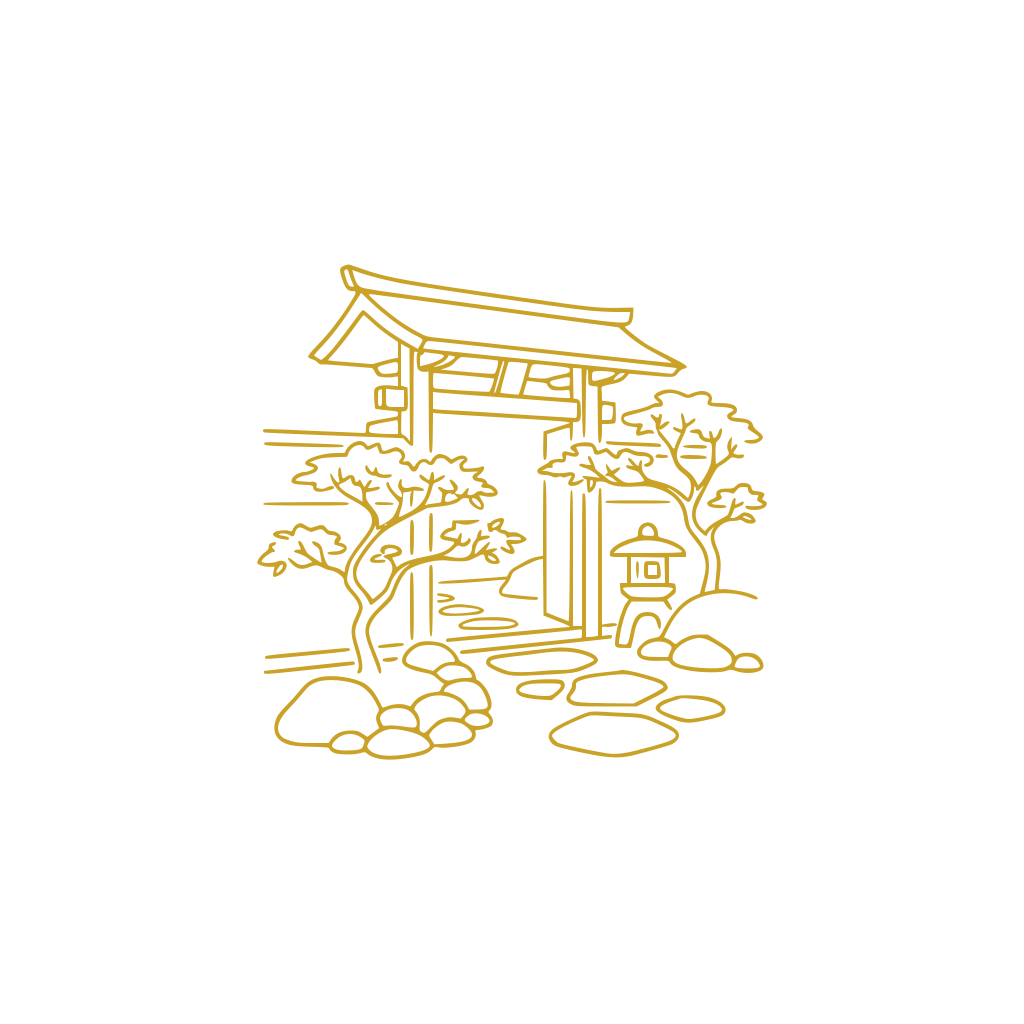
Entry Japanese Garden
Designed in 1967 by Kinya Hira, featuring manicured maples, stone lanterns, and river rocks to create a meditative transition space.

Lotus Flower Motif
An enduring Buddhist motif representing spiritual transformation, rising unblemished out of murky waters into full enlightenment.
Interesting Facts
Founded on November 29, 1903, the Oregon Buddhist Temple is the oldest continuously operating Buddhist organization in Oregon. (Tier A)
Prior to WWII internment in 1942, Japanese American families locked their household heirlooms inside the temple building for safe storage throughout the war. (Tier B)
Head minister Tansai Terakawa tragically died in 1944 while incarcerated at the Minidoka War Relocation Center in Idaho. (Tier B)
The original 1910 downtown temple building at 312 NW 10th Avenue is listed on the National Register of Historic Places. (Tier A)
Early congregants adopted Western church conventions including organ accompaniment, pews, and the name 'Portland Buddhist Church' to facilitate local integration. (Tier B)
The entry garden at the 34th Avenue facility was designed in 1967 by Kinya Hira, former Director of the Portland Japanese Garden. (Tier B)
The temple's annual ObonFest draws thousands of Portland residents for traditional Bon Odori dancing and taiko performance. (Tier A)
The intricate gold-leaf sanctuary altar (Onaijin) was custom built in Japan to conform strictly to Nishi Hongwanji specifications. (Tier A)
In 2016, temple members installed dedicated internal bike racks to support Portland's active urban cycling community. (Tier B)
Common Questions
Is the Oregon Buddhist Temple open to beginners and non-Buddhists?
Yes, all Sunday Dharma services and cultural festivals are fully open to the general public regardless of background.
What should I wear when attending a service?
Modest casual attire is appropriate, and visitors are asked to remove their shoes prior to entering the sanctuary.
What is the historical significance of the original downtown building?
Built in 1910, the original downtown structure served as a WWII storage haven for Japanese families and is listed on the National Register of Historic Places.
When is the best time of year to visit the temple?
While Sunday morning services run year-round, late July and early August offer the vibrant outdoor ObonFest celebration.
Featured Stories
Pioneer Foundation in Japantown
1903–1910
Reverend Shozui Wakabayashi arrived in Portland in November 1903 to minister to Japanese immigrants working on Pacific Northwest railroads, farms, and lumber mills. By 1910, the thriving congregation had rallied to erect a grand three-story brick sanctuary at NW 10th Avenue and Everett Street, establishing a vital civic and spiritual core for Portland's Nikkei community.
Source: Oregon Historical Society Archives
Sanctuary of Safe Storage During WWII
1942–1945
When Executive Order 9066 forced Oregon's Japanese American families into internment camps in 1942, congregants stored family heirlooms, business records, and personal treasures inside the downtown temple. Though resident minister Tansai Terakawa tragically died in confinement at Minidoka, Reverend Hojun Sugimoto reopened the building in 1945 so returning families could retrieve their preserved belongings and rebuild their lives.
Source: Densho Digital Repository
Mid-Century Renewal in Southeast Portland
1966
In response to post-war demographic shifts and suburban growth, the temple relocated from downtown to a modern sanctuary complex on SE 34th Avenue in 1966. Enhanced by an entry garden designed by Portland Japanese Garden Director Kinya Hira, the new facility allowed the Sangha to expand bilingual services, multicultural outreach, and popular cultural traditions such as ObonFest.
Source: Oregon Buddhist Temple Centennial History
Timeline
Temple Founding
Reverend Shozui Wakabayashi arrives from Toyama, Japan, and establishes the Portland Buddhist Church at 43 Fourth Avenue.
MilestoneDowntown Sanctuary Construction
The congregation builds a dedicated three-story brick sanctuary in Japantown at NW 10th Avenue and Everett Street.
MilestoneChief Abbot Visit
Chief Abbot Daika Sonyu Ohtani of Nishi Hongwanji visits Portland, strengthening ties with Kyoto.
EventWartime Incarceration
Congregants are forcibly relocated to internment camps under Executive Order 9066 after storing heirlooms in the temple.
EventPassing of Rinban Terakawa
Head minister Tansai Terakawa passes away while incarcerated at the Minidoka Relocation Center in Idaho.
EventPost-War Reopening
Reverend Hojun Sugimoto reopens the downtown sanctuary to assist returning Japanese American families.
MilestoneSE 34th Avenue Temple Dedicated
The congregation officially dedicates its new Mid-Century sanctuary complex in Southeast Portland.
DedicationEntry Garden Completion
Landscape architect Kinya Hira completes the traditional Japanese front entry garden.
MilestoneCentennial Celebration
The Oregon Buddhist Temple celebrates 100 years of continuous operation in the Pacific Northwest.
MilestoneNational Register Listing
The original 1910 downtown temple building is listed on the National Register of Historic Places.
MilestoneBicycle Access Expansion
The temple installs dedicated internal bike parking to support Portland urban cycling culture.
EventHistory by Decade
1900s — Foundation in Portland
Reverend Shozui Wakabayashi founded the Portland Buddhist Church on November 29, 1903, serving Japanese immigrants in local timber and railway industries. Services initially met in rented downtown rooms where Wakabayashi established a Japanese-language school and women's association.
1910s — The Japantown Landmark
In 1910, the growing congregation constructed a landmark three-story brick temple at NW 10th Avenue and Everett Street in Portland's Nikkei neighborhood. The sanctuary became the core cultural and religious center for over 500 local Japanese families.
1920s–1930s — Growth and Youth Programs
During the interwar decades, second-generation Nisei assumed leadership while the temple launched music ensembles, athletic leagues, and social safety programs. Chief Abbot Daika Sonyu Ohtani visited from Kyoto in 1925 to bless the community.
1940s — Executive Order 9066 and Post-War Return
Following Executive Order 9066 in 1942, members locked their personal belongings inside the temple before forced relocation to camps such as Minidoka. Reverend Hojun Sugimoto reopened the building in 1945 to help returning families reclaim stored possessions.
1950s–1960s — Relocation to SE Portland
Post-war urban redevelopment prompted the congregation to acquire land in Southeast Portland and build a modern complex, dedicated in 1966. In 1967, landscape architect Kinya Hira designed the front entry Japanese garden.
1970s–1990s — Cultural Expansion and Festivals
The temple broadened its multicultural programming, instituting English language services and expanding its annual ObonFest and Sukiyaki Bazaar into major civic traditions.
2000s–Present — Centennial and Legacy
The temple celebrated its centennial in 2003, followed by the original downtown building's listing on the National Register of Historic Places in 2004. Today, the Oregon Buddhist Temple continues modern active Sangha programs with hybrid streaming and community bike infrastructure.
Architecture & Facilities
Mid-Century Modern ecclesiastical architecture subtly infused with traditional Japanese temple spatial organization, featuring clean horizontal rooflines, low-pitched gables, and warm natural timber elements tailored for 20th-century Pacific Northwest civic life.
Building Materials
Exterior Masonry
Red brick masonry paired with light stucco surfaces and dark painted timber fascia boards.
Structural Beams
Exposed interior glulam timber arches that provide open span support over the main sanctuary.
Altar Handiwork
Gold leaf, lacquered cypress wood, and metal accents imported directly from Japanese master craftsmen.
Sash Windows
Multi-pane floor-to-ceiling clear glass windows framing views of the entry Japanese garden.
Interior Features
Main Sanctuary (Hondo)
Combines Western wooden pews with Japanese altar furnishings under warm wood ceiling paneling.
Golden Altar (Onaijin)
A gilded multi-tiered sanctuary box housing Amida Buddha and lineage founder scrolls.
Social Hall (Kaikan)
A versatile hardwood floor assembly hall equipped for community banquets and martial arts.
Dharma Classrooms
Educational wings designed for youth religious instruction, language classes, and Sangha meetings.
Temple Grounds
The grounds feature a traditional front Japanese garden designed in 1967 by Kinya Hira, containing manicured maples, stone lanterns, and river rocks, alongside surface parking and dedicated bicycle racks.
Additional Facilities
Includes a full commercial kitchen, administration offices, a temple library, and dedicated bicycle parking facilities.
Religious Significance
The Oregon Buddhist Temple embodies the Jōdo Shinshū (True Pure Land) tradition within Mahayana Buddhism, focusing on Amida Buddha's boundless wisdom and ultimate compassion.
To provide a sanctuary for deep listening (Mondō), cultivate Shinjin (the entrusting heart), and express communal gratitude through the Nembutsu.
Sacred Ordinances
Nembutsu Recitation
The audible recitation of 'Namo Amida Butsu' as a spontaneous expression of gratitude for Amida Buddha's universal vow.
Oshōkō (Incense Offering)
Pinching aromatic incense onto hot coals before the altar to purify thoughts and offer reverence to the Triple Gem.
Hatsubon and Obon Services
Memorial rituals honoring deceased ancestors through traditional chanting, reflection, and community Bon Odori folk dancing.
Hanamatsuri Bathing Ritual
Pouring sweet hydrangea tea over an infant Buddha statue in a floral pavilion to celebrate the Buddha's historical birth.
The Path of Tariki (Other-Power)
Unlike monastic Buddhist traditions emphasizing strenuous self-directed meditation, Jōdo Shinshū relies on the grace and unhindered light of Amida Buddha to transcend worldly suffering.
Sangha Community and American Adaptations
Since 1903, the temple has integrated Western church elements like organs, pews, and choir hymns with timeless Jōdo Shinshū doctrine to serve generations of Nikkei and diverse Pacific Northwest seekers.
Sources & Research
Every fact on Temples.org is backed by verified Sources & Research. Each piece of information is rated by source tier and confidence level.
View All Sources (8)
| Field | Source | Tier | Retrieved |
|---|---|---|---|
| About & Historical Background | Oregon Buddhist Temple (opens in a new tab) | A | 2026-02-18 |
| About & Historical Background | Buddhist Churches of America (opens in a new tab) | A | 2026-02-18 |
| About & Historical Background | Jōdo Shinshū Hongwanji-ha (opens in a new tab) | A | 2026-02-18 |
| Timeline & Featured Stories | National Park Service - National Register of Historic Places (opens in a new tab) | A | 2026-02-18 |
| Timeline & History by Decade | The Oregon Encyclopedia - Oregon Historical Society (opens in a new tab) | B | 2026-02-18 |
| Featured Stories & Wartime Era | Densho Encyclopedia (opens in a new tab) | B | 2026-02-18 |
| Architecture & Garden Design | Portland Japanese Garden (opens in a new tab) | B | 2026-02-18 |
| Visitor Insights & Getting There | TriMet Transit Authority (opens in a new tab) | A | 2026-02-18 |