Visitor Insights
Visiting Philadelphia Pennsylvania Temple
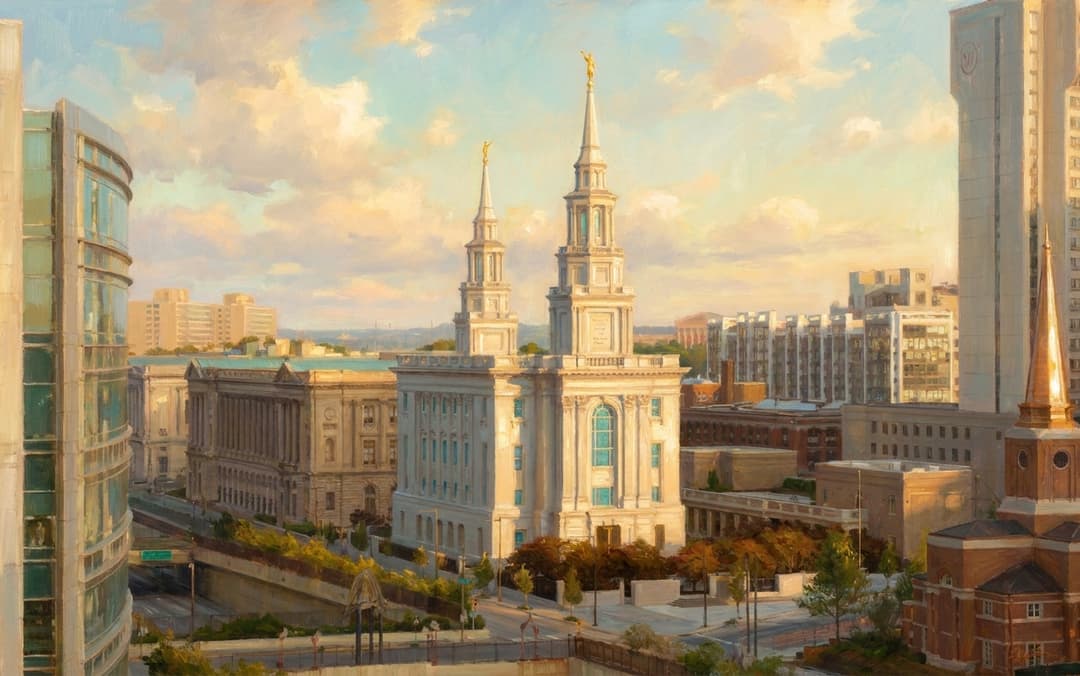
Situated directly along Vine Street near historic Logan Square in Center City Philadelphia, the temple sits within an attractive urban complex featuring public gardens and a granite reflecting pool. While the temple interior is reserved for congregants, the public is invited to stroll the landscaped grounds and visit the adjacent Family History Center.
Highlights
- Elegant public urban plaza framed by forty-four Japanese maples and a reflecting pool.
- Authentic 18th-century American Neoclassical architecture harmonizing with nearby civic landmarks.
- Adjacent Family History Center offering free genealogical research resources.
Things to Know
- Underground patron parking is accessible beneath the adjacent meetinghouse structure.
- Modest dress is requested when walking through the temple plaza and grounds.
Location
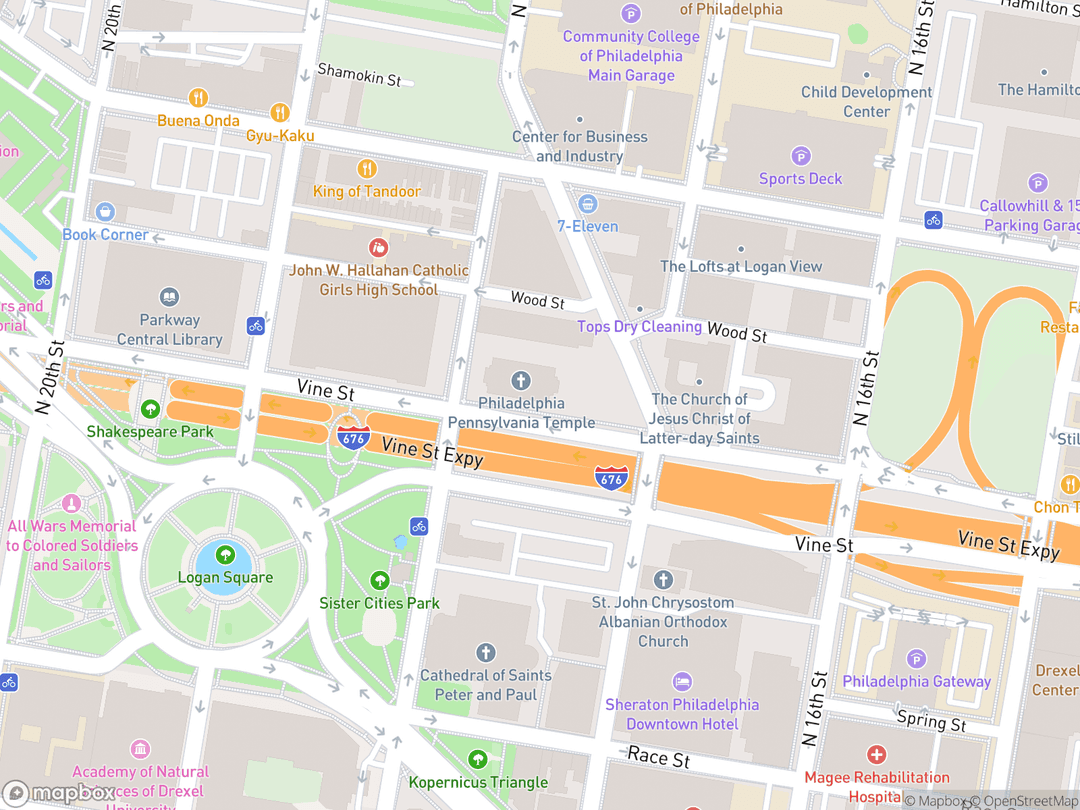
1739 Vine Street, Philadelphia, Pennsylvania 19103, United States
Hours: Tuesday–Saturday: 6:00 AM – 9:00 PM (Closed Sundays and Mondays)
Getting There: Located in downtown Philadelphia along Vine Street between 17th and 18th Streets, easily reached via SEPTA bus or regional rail lines.
Get DirectionsTips for Your Visit
Family History Exploration
Visit the Family History Center across the plaza to research your family tree with assistance from on-site specialists.
Best Photography Spots
Capture magnificent exterior views of the twin spires from across Logan Square or within the Japanese maple bosque.
About
Within the broader Christian and Abrahamic tradition, sacred spaces have long been set apart as places of sanctuary, prayer, and communion with God. From the ancient Tabernacle in the wilderness to historic Christian cathedrals across the globe, sacred architecture reflects a deliberate effort to establish a visible bridge between heaven and earth. In The Church of Jesus Christ of Latter-day Saints, temples serve a distinct purpose separate from regular weekly meetinghouses, operating as holy sanctuaries for eternal ordinances such as marriage sealings and proxy baptisms.
The Philadelphia Pennsylvania Temple holds profound spiritual significance for Latter-day Saints. Although the Church was formally organized in New York, pivotal foundational events occurred within Pennsylvania, including the translation of much of the Book of Mormon in Harmony and the restoration of divine priesthood authority along the Susquehanna River in 1829.
Dedicated in 2016 as the faith's 152nd operating temple worldwide and the first in Pennsylvania, the edifice stands in Center City Philadelphia. Its refined architecture visually unites America's foundational democratic heritage with the spiritual origins of the Latter-day Saint tradition.
Gallery
Symbolic Elements
The temple's exterior features intricate carvings, each rich with spiritual meaning:
Classical Orders Progression
Transitioning from Doric on the ground floor to Corinthian on the top floor symbolizes spiritual progression toward divine light.

Twin Brass Quills
Brass quills on reception desks honor the Declaration of Independence and the translation of sacred scripture.

Franklin Institute Railings
Cast bronze baptistry railings reproduce historic 18th-century decorative patterns from the local Franklin Institute.

City Flag Stained Glass
Opalescent glass incorporates azure blue and golden yellow tones directly referencing the municipal flag of Philadelphia.

Pennsylvania Flora Motifs
Carvings and carpets subtly depict Mountain Laurel flowers and Eastern Hemlock leaves native to Pennsylvania.

Twelve Baptismal Oxen
Twelve life-sized bronze oxen holding the baptismal font represent the twelve biblical tribes of Israel.

Angel Moroni Statue
The gold-leafed statue topping the spire symbolizes the restoration of the gospel message to all nations.
Interesting Facts
It is the first Latter-day Saint temple built in Pennsylvania, despite the state hosting major 1820s restoration events. (Tier A)
The stained glass windows feature azure blue and gold accents inspired by the Philadelphia city flag. (Tier A)
Interior entrance desks display brass quill motifs honoring the signing of the U.S. Constitution. (Tier B)
The exterior is clad in rain-gray granite quarried from Deer Isle, Maine. (Tier A)
The baptistry handrails were custom-modeled after historic cast-iron railings in the nearby Franklin Institute. (Tier B)
The architectural order progresses floor-by-floor from Doric to Ionic and finally Corinthian. (Tier B)
A youth cultural event titled 'We the People' was held on national Constitution Day in 2016. (Tier A)
The entire complex sits atop a two-level subterranean parking garage built in Center City. (Tier A)
President Henry B. Eyring, who dedicated the temple, was baptized in Philadelphia as a young boy. (Tier A)
Common Questions
Why does the temple use Neoclassical Georgian architecture?
Church leaders selected Georgian Revival architecture to complement Philadelphia's historic civic buildings like Independence Hall.
What historical events connecting to the Church occurred in Pennsylvania?
Key events include the translation of the Book of Mormon and the restoration of priesthood authority along the Susquehanna River.
Can non-members visit the temple grounds and plaza?
Yes, the public is welcome to enjoy the exterior gardens, reflecting pool, and Family History Center.
What do the blue and gold colors in the stained glass represent?
The azure blue and warm yellow tones directly match the official municipal flag of Philadelphia.
Featured Stories
Returning to the Susquehanna Roots
1829–2016
Although Pennsylvania was where Joseph Smith translated most of the Book of Mormon and received priesthood authority in 1829, local members waited nearly two centuries for a temple in the state. The dedication in 2016 marked a historic milestone, bringing a temple back to the sacred grounds where the faith's early spiritual foundations were laid.
Source: Church Newsroom
Aligning Modern Faith with Historic Liberty
2012–2016
When initial contemporary architectural proposals were reconsidered, designers adopted an authentic Neoclassical Georgian layout to match Center City's historical landmarks. By mirroring elements of Independence Hall and local civic structures, the temple stands as a tribute to early American principles of religious liberty.
Source: FFKR Architectural Dossier
A Personal Dedication and Homecoming
September 18, 2016
President Henry B. Eyring presided over the temple dedication with personal emotion, having lived in nearby New Jersey and been baptized in Philadelphia as a boy. His dedication fulfilled a lifelong personal and spiritual loop, connecting childhood memories with sacred apostolic service.
Source: Official Dedication Report
Timeline
Priesthood Restoration
John the Baptist restores the Aaronic Priesthood along the Susquehanna River in Pennsylvania.
MilestoneJoseph Smith Visit
Joseph Smith visits Philadelphia to organize a branch of over three hundred members.
EventFirst Stake Organized
The Philadelphia Stake is established to serve growing Mid-Atlantic congregations.
MilestoneTemple Announcement
President Thomas S. Monson formally announces the construction of the Philadelphia Temple.
MilestoneSite Location Selected
The Church acquires the Center City Vine Street property near Logan Square.
EventGroundbreaking Ceremony
President Henry B. Eyring presides at the official groundbreaking and site dedication.
component.timeline.groundbreakingDesign Approval
The Philadelphia Art Commission approves the classical Georgian Revival architectural design.
EventAngel Moroni Statue Installed
A gold-leafed Angel Moroni statue is raised atop the eastern spire.
EventPublic Open House Begins
More than one hundred forty thousand visitors tour the completed sanctuary.
EventYouth Cultural Celebration
Thousands of youth perform in 'We the People' on Constitution Day.
EventFormal Dedication
President Henry B. Eyring officially dedicates the temple in three sessions.
DedicationHistory by Decade
1820s–1840s — Sacred Foundations in Pennsylvania
During the late 1820s, Joseph Smith resided in Harmony, Pennsylvania, translating significant portions of the Book of Mormon. In May 1829, divine messengers restored priesthood authority along the Susquehanna River. Joseph Smith later visited Philadelphia in 1839 to organize a vibrant early congregation.
1960s–2000s — Regional Growth and Gathering
Following decades of westward movement, Latter-day Saint populations in Pennsylvania grew substantially in the mid-20th century. The Philadelphia Stake was organized in 1960, requiring local patrons to travel long distances to Washington D.C. or Manhattan for temple worship until an urban site was selected in 2009.
2010s — Construction and Consecration
Groundbreaking took place in 2011, followed by years of meticulous Neoclassical construction using Maine granite. A thirty-day open house welcomed over one hundred forty thousand neighbors in late 2016 before President Henry B. Eyring officially dedicated the temple on September 18, 2016.
Architecture & Facilities
The temple is built in an authentic American Georgian Revival and Neoclassical Revival architectural style. Its massing and proportions reflect 18th-century American classical traditions, harmonizing with adjacent landmarks along the Benjamin Franklin Parkway such as the Parkway Central Library and the Cathedral Basilica of Saints Peter and Paul.
Building Materials
Granite Cladding
Quarried in Deer Isle, Maine, and precision-cut into rain-gray classical entablatures.
Art Glass
Triple-glazed windows tinted with azure blue and golden yellow hues.
Interior Stone
Egyptian limestone and polished Italian marble flooring line the corridors and baptistry.
Custom Millwork
Hardwood trim painted in historic colonial off-white tones modeled after Independence Hall.
Interior Features
Baptistry
Features a font supported by twelve cast bronze oxen and railings inspired by the Franklin Institute.
Instruction Rooms
Two-stage progressive rooms embellished with Ionic capitals and landscape murals of Pennsylvania valleys.
Celestial Room
An elegant space featuring Corinthian columns, rich gold leaf detailing, and crystal chandeliers.
Sealing Rooms
Sacred marriage rooms equipped with custom colonial-style mirror frames and bronze sconces.
Temple Grounds
A 1.6-acre urban plaza featuring forty-four Bloodgood Japanese maples, granite seating, seasonal gardens, and a black basalt reflecting pool.
Additional Facilities
An adjacent complex houses a standard LDS meetinghouse, Family History Center, retail distribution center, and subterranean parking garage.
Religious Significance
For Latter-day Saints, the temple represents the literal 'House of the Lord,' standing as the most sacred place of worship on earth. Rooted in Abrahamic and Biblical tradition, temple worship provides a sanctuary apart from worldly concerns where individuals make solemn covenants with God.
To administer sacred ordinances including eternal marriage sealings and proxy baptisms that unite families eternally.
Sacred Ordinances
Baptisms for the Dead
Proxy baptisms performed in behalf of ancestors in a font modeled after the biblical Molten Sea.
Temple Endowment
Instruction and sacred covenants focusing on the plan of salvation and divine obedience.
Marriage Sealings
Holy ceremonies joining husbands, wives, and children in eternal family relationships.
Priesthood Heritage in Pennsylvania
The temple stands as a modern monument to the divine restoration of priesthood authority along Pennsylvania's Susquehanna River in 1829.
Sacred Space in an Urban Center
Positioned amidst Center City Philadelphia, the sanctuary offers a quiet refuge of divine peace and covenant reflection within a busy metropolis.
Similar Temples
Sources & Research
Every fact on Temples.org is backed by verified Sources & Research. Each piece of information is rated by source tier and confidence level.
View All Sources (4)
| Field | Source | Tier | Retrieved |
|---|---|---|---|
| About & Historical Background | Church History Department (opens in a new tab) | A | 2026-02-18 |
| Timeline & Featured Stories | LDS Temples (opens in a new tab) | C | 2026-02-18 |
| Architecture & Design | FFKR Architects (opens in a new tab) | B | 2026-02-18 |
| Religious Significance | The Church of Jesus Christ of Latter-day Saints (opens in a new tab) | A | 2026-02-18 |