Visitor Insights
Visiting Pittsburgh Pennsylvania Temple
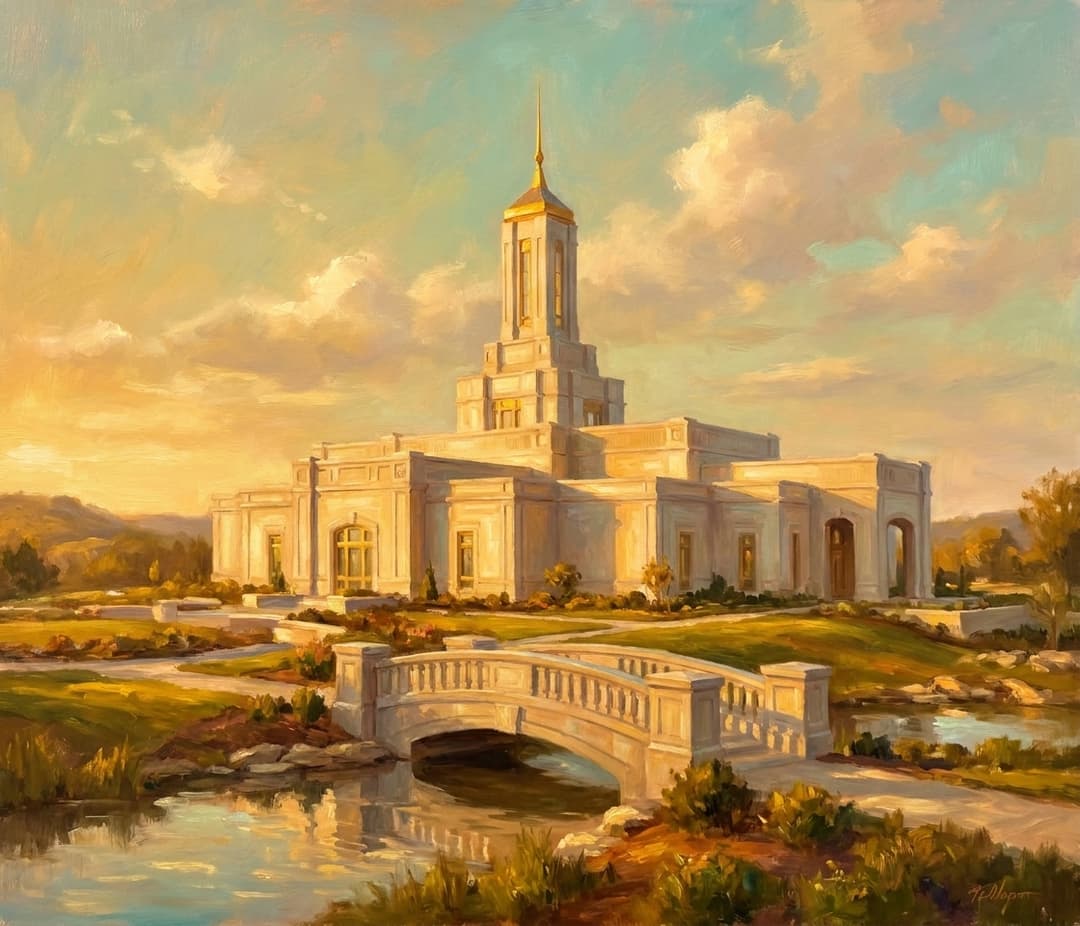
The Pittsburgh Pennsylvania Temple is located on a quiet 5.8-acre campus in Cranberry Township, adjacent to the Pittsburgh Pennsylvania North Stake Center. Beautiful exterior gardens and a custom granite footbridge are open to all visitors daily from sunrise to sunset.
Highlights
- Picturesque granite footbridge crossing a tranquil retention basin.
- Extensive exterior flower gardens featuring regional landscape design.
- Detailed Portuguese granite stonework with mountain laurel carvings.
Things to Know
- Interior entry requires an active temple recommend for members of the Church.
- No public visitors' center or clothing distribution center on site.
Location
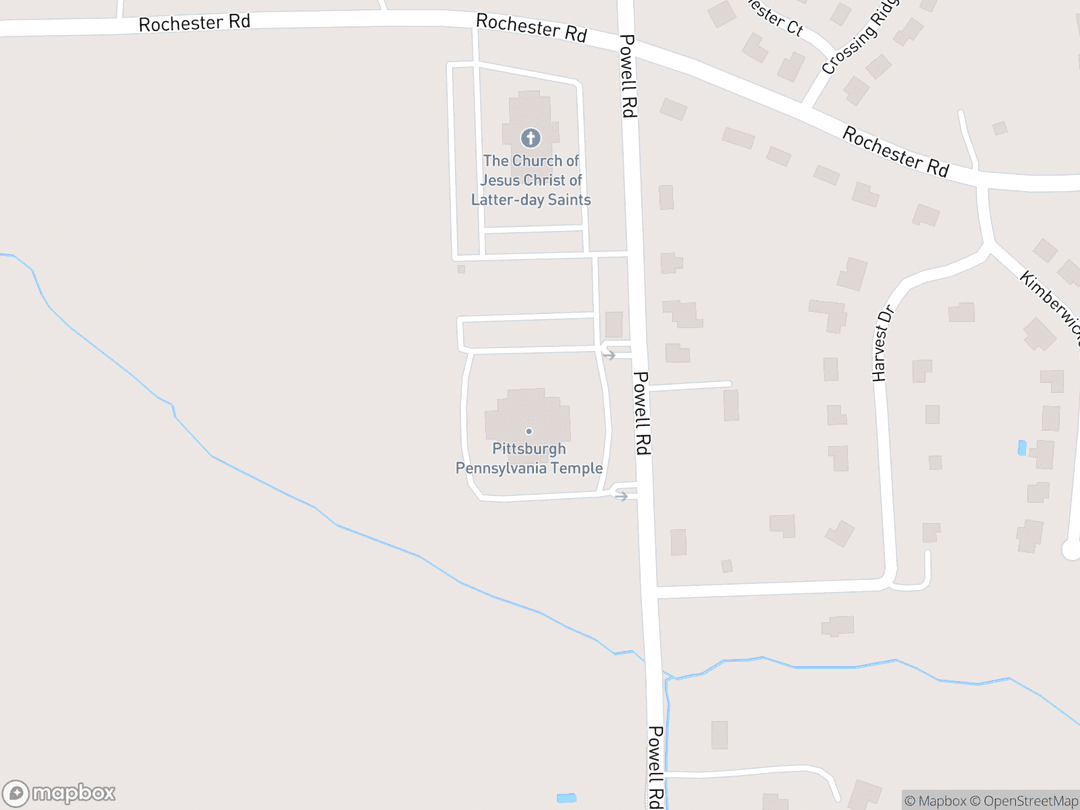
2093 Powell Road, Cranberry Township, Pennsylvania 16066, United States
Hours: Grounds open daily sunrise to sunset; temple services operate Tuesday through Saturday.
Getting There: Accessible via Interstate 76 (Pennsylvania Turnpike) and Interstate 79 at Powell Road in Cranberry Township.
Get DirectionsTips for Your Visit
Photography Spots
The granite footbridge offers an ideal position for capturing the full spire and reflection on the water.
Sunday Services
Visitors seeking Sunday worship are welcome at the adjacent Pittsburgh Pennsylvania North Stake Center.
About
The Pittsburgh Pennsylvania Temple stands as the 196th operating temple of The Church of Jesus Christ of Latter-day Saints, serving members across Western Pennsylvania, Eastern Ohio, and Northern West Virginia. Located in Cranberry Township, approximately 20 miles north of downtown Pittsburgh, the structure reflects a commitment to sacred architecture within the broader Christian restorationist tradition.
Rooted in a shared Christian heritage focused on Jesus Christ, Latter-day Saints construct temples as sacred spaces set apart from regular Sunday meetinghouses. Within these sanctuaries, patrons participate in eternal covenants, sacred marriages, and proxy baptisms that extend Christ's saving grace across generations.
Dedicated on September 15, 2024, by Elder Dieter F. Uchtdorf, the temple incorporates iconic regional motifs into its single-story Neoclassical design. Features such as a granite footbridge honor Pittsburgh's identity as the City of Bridges, symbolizing the temple's purpose as a connection between heaven and earth.
Gallery
Symbolic Elements
The temple's exterior features intricate carvings, each rich with spiritual meaning:

Mountain Laurel Motif
Pennsylvania's state flower is carved into exterior window headers and woven into interior textiles.

Dogwood Blossom Art Glass
Stylized dogwood blossoms in windows symbolize spring renewal and spiritual life in Christian tradition.

Granite Footbridge
A custom stone bridge pays tribute to Pittsburgh's bridge heritage while symbolizing connection to God.

Single Central Spire
Points heavenward as an architectural anchor symbolizing individual upward spiritual aspiration.

Baptismal Font Oxen
Twelve bronze oxen supporting the font represent the twelve tribes of ancient Israel.

Portuguese Granite Cladding
Durable white granite stone exterior represents purity, strength, and eternal covenant commitments.

Celestial Room
Represents the ultimate peace and heavenly presence of God through soft illumination and elegant finishings.
Interesting Facts
The structural steel frame of the temple was fabricated locally by Pittsburgh steel makers in honor of the city's heritage. (Tier A)
A granite footbridge on the site pays tribute to Pittsburgh's distinction as the 'City of Bridges'. (Tier A)
Pennsylvania's state flower, the mountain laurel, is carved into exterior stonework and woven into interior carpets. (Tier A)
The central spire reaches 125 feet high and was designed without an Angel Moroni statue. (Tier A)
Interior flooring features Crema Ella marble imported directly from Turkey alongside accent stones from Brazil and Spain. (Tier B)
It serves more than 29,000 Church members in over 80 congregations across three states. (Tier A)
Before 1974, Latter-day Saints in Western Pennsylvania had to travel as far as Utah or Alberta for temple worship. (Tier B)
It is the second operating temple in the Commonwealth of Pennsylvania, following Philadelphia in 2016. (Tier A)
Common Questions
Who can enter inside the Pittsburgh Pennsylvania Temple?
Members of The Church of Jesus Christ of Latter-day Saints holding valid temple recommends may enter for worship.
Are the temple grounds open to the public?
Yes, the surrounding gardens and granite footbridge are open to the public daily from sunrise to sunset.
Why is there no Angel Moroni statue on the spire?
Recent church temple design patterns frequently omit statues on smaller floor plan prototypes.
What region does this temple serve?
It serves over 29,000 members across Western Pennsylvania, Eastern Ohio, and Northern West Virginia.
Featured Stories
A Bridge Connecting Heaven and Earth
September 15, 2024
During the dedication of the Pittsburgh Pennsylvania Temple, Elder Dieter F. Uchtdorf emphasized the unique architectural footbridge spanning the site's retention basin. He noted that just as Pittsburgh's iconic 446 bridges connect geographic communities, the temple serves as a spiritual bridge connecting God's children on earth with heaven.
Source: Church Newsroom Dedication Report
Local Steel in the House of the Lord
August 21, 2021
To honor Pittsburgh's global legacy as the 'Steel City,' church contractors sourced the temple's structural steel frame directly from local fabricators Littell Steel and Century Steel. Local ironworkers expressed immense pride in erecting the strong metallic framework that supports the sacred Portuguese granite structure.
Source: Butler County Construction Journal
Pioneer Roots Along the Susquehanna
May 15, 1829
The dedication of Western Pennsylvania's first temple connects modern Saints directly to the dawn of the Restoration. Nearly two centuries after divine messengers appeared to Joseph Smith along Pennsylvania's Susquehanna River, a permanent temple now stands as a testament to those early sacred events.
Source: Church History Regional Records
Timeline
Priesthood Restoration in Pennsylvania
John the Baptist restores the Aaronic Priesthood to Joseph Smith and Oliver Cowdery along the Susquehanna River.
EventPittsburgh Stake Organized
The Pittsburgh Pennsylvania Stake is created to consolidate growing congregations in Western Pennsylvania.
MilestoneTemple Announced
President Russell M. Nelson announces the Pittsburgh Pennsylvania Temple during General Conference.
MilestoneSite Location Selected
The Church releases the site location in Cranberry Township along with exterior architectural renderings.
EventGroundbreaking Ceremony
Elder Randall K. Bennett presides at the ceremonial groundbreaking service.
component.timeline.groundbreakingMedia Day
Journalists and civic leaders tour the completed temple prior to public open house.
EventPublic Open House Begins
Tens of thousands of community members visit the temple during a two-week open house.
EventTemple Dedication
Elder Dieter F. Uchtdorf dedicates the temple in two sacred sessions.
DedicationHistory by Decade
1820s–1840s — Historical Roots in Pennsylvania
Early Latter-day Saint history is deeply intertwined with Pennsylvania, where Joseph Smith translated much of the Book of Mormon in Harmony and received priesthood authority along the Susquehanna River in 1829. Early missionaries proselytized actively in Pittsburgh during the 1830s and 1840s before church headquarters moved westward.
1950s–1960s — Post-War Growth in Western Pennsylvania
Small branches formed throughout Western Pennsylvania following World War II as families moved to the industrial hub of Pittsburgh. The organization of the Pittsburgh Stake in 1969 marked a crucial consolidation of Latter-day Saint growth in the region.
1970s–2010s — Long Journeys for Temple Worship
For decades, local Saints traveled long distances to attend temples in Washington D.C., Columbus, or Utah. The dedication of the Philadelphia Pennsylvania Temple in 2016 provided closer access on the state's eastern side, but Western Pennsylvania continued praying for a local house of the Lord.
2020s — Announcement, Construction, and Dedication
President Russell M. Nelson announced the temple in 2020, leading to groundbreaking in August 2021 in Cranberry Township. Following three years of construction incorporating local steel and artisan stonework, Elder Dieter F. Uchtdorf dedicated the sacred structure on September 15, 2024.
Architecture & Facilities
The Pittsburgh Pennsylvania Temple presents a Neoclassical design accented by subtle Art Deco elements and classic American proportions. Clad in soft Portuguese granite with a single central spire rising 125 feet, its massing integrates seamlessly into the surrounding rolling hills of Butler County.
Building Materials
Exterior Granite
Clad in light-colored Portuguese granite featuring smooth-tooled panels and detailed carvings.
Structural Frame
Fabricated from heavy structural steel produced locally by Pittsburgh steel manufacturers.
Interior Marble
Floored with Crema Ella marble from Turkey accented by Spanish and Brazilian marbles.
Decorative Glass
Custom art glass featuring stylized dogwood branch blossoms rendered in pink and soft green.
Interior Features
Baptistry
Features a central baptismal font supported by twelve cast bronze oxen.
Instruction Rooms
Two ordinance rooms finished with soft gold and green patterned carpet and linen wallcoverings.
Sealing Rooms
Two marriage sealing rooms outfitted with custom gold-leaf altars and delicate crystal chandeliers.
Celestial Room
A serene central hall decorated with gold leaf accents and organic mountain laurel wall patterns.
Temple Grounds
The 5.8-acre grounds feature manicured flower gardens, stone walkways, and a signature granite-clad footbridge crossing a storm-water basin.
Additional Facilities
Located adjacent to the Pittsburgh Pennsylvania North Stake Center, providing parking and meetinghouse facilities for congregational worship.
Religious Significance
Within Latter-day Saint theology, which stands firmly within the broader Christian restorationist context, temples are uniquely sacred structures distinct from regular Sunday chapels. They are considered literal houses of the Lord dedicated to holy sacraments that unite families for eternity.
To provide a holy space for sacred priesthood ordinances, eternal marriage sealings, and proxy baptisms for deceased ancestors.
Sacred Ordinances
Baptisms for the Dead
Proxy baptisms performed in behalf of ancestors, offering them the choice to accept Christ's gospel.
Endowment
A sacred instruction session where patrons make covenants of obedience, sacrifice, and devotion to God.
Eternal Marriage Sealings
Sacred ceremonies joining husbands, wives, and children in eternal family relationships.
The House of the Lord
The phrase 'Holiness to the Lord' inscribed on the temple exterior reflects the ancient biblical sanctuary tradition, marking the building as a place set apart from worldly concerns for divine communion.
Similar Temples
Sources & Research
Every fact on Temples.org is backed by verified Sources & Research. Each piece of information is rated by source tier and confidence level.
View All Sources (8)
| Field | Source | Tier | Retrieved |
|---|---|---|---|
| About & Historical Background | The Church of Jesus Christ of Latter-day Saints (opens in a new tab) | A | 2026-02-15 |
| Architecture & Design | The Church of Jesus Christ of Latter-day Saints (opens in a new tab) | A | 2026-02-15 |
| Timeline & Dedication | Church News (opens in a new tab) | B | 2026-02-15 |
| General Conference Announcement | The Church of Jesus Christ of Latter-day Saints (opens in a new tab) | A | 2026-02-15 |
| Local Construction Details | Butler Eagle (opens in a new tab) | C | 2026-02-15 |
| Cranberry Township Planning | Cranberry Eagle (opens in a new tab) | C | 2026-02-15 |
| General Contracting Report | Jacobsen Construction (opens in a new tab) | D | 2026-02-15 |
| Architectural Specifications | HKS Architects (opens in a new tab) | D | 2026-02-15 |