Visitor Insights
Visiting Columbia South Carolina Temple
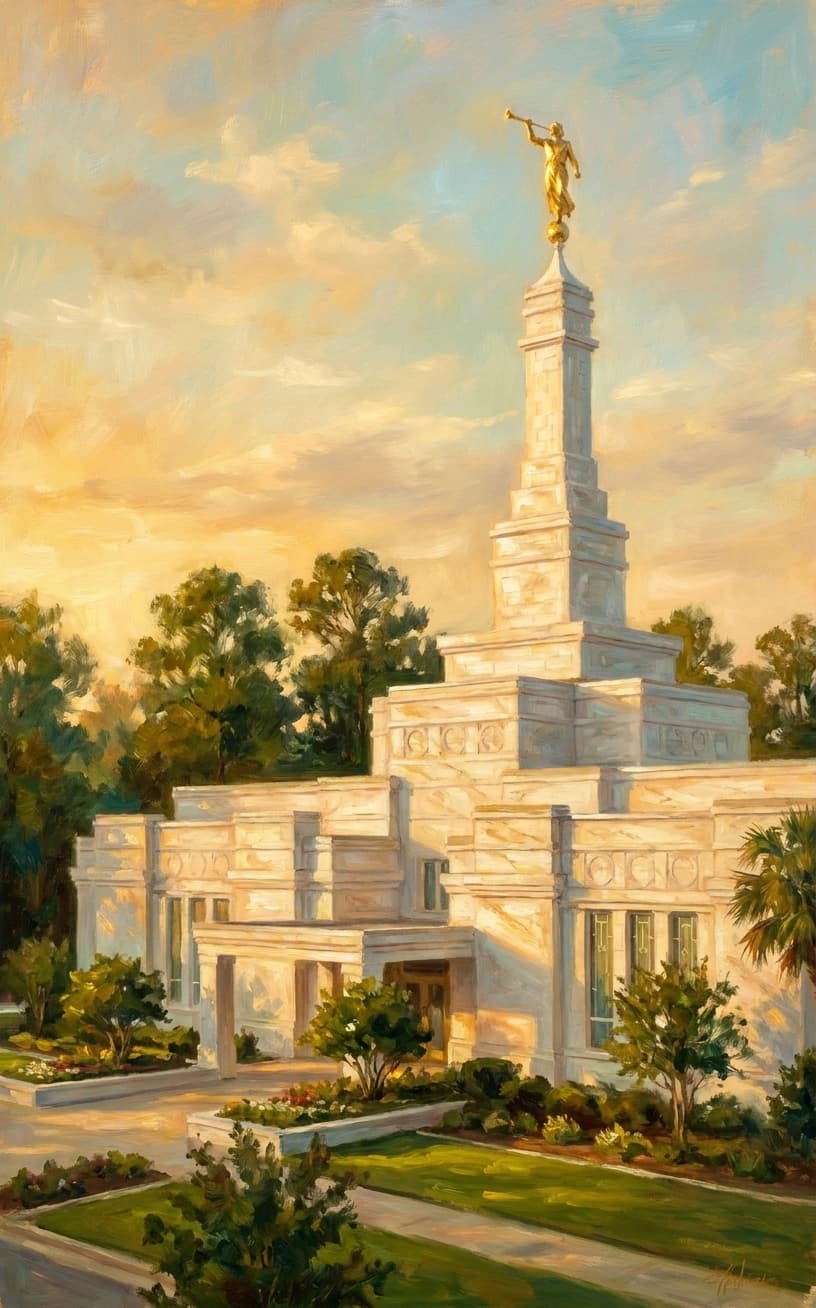
The Columbia South Carolina Temple offers a deeply peaceful and contemplative atmosphere, nestled within a beautifully wooded 3.6-acre lot in the suburban community of Hopkins. Visitors can stroll along the manicured perimeter pathways, surrounded by native South Carolina flora, including towering loblolly pines and vibrant crape myrtles. While the sacred interior is reserved for members holding active temple recommends, the exterior grounds are open to all who seek a quiet space for reflection. The site provides a serene escape from the bustle of nearby Columbia, inviting spiritual renewal and quiet appreciation of its classic modern architecture.
Highlights
- Beautifully manicured 3.6-acre grounds featuring native South Carolina loblolly pines, dogwoods, and crape myrtles.
- Luminous exterior clad in Imperial Danby white variegated marble from Vermont.
- Peaceful perimeter walking paths with benches for quiet contemplation and prayer.
- Striking single-spire design topped by the iconic gold-leafed angel Moroni statue.
Things to Know
- The interior of the temple is reserved for active members of the Church with a valid temple recommend.
- There is no public visitors' center, patron housing, or distribution center on this site.
- The physical site is located in Hopkins, approximately 11 miles southeast of downtown Columbia.
- Modest dress and quiet conduct are appreciated when walking the sacred temple grounds.
Location
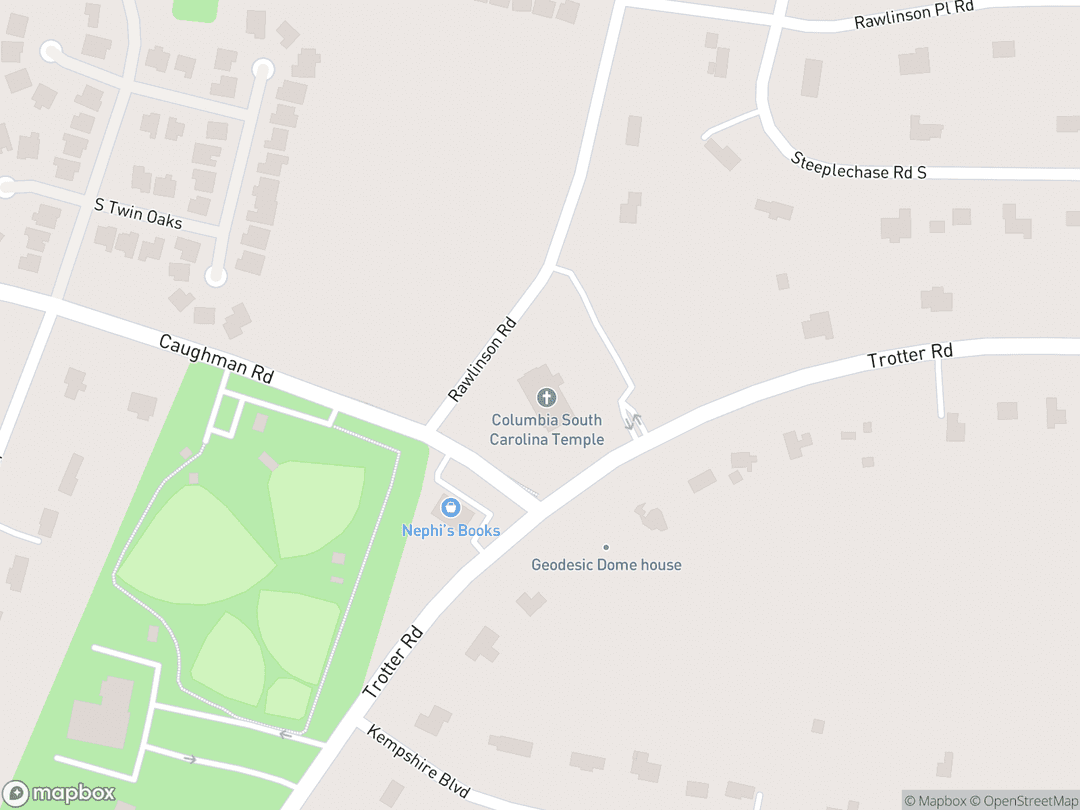
2905 Trotter Road, Hopkins, South Carolina 29061-9573, United States
Hours: Grounds are open daily from sunrise to dusk. Interior ordinance hours vary by schedule; closed Sundays and Mondays.
Getting There: Located at 2905 Trotter Road in Hopkins, South Carolina. From downtown Columbia, travel southeast on US-76 East (Garners Ferry Road), then turn right onto Trotter Road. The temple will be on your right in a quiet, wooded residential area. Ample free parking is available on-site.
Get DirectionsTips for Your Visit
Golden Hour Photography
Visit at dusk when the exterior lighting turns on. The Imperial Danby marble cladding beautifully reflects the warm evening colors, making it an ideal time for photography.
Springtime Blooms
Plan a visit during the spring months when the dogwood trees and crape myrtles on the grounds are in full bloom, creating a spectacular natural frame for the temple.
Quiet Reflection
Take advantage of the wooden benches placed along the perimeter pathways. They offer a perfect, shaded spot to read, pray, or enjoy the peaceful woodland sounds.
About
The Columbia South Carolina Temple stands as a sacred monument of faith, dedicated on October 16, 1999, by President Gordon B. Hinckley. As the first Latter-day Saint temple constructed in the state of South Carolina, it represents a historic milestone for local members who previously traveled hundreds of miles to Atlanta, Georgia, or Washington, D.C., to participate in temple worship. Situated in the quiet, wooded suburban community of Hopkins, just southeast of the capital city of Columbia, the temple provides a peaceful refuge from the bustle of daily life.
In the broader context of Christian theology and the Abrahamic tradition, the temple serves as a modern manifestation of the ancient tradition of building a literal "House of the Lord." Like the tabernacle of Moses and the grand cathedrals of historic Christianity, this sacred structure is designed to bridge the gap between the mortal and the divine. It is a place where heaven and earth meet, allowing believers to draw closer to God, seek personal revelation, and find spiritual sanctuary in an increasingly chaotic world.
The temple's construction was part of a visionary initiative championed by President Hinckley in the late 1990s to build smaller, highly efficient temples. By utilizing standardized floor plans and modern construction techniques, the Church was able to bring these sacred buildings directly to localized congregations worldwide. The Columbia temple was constructed using a highly successful 10,700-square-foot design, making it a model of architectural efficiency that maximizes sacred space while maintaining a dignified, elegant presence.
Today, the temple serves thousands of Latter-day Saints across South Carolina and parts of North Carolina and Georgia. Its beautifully landscaped 3.6-acre grounds, filled with native flora and towering pines, are open to the public and offer a serene space for quiet contemplation. For the members who enter its doors, the temple remains a place of profound spiritual renewal, where sacred covenants are made and the eternal nature of the family unit is celebrated.
Gallery
Symbolic Elements
The temple's exterior features intricate carvings, each rich with spiritual meaning:

The Angel Moroni
Perched atop the single spire, the gold-plated statue of the angel Moroni symbolizes the restoration of the gospel of Jesus Christ. Holding a trumpet to his lips, he represents the heralding of the glad tidings to all nations, fulfilling biblical prophecy.

Imperial Danby Marble
The exterior is clad in Imperial Danby white variegated marble quarried from Vermont. This premium stone, with its soft gray and gold veining, symbolizes purity, light, and the enduring nature of the covenants made within the temple.

The Single Spire
The temple's single, integrated spire points directly toward heaven, serving as a physical representation of humanity's upward reach toward God. It acts as a beacon of hope and a reminder of the vertical relationship between the Creator and His children.

The Baptismal Font and Twelve Oxen
Resting on the backs of twelve sculpted oxen, the baptismal font draws directly from the biblical description of King Solomon's Temple. The oxen represent the twelve tribes of Israel, symbolizing the gathering of Israel and the universal reach of Christ's saving grace.

The Celestial Room
Representing the kingdom of God and the peace of heaven, the Celestial Room is the spiritual heart of the temple. Its exquisite furnishings, soft lighting, and infinite mirror reflections symbolize eternal progression and the endless nature of the family unit.

Native Landscaping
The grounds are landscaped with native loblolly pines, dogwoods, and crape myrtles, blending the sacred structure with the natural South Carolina woodland. This integration symbolizes the harmony between God's creations and His holy house.

Symmetrical Classic Modern Design
The temple's clean lines, balanced proportions, and symmetrical facade reflect order, harmony, and divine organization. This architectural style emphasizes simplicity and focus, directing the mind of the patron toward spiritual matters.
Interesting Facts
The Columbia South Carolina Temple was the very first Latter-day Saint temple constructed in the state of South Carolina.
It was dedicated just 401 days after its initial announcement, making it one of the fastest-constructed temples in modern Church history.
Ground was broken for the temple on December 5, 1998, which was the exact same day that ground was broken for the Hermosillo Sonora Mexico Temple.
The temple was announced by the First Presidency on the same day as the Birmingham Alabama Temple.
On the morning of the dedication, choir member Judy Wilcox chose to sing despite learning her son had tragically passed away in a car accident the previous day.
South Carolina Governor James Hodges sent a personal letter of commendation to the Church, which was read aloud by his Deputy Chief of Staff during the open house.
On April 6, 2022, a powerful lightning strike directly hit the angel Moroni statue, blowing a large chunk out of the upper back of its torso.
The damaged Moroni statue was replaced on June 27, 2022, using a large crane to swap the figure with a brand-new, gold-leafed replacement.
The temple is one of 43 temples worldwide built using a highly successful 10,700-square-foot standardized floor plan first conceived in the late 1990s.
The exterior is faced with Imperial Danby white variegated marble, which was quarried from historic underground quarries in Vermont.
Common Questions
Can the general public go inside the Columbia South Carolina Temple?
No, the interior of the temple is reserved for active members of The Church of Jesus Christ of Latter-day Saints who hold a current temple recommend. However, the public is welcome to walk the beautiful 3.6-acre grounds, enjoy the gardens, and view the exterior architecture.
Why is the temple located in Hopkins instead of Columbia?
While the temple is named after Columbia, the capital city of South Carolina, its physical site was selected in the adjacent, quieter suburban community of Hopkins. This location provides a peaceful, wooded setting that aligns with the sacred, contemplative nature of temple worship, while remaining easily accessible to patrons from the greater Columbia metropolitan area.
What was the reason for the temple's closure in late 2023?
The temple closed on September 4, 2023, for an extensive four-and-a-half-month maintenance and renovation project. The work focused on upgrading the building's mechanical and HVAC systems, reconfiguring administrative offices, and expanding the baptistry laundry and worker facilities to improve the experience for patrons and volunteers.
What happened to the angel Moroni statue in 2022?
On April 6, 2022, a severe thunderstorm resulted in a direct lightning strike to the angel Moroni statue atop the temple spire. The strike caused significant structural damage to the upper back of the statue's torso. On June 27, 2022, a crane was used to safely remove the damaged figure and replace it with a newly cast, gold-leafed statue.
How does the Columbia South Carolina Temple differ from a regular meetinghouse?
Latter-day Saint meetinghouses (or chapels) are used for weekly Sunday worship services, youth activities, and community gatherings, and are open to everyone. Temples, however, are considered sacred 'Houses of the Lord' reserved for special ordinances such as eternal marriages (sealings) and baptisms for the deceased. They are designed for quiet contemplation and covenant-making rather than large congregational sermons.
Featured Stories
A Mother's Song of Faith Amid Grief
October 16, 1999
On the morning of the temple's dedication, local choir member Judy Wilcox arrived at the temple carrying an unimaginable burden of grief. Just the day before, her son had tragically passed away in a sudden car accident. Despite her immense personal sorrow, Judy chose to take her place in the choir to sing praises to the Lord during the dedication sessions. She expressed that she felt her presence was needed and that singing in the House of the Lord brought her a profound sense of peace and comfort. Her remarkable demonstration of faith and resilience deeply touched everyone in attendance, serving as a powerful testament to the comforting power of the temple covenants.
Source: The Church News Dedication Report
A Rapid Construction and a Shared Groundbreaking
December 5, 1998
The construction of the Columbia South Carolina Temple was marked by an extraordinary pace and a unique global connection. Ground was broken for the sacred structure on December 5, 1998, under the direction of Elder Gordon T. Watts. Remarkably, on that very same day, thousands of miles away, ground was also being broken for the Hermosillo Sonora Mexico Temple, highlighting the rapid expansion of temples worldwide under President Gordon B. Hinckley's administration. Local members and community leaders, including state Senator Warren Giese, gathered in Hopkins to witness the historic event. The temple would be completed and dedicated just 401 days after its initial announcement, standing as one of the fastest-built temples in modern history.
Source: Church History Department Records
Moroni's Lightning Strike and Restoration
April 6, 2022
During a severe spring thunderstorm on April 6, 2022, a powerful bolt of lightning struck the angel Moroni statue atop the Columbia South Carolina Temple spire. The direct hit blew a significant chunk out of the upper back of the statue's torso, leaving the iconic figure visibly damaged. For several weeks, local members and neighbors looked up to see the battle-scarred statue, which served as a unique talking point in the community. On June 27, 2022, a large crane was brought to the temple site to carefully remove the damaged figure. A brand-new, gold-leafed replacement statue was hoisted into place, restoring the temple's spire to its original, brilliant luster and symbolizing renewal and resilience.
Source: Local News and Temple Administration Reports
Timeline
First Missionary Arrives in South Carolina
Lysander M. Davis, the first Latter-day Saint missionary in the state, arrives and finds a small group of believers already prepared for baptism.
EventJoseph Smith Meets with First Convert
Shortly before his martyrdom, Joseph Smith meets with South Carolina's first convert, Emmanuel Masters Murphy, recounting a prophecy about the Civil War.
EventFirst Official Branch Organized
Following decades of slow growth and localized persecution, the first official branch of the Church in South Carolina is organized with 40 members.
EventTemple Announcement
The First Presidency of the Church officially announces plans to construct the Columbia South Carolina Temple.
MilestoneGroundbreaking Ceremony
Elder Gordon T. Watts of the Seventy presides over the groundbreaking ceremony, attended by over 3,500 local members and community leaders.
component.timeline.groundbreakingPublic Open House Commences
A nine-day public open house begins, drawing nearly 20,000 visitors to tour the sacred interior of the newly completed temple.
MilestoneTemple Dedication
President Gordon B. Hinckley dedicates the Columbia South Carolina Temple in six sessions over two days, making it the 62nd operating temple.
Dedication10th Anniversary Celebration
Local members gather to celebrate a decade of temple service and spiritual blessings in the South Carolina region.
Event20th Anniversary Milestone
The temple reaches its 20th anniversary of continuous operation, serving as a beacon of faith for thousands of local Saints.
EventAngel Moroni Lightning Strike
A severe thunderstorm results in a direct lightning strike to the angel Moroni statue, causing significant structural damage to the torso.
EventAngel Moroni Replacement
A large crane is utilized to remove the damaged figure and install a newly cast, gold-leafed replacement statue of the angel Moroni.
RenovationTemple Closes for Renovation
The temple closes for an extensive four-and-a-half-month maintenance and renovation project to upgrade systems and expand facilities.
RenovationMechanical Systems Upgraded
A major milestone in the renovation is reached as advanced HVAC and electrical systems are successfully integrated into the structure.
RenovationInterior Renovation Completed
Workers complete the interior renovations, including reconfigured administrative offices and an expanded baptistry laundry room.
RenovationTemple Reopens for Ordinances
The temple officially reopens for regular patron ordinances following the successful completion of the interior renovations.
MilestoneHistory by Decade
1830s–1910s — Early Missionary Labors and Slow Growth
The history of the Church in South Carolina began in November 1839 when the first missionary, Lysander M. Davis, arrived in the state. To his surprise, he found a small group of believers already prepared for baptism, having been fellowshipped by Emmanuel Masters Murphy, the state's first convert. Murphy had been baptized in Tennessee in 1836 and returned to his home state to share his new faith. Shortly before his martyrdom in June 1844, Joseph Smith reportedly met with Murphy and recounted a prophecy concerning the impending American Civil War, which was foretold to begin in South Carolina, urging Murphy to return home to warn the citizens. Despite localized persecution and slow growth, the first official branch of the Church was organized in 1917 with 40 members, establishing a permanent footing.
1990s — Announcement, Groundbreaking, and Dedication
On September 11, 1998, the First Presidency announced plans to construct the Columbia South Carolina Temple, bringing immense joy to local Saints who previously had to travel long distances to Atlanta or Washington, D.C. Ground was broken on December 5, 1998, with over 3,500 members and community leaders in attendance. The construction progressed with remarkable speed, taking just over a year to complete. A public open house held in September 1999 drew nearly 20,000 visitors, introducing many in the community to the temple's sacred purpose. President Gordon B. Hinckley dedicated the temple on October 16, 1999, declaring it the 62nd operating temple of the Church and the first in South Carolina.
2020s — Lightning Strike, Renovations, and Reopening
In the 2020s, the temple experienced both natural challenges and significant upgrades. On April 6, 2022, a severe thunderstorm resulted in a direct lightning strike to the angel Moroni statue, causing structural damage that required its replacement via crane in June of that year. Following nearly a quarter-century of continuous operation, the temple closed on September 4, 2023, for an extensive four-and-a-half-month renovation. This project upgraded the building's mechanical and HVAC systems, reconfigured administrative offices, and expanded the baptistry laundry and worker facilities. The temple officially reopened on March 5, 2024, beautifully refreshed and ready to serve future generations of patrons.
Architecture & Facilities
The Columbia South Carolina Temple features a classic modern, single-spire design. It is one of the early "smaller temple" models championed by President Gordon B. Hinckley in the late 1990s, designed to bring sacred ordinances closer to localized congregations. The building's aesthetic is characterized by clean, vertical lines, symmetrical proportions, and a single integrated spire rising directly from the front facade, creating a dignified and elegant presence.
Building Materials
Exterior Cladding
Imperial Danby white variegated marble quarried from historic underground quarries in Vermont, featuring soft gray and gold veining.
Spire Cladding
High-grade metal cladding designed to withstand severe weather and maintain a brilliant, reflective finish.
Structural Frame
Reinforced concrete and structural steel, providing a highly durable and secure foundation for the sacred building.
Grounds Paving
High-quality concrete and stone pavers used for the walkways, designed to blend seamlessly with the natural woodland surroundings.
Interior Features
Baptistry
A sacred room featuring a baptismal font resting on the backs of twelve sculpted oxen, symbolizing the twelve tribes of Israel.
Instruction Rooms
Two progressive instruction rooms where patrons move from one room to another, symbolizing spiritual progression and covenant-making.
Sealing Rooms
Two beautifully appointed rooms featuring altars where couples are married for eternity, symbolizing the eternal family unit.
Celestial Room
The spiritual heart of the temple, designed with exquisite furnishings, soft lighting, and infinite mirrors to represent the peace of heaven.
Temple Grounds
The 3.6-acre grounds are meticulously landscaped to blend with the surrounding South Carolina woodland, featuring native loblolly pines, dogwoods, crape myrtles, and seasonal flower beds.
Additional Facilities
The site includes a patron and worker clothing laundry facility, administrative offices, and a waiting room, all recently upgraded during the 2023–2024 renovation.
Religious Significance
The Columbia South Carolina Temple stands as a sacred sanctuary of The Church of Jesus Christ of Latter-day Saints, rooted in the Christian and Abrahamic tradition of covenant-making with God. Like the ancient tabernacles of the Old Testament and historic Christian cathedrals, it is built as a literal House of the Lord, a physical space dedicated to bridging the gap between heaven and earth.
The core spiritual purpose of the temple is to provide a sacred space where members of the Church can make eternal covenants with God and participate in saving ordinances that bind families together forever.
Sacred Ordinances
The Endowment
A sacred presentation of instructions and covenants regarding the plan of salvation, the creation of the earth, and the mission of Jesus Christ.
Eternal Marriage (Sealing)
A sacred ordinance where couples and families are united for eternity, reflecting the doctrine that love and family relationships endure beyond death.
Proxy Baptisms
Baptisms performed by the living on behalf of deceased ancestors, offering the blessings of Christ's saving grace to all generations.
The Abrahamic Covenant and Eternal Families
The ordinances performed within the temple reflect the continuation of the Abrahamic covenant, promising eternal progression and the sealing of families across generations through the priesthood authority.
A Beacon of Christ-Centered Hope
Every aspect of the temple, from its architecture to its ordinances, is centered on the life, atonement, and resurrection of Jesus Christ, serving as a physical testament of His grace and love for all humanity.
Similar Temples
Sources & Research
Every fact on Temples.org is backed by verified Sources & Research. Each piece of information is rated by source tier and confidence level.
View All Sources (4)
| Field | Source | Tier | Retrieved |
|---|---|---|---|
| About & Historical Background | The Church of Jesus Christ of Latter-day Saints (opens in a new tab) | A | 2026-02-18 |
| Architecture & Design | ChurchofJesusChristTemples.org (opens in a new tab) | C | 2026-02-18 |
| About & Historical Background | The Church of Jesus Christ of Latter-day Saints (opens in a new tab) | A | 2026-02-18 |
| Architecture & Design | Photogent Temple Photography (opens in a new tab) | C | 2026-02-18 |