Visitor Insights
Visiting Memphis Tennessee Temple
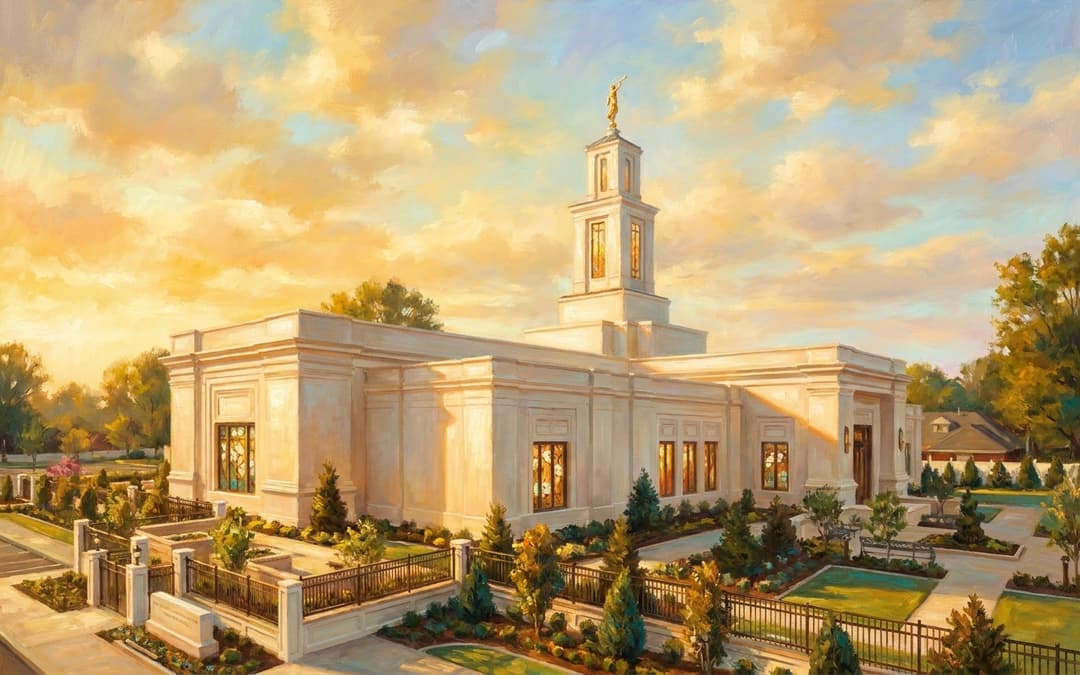
The Memphis Tennessee Temple grounds offer a serene environment open to all visitors. While the interior is reserved for members, the beautifully landscaped gardens provide a peaceful setting for reflection.
Highlights
- Walk the meticulously maintained temple grounds.
- Enjoy the tranquil gardens and seasonal floral displays.
- View the temple's exterior architecture and the Angel Moroni statue.
Things to Know
- Temple interior access is restricted to worthy members of the Church.
- Dress respectfully when visiting the temple grounds.
Location

7800 Wolf River Blvd, Eads, TN 38028, USA
Hours: Temple grounds are open daily from early morning until late evening. Specific operating hours for ordinances are available on the official Church website.
Getting There: Located in Eads, Tennessee, the temple is easily accessible by car off Wolf River Blvd. Parking is available on-site.
Get DirectionsTips for Your Visit
Visit During Spring or Fall
The temple's landscaping is particularly vibrant with dogwood blossoms in spring and colorful foliage in the fall.
Photography
Visitors are welcome to take photographs of the temple exterior and grounds for personal use.
About
The Memphis Tennessee Temple stands as a beacon of faith in Eads, a suburb of Memphis. Dedicated to the sacred purposes of The Church of Jesus Christ of Latter-day Saints, it serves as a House of the Lord where members participate in ordinances central to their Christian belief in eternal families and the plan of salvation.
Originally dedicated in 2000, the temple underwent extensive renovations to enhance its beauty and functionality. Its rededication in 2019 marked a renewed commitment to its role as a spiritual refuge for Latter-day Saints across the region. The temple's design reflects both contemporary aesthetics and timeless spiritual symbolism.
Gallery
Symbolic Elements
The temple's exterior features intricate carvings, each rich with spiritual meaning:

Angel Moroni Statue
Perched atop the spire, the Angel Moroni symbolizes the restoration of the gospel of Jesus Christ and its proclamation.

White Granite Exterior
The temple's white granite facade symbolizes purity, sanctity, and the enduring nature of sacred covenants made within.

Single Spire
The single spire reaching heavenward represents the aspiration to draw closer to God and signifies the temple as a connection between heaven and earth.

Dogwood Blossoms
Incorporated into the art glass, dogwood blossoms pay homage to Tennessee's state flower and symbolize sacrifice and renewal in Christian tradition.

Meticulously Landscaped Grounds
The serene grounds, with diverse flora, create a peaceful and reflective atmosphere, inviting visitors to experience tranquility.

Sacred Interior Spaces
The interior features sacred rooms for ordinances, adorned with fine wood, stone, and art glass, fostering a reverent environment.

Clean Lines and Contemporary Design
The temple's modern architectural style emphasizes clean lines and dignified aesthetics, reflecting its sacred purpose with timeless elegance.

Eternal Family Symbolism
Every aspect of the temple, from its design to its ordinances, reinforces the Latter-day Saint belief in the eternal nature of family relationships.
Interesting Facts
The Memphis Tennessee Temple was the second temple built in Tennessee, following the Nashville Tennessee Temple (Tier B).
It was one of 32 smaller temples announced in 1999, part of a vision to have 100 operating temples by the end of 2000 (Tier A).
The temple was originally dedicated just seven months after its groundbreaking, reflecting an accelerated construction schedule (Tier C).
The white granite used for the temple's exterior was sourced from Carrara, Italy, a common practice for many temples (Tier A).
The temple serves Latter-day Saints from western Tennessee, eastern Arkansas, and northern Mississippi (Tier C).
During its 2019 renovation, the temple received significant updates to its interior, including new finishes and mechanical systems (Tier A).
The open house before the 2019 rededication attracted thousands of visitors from the community (Tier A).
The temple's landscaping earned an 'America in Bloom' award in 2003, recognized for its beauty (Tier B).
The design is similar to other smaller temples built around the same time, such as the Fukuoka Japan Temple (Tier C).
Common Questions
What is the purpose of the Memphis Tennessee Temple?
The temple serves as a sacred house of worship where Latter-day Saints make covenants and perform ordinances essential to their faith.
Can non-members enter the temple?
While the temple interior is reserved for worthy members, the beautiful grounds are open to the public for quiet reflection.
When was the temple originally dedicated?
The Memphis Tennessee Temple was originally dedicated on April 23, 2000, by President James E. Faust.
What are the distinctive features of the temple's architecture?
It features a contemporary single-spire design with white granite exterior and interior art glass depicting dogwood blossoms.
What is the Angel Moroni statue's significance?
The Angel Moroni statue symbolizes the restoration of the gospel of Jesus Christ and the proclamation of the everlasting gospel.
Featured Stories
A Rapid Construction and Dedication
2000
The Memphis Tennessee Temple was part of a remarkable initiative to build 100 temples by the year 2000. Its construction was notably swift, with a groundbreaking in October 1999 and dedication just seven months later in April 2000. This rapid completion allowed members in the region to quickly access the sacred ordinances of the temple.
Source: ChurchofJesusChristTemples.org
The Joy of Rededication
2019
After extensive renovations, the temple was rededicated by Elder Jeffrey R. Holland, bringing renewed joy to local Latter-day Saints. The rededication ceremony was a spiritual highlight, emphasizing the temple's continued role as a House of the Lord. Thousands attended the preceding public open house, experiencing the temple's refreshed beauty.
Source: The Church of Jesus Christ of Latter-day Saints Newsroom
A Community's Embrace
2003
The Memphis Tennessee Temple has been recognized not only for its spiritual significance but also for its physical beauty. In 2003, its meticulously maintained grounds received an 'America in Bloom' award, a testament to the care and pride invested in its appearance. This recognition highlights the temple's positive contribution to the local community's aesthetic landscape.
Source: Deseret News
Timeline
Temple Announced
The First Presidency announced plans to construct the Memphis Tennessee Temple.
component.timeline.announcementGroundbreaking Ceremony
A groundbreaking ceremony was held, officially commencing construction of the temple.
component.timeline.groundbreakingPublic Open House Begins
The public was invited to tour the interior of the newly completed temple.
EventTemple Dedicated
President James E. Faust dedicated the Memphis Tennessee Temple as the 77th operating temple.
DedicationAmerica in Bloom Award
The temple grounds received recognition for their exceptional beauty and landscaping.
EventClosed for Renovation
The temple closed its doors to undergo extensive interior and mechanical renovations.
RenovationRenovation Open House
A public open house was held, allowing visitors to tour the newly renovated temple interior.
EventTemple Rededicated
Elder Jeffrey R. Holland rededicated the Memphis Tennessee Temple after its renovations.
DedicationTemporary Closure (COVID-19)
The temple temporarily closed in response to the global COVID-19 pandemic.
EventResumed Operations
The temple gradually resumed operations with adjusted phases following the temporary closure.
EventHistory by Decade
1990s — Announcement and Groundbreaking
The 1990s marked the beginning of the Memphis Tennessee Temple's history with its announcement on January 23, 1999, as part of a global temple-building initiative. Later that year, on October 10, 1999, a groundbreaking ceremony was held, signifying the commencement of construction. This period was characterized by anticipation and excitement among local Latter-day Saints.
2000s — Dedication and Early Operations
The temple was completed rapidly, with a public open house held in early April 2000, allowing thousands to tour the sacred edifice. On April 23, 2000, President James E. Faust dedicated the temple, making it the 77th operating temple of the Church. In 2003, the temple grounds received an "America in Bloom" award, recognizing their exceptional beauty.
2010s — Renovation and Rededication
In October 2017, the temple closed for extensive renovations to update its interior and mechanical systems. Following the completion of these upgrades, a public open house was held from March 23 to April 6, 2019, drawing large crowds. The temple was then rededicated on May 5, 2019, by Elder Jeffrey R. Holland, marking a new chapter in its service.
2020s — Global Challenges and Continued Service
The early 2020s brought unprecedented challenges with the global COVID-19 pandemic, leading to the temporary closure of the temple in March 2020. However, the temple later resumed operations with adjusted phases, continuing its sacred work. It remains a vital spiritual center for Latter-day Saints in the Memphis region.
Architecture & Facilities
The Memphis Tennessee Temple features a contemporary architectural style, characteristic of many Latter-day Saint temples built in the late 20th and early 21st centuries. Its design emphasizes clean lines, a dignified appearance, and functional elegance, reflecting the sacred purpose of the building while integrating modern aesthetics. The single-spire design is a hallmark of this era's temple construction.
Building Materials
Exterior
The temple's exterior is constructed with white granite sourced from the Campolonghi quarries in Carrara, Italy, providing a bright and enduring facade.
Interior
The interior features a harmonious blend of fine wood, stone, and custom art glass, creating an atmosphere of reverence and beauty.
Art Glass
Custom art glass, depicting dogwood blossoms, enhances the interior's aesthetic and connects the temple to its Tennessee locale.
Roofing
The roof is made of durable, high-quality materials designed to complement the granite exterior and withstand local weather conditions.
Interior Features
Baptistry
A sacred space for proxy baptisms for the dead, featuring a large font resting on twelve oxen.
Endowment Rooms
Rooms where members participate in sacred ordinances, designed for instruction and covenant-making.
Sealing Rooms
Rooms dedicated to performing eternal marriage and family sealing ordinances, adorned with elegant furnishings.
Celestial Room
A symbolic representation of returning to God's presence, characterized by its serene beauty and reflective atmosphere.
Temple Grounds
The temple stands on a 6.3-acre site, featuring meticulously landscaped grounds with various trees, shrubs, and flowers, including dogwood trees. Pathways invite quiet contemplation, contributing to a serene and reflective atmosphere for all visitors.
Additional Facilities
The temple grounds include ample parking for patrons and visitors, as well as well-maintained walkways and seating areas for quiet reflection amidst the gardens.
Religious Significance
Within the broader Christian tradition, temples are often seen as sacred spaces for communion with God. For members of The Church of Jesus Christ of Latter-day Saints, the Memphis Tennessee Temple holds a unique and profound significance as a 'House of the Lord,' distinct from regular chapels or meetinghouses.
The core spiritual purpose of the temple is to provide a sacred space where members can make eternal covenants with God, receive divine instruction, and perform saving ordinances for both the living and the dead, central to their belief in eternal families and the plan of salvation.
Sacred Ordinances
Baptism for the Dead
A proxy ordinance where living members are baptized on behalf of deceased ancestors, offering them the opportunity to accept the gospel in the spirit world.
Endowment
A series of sacred instructions and covenants that provide members with knowledge, power, and blessings to help them return to God's presence.
Sealing
Ordinances that bind families together for eternity, allowing husbands and wives, and parents and children, to be united beyond mortal life.
Covenant Path
The temple is central to the Latter-day Saint 'covenant path,' a series of commitments members make with God throughout their lives, leading to spiritual growth and eternal blessings.
Eternal Families
A foundational doctrine taught and practiced in the temple is the eternal nature of the family unit, where relationships can continue beyond death through sacred sealing ordinances.
Personal Revelation
Members believe the temple is a place where they can draw closer to God, receive personal revelation, and find peace and guidance amidst life's challenges.
Similar Temples
Sources & Research
Every fact on Temples.org is backed by verified Sources & Research. Each piece of information is rated by source tier and confidence level.
View All Sources (3)
| Field | Source | Tier | Retrieved |
|---|---|---|---|
| Original Dedication & History | ChurchofJesusChristTemples.org (opens in a new tab) | C | 2024-07-30 |
| Architectural Details & Materials | The Church of Jesus Christ of Latter-day Saints (opens in a new tab) | A | 2024-07-30 |
| Groundbreaking Announcement | Church History Department (opens in a new tab) | A | 2024-07-30 |