Visitor Insights
Visiting Red Cliffs Utah Temple
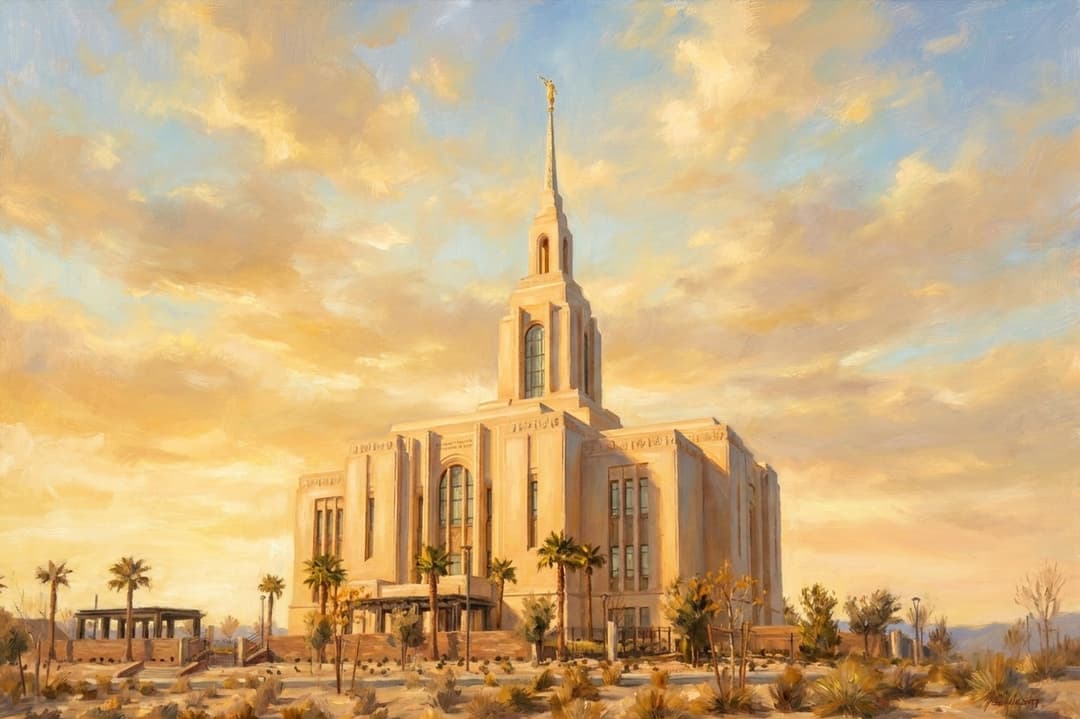
The Red Cliffs Utah Temple grounds feature palm-lined walkways, shaded entrance structures, and linear reflecting pools set against red rock cliffs. While interior access requires a valid temple recommend, visitors are welcome to explore the public grounds and garden pathways year-round.
Highlights
- Twin linear reflecting pools at the main north entry plaza
- Views of the central 230-foot spire capped with the golden Angel Moroni
- Native high-desert foliage and palm trees lining the main boulevard
Things to Know
- No on-site standalone visitor center; interactive exhibits are at the historic St. George Temple Visitor Center
- Sunday closure for sacred worship services across local chapels
- Golden hour at sunset offers striking light against the off-white precast facade
Location
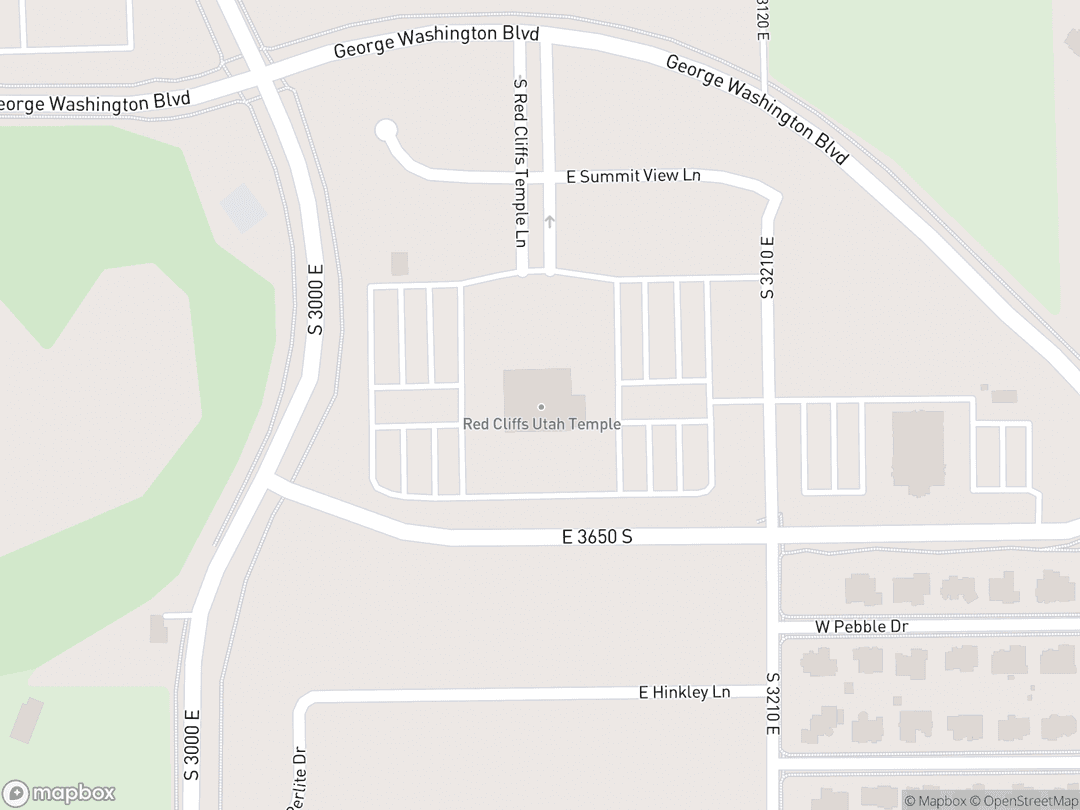
1555 South Red Cliffs Temple Lane, St. George, Utah 84790, United States
Hours: Grounds open daily from sunrise to sunset; interior available for member ordinance appointments Tuesday through Saturday.
Getting There: Located at 3000 East and 1580 South in eastern St. George. Accessible via I-15 Exit 4 or Exit 6, following major east-west arteries toward 3000 East.
Get DirectionsTips for Your Visit
Photography Vantage
Capture magnificent reflections of the tower and sky from the north plaza water features during morning hours.
Visitor Center Access
Visit the nearby historic St. George Temple Visitors' Center just five miles west for interactive Church history displays.
About
The Red Cliffs Utah Temple stands as the 189th operating house of the Lord for The Church of Jesus Christ of Latter-day Saints, serving members across the rapidly growing region of Washington County. Announced in October 2018 and dedicated on March 24, 2024, this sacred structure stands as a testament to the growth of faith in southern Utah.
Rooted in the ancient Judeo-Christian tradition of dedicated holy spaces—tracing back to the Biblical tabernacle and Solomon's Temple—the temple fulfills a sanctuary role distinct from local chapels. In the Latter-day Saint faith, which sits within the broader Christian restorationist heritage, temples represent the physical meeting point between earth and heaven where sacred eternal covenants are made.
Nestled along the desert landscape near the Red Cliffs National Conservation Area, the 96,277-square-foot edifice incorporates indigenous flora motifs and stratified canyon stone imagery. The temple offers essential priesthood ordinances including eternal marriages and ancestral proxy work, uniting families across generations.
Gallery
Symbolic Elements
The temple's exterior features intricate carvings, each rich with spiritual meaning:

Dwarf Bearclaw Poppy Motif
Sculpted into wood millwork and art glass, this endemic flower represents resilient beauty blossoming in desert soils.

Cottonwood Tree Reliefs
Carved into concrete panels, these branches honor early pioneer settlers who planted cottonwoods for shade and shelter.

Angel Moroni Statue
The gold-leafed figure atop the spire symbolizes the restoration of Christ's gospel proclaimed to all nations.

Twin Reflecting Pools
Flanking the entrance plaza, these linear pools symbolize spiritual cleansing, reflection, and living water.

Stratified Canyon Stone Patterns
Horizontal floor stone layering reflects nearby red rock formations, representing an unmovable foundation of faith.

Baptismal Font on Twelve Oxen
Cast bronze oxen supporting the font represent the twelve tribes of Israel carrying salvation to the world.

High-Desert Stained Glass
Art glass windows feature stylized succulents and desert flora, connecting sacred interior spaces with surrounding creation.
Interesting Facts
Red Cliffs is the second temple built in St. George, situated just five miles east of the pioneer-era St. George Temple. (Tier A)
The primary interior motif is the dwarf bearclaw poppy, a rare flower endemic exclusively to Washington County. (Tier A)
Elder Jeffrey R. Holland, a St. George native, emotionally presided at the 2020 groundbreaking near his childhood home. (Tier A)
Art glass windows feature desert succulents, pomegranate vines, and Indian paintbrush instead of traditional European florals. (Tier A)
Red Cliffs shares its overall floor plan archetype with the Saratoga Springs Utah Temple while featuring localized finishes. (Tier A)
At 230 feet to the top of the Moroni statue, the central spire is one of the tallest architectural points in eastern St. George. (Tier A)
Over 300,000 visitors toured the interior during the month-long public open house in early 2024. (Tier A)
Precast concrete panels include exterior bas-reliefs illustrating canyon motifs and cottonwood tree branches. (Tier A)
Common Questions
Why is this temple named Red Cliffs?
It was named for the nearby Red Cliffs Desert Reserve and iconic sandstone formations that define the region.
Are public tours available inside the temple today?
Public interior tours were conducted during the 2024 open house; current interior access requires a active temple recommend.
How tall is the Red Cliffs Utah Temple?
The central spire reaches an overall height of 230 feet, topped by an Angel Moroni statue.
How many temples are located in St. George, Utah?
St. George has two operating temples: the pioneer-era St. George Utah Temple (1877) and the Red Cliffs Utah Temple (2024).
Featured Stories
A Native Son Presides at Groundbreaking
November 7, 2020
Elder Jeffrey R. Holland of the Quorum of the Twelve Apostles presided at the groundbreaking ceremony in his hometown of St. George. Expressing deep emotion, he recalled running across those exact desert hills as a young boy and praised the enduring faith of regional pioneer ancestors. His dedicatory prayer asked that the structure stand as a holy refuge and a beacon of peace for all who look upon it.
Source: Church Newsroom
Welcoming 300,000 Open House Guests
February 2024
During the four-week public open house, more than 300,000 visitors toured the completed temple interior. Guests from diverse faiths walked through the instruction rooms and Celestial Room, admiring the local dwarf bearclaw poppy motifs and custom art glass. Volunteers and community members united to host thousands of daily tours, fostering goodwill throughout southern Utah.
Source: Church Newsroom
A Sacred Dedication by President Eyring
March 24, 2024
President Henry B. Eyring, Second Counselor in the First Presidency, dedicated the Red Cliffs Utah Temple in two sessions. He urged Latter-day Saints to make temple worship a central anchor in their lives and to feel the Savior's love within its walls. The dedication marked the 189th operating temple of the Church worldwide, bringing a second holy house to Washington County.
Source: Church Newsroom
Timeline
Temple Announced
President Russell M. Nelson announces a second temple for Washington County during General Conference.
MilestoneSite Location Released
The First Presidency selects a 15.31-acre property in eastern St. George.
MilestoneOfficial Renaming
The project is officially named the Red Cliffs Utah Temple.
MilestoneGroundbreaking Ceremony
Elder Jeffrey R. Holland presides at the groundbreaking service.
component.timeline.groundbreakingExcavation Begins
Heavy earthmoving equipment moves onto the site to begin footings.
EventStatue Installation
The Angel Moroni statue is hoisted atop the central octagonal spire.
MilestoneMedia Day
Journalists tour the newly completed interior during media previews.
EventPublic Open House Begins
A month-long public tour welcomes over 300,000 visitors inside.
EventOpen House Concludes
Public tours wrap up in preparation for official dedication.
EventTemple Dedication
President Henry B. Eyring dedicates the edifice in two sacred sessions.
DedicationHistory by Decade
2010s — Announcement & Planning
We are pleased to announce plans to construct another temple in Utah, located in Washington County.
Rapid population growth in Washington County prompted Church leaders to plan a second regional temple to support the historic St. George Temple. President Russell M. Nelson announced the project in October 2018, and site acquisition followed shortly after in eastern St. George.
2020s — Construction & Dedication
May this temple be a place of peace, reflection, and revelation for all who enter.
Construction commenced in November 2020 following a groundbreaking presided over by Elder Jeffrey R. Holland. Despite supply chain challenges, construction progressed steadily, culminating in a public open house and official dedication by President Henry B. Eyring on March 24, 2024.
Architecture & Facilities
The Red Cliffs Utah Temple exhibits a transitional Neo-Classical design tailored specifically to southern Utah's high-desert environment. Constructed with heavy steel framing clad in durable off-white precast concrete panels, the building features deep vertical window bays, stepped pilasters, and subtle relief carvings depicting cottonwood branches and desert canyon landscapes. A central octagonal spire capped with a golden Angel Moroni statue anchors the design, creating a striking profile against the red sandstone cliff backdrops.
Building Materials
Exterior Panels
Durable off-white precast concrete panels designed to withstand intense desert heat and UV light.
Structural Framing
Heavy structural steel framework engineered for seismic resilience and long-term durability.
Art Glass Windows
Custom leaded glass panels featuring high-desert succulents, native poppies, and geometric lines.
Interior Stone
Polished natural stone tile floorings arranged to reflect regional horizontal rock stratification.
Interior Features
Instruction Rooms
Four progressive endowment rooms finished with warm earth tones, desert floral millwork, and custom carpeting.
Sealing Rooms
Six solemn marriage altars framed by detailed wood carving and delicate crystal sconces.
Celestial Room
An elevated sanctuary featuring soaring ceilings, gold-leaf accents, and a grand central crystal chandelier.
Baptistery
A lower-level font resting upon twelve cast bronze oxen set within a marble-clad enclosure.
Temple Grounds
The 15.31-acre property features palm-lined boulevards, linear reflecting pools, shaded north plaza entrance structures, and native desert flora designed for water efficiency.
Additional Facilities
Includes administrative offices, ordinance clothing preparation rooms, and parking facilities, while major visitor center services remain integrated at the nearby historic St. George Temple Visitors' Center.
Religious Significance
Within the broader Judeo-Christian tradition, sacred structures have long provided a designated sanctuary where humanity seeking God enters into His presence. From the ancient Tabernacle of Moses to the historic Temple of Solomon in Jerusalem, dedicated houses of God served as centers for sacrifice, covenant making, and spiritual instruction. In Latter-day Saint theology—a branch of Christian restorationism—temples continue this Biblical pattern under restored priesthood authority. While local chapels host public Sunday worship, temples are reserved for sacred ordinances that bind families eternally and offer instruction on God's divine plan of salvation.
To provide a holy house where faithful Latter-day Saints participate in sacred priesthood ordinances that bind families for eternity and offer salvation covenants to living members and deceased ancestors.
Sacred Ordinances
Temple Endowment
A sacred instructional presentation detailing creation, mortality, Christ's Atonement, and personal covenants of obedience and service.
Eternal Marriage (Sealing)
A holy priesthood rite uniting husbands, wives, and children for eternity rather than 'until death do you part'.
Proxy Baptism for Ancestors
Vicarious baptisms performed by proxy on behalf of deceased individuals, honoring free agency in the afterlife.
The House of the Lord
Considered literally the house of God, the temple is kept immaculate and sacred, serving as a sanctuary of peace away from worldly concerns.
Genealogy and Family History
Temple work drives extensive genealogical research, encouraging members to discover ancestral heritage and perform proxy rites on their behalf.
Similar Temples
Sources & Research
Every fact on Temples.org is backed by verified Sources & Research. Each piece of information is rated by source tier and confidence level.
View All Sources (3)
| Field | Source | Tier | Retrieved |
|---|---|---|---|
| About & Historical Background | The Church of Jesus Christ of Latter-day Saints (opens in a new tab) | A | 2026-02-18 |
| Construction & Statistical Facts | ChurchofJesusChristTemples.org (opens in a new tab) | C | 2026-02-18 |
| History & Development | KSL News (opens in a new tab) | B | 2026-02-18 |