Visitor Insights
Visiting Richmond Virginia Temple
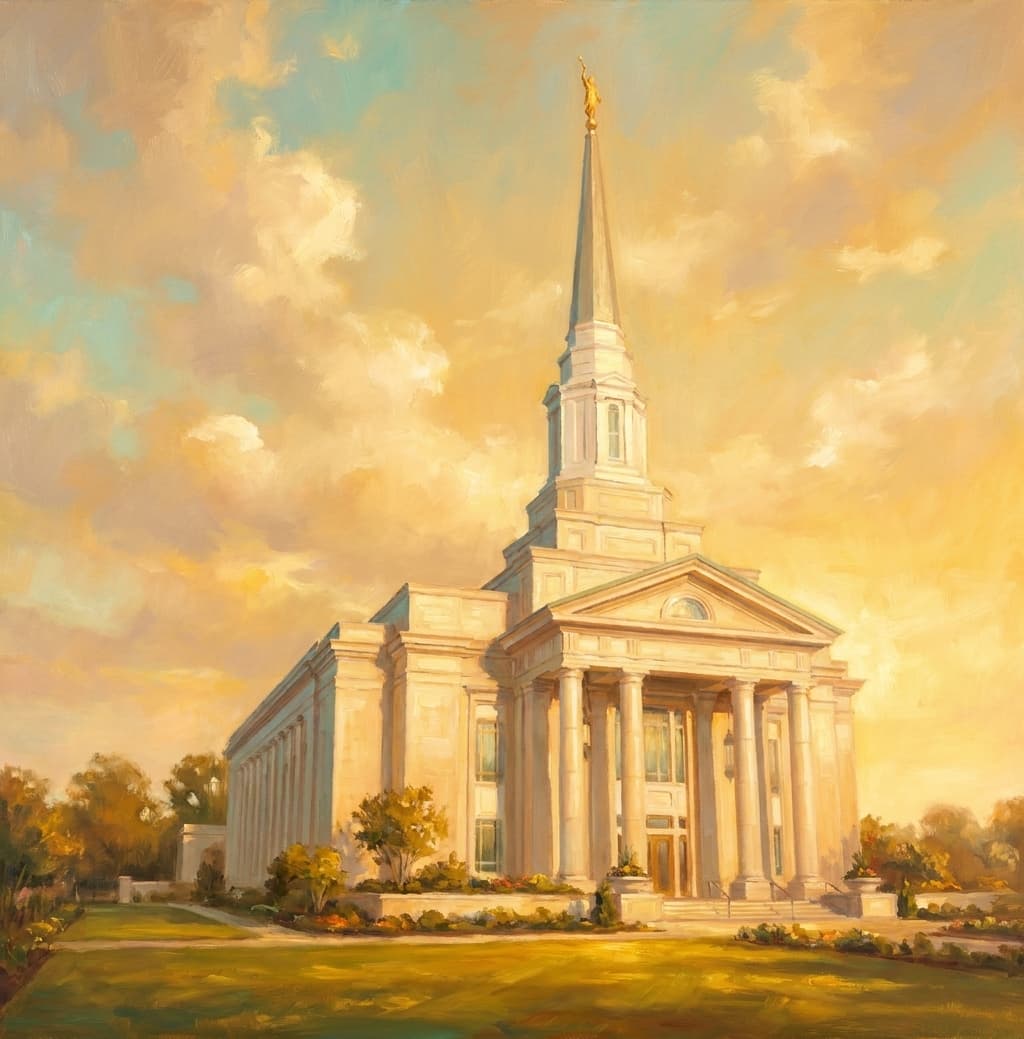
The Richmond Virginia Temple sits on a 12-acre parcel in Glen Allen, featuring brick pathways and landscaping inspired by historic Colonial Williamsburg. The grounds offer a peaceful retreat for reflection, with accessible public paths open daily during daylight hours.
Highlights
- Colonial Williamsburg-style formal gardens and brick walkways
- A restored 100-year-old stained-glass window depicting Christ as the Good Shepherd
- Jeffersonian Doric stone columns and an exterior clad in imported Portuguese limestone
- Grand Peruvian walnut staircase in the main entryway
Things to Know
- Temple interior entry requires an active temple recommend for Church members
- Public open house took place prior to dedication; interior is now closed to general visitors
- The outdoor grounds and adjoining meetinghouse welcome all visitors
Location
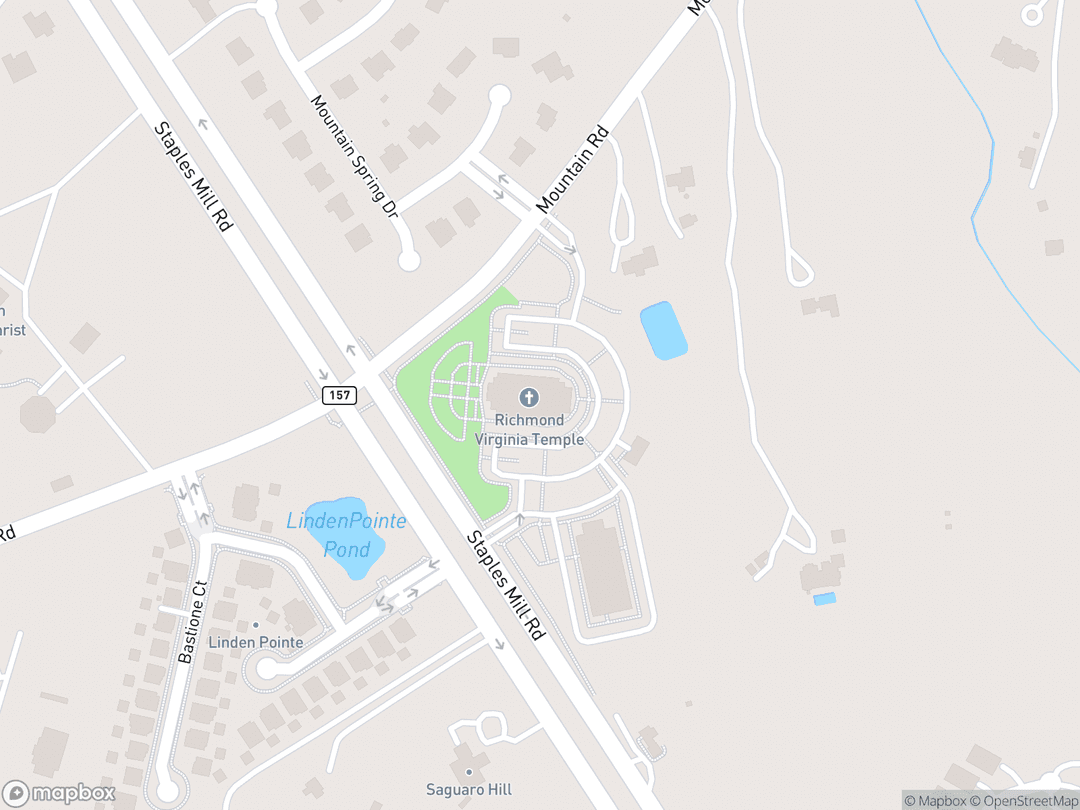
10915 Staples Mill Road, Glen Allen, VA 23060, USA
Hours: Grounds open daily from sunrise to sunset. Ordinance schedules vary by appointment.
Getting There: Located at 10915 Staples Mill Road (U.S. Route 33) at Mountain Road in Henrico County, under 4 miles from the Richmond Amtrak Station and accessible via Interstate 295 and Interstate 95.
Get DirectionsTips for Your Visit
Grounds Visit
Take time to explore the colonial gardens and view the carved dogwood stone motifs along the facade.
Transit Access
The temple is located less than four miles from the Richmond Staples Mill Road Amtrak Station for regional travelers.
Adjacent Services
An adjoining meetinghouse on the campus hosts Sunday worship services open to the general public.
About
The Richmond Virginia Temple stands in Glen Allen, Virginia, as the 177th operating temple of The Church of Jesus Christ of Latter-day Saints and the first erected within the Commonwealth. Grounded in the broader Christian tradition of designating sacred places set apart for communion with the Divine, the sanctuary serves as a dedicated House of the Lord where worshipers draw closer to God and strengthen their spiritual foundations.
Designed in the spirit of Virginia's historic architecture, the building incorporates classical Georgian, Federal, and Jeffersonian Doric elements while providing a permanent sacred space for over 96,000 Latter-day Saints across the region. Unlike standard chapels used for weekly Sunday services, temple entry is reserved for faithful church members to participate in sacred priesthood ordinances centered on the eternal Gospel of Jesus Christ.
Inside the temple, covenants are solemnized that bind families together for eternity and offer proxy salvation rites for deceased ancestors. The interior artfully integrates regional symbols such as the Virginia dogwood flower alongside historic Christian artifacts, including a restored century-old leaded glass window portraying Christ as the Good Shepherd.
Gallery
Symbolic Elements
The temple's exterior features intricate carvings, each rich with spiritual meaning:

Virginia Dogwood Blossom
Carved into exterior stone and bronze hardware, the state flower symbolizes local Virginian identity and spiritual rebirth in Christ.

Octagon Motif
Inspired by Jeffersonian design, octagonal ceiling moldings and rug patterns symbolize resurrection and transition into eternity.

Interlocking Guilloche Pattern
Continuous circular ribboning framing millwork and glasswork represents eternal progression and unbreakable priesthood covenants.

Good Shepherd Stained Glass
A restored 100-year-old leaded glass artwork anchors the temple entryway to Jesus Christ's biblical teachings.

Jeffersonian Doric Columns
Classical portico columns honor Virginia's foundational early American architecture and orderly craftsmanship.

Moleanos Limestone Exterior
Warm beige limestone imported from Portugal provides an enduring finish reflecting purity and resilience.

Peruvian Walnut Grand Staircase
Rich dark walnut woodwork welcoming patrons symbolizes ascension to sacred higher learning and spiritual peace.
Interesting Facts
The Richmond Virginia Temple is the first Latter-day Saint temple constructed in the Commonwealth of Virginia. (Tier A)
A 100-year-old leaded glass window depicting Christ as the Good Shepherd was salvaged from an eastern U.S. church and restored for the foyer. (Tier A)
The entire exterior facade is clad in Portuguese Moleanos limestone rather than local brick or domestic granite. (Tier A)
Architectural details draw heavy inspiration from Thomas Jefferson's designs at Monticello and the University of Virginia. (Tier B)
Groundbreaking occurred on April 11, 2020, under strict early COVID-19 lockdown gathering limits. (Tier A)
The 12-acre landscape architecture features formal gardens patterned after 18th-century Colonial Williamsburg. (Tier B)
The main foyer's grand staircase is crafted from imported Peruvian walnut with a period-style woven runner. (Tier A)
When Richmond's first branch formed in 1919 it had under 100 members, growing to over 96,000 statewide by dedication in 2023. (Tier A)
Common Questions
Why is the Richmond Virginia Temple historically significant?
It is the very first temple of The Church of Jesus Christ of Latter-day Saints built in the Commonwealth of Virginia.
What architectural style was used for the Richmond Virginia Temple?
The building incorporates Early American Colonial styles, blending Georgian, Federal, and Jeffersonian Doric architecture.
Can non-members visit the temple grounds?
Yes, the 12-acre landscaped grounds, brick paths, and public areas are open to all visitors during daylight hours.
What unique historical artifact is housed inside the temple?
The foyer features a restored 100-year-old stained-glass window depicting Jesus as the Good Shepherd, salvaged from a historic Protestant church.
Featured Stories
A Sacred Haven in Henrico County
May 7, 2023
After generations of Virginia Saints traveled long distances to Washington D.C. for temple worship, President Dallin H. Oaks dedicated the Richmond Virginia Temple in two inspiring sessions. The dedication fulfilled decades of prayer and spiritual growth across the Commonwealth, establishing a regional center for sacred covenants. More than 46,000 visitors toured the building during its public open house, including state officials and interfaith leaders.
Source: Church News & Official Dedication Records
The Restored Good Shepherd Window
March 20, 2023
During interior planning, temple designers acquired a century-old stained-glass window portraying Jesus Christ as the Good Shepherd from a decommissioned eastern U.S. church. Craftsmen meticulously restored the leaded glass artifact and mounted it prominently in the main entrance foyer. The century-old masterpiece provides an immediate visual testament to the temple's Christ-centered devotion.
Source: LDS Living & Open House Cultural Records
A Pandemic-Era Groundbreaking
April 11, 2020
Groundbreaking for the temple took place during the initial height of global COVID-19 health restrictions in early 2020. Despite strict attendance limits, Elder Randall K. Bennett presided over an intimate service and offered a prayer of dedication over the 12-acre parcel. Construction proceeded safely through challenging times, bringing Virginia's landmark sanctuary to completion three years later.
Source: Official Church Newsroom Announcement
Timeline
First Richmond Branch Formed
The first official branch of the Church in Richmond is organized with under 100 members.
MilestoneRichmond Ward Created
Growth leads to the creation of the Richmond Ward assigned to the Washington D.C. Stake.
MilestoneVirginia Stake Organized
The Virginia Stake is organized as the sixth Atlantic coast stake with over 700 local members.
MilestoneWashington D.C. Temple Dedicated
Virginia Saints begin decades of traveling to Washington D.C. for local temple worship.
MilestoneTemple Announced
President Russell M. Nelson officially announces plans for Virginia's first temple.
MilestoneDesign Renderings Released
Official artistic renderings reveal a colonial-style design planned for Henrico County.
EventGroundbreaking Service
Elder Randall K. Bennett presides at a small pandemic-era groundbreaking ceremony.
component.timeline.groundbreakingMedia Preview
Interior photography is released highlighting colonial Virginian craftsmanship and art.
EventPublic Open House Begins
A 21-day public open house commences, eventually welcoming over 46,000 visitors.
EventTemple Dedication
President Dallin H. Oaks formally dedicates the Richmond Virginia Temple in two sessions.
DedicationHistory by Decade
1910s–1950s — Early Roots in Virginia
The first official Richmond Branch of the Church was organized in 1919 with fewer than 100 members. Over subsequent decades, steady growth led to the organization of the Richmond Ward in 1946 and the Virginia Stake in 1957. By the late 1950s, the Atlantic coast saw rapidly expanding Latter-day Saint congregations.
1970s–2010s — Regional Growth & Need
When the Washington D.C. Temple opened in 1974, Virginia members regularly traveled long hours along Interstate 95 to attend sacred ordinances. By the 2010s, statewide membership surpassed 90,000 across 20 stakes, creating a vital need for a dedicated temple inside the Commonwealth.
2018–2020 — Announcement & COVID-Era Groundbreaking
President Russell M. Nelson announced the Richmond Virginia Temple on April 1, 2018. Site plans for a 12-acre lot in Glen Allen were approved, leading to a small, private groundbreaking ceremony on April 11, 2020, during the onset of the COVID-19 pandemic.
2023 — Open House & Dedication
Following three years of precise colonial-style construction, a 21-day public open house welcomed over 46,000 guests in early 2023. President Dallin H. Oaks dedicated the completed 39,202-square-foot temple on May 7, 2023, establishing Virginia's first operating House of the Lord.
Architecture & Facilities
The Richmond Virginia Temple reflects Early American Colonial architecture, artfully combining Georgian symmetry, Federal proportions, and Jeffersonian Doric elements tailored to Virginia's historic heritage. The single end-spire structure features classical porticos, pilasters, and multi-pane sash windows clad in imported Portuguese limestone.
Building Materials
Exterior Cladding
High-grade Moleanos limestone imported from Portugal provides a durable and elegant warm beige exterior finish.
Woodwork & Millwork
Custom painted wood door casings and panels are crafted using traditional 18th-century Virginian carpentry methods.
Grand Staircase
The primary entry staircase is constructed from rich imported Peruvian walnut with an intricate custom woven runner.
Art Glass & Hardware
Exterior and interior sash windows incorporate custom leaded glass accented by oil-rubbed bronze hardware.
Interior Features
Entry Foyer
Features a restored 100-year-old leaded glass window depicting Christ as the Good Shepherd alongside historic Williamsburg blue tones.
Instruction Rooms
Four instruction rooms provide sacred instructional spaces detailed with octagonal ceiling moldings and custom woven area rugs.
Sealing Rooms
Three sealing rooms feature gold-leaf inlaid altars, crystalline chandeliers, and facing mirrors symbolic of eternity.
Baptistery
Located on the lower level, the font rests upon twelve sculpted oxen representing the biblical twelve tribes of Israel.
Temple Grounds
The 12-acre site is landscaped in the style of 18th-century Colonial Williamsburg, featuring brick paths, manicured boxwood hedges, native dogwood trees, and period outdoor lighting.
Additional Facilities
A 16,200-square-foot Latter-day Saint meetinghouse shares the temple campus, serving local congregations for Sunday worship and community fellowship.
Religious Significance
Within the broader Judeo-Christian tradition of designated holy sanctuaries, the Richmond Virginia Temple stands as a sacred House of the Lord, set apart from worldly concerns for divine worship and spiritual devotion.
The temple serves as a sacred place where church members make solemn covenants with God, receive spiritual instruction, and unite families eternally through priesthood authority.
Sacred Ordinances
Baptism for Deceased Ancestors
Proxy baptisms performed by modern worshipers offer saving Gospel ordinances to deceased ancestors who did not receive them in life.
The Endowment
A sacred instructional ceremony where patrons learn about God's eternal salvation plan and make personal covenants of obedience and devotion to Jesus Christ.
Eternal Marriage Sealings
Priesthood ordinances performed at holy altars that solemnize marriage relationships for time and all eternity.
Christ-Centered Worship
All covenants and ceremonies performed within the temple focus directly on Jesus Christ as the Savior and Redeemer of humanity.
Eternal Scope of Family
Latter-day Saint theology teaches that family relationships established in the temple endure beyond physical death through God's priesthood authority.
Similar Temples
Sources & Research
Every fact on Temples.org is backed by verified Sources & Research. Each piece of information is rated by source tier and confidence level.
View All Sources (3)
| Field | Source | Tier | Retrieved |
|---|---|---|---|
| Architecture & Facilities | ChurchofJesusChristTemples.org (opens in a new tab) | C | 2026-01-30 |
| Symbolic Elements | LDS Living (opens in a new tab) | B | 2026-01-30 |
| Religious Significance | The Church of Jesus Christ of Latter-day Saints (opens in a new tab) | A | 2026-01-30 |