Visitor Insights
Visiting Bear Lodge (Devils Tower)
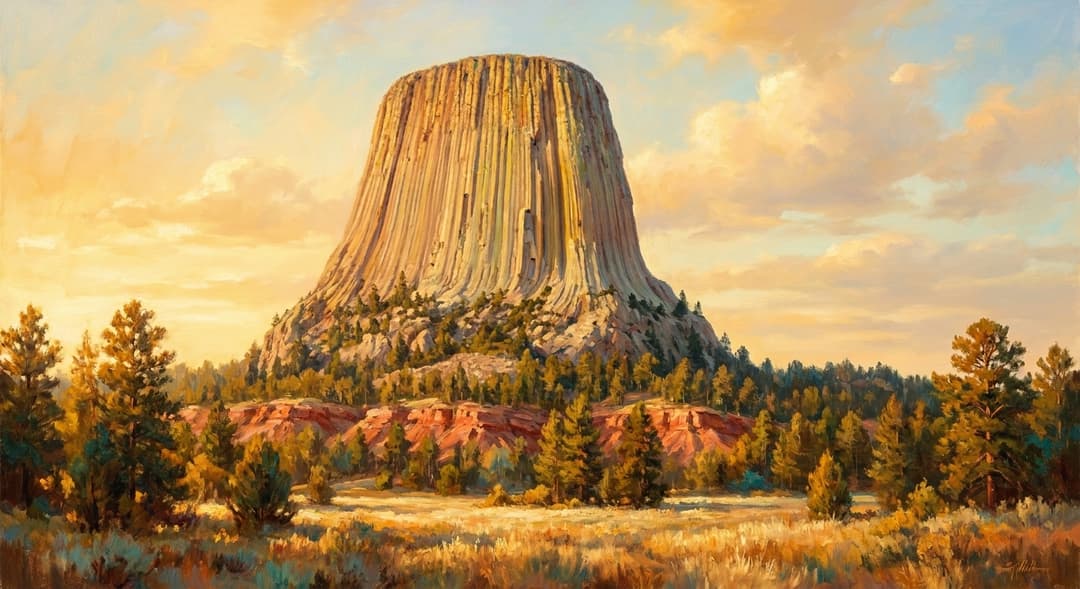
Bear Lodge offers a reverent encounter with sacred Northern Plains geography, encircled by the 1.3-mile paved Tower Trail. Visitors witness sheer megalithic columns adorned with prayer offerings amid fragrant ponderosa pine forests.
Highlights
- Paved 1.3-mile Tower Trail tracing the base of the massive columnar cliffs
- Historic 1930s Civilian Conservation Corps rustic log administration building
- Panoramic vistas across the Belle Fourche River valley and red siltstone formations
- Display of colorful ceremonial prayer cloths and tobacco offerings tied to sacred trees
Things to Know
- Recreational climbers observe a voluntary climbing moratorium throughout June in honor of Indigenous ceremonies.
- Prayer cloths and sacred bundles along the trails are strictly holy and must never be touched or photographed.
- Commercial drones are strictly prohibited throughout the monument preserve to protect ceremonial solemnity.
- Summer mid-day temperatures can exceed ninety degrees; early morning visits ensure cooler walking conditions.
Location
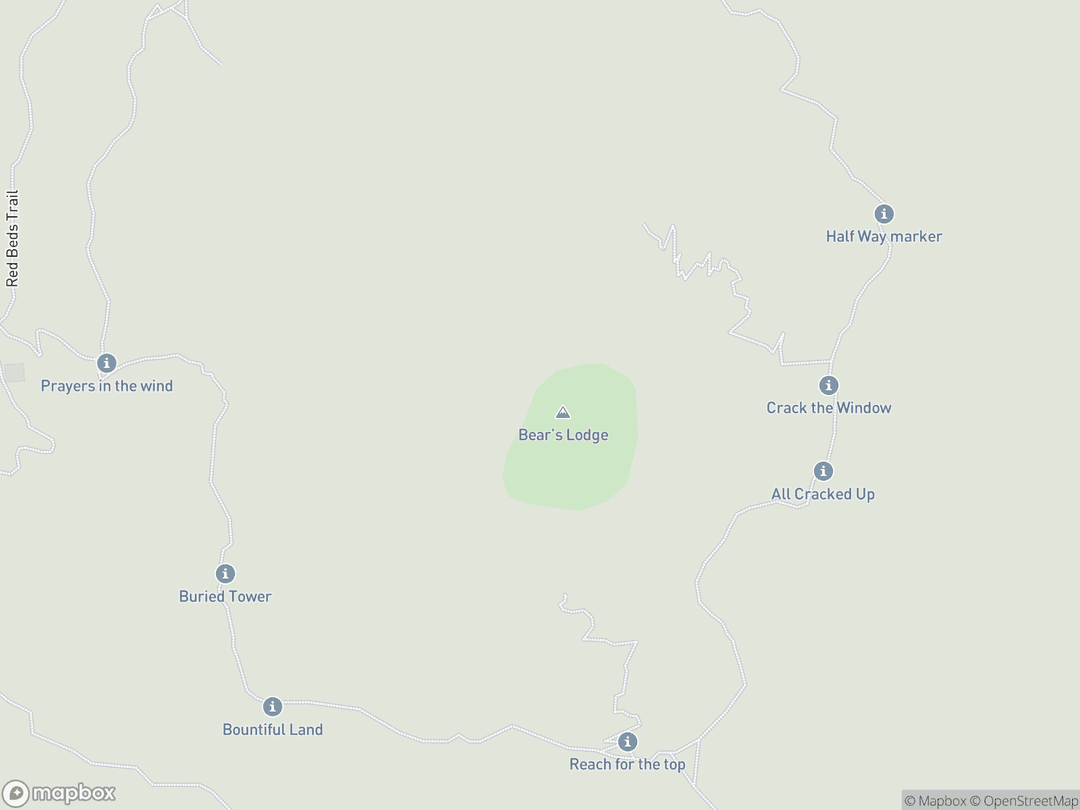
WY-110, Devils Tower, WY 82714, United States
Hours: Preserve grounds are open 24 hours daily year-round; the visitor center operates seasonal daylight hours.
Getting There: Reached via WY-110 off WY-24 in Crook County, accessible from Interstate 90 at Moorcroft or Sundance.
Get DirectionsTips for Your Visit
Honoring Ceremonial Solitude
Keep voices lowered along the Tower Trail and never disturb prayer cloths tied among perimeter trees.
June Climbing Moratorium
Support tribal sacred stewardship by refraining from ascending the monolith during the June solstice ceremonies.
Optimal Lighting for Photography
Arrive at sunrise or twilight when low-angle sunlight turns the columnar phonolite face deep amber and red.
About
Bear Lodge, known in Lakota as Mathó Thípila, rises dramatically as a sheer volcanic monolith above the Belle Fourche River in northeastern Wyoming. Revered by more than twenty Northern Plains Indigenous nations, this natural earth altar embodies living spiritual memory and celestial architecture untouched by human tools.
According to oral traditions of the Lakota, Cheyenne, and Kiowa nations, the great rock was raised by the Great Mystery to protect endangered children from a giant bear. The vertical fluted columns signify claw marks carved into stone, linking earthly physical contours directly with the creation of the Pleiades constellation.
Designated in 1906 as the first United States National Monument, Bear Lodge remains an active liturgical landscape. Tribal members gather seasonally for prayer offerings, vision quests, and annual Sun Dances, maintaining ancestral covenants across thousands of acres of sacred topography.
Gallery
Symbolic Elements
The temple's exterior features intricate carvings, each rich with spiritual meaning:

Bear Claw Columnar Fluting
Vertical stone columns represent protective furrows gouged by a colossal bear during ancestral deliverances.

Pleiades Star Alignment
Celestial maidens rescued upon the rising stone summit were translated into the Seven Sisters star cluster.

Sacred Prayer Cloths (Čhaŋnúŋpa)
Vibrant fabric ties containing tobacco represent directional prayers for healing, guidance, and remembrance.

Sacred Sweat Lodge (Inípi)
Low domed willow frameworks near the base provide purification rites preceding formal ceremonies.

Sun Dance Ground (Wiwaŋyaŋg Wačhípi)
The summer ceremonial circle renews cosmic balance and communal health through sacred circular dance.

Grandfather Stones (Tȟuŋkáŋ)
Deep igneous rocks heated in sacred fires embody timeless ancestral presence and earth energy.

Four Cardinal Directions
Ceremonial orientations honor the winds and spirits of the compass guiding Indigenous life cycles.
Interesting Facts
President Theodore Roosevelt named Bear Lodge the first National Monument in the United States on September 24, 1906. (Tier A)
A drafting omission in the 1906 presidential proclamation permanently excluded the apostrophe from the legal name Devils Tower. (Tier A)
The formation features the largest hexagonal columnar jointing documented on Earth with individual pillars measuring twenty feet across. (Tier B)
A 170-foot segment of the original 1893 wooden peg ladder remains preserved on the southeastern face of the monolith. (Tier A)
Stunt parachutist George Hopkins spent six freezing days stranded atop the summit in 1941 after landing on a bet without an exit plan. (Tier A)
When struck with a small hammer, loose flakes of the tower's phonolite rock ring out with a distinct bell-like resonance. (Tier B)
Federal appellate courts upheld the monument's voluntary June climbing moratorium as a constitutional accommodation of Indigenous religious worship. (Tier B)
Director Steven Spielberg utilized the monolith as the pivotal extraterrestrial landing destination in his 1977 film Close Encounters of the Third Kind. (Tier B)
The isolated 1.5-acre summit plateau sustains an autonomous prairie ecosystem supporting chipmunks, mice, and prairie falcons. (Tier A)
More than twenty affiliated Plains tribes endorse official petitions to replace the derogatory misnomer with the ancestral title Bear Lodge. (Tier A)
Common Questions
Why is the monument named Devils Tower instead of Bear Lodge?
An 1875 military expedition topographer mistranslated an Indigenous name as 'Bad God's Tower', which was published as Devils Tower.
Why are climbers requested not to climb during June?
A voluntary moratorium honors Northern Plains tribes conducting annual Sun Dances and sacred solstice rites throughout the month.
Can visitors touch the prayer cloths tied to trees?
No, prayer cloths are private religious offerings and federal park guidelines mandate that they must never be touched or photographed.
Is the monolith an extinct volcano?
Geologists classify the tower as an eroded subsurface igneous intrusion rather than an ancient volcanic crater or ash cone.
How tall is Bear Lodge?
The monolith rises 867 feet from its immediate base and 1,267 feet above the surrounding Belle Fourche River valley.
Featured Stories
The Seven Maidens and the Great Bear
Ancestral Era
Ancient oral histories recount that young children playing near camp were pursued across the plains by a giant bear. Seeking refuge, they climbed atop an ordinary boulder and prayed earnestly to the earth for deliverance. In response, the ground surged upward hundreds of feet into the sky, stranding the bear whose desperate claws carved the vertical fluting while the children became the Pleiades.
Source: Intertribal Oral Histories and NPS Ethnographic Studies
The Six-Day Plight of George Hopkins
October 1, 1941
Professional parachutist George Hopkins landed atop the sheer 1.5-acre plateau on a wager, losing his descent rope upon touchdown. Stranded during freezing autumn storms, Hopkins survived through food and thermal blankets dropped from biplanes while thousands watched from the valley below. Renowned technical climber Jack Durrance led a daring eight-man rescue mission up the vertical fractures to bring him down safely.
Source: National Park Service Historical Collections
Affirming Ceremonial Sovereignty
February 1, 1995
Following decades of tribal advocacy, the National Park Service enacted a voluntary climbing moratorium throughout the sacred solstice month of June. When commercial climbing outfits challenged the regulation under the federal Establishment Clause, federal courts decisively upheld the policy as a constitutional accommodation of Native cultural heritage. Today, climber participation drops dramatically each June in voluntary homage to ceremonial sanctity.
Source: Federal Court Record (Bear Lodge Multiple Use Association v. Babbitt)
Timeline
Dodge Expedition and Name Misinterpretation
Colonel Richard Irving Dodge military survey misinterpreted the native phrase into the colonial moniker Devils Tower.
MilestoneThe Historic Wooden Stake Ladder Ascent
Ranchers William Rogers and Willard Ripley completed a climb using a 350-foot wooden stake ladder before one thousand spectators.
EventFirst Documented Woman on the Summit
Alice Ripley ascended the sheer wooden peg ladder to become the first recorded woman on the summit plateau.
MilestoneFirst National Monument Proclaimed
President Theodore Roosevelt signed Proclamation 656 creating America's inaugural National Monument under the Antiquities Act.
MilestoneCivilian Conservation Corps Infrastructure
CCC enrollees built the rustic log administration headquarters, warden residences, and the base Tower Trail.
RenovationFirst Technical Free Climb
Pioneer climber Fritz Wiessner executed the premier ascent using modern technical rock-climbing protection.
MilestoneStranded Parachutist Rescue
Jack Durrance led an emergency mountaineering party to rescue stranded stunt jumper George Hopkins from the summit.
EventClose Encounters of the Third Kind
Director Steven Spielberg featured the landmark as the dramatic celestial climax in his renowned science-fiction film.
EventEnactment of the June Climbing Moratorium
The Park Service implemented a voluntary climbing closure during June to preserve sacred tribal Sun Dances.
MilestoneFederal Court Upholds Sacred Land Accommodation
Federal courts affirmed that voluntary climbing moratoria legitimately accommodate Indigenous religious heritage without violating the Constitution.
MilestoneFederal Committee Endorsement for Bear Lodge Restoration
The federal Advisory Committee on Reconciliation in Place Names recommended officially restoring the ancestral name Bear Lodge.
MilestoneHistory by Decade
Pre-1870s — Ancestral Ceremonial Sanctuary
The earth is our mother and this tower was raised by the Great Mystery to shelter her children.
For millennia before European contact, Northern Plains tribes utilized Bear Lodge as a sacred axis mundi and natural celestial observatory. Nations gathered here during the summer solstice for vision quests, purification sweat ceremonies, and community Sun Dances honoring universal harmony.
1870s–1890s — Survey Expeditions and the Stake Ladder
The 1875 Black Hills expedition encountered the colossal formation, mistranslating native endonyms into 'Devils Tower' in federal journals. Local ranchers later constructed an ingenious 350-foot wooden stake ladder into a vertical crack, ascending before holiday crowds in 1893.
1900s–1930s — Federal Protection and CCC Craftsmanship
Theodore Roosevelt proclaimed the site America's first National Monument in 1906 under the newly enacted Antiquities Act. During the Great Depression, the Civilian Conservation Corps constructed the rustic timber headquarters and established the surrounding pedestrian trail network.
1940s–1960s — Technical Feats and Geological Clarity
The dramatic 1941 rescue of stranded parachutist George Hopkins by Jack Durrance captured international headlines and established the tower as a mountaineering proving ground. Subsequent USGS surveys clarified that the formation is an eroded subsurface igneous intrusion rather than a volcanic neck.
1970s–1990s — Cultural Resurgence and Religious Accommodation
The release of Close Encounters of the Third Kind brought unprecedented global tourism to the monument in 1977. Concurrently, the American Indian Movement and tribal elders organized to defend traditional worship, resulting in the historic 1995 voluntary June climbing closure.
2000s–Present — Restorative Stewardship and Name Reclamation
Regional tribes spearheaded persistent legal petitions to the U.S. Board on Geographic Names to officially restore the ancestral name Mathó Thípila. Broad voluntary compliance with the June climbing moratorium continues to demonstrate profound public respect for indigenous sovereignty.
Architecture & Facilities
Megalithic natural igneous monolith displaying the world's most colossal columnar jointing, formed through subsurface magmatic intrusion and selective erosion without masonry or human tools.
Building Materials
Phonolite Porphyry
Fine-grained greenish-gray igneous rock forming massive cooling columns that ring like a bell when struck.
Feldspar and Pyroxene Phenocrysts
White sodic feldspar crystals measuring up to an inch across embedded alongside dark green aegirine-augite crystals.
Weathered Lichen Crust
Symbiotic crustose lichens painting exposed stone surfaces in shifting shades of pale green, amber, and gold.
Sedimentary Base Beds
Triassic red siltstones and gypsum layers of the Spearfish Formation creating a vivid natural threshold below the rock.
Interior Features
Summit Plateau Ecosystem
A 1.5-acre prairie ecosystem perched hundreds of feet aloft supporting native sagebrush, bunchgrasses, and nesting raptors.
Perimeter Columnar Fissures
Deep vertical expansion joints dividing the exterior into hexagonal pillars measuring up to twenty feet across.
Surrounding Talus Apron
Massive fields of shattered prismatic column boulders tumbled along the lower perimeter through millennia of frost action.
Base Ceremonial Groves
Contemplative ponderosa pine stands encircling the formation where prayer ties and sweat lodges are established.
Temple Grounds
The 1,347-acre preserve encompasses pine woodlands, native mixed-grass prairie, and the 1.3-mile paved Tower Trail circling the base of the rock.
Additional Facilities
A rustic 1930s Civilian Conservation Corps log-and-stone visitor center provides interpretive exhibits, bookstore resources, and ranger-led cultural education programs.
Religious Significance
To Northern Plains Indigenous cosmologies, Bear Lodge is an unhewn altar of divine origin linking earth, cosmos, and ancestral spirits.
To serve as a sacred gathering sanctuary for community renewal, healing ceremonies, vision quests, and celestial alignments.
Sacred Ordinances
Wiwaŋyaŋg Wačhípi (Sun Dance)
A multi-day summer sacrifice and renewal rite centered around a sacred tree to ensure communal and ecological health.
Hanbleceya (Vision Quest)
Periods of solo fasting and prayer conducted in secluded elevation to seek spiritual guidance and clarity.
Inípi (Sweat Lodge)
A purifying steam ceremony inside a low willow frame utilizing heated grandfather stones and medicinal herbs.
Čhaŋnúŋpa Offerings
Tying prayer-filled tobacco ties to branches around the mountain to convey personal petitions to the Great Mystery.
The June Sacred Season
Tribes celebrate seasonal renewal around the summer solstice, asking visitors and climbers to afford uninterrupted spiritual quietude across the formation.
Sacred Topography as Living Temple
Traditional practitioners recognize the entire Black Hills landscape as an interconnected living body wherein Bear Lodge acts as a vital spiritual focal point.
Similar Temples
Sources & Research
Every fact on Temples.org is backed by verified Sources & Research. Each piece of information is rated by source tier and confidence level.
View All Sources (7)
| Field | Source | Tier | Retrieved |
|---|---|---|---|
| About & Historical Background | National Park Service (opens in a new tab) | A | 2026-03-31 |
| Climbing Management & June Voluntary Closure | National Park Service (opens in a new tab) | A | 2026-03-31 |
| Geology & Columnar Jointing Formation | U.S. Geological Survey (opens in a new tab) | A | 2026-03-31 |
| Monument History & Early Expeditions | Wyoming State Historical Society (opens in a new tab) | B | 2026-03-31 |
| Geographical Description & Dimensions | Encyclopaedia Britannica (opens in a new tab) | B | 2026-03-31 |
| Constitutional Accommodation Legal Precedent | Justia US Law (opens in a new tab) | B | 2026-03-31 |
| Environmental and Geological Heritage | European Geosciences Union (opens in a new tab) | B | 2026-03-31 |