Visitor Insights
Visiting Bighorn Medicine Wheel
Visiting the Bighorn Medicine Wheel involves a quiet mountain pilgrimage across high alpine tundra. Reaching the consecrated rim requires a scenic 1.5-mile walk along a restricted service road, offering vast vistas across the Bighorn Basin.
Highlights
- Awe-inspiring views extending across northern Wyoming into Montana
- Intricate stone spokes aligned with solstice sunrises and morning stars
- Hundreds of sacred prayer cloths fluttering gently along the perimeter cord
- Profound silence and high-altitude alpine atmosphere above the tree line
Things to Know
- The 3-mile round-trip hike sits above 9,000 feet and requires warm layers
- Visitors must stay behind the perimeter cord and never touch prayer offerings
- Access is seasonal and strictly dependent on mountain snowpack from June to September
Location
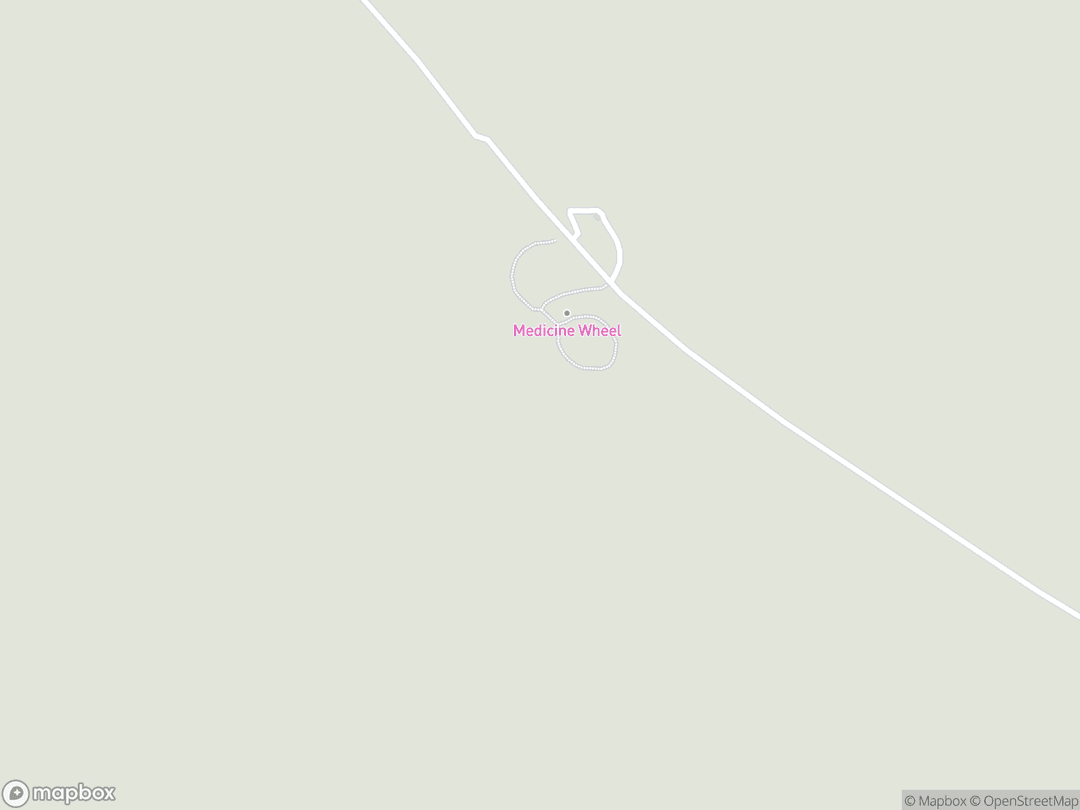
Medicine Mountain Summit, Bighorn National Forest, off U.S. Highway 14A, Lovell, Wyoming 82431
Hours: Open daylight hours from mid-June through mid-September; periodic brief closures occur for tribal ceremonies.
Getting There: Located off U.S. Highway 14A between Lovell and Burgess Junction; take Forest Service Road 12 for 1.6 miles to the visitor parking lot.
Get DirectionsTips for Your Visit
Prepare for Altitude
Drink plenty of water and walk at a steady pace, as the thin air at nearly 10,000 feet quickly exhausts unprepared hikers.
Respect Sacred Offerings
Never touch, disturb, or photograph close-ups of the medicine bags, tobacco ties, and prayer cloths left along the boundary.
Check Weather Conditions
Afternoon alpine thunderstorms bring sudden lightning and hail; begin your walk early in the day.
About
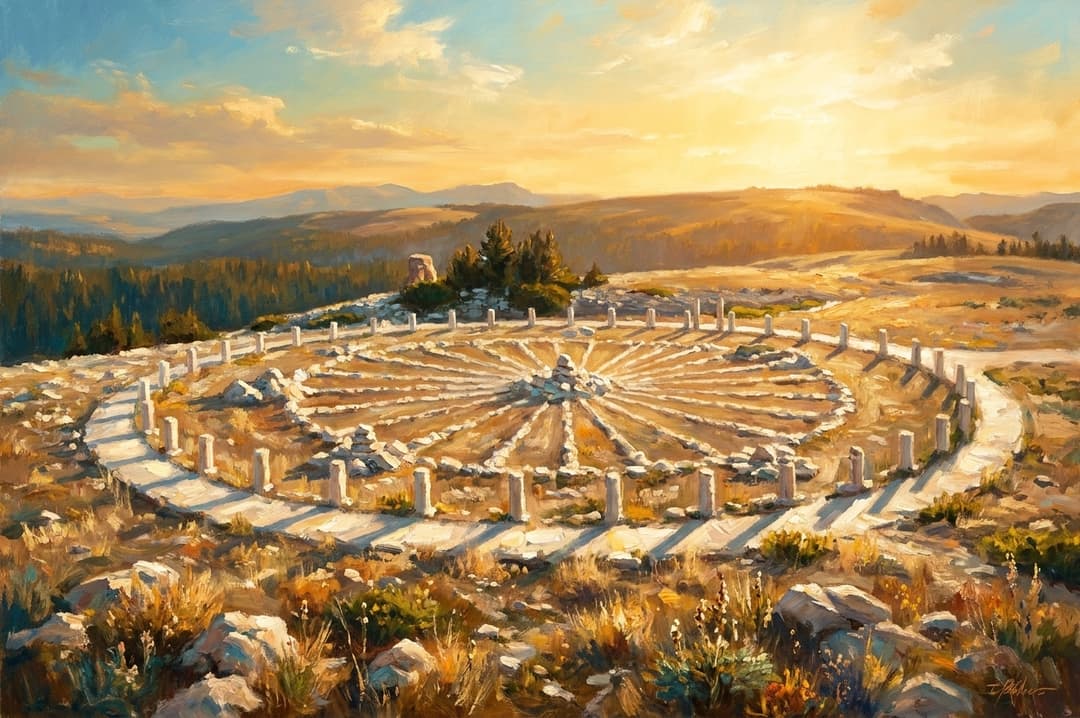
The Bighorn Medicine Wheel rests atop the windswept 9,642-foot crest of Medicine Mountain in northern Wyoming. Constructed from white limestone surface boulders, this ancient open-air sanctuary functions as an alpine cathedral, celestial observatory, and enduring altar for Northern Plains Indigenous nations.
Comprising a central stone cairn, twenty-eight radiating spokes, and six outer cairns, the monument reflects celestial geometries aligned with the summer solstice and rising dawn stars. Ancestral peoples gathered here across centuries, embedding cosmological order directly into the mountain bedrock.
Today, the site remains an active sanctuary co-stewarded by regional tribes and the U.S. Forest Service. Native pilgrims continuously visit to fast, offer tobacco ties, and conduct sacred ceremonies, preserving an unbroken tradition of high-altitude prayer and planetary renewal.
Gallery
Symbolic Elements
The temple's exterior features intricate carvings, each rich with spiritual meaning:

The Sacred Hoop
The outer stone perimeter represents the unbroken circle of life, cosmic eternity, and the unity of creation.

The Central Hub Altar
Cairn O anchors the structure as the axis mundi, serving as the central channel linking earth to the heavens.

Twenty-Eight Radial Spokes
The limestone spokes symbolize the lunar cycle, the ribs of the sacred bison, and the rafters of the Sun Dance lodge.

Vision Quest Blinds
Horseshoe-shaped peripheral cairns provided wind shelter for spiritual seekers undertaking solitary multi-day prayer fasts.

Solstice Sunrise Vector
Sightlines connecting Cairn E through the central altar pinpoint the exact horizon rising of the summer solstice sun.

Heliacal Dawn Stars
Calculated sightlines across peripheral cairns align with the summer dawn appearances of Aldebaran, Rigel, and Sirius.

Sacred Prayer Cloths
Colored cotton ties affixed along the perimeter rope represent tangible prayers for personal and communal healing.

Four Cardinal Directions
The wheel's primary axes honor the four directions, each corresponding to distinct elemental powers and seasons.
Interesting Facts
At 9,642 feet above sea level, the Bighorn Medicine Wheel is one of the highest consecrated religious sites in North America. (Tier A)
The monument is the archetypal type-site against which more than seventy medicine wheels across the Northern Plains are classified. (Tier B)
The twenty-eight limestone spokes align precisely with the number of wooden rafters used in the traditional Plains Sun Dance lodge. (Tier A)
Calculations published in 1974 proved the cairns align with the summer solstice sunrise and the dawn risings of three major stars. (Tier B)
In Crow tradition, the caves around the mountain are home to the Nirumbee, sacred spiritual beings possessing great power. (Tier A)
Archaeological research reveals the central altar was constructed around 1200 CE, with additions continuing into the horse era. (Tier B)
A grassroots tribal coalition successfully stopped multi-million-dollar commercial tourism developments at the site during the late 1980s. (Tier A)
An intrusive chain-link security fence that encircled the stones for sixty-eight years was replaced in 1999 with a prayer cord. (Tier A)
On clear mornings, the panoramic view from the summit stretches hundreds of miles across Wyoming and Montana. (Tier B)
Hundreds of Indigenous practitioners travel thousands of miles to offer prayers at the wheel during the summer solstice each year. (Tier A)
Common Questions
Is the Bighorn Medicine Wheel an ancient ruin?
No, it is an active, living place of worship continuously used by regional Indigenous nations.
Why are colored cloths tied around the wheel?
The cloths are sacred prayer offerings representing petitions for healing, gratitude, and spiritual guidance.
Can visitors walk inside the stone circle?
No, federal law and sacred site etiquette require all visitors to remain respectfully behind the post-and-rope perimeter.
How long is the hike to the Medicine Wheel?
The walk is approximately 1.5 miles each way on a graded gravel road with a 440-foot elevation gain.
When is the site open to the public?
The area is generally open from mid-June through mid-September during daylight hours, depending on alpine snow conditions.
Featured Stories
Chief Red Crow's Mountain Vision
1820
In the early nineteenth century, the revered Apsáalooke leader Red Crow ascended the high limestone summit on a solitary vision quest. Fasting within the protective stone circle, he received sacred medicine from the Nirumbee spirits of the mountain. Before his passing, Red Crow affirmed that his spirit would dwell eternally beside the stone altar.
Source: Crow Nation Ethnohistory and Oral Tradition
The Celestial Revelation of 1974
June 21, 1974
Solar physicist Dr. John Eddy published a groundbreaking survey in Science demonstrating that the wheel's cairns aligned with solstice and stellar risings. His empirical calculations proved that Indigenous plains builders possessed an advanced predictive astronomy. This discovery challenged entrenched colonial biases and brought worldwide acclaim to Native engineering.
Source: Science Magazine Archaeoastronomy Study
The Historic Accord of 1996
1996
Faced with government plans to construct parking lots and gift shops abutting the sacred stones, a coalition of tribal nations united in protest. Their decades of persistent advocacy yielded the landmark 1996 Historic Preservation Plan, halting destructive commercial development. The historic agreement established cooperative tribal stewardship and removed intrusive security fences.
Source: U.S. Forest Service Historic Preservation Accord
Timeline
Construction of the Central Cairn
Ancestral Indigenous craftspeople lay the hollow-centered central stone ring atop the limestone plateau.
MilestoneAssembly of Radial Spokes
Builders place twenty-eight stone spoke alignments and peripheral cairns to track celestial movements.
MilestoneCeremonial Maintenance at Cairn F
Lodgepole pine wood fragments incorporated into Cairn F mark active ritual renewal during the horse era.
EventChief Red Crow's Vision Quest
Apsáalooke holy man Red Crow undertakes a transformative fast sheltered inside the wheel's stone perimeter.
EventEarliest Non-Indigenous Written Account
Pioneers and trappers guided by local tribes produce the first written record describing the mountain wheel.
EventFirst Anthropological Survey
S.C. Simms of Chicago's Field Columbian Museum conducts the first formal scientific examination of the wheel.
MilestoneErection of Wire Security Enclosure
Civic clubs install a heavy woven-wire fence around the stones to deter souvenir collectors.
RenovationNational Historic Landmark Designation
The Department of the Interior designates the initial 110-acre site as a National Historic Landmark.
MilestoneArchaeoastronomy Findings Published
Dr. John Eddy demonstrates in Science that the cairns form precise horizon vectors for summer stars and solstices.
MilestoneHistoric Preservation Plan Signed
Tribal coalitions and federal agencies enact a historic co-management accord protecting the sacred landscape.
MilestoneRemoval of the Wire Fence
The intrusive security fence is replaced by a respectful timber post-and-rope prayer boundary.
RenovationLandmark Viewshed Expansion
The National Historic Landmark boundary expands to 4,088 acres to preserve the wider sacred landscape.
MilestoneHistory by Decade
1200s–1400s — Foundations on the Crest
During the Late Prehistoric period, ancestral Northern Plains peoples established the initial limestone cairn upon Medicine Mountain. Builders calibrated horizontal vectors across the surrounding ridges to mirror the movements of the sun and stars. Over generations, artisans arranged twenty-eight stone spokes radiating outward to define a sacred ceremonial compass.
1700s–1800s — Living Sanctuary and Prophecy
Throughout the Protohistoric era, Apsáalooke, Cheyenne, Arapaho, and Shoshone holy people visited the summit for solitary vision quests and spiritual renewal. Notable leaders such as Red Crow sought spiritual strength at the stone altar, anchoring oral histories across the mountain range. Even as Euro-American settlers entered Wyoming, tribal pilgrimages endured quietly across high alpine trails.
1900s–1960s — Documentation and Encroachment
Early twentieth-century anthropologists recognized the stone complex as the primary archetype of radial medicine wheels across North America. Increasing automobile tourism prompted local groups to encircle the monument with a heavy wire fence in 1931 to halt vandalism. In 1958, federal agencies built an FAA radar tracking station nearby, altering the sacred mountain's skyline.
1970s–1980s — Scientific Acclaim and Cultural Resistance
In 1974, astronomer John Eddy proved that the cairns mapped the summer solstice and heliacal risings of bright stars, sparking worldwide interest. When the Forest Service proposed multi-million-dollar tourism developments and expanded logging during the 1980s, regional tribes formed the Medicine Wheel Coalition. This unified grassroots resistance defended the mountain under the American Indian Religious Freedom Act.
1990s — The Collaborative Milestone
Years of consultation culminated in the landmark 1996 Historic Preservation Plan, establishing cooperative stewardship between tribal coalitions and the Forest Service. The upper road was closed to private traffic, commercial logging was restricted, and ceremonial privacy provisions were guaranteed. In 1999, stewards dismantled the wire cage, substituting a gentle rope perimeter for prayer cloths.
2000s–2020s — Holistic Landscape Stewardship
Federal authorities expanded the National Historic Landmark in 2011 to encompass 4,088 acres, safeguarding ancestral vision quest beds and gathering grounds. Non-invasive mapping and remote sensing revealed dozens of affiliated ceremonial structures across the plateau. Today, the wheel stands as one of North America's most revered living sanctuaries of multi-tribal pilgrimage.
Architecture & Facilities
The Bighorn Medicine Wheel is the supreme archetype of Northern Plains Indigenous stone architecture, characterized by an extended radial limestone circle with interior and exterior cairns. Rather than enclosing sacred space beneath a vaulted roof, the architecture consecrated an exposed alpine plateau, integrating panoramic horizon vectors with celestial mechanics into an enduring open-air mountain cathedral.
Building Materials
Bighorn Limestone
Naturally weathered buff and pale gray surface stones were gathered directly from the surrounding karst bedrock.
Dolomitic Fieldstones
Dense, unworked local stones weighing ten to forty-five pounds each form stable, mortarless circular alignments.
Lodgepole Pine Wood
Ancient structural timbers discovered within Cairn F date ceremonial additions to the mid-eighteenth century.
Alpine Karst Bedrock
The exposed limestone ridge provides a natural, solid foundation that has resisted centuries of arctic weather.
Interior Features
Cairn O (Central Altar)
A doughnut-shaped stone ring measuring twelve feet across serves as the axis mundi and primary focal point.
Twenty-Eight Radial Corridors
Linear stone pathways demarcate distinct celestial vectors and correspond to the structural poles of the Sun Dance.
Peripheral Vision Blinds
Cairns A through F served as sheltered fasting beds where spiritual seekers lay protected from harsh winds.
Outer Consecrated Precinct
A continuous limestone circle spans eighty feet across, delineating the sacred precinct from the mountainside.
Temple Grounds
The immediate grounds span 4,088 acres of protected subalpine and alpine tundra, containing ancient vision quest beds, prayer trails, and endemic flora.
Additional Facilities
A small visitor contact cabin and interpretive trail provide educational guidance at the lower parking area 1.5 miles below the summit.
Religious Significance
To Northern Plains Indigenous nations, Medicine Mountain is an ancient altar and living sanctuary where the physical landscape communes directly with the heavens.
The site functions as an open-air mountain temple for vision quests, cosmic alignment ceremonies, planetary renewal, and personal prayer.
Sacred Ordinances
Vision Fasting
Spiritual seekers endure multiple days of solitary fasting within stone cairn blinds to receive divine direction.
Solstice Renewal
Tribal practitioners gather at dawn during the summer solstice to greet the sun and offer prayers for all creation.
Tobacco and Cloth Offerings
Pilgrims tie colored prayer cloths and medicine bundles along the boundary to carry blessings across the world.
Cosmic Geometry and the Sun Dance
The twenty-eight spokes mirror the structural architecture of the Sun Dance lodge, symbolizing the ribs of the sacred buffalo and the lunar month.
The Spirits of Medicine Mountain
Apsáalooke tradition venerates the mountain as the dwelling place of the Nirumbee, powerful spiritual caretakers who bestow wisdom upon sincere seekers.
Similar Temples
Sources & Research
Every fact on Temples.org is backed by verified Sources & Research. Each piece of information is rated by source tier and confidence level.
View All Sources (6)
| Field | Source | Tier | Retrieved |
|---|---|---|---|
| About & Historical Background | U.S. Forest Service - Bighorn National Forest (opens in a new tab) | A | 2026-03-31 |
| Visitor Insights & Co-Management | Wyoming State Historic Preservation Office (opens in a new tab) | A | 2026-03-31 |
| Architecture & Celestial Alignment | American Association for the Advancement of Science (opens in a new tab) | B | 2026-03-31 |
| Archaeological Research & Dating | American Anthropological Association (opens in a new tab) | B | 2026-03-31 |
| Religious Significance & Ceremonial Use | Wyoming Historical Society (opens in a new tab) | B | 2026-03-31 |
| Symbolic Elements & Cultural Meaning | Smithsonian Institution (opens in a new tab) | B | 2026-03-31 |