Visitor Insights
Visiting Caracas Venezuela Temple
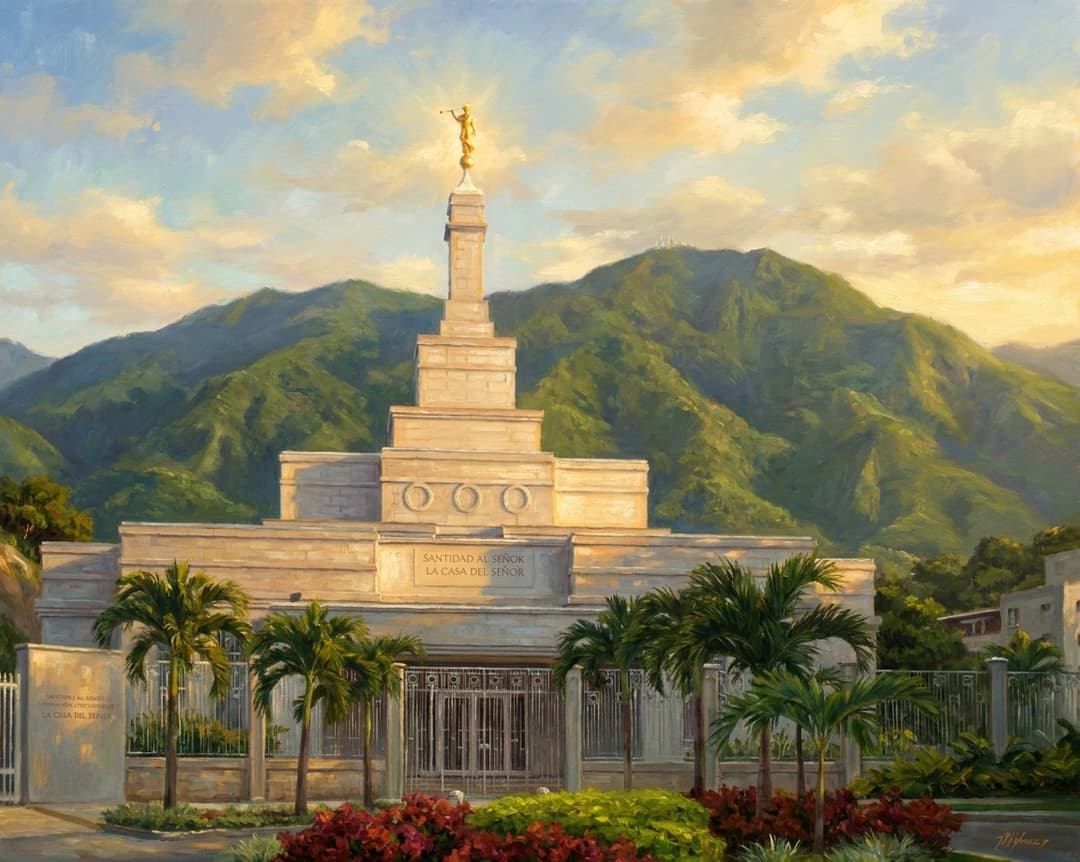
Visiting the Caracas Venezuela Temple grounds offers a serene and spiritually uplifting experience away from the busy streets of Caracas. The site is beautifully framed by the dramatic green peaks of the El Ávila mountain range, creating a peaceful atmosphere perfect for quiet contemplation and prayer. While the interior of the temple is reserved for members of the Church holding active temple recommends, the public is welcome to explore the manicured gardens and walkways. Visitors can appreciate the unique architecture, the light gray granite cladding, and the peaceful environment that characterizes this sacred sanctuary.
Highlights
- Stunning panoramic views of the majestic El Ávila mountain range framing the temple.
- Beautifully landscaped gardens featuring tropical flora, manicured lawns, and quiet walkways.
- The striking Classic Modern architecture clad in light gray granite that glows in the tropical sun.
- A peaceful, contemplative atmosphere ideal for personal reflection, prayer, and meditation.
Things to Know
- The interior of the temple is reserved exclusively for Latter-day Saint patrons with active recommends.
- Photography is permitted on the public grounds but is strictly prohibited inside the temple building.
- Visitors are encouraged to dress respectfully when walking through the sacred temple grounds.
Location
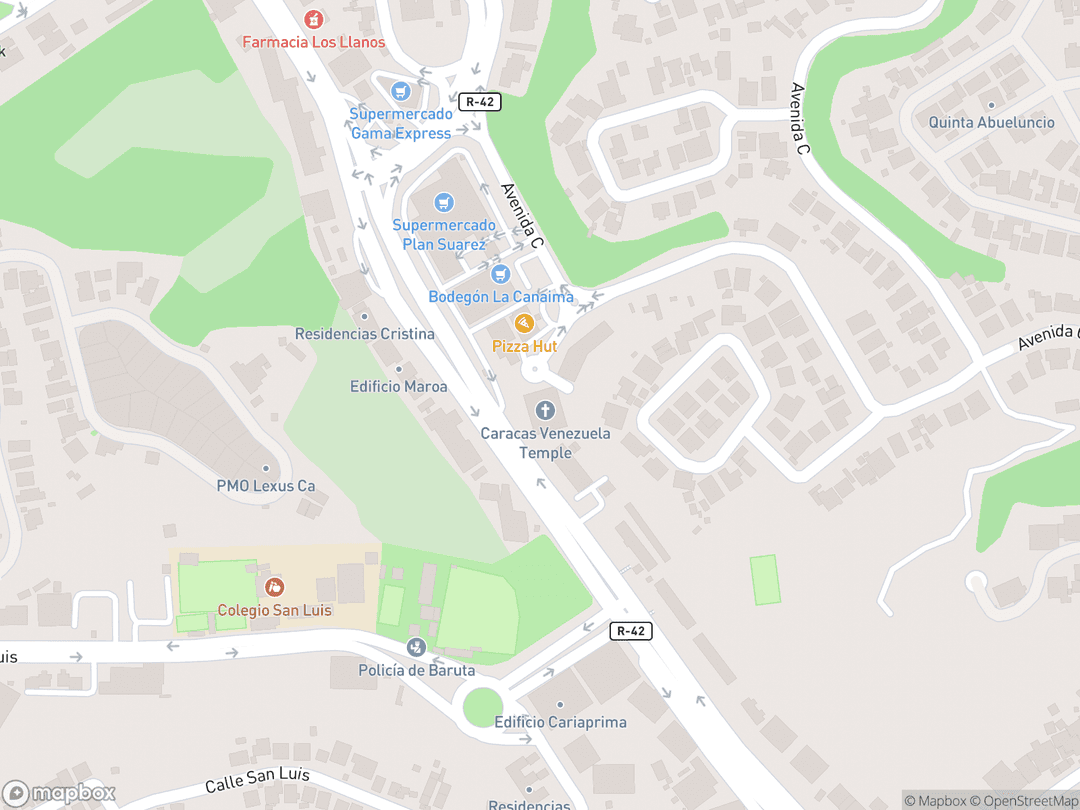
Calle C-1 con Avenida C, Urbanización Caurimare, Caracas, Venezuela
Hours: The temple grounds are open daily to the public during daylight hours, typically from 8:00 AM to 8:00 PM.
Getting There: Located in the eastern Caracas neighborhood of Caurimare at Avenida C and Calle C-1. The site is easily accessible via local taxi services or public transit heading toward the Caurimare sector. Limited on-site parking is available.
Get DirectionsTips for Your Visit
Golden Hour Photography
Visit in the late afternoon to capture the warm golden light reflecting off the light gray granite exterior against the green mountains.
Respectful Attire
Wear modest clothing suitable for a sacred religious site to ensure a comfortable and respectful experience for all visitors.
Combine with Local Chapel
The temple shares grounds with a local meetinghouse where Sunday worship services are open to the general public.
About
The Caracas Venezuela Temple stands as a monumental beacon of faith and spiritual resilience in northern South America. Nestled near the base of the majestic El Ávila mountain range in the eastern neighborhood of Caurimare, this sacred edifice serves as the first temple of The Church of Jesus Christ of Latter-day Saints in Venezuela. Within the broader Christian tradition, the temple stands as a modern manifestation of biblical sanctuary worship, serving as a dedicated House of the Lord where sacred covenants are made with God. It serves a vast district of patrons across Venezuela and neighboring Trinidad and Tobago, offering a refuge of peace amidst a bustling metropolitan landscape.
The history of the temple is deeply intertwined with the growth of the Latter-day Saint community in Venezuela, which began in earnest in the mid-1960s. For decades, local members made extraordinary sacrifices to travel thousands of miles to the nearest temple in Peru, navigating complex border crossings and financial hurdles. The announcement of a local temple in 1995 brought immense joy, though the subsequent construction phase faced significant engineering challenges, including the discovery of an active underground spring and subsequent landslides. Despite these natural and logistical hurdles, the temple was completed and dedicated in August 2000, standing today as a testament to the perseverance of the local Saints.
Architecturally, the temple is a masterpiece of spatial adaptation, utilizing a rare two-story design to fit within a highly constrained half-acre urban lot. Its light gray granite exterior reflects the bright tropical sun, contrasting beautifully with the lush green slopes of the mountains behind it. As a sacred space, the temple is designed to draw the minds of visitors and patrons upward, bridging the earthly and the divine through holy ordinances that unite families for eternity.
Gallery
Symbolic Elements
The temple's exterior features intricate carvings, each rich with spiritual meaning:

The Single Spire
The single spire points directly heavenward, symbolizing the connection between earth and heaven. It acts as a visual reminder of humanity's upward journey toward the divine.
Angel Moroni with Scroll
Atop the spire stands a gold-leafed statue of the Angel Moroni holding a scroll. This rare variation represents the opening of the heavens and the restoration of the revealed scriptures.

Holiness to the Lord Inscription
Directly above the temple entrance, the Spanish inscription reads 'Santidad al Señor — la Casa del Señor'. This serves as a boundary symbol, reminding all who enter that they are leaving the secular world.

The Baptismal Font Oxen
The baptismal font is supported by twelve sculpted oxen, representing the twelve tribes of Israel. This design directly references the molten sea in King Solomon's Temple.

Sealing Room Mirrors
Large, parallel mirrors on opposing walls of the sealing rooms create an infinite reflection. This beautiful visual effect symbolizes the eternal nature of the marriage covenant and the endless progression of family relationships.

The Celestial Room
Adorned in soft creams, whites, and gold, the Celestial Room represents the peace and glory of the celestial kingdom. It is a sacred, quiet space for prayer, meditation, and personal revelation.

Light Gray Granite Cladding
The exterior is clad in light gray granite, reflecting the bright tropical sun. This durable material symbolizes spiritual purity, resilience, and the enduring nature of covenants made within the temple.

Custom Art Glass Windows
The temple's windows feature custom art glass designed to filter natural light into the sacred interior spaces, symbolizing the light of Christ illuminating the lives of those who enter.
Interesting Facts
The Caracas Temple was the 96th operating temple of the Church worldwide and the very first to be constructed in Venezuela. (Tier A)
Prior to its dedication, Venezuelan Saints had to travel approximately 2,000 miles to the Lima Peru Temple, requiring immense financial sacrifice. (Tier B)
During initial excavation, workers struck an active underground spring, requiring engineers to pause construction and divert the water. (Tier B)
The diversion of the underground spring triggered two major landslides, shifting eight tons of earth and presenting a major engineering hurdle. (Tier B)
It is one of only five temples globally to feature the Karl A. Quilter Angel Moroni statue holding a scroll instead of just a trumpet. (Tier A)
Because of tight property boundaries, the temple's dedication cornerstone is located inside the foyer rather than on the exterior facade. (Tier A)
To accommodate the two-story design on a half-acre lot, the progressive endowment rooms are uniquely laid out perpendicular to each other. (Tier B)
During the 1999 Vargas mudslides, the local Church mobilized, using the adjacent facilities to distribute food and medicine to thousands. (Tier B)
As President Hinckley departed the temple grounds, thousands of local members gathered along the streets, waving white handkerchiefs. (Tier B)
Following political tensions in 2005, the temple district became entirely self-reliant, operated fully by local Venezuelan citizens. (Tier A)
While early databases list the floor area as 15,332 square feet, official records clarify the total floor area is 20,630 square feet. (Tier B)
Common Questions
Who can enter the Caracas Venezuela Temple?
While the beautifully landscaped temple grounds are open to the general public, the interior of the temple is reserved for members of the Church holding active temple recommends, which are issued to those who live the core tenets of the faith.
Why is the dedication cornerstone located inside the temple foyer?
Due to the tight half-acre property boundaries and steep hillside drop-offs of the Caurimare site, the dedication cornerstone was uniquely placed inside the temple's entryway foyer rather than on the exterior facade.
How does the Caracas Temple differ from other smaller temples built in the same era?
While most smaller temples built in the late 1990s were single-story structures, the Caracas Temple was adapted into a rare two-story design to maximize the limited square footage of its small urban lot.
What role did the temple site play during the 1999 Vargas mudslide disaster?
Just months after groundbreaking, the catastrophic mudslides struck northern Venezuela. The temple construction site and adjacent meetinghouse became vital coordination hubs where local members packaged and distributed tons of Church-sponsored humanitarian aid to displaced citizens.
What is the significance of the Angel Moroni statue holding a scroll?
The Caracas Temple features a rare variation of the Angel Moroni statue sculpted by Karl A. Quilter, depicting Moroni holding a scroll in his left hand. This symbolizes the revealed scriptures and the restoration of the gospel in the latter days.
Featured Stories
The Miraculous Mudslide Relief of 1999
December 16, 1999
Just months after the groundbreaking of the Caracas Venezuela Temple, the catastrophic Vargas mudslides devastated northern Venezuela, claiming thousands of lives and displacing countless families. While construction on the temple itself continued, the local Latter-day Saint community quickly mobilized to assist in relief efforts. The temple site and the adjacent local meetinghouse were transformed into vital coordination hubs for humanitarian aid.
Local members and missionaries worked side-by-side to package and distribute tons of food, clean water, clothing, and medicine to those affected by the disaster. This massive relief effort not only provided physical salvation to thousands of displaced citizens but also established the temple site as a place of refuge, service, and Christian love long before its formal dedication.
Source: Church Newsroom Relief Reports, December 1999
Overcoming the Landslides and Underground Springs
1999
The construction of the Caracas Temple was a testament to engineering perseverance and faith. During the initial excavation of the foundation on the steep Caurimare hillside, construction workers unexpectedly struck an active underground spring. Water began to flood the excavation site, forcing engineers to pause construction and design a complex drainage system to safely divert the water.
However, the diversion of the spring compromised the stability of the hillside, triggering two major landslides. The second landslide shifted eight tons of earth and construction materials down the slope, threatening the integrity of the entire project. Through innovative engineering, retaining walls, and the tireless efforts of the construction team, the hillside was successfully stabilized, allowing the temple to rise securely on its foundation.
Source: Jahn Construction Project Archives, 1999
The Emotional Dedication and White Handkerchief Salute
August 20, 2000
The dedication of the Caracas Venezuela Temple by President Gordon B. Hinckley was a highly emotional milestone for the Venezuelan Saints, many of whom had spent decades sacrificing to travel to the temple in Peru. Over 6,000 members gathered in four dedicatory sessions to witness the fulfillment of their long-held dreams. The spirit of gratitude and joy was palpable throughout the sacred proceedings.
As President Hinckley departed the temple grounds following the final dedicatory session, an spontaneous and moving tribute occurred. Thousands of local members lined the streets surrounding the temple, waving white handkerchiefs and singing the Spanish translation of the beloved hymn 'We Thank Thee, O God, for a Prophet'. The emotional scene brought tears to the eyes of both the prophet and the gathered Saints, marking a historic day of faith.
Source: Church News Dedication Report, August 2000
Timeline
Venezuela Dedicated for Preaching
Elder Marion G. Romney dedicated Venezuela for the preaching of the gospel, organizing the first official congregation in Caracas shortly thereafter.
MilestoneFirst Venezuelan Convert Baptized
Manuel Vargas and his family were baptized as the first local converts, establishing a foundational generation of Latter-day Saints in the country.
EventVenezuela Caracas Mission Organized
The Venezuela Caracas Mission was officially organized, accelerating missionary efforts and congregational growth throughout the country.
MilestoneCaurimare Land Purchased
The Church purchased a half-acre parcel of land in the Caurimare neighborhood of Caracas, holding it in reserve for future development.
EventMeetinghouse Constructed on Site
A local meetinghouse was constructed on the Caurimare property to serve the expanding Caracas Venezuela Stake as national membership surged.
EventTemple Announced
President Gordon B. Hinckley announced plans to construct a temple in Venezuela, initiating an intensive 18-month search for a suitable site.
MilestoneSite Selection Finalized
After alternative properties fell through, Church leaders announced revised plans to construct the temple on the existing Church-owned property in Caurimare.
MilestoneGroundbreaking Ceremony
Ground was broken and the site dedicated by Elder Francisco J. Viñas, President of the South America North Area.
component.timeline.groundbreakingVargas Mudslides Relief Hub
The catastrophic Vargas mudslides devastated northern Venezuela. The temple site and local meetinghouse served as coordination hubs for distributing tons of humanitarian aid.
EventPublic Open House Commences
The public open house commenced, drawing 27,806 visitors over a one-week period to tour the interior of the completed building.
EventTemple Dedicated
President Gordon B. Hinckley dedicated the Caracas Venezuela Temple in four sessions, attended by approximately 6,000 Venezuelan members.
DedicationReassignment of Foreign Missionaries
Due to political tensions and visa restrictions, all North American missionaries were reassigned out of Venezuela, leaving operations entirely to local members.
Event100% Local Self-Reliance Achieved
The local missionary and temple forces achieved complete self-reliance, with all operations fully staffed and led by local Venezuelan citizens.
MilestoneTemporary Pandemic Closure
The temple closed temporarily in response to the COVID-19 pandemic, later reopening under phased safety guidelines.
RenovationSecond Venezuela Temple Announced
President Russell M. Nelson announced a second temple for Venezuela to be built in Maracaibo, reflecting the ongoing growth of the local Latter-day Saint community.
MilestoneHistory by Decade
1960s–1970s — Planting the Seeds of Faith
The history of the Latter-day Saint faith in Venezuela began in November 1966 when Elder Marion G. Romney dedicated the nation for the preaching of the gospel. Shortly thereafter, the first official congregation was organized in Caracas, planting the seeds of a community that would grow rapidly over the coming decades. In 1967, Manuel Vargas and his family became the first local converts, establishing a foundational generation of faith. By July 1971, the growth of the Church necessitated the organization of the Venezuela Caracas Mission, which accelerated missionary efforts across the country. Recognizing the rapid expansion, the Church purchased a half-acre parcel of land in the eastern Caracas neighborhood of Caurimare in 1977. This property was initially held in reserve, destined to become the future home of the nation's first temple.
1980s–1990s — Growth, Obstacles, and Temple Announcement
During the 1980s, national membership surged to nearly 25,000, and a local meetinghouse was constructed on the Caurimare property in 1987 to serve the expanding Caracas Venezuela Stake. On September 30, 1995, President Gordon B. Hinckley announced plans to construct a temple in Venezuela, initiating an intensive 18-month search for a suitable site. After several alternative properties fell through due to zoning and logistical issues, Church leaders finalized plans in May 1998 to build on the existing Caurimare property. Ground was officially broken on January 10, 1999, by Elder Francisco J. Viñas. The construction phase was marked by significant challenges, including the discovery of an active underground spring and subsequent landslides that shifted tons of earth. Additionally, the catastrophic Vargas mudslides of December 1999 devastated the region, turning the temple construction site into a vital coordination hub for humanitarian aid.
2000s–Present — Dedication, Self-Reliance, and Expansion
The Caracas Venezuela Temple was dedicated on August 20, 2000, by President Gordon B. Hinckley, bringing immense joy to thousands of local members who previously had to travel to Peru. In October 2005, due to political tensions and visa restrictions, all North American missionaries were reassigned out of Venezuela. This transition placed the responsibility of missionary and temple operations entirely on local members. By 2014, the local missionary and temple forces achieved 100% self-reliance, fully staffed and led by local citizens. The temple continued to serve as a beacon of peace through the political and economic challenges of the 2010s and 2020s. On April 7, 2024, President Russell M. Nelson announced a second temple for Venezuela in Maracaibo, reflecting the enduring strength and growth of the local Latter-day Saint community.
Architecture & Facilities
The Caracas Venezuela Temple features a Classic Modern, single-spire design. It belongs to a specific generation of temples initiated by President Gordon B. Hinckley in the late 1990s, designed to bring temple blessings closer to remote or smaller populations of Saints. While most of these temples were built as single-story structures, the tight constraints of the 0.5-acre Caracas site required a rare two-story adaptation of the standard floor plan, blending modern architectural efficiency with sacred sanctuary design.
Building Materials
Exterior Cladding
The exterior is clad in light gray granite, which reflects the tropical sun and stands out against the lush green backdrop of the El Ávila mountains.
Art Glass Windows
Custom art glass windows designed to filter natural light into the sacred interior spaces, creating a peaceful and contemplative atmosphere.
Interior Woodwork
High-quality mahogany woodwork throughout the interior, adding warmth and elegance to the sacred ordinance rooms.
Flooring
Premium marble and high-grade carpeting imported to ensure durability and a beautiful, reverent aesthetic in all high-traffic areas.
Interior Features
The Baptistry
Located on the lower level, featuring a beautiful baptismal font supported by twelve sculpted oxen, symbolizing the twelve tribes of Israel.
Instruction Rooms
Two progressive instruction rooms arranged perpendicular to each other to maximize the available square footage of the tight urban lot.
Sealing Rooms
Two sealing rooms featuring large, parallel mirrors on opposing walls, symbolizing the eternal nature of family relationships.
The Celestial Room
A quiet, beautifully adorned space for prayer and meditation, symbolizing the peace and glory of the celestial kingdom.
Temple Grounds
The temple grounds feature beautifully landscaped gardens, manicured lawns, quiet walkways, and tropical flora, all framed by the dramatic peaks of the El Ávila mountain range.
Additional Facilities
The temple shares its half-acre grounds with a local meetinghouse and Church administrative offices, serving as a central hub for the local Latter-day Saint community.
Religious Significance
In Latter-day Saint theology, the temple is the House of the Lord, a sacred space separate from the world where heaven and earth meet. It represents a modern continuation of biblical sanctuary worship, where sacred covenants are made between God and His children.
The core spiritual purpose of the temple is to provide a place where sacred ordinances can be performed to unite families for eternity and to help individuals prepare to return to the presence of God.
Sacred Ordinances
Baptism for the Dead
A proxy ordinance where living individuals are baptized on behalf of their deceased ancestors, offering them the opportunity to accept the covenant.
The Endowment
A sacred ordinance in which covenants are made, and individuals receive spiritual instruction and promises regarding their eternal journey.
Eternal Marriage (Sealing)
An ordinance that unites a husband, wife, and their children for eternity, transcending the boundary of death.
A Modern House of Israel
The temple's design and ordinances, such as the baptismal font supported by twelve oxen, connect Latter-day Saints with the house of Israel, emphasizing their covenant relationship with God and their role in the gathering of Israel.
Covenants and Discipleship
The covenants made within the temple focus on Christ-like living, personal holiness, and devotion to God, deepening the patron's discipleship and commitment to follow Jesus Christ.
Similar Temples
Sources & Research
Every fact on Temples.org is backed by verified Sources & Research. Each piece of information is rated by source tier and confidence level.
View All Sources (6)
| Field | Source | Tier | Retrieved |
|---|---|---|---|
| About & Historical Background | The Church of Jesus Christ of Latter-day Saints (opens in a new tab) | A | 2026-02-18 |
| Architecture & Design Specifications | The Church of Jesus Christ of Latter-day Saints (opens in a new tab) | A | 2026-02-18 |
| Visitor Insights & Facts | ChurchofJesusChristTemples.org (opens in a new tab) | C | 2026-02-18 |
| Religious Significance & History | BYU Studies (opens in a new tab) | B | 2026-02-18 |
| Timeline & Local Leadership | Sala de Prensa Venezuela (opens in a new tab) | A | 2026-02-18 |
| Interesting Facts & Construction Challenges | El Universal (opens in a new tab) | B | 2026-02-18 |